
Content
Nuts & washers are two of the most fundamental components in any fastened assembly, yet they serve distinctly different functions that are frequently misunderstood. A nut is a threaded fastener that mates with a bolt or threaded rod to create a clamping force between joined materials. A washer is an unthreaded disc placed between the nut or bolt head and the work surface to distribute that clamping force over a wider area, protect the surface from damage, and in certain designs, resist loosening. Using one without the other in the wrong application is one of the most common causes of fastener joint failure — either through surface deformation under the nut or through gradual loosening from vibration.
The relationship between nuts & washers and the bolts they pair with is defined by three matching criteria: thread size and pitch, material grade, and finish. A Grade 8 bolt paired with a Grade 2 nut creates a weak point at the nut that will fail before the bolt reaches its design load. Similarly, a zinc-plated steel washer used against stainless steel fasteners in a wet environment creates a galvanic cell that accelerates corrosion at the contact point. Correct selection across all three criteria — not just size — is what determines whether a fastened joint performs reliably under its intended service conditions.
The range of types of nuts and washers available reflects the diversity of engineering challenges they are designed to solve. Understanding the functional purpose of each type before specifying them prevents over-engineering expensive specialty fasteners into simple applications and under-specifying standard hardware into demanding ones.
Material compatibility is one of the most consequential decisions in specifying nuts & washers, particularly in applications involving moisture, temperature extremes, chemical exposure, or electrical conductivity requirements. The following table summarizes the principal material options and their performance characteristics across key service parameters.
| Material | Strength | Corrosion Resistance | Best Applications |
|---|---|---|---|
| Low carbon steel (zinc-plated) | Moderate | Low–Moderate | Indoor general construction, furniture |
| Stainless steel 304 | Good | High | Outdoor, food equipment, general wet environments |
| Stainless steel 316 | Good | Very High | Marine, chemical processing, coastal installations |
| Galvanized steel | Good | High | Outdoor structural, decking, landscaping |
| Brass | Moderate | Good | Plumbing, electrical, decorative hardware |
| Aluminum | Low–Moderate | Good | Lightweight assemblies, aerospace, electronics |
| Nylon | Low | Very High | Electrical insulation, chemical resistance, light loads |
Galvanic compatibility deserves particular attention when mixing materials. Stainless steel nuts used with aluminum bolts, or brass washers used against steel fasteners in wet environments, create electrochemical potential differences that accelerate corrosion of the less noble metal. Using fastener components of the same material — or pairing metals that are close together on the galvanic series — is the most reliable way to prevent this type of premature joint degradation.
Knowing how to choose nuts and washers correctly requires working through a structured set of criteria rather than defaulting to whatever hardware is available. The following framework applies to both new assemblies and replacement purchases for existing fastened joints.
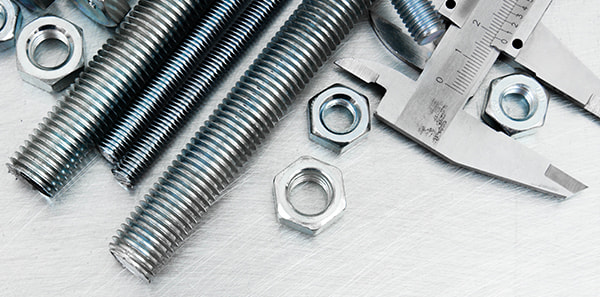
Every nut must match the bolt's thread diameter and pitch exactly. For inch-series fasteners, the thread designation includes the nominal diameter and threads per inch — for example, 3/8-16 (3/8 inch diameter, 16 threads per inch). For metric fasteners, the designation includes nominal diameter and pitch in millimeters — for example, M10×1.5. Mixing inch and metric fasteners is a common mistake that creates cross-threading, which strips the nut or bolt threads and produces an unreliable joint. Thread pitch gauges or caliper measurement against a known standard are reliable verification methods when the bolt specification is unknown.
Grade compatibility ensures that the nut and washer can withstand the clamping force the bolt is designed to deliver. In inch-series assemblies, Grade 2 nuts pair with Grade 2 and Grade 5 bolts in light applications; Grade 8 nuts are required with Grade 8 bolts in structural and high-tensile applications. In metric assemblies, the nut property class should equal or exceed the bolt property class — a Class 10.9 bolt requires at minimum a Class 10 nut. Undersized grade nuts strip before the bolt reaches its proof load, creating a joint that appears tightened but carries a fraction of the intended clamping force.
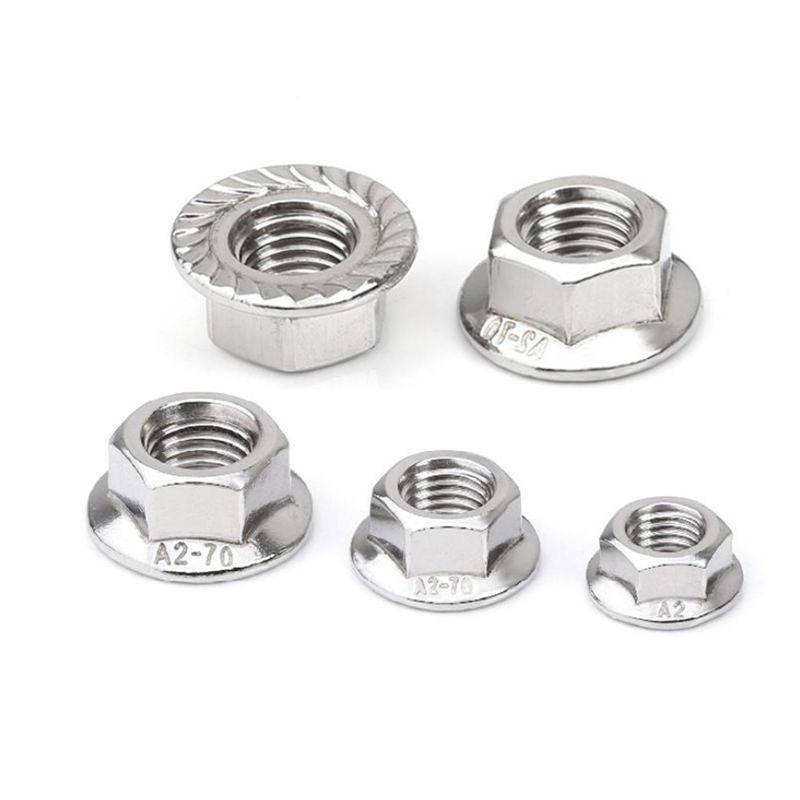
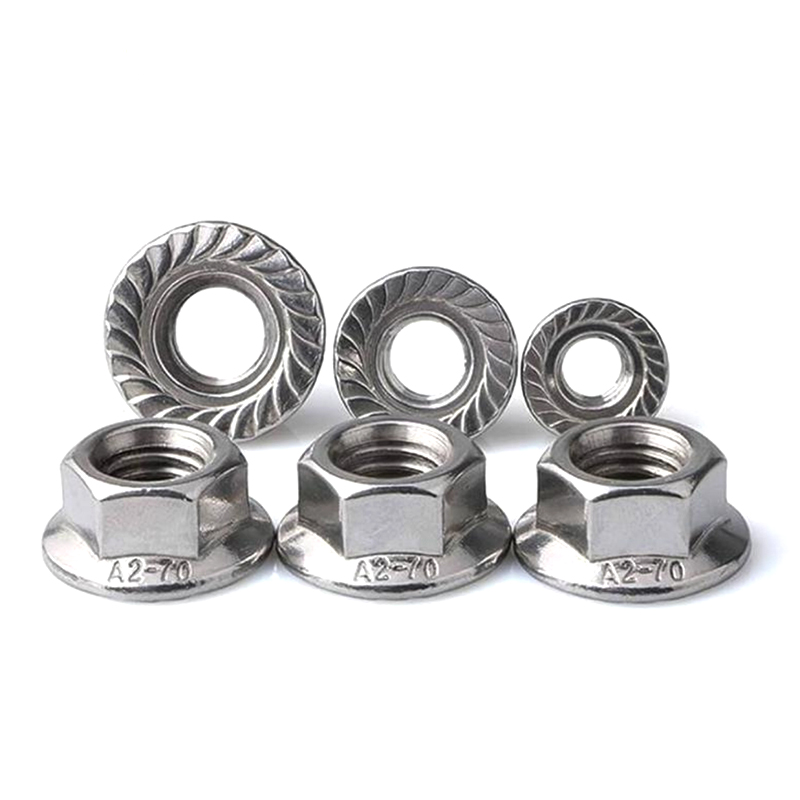
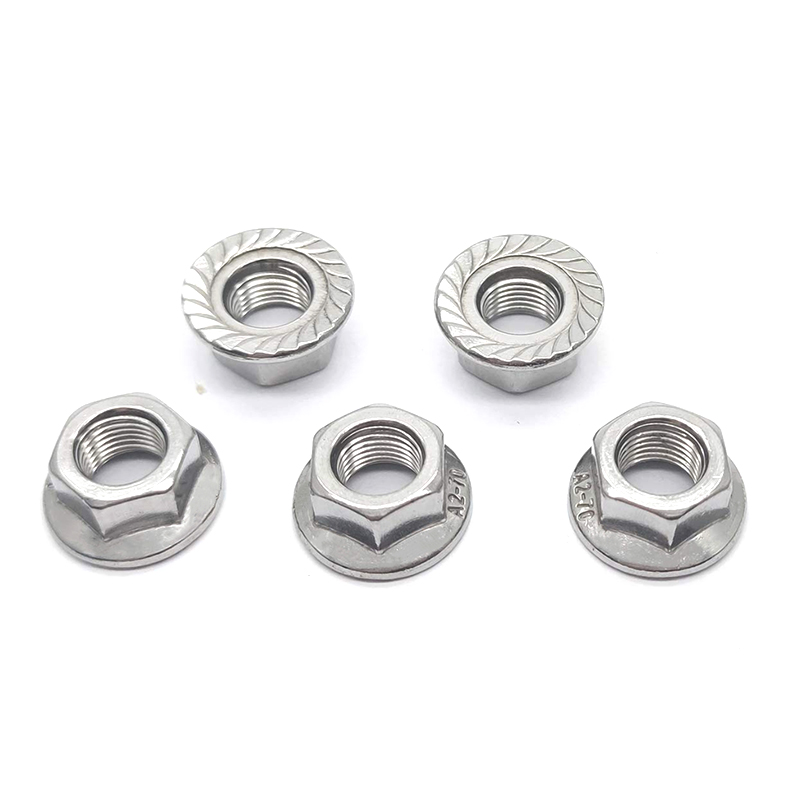
Once the nut is specified, determine whether the application requires load distribution, vibration resistance, surface protection, or a combination. Use a flat washer (USS size for soft materials and oversized holes, SAE size for precision assemblies) whenever load distribution or surface protection is the primary need. Add a split lock or toothed lock washer — or specify a nyloc nut — in any application subject to vibration, thermal cycling, or dynamic loading. In applications where a flange nut is already specified, a separate flat washer is typically unnecessary since the integrated flange serves both functions.
Confirm that the chosen material for nuts & washers is compatible with both the bolt material and the environmental conditions. For indoor, dry environments, zinc-plated or plain steel hardware provides adequate performance at the lowest cost. For outdoor or intermittently wet environments, hot-dip galvanized or stainless steel 304 is appropriate. For continuous immersion, salt spray, or chemical exposure, stainless steel 316 is the reliable baseline. For food processing, pharmaceutical, or medical equipment, verify that the material meets relevant regulatory requirements — typically 316 stainless steel with a passivated finish as a minimum standard.
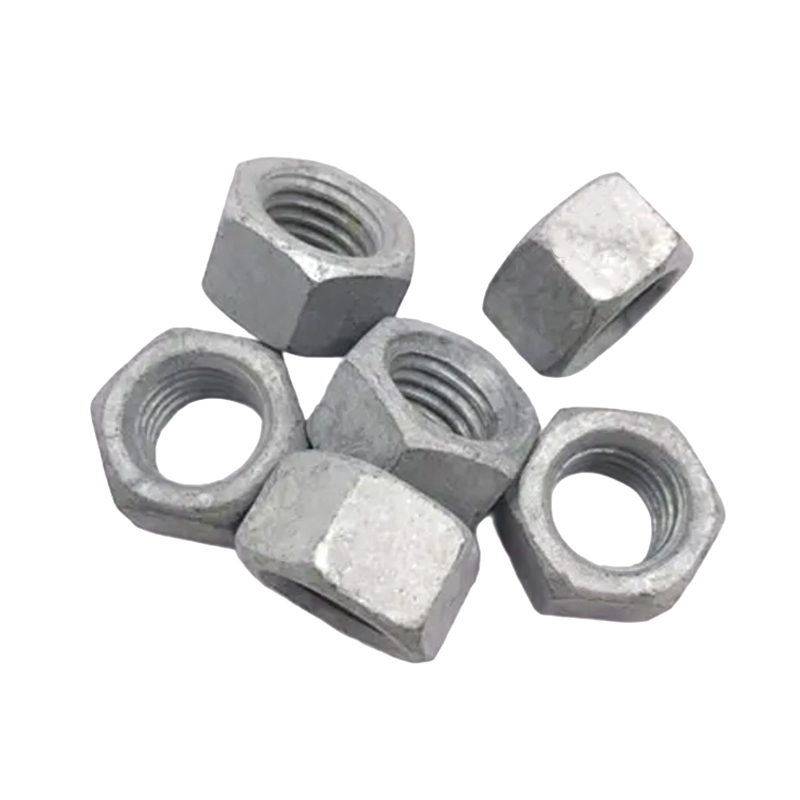
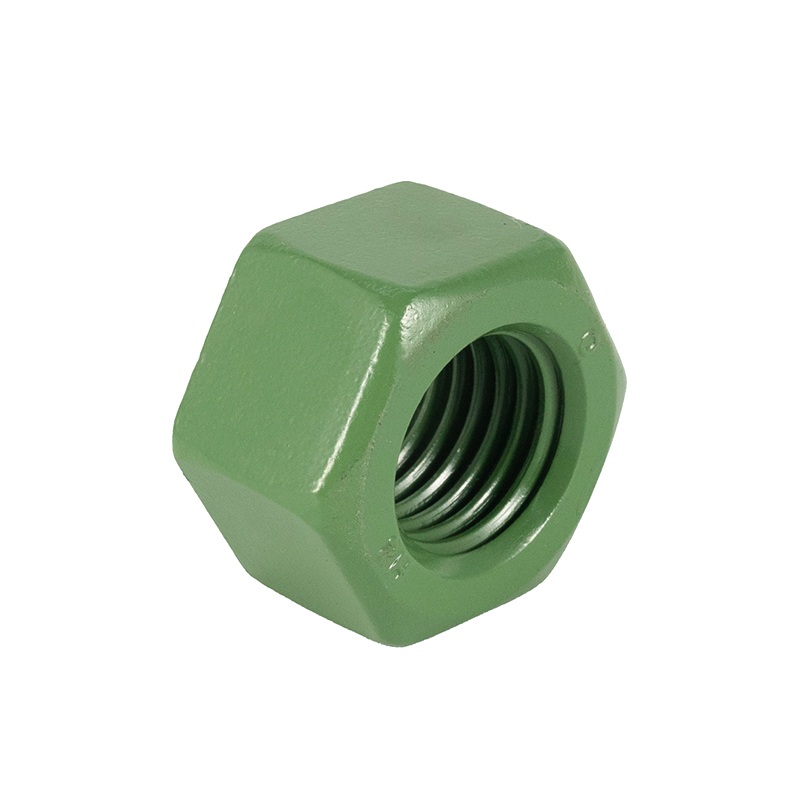
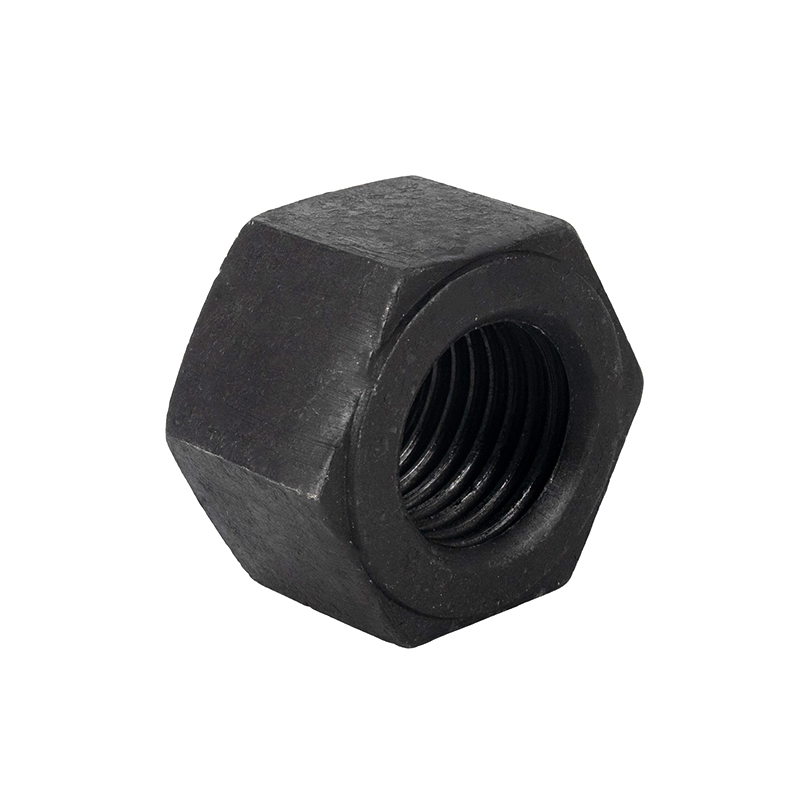
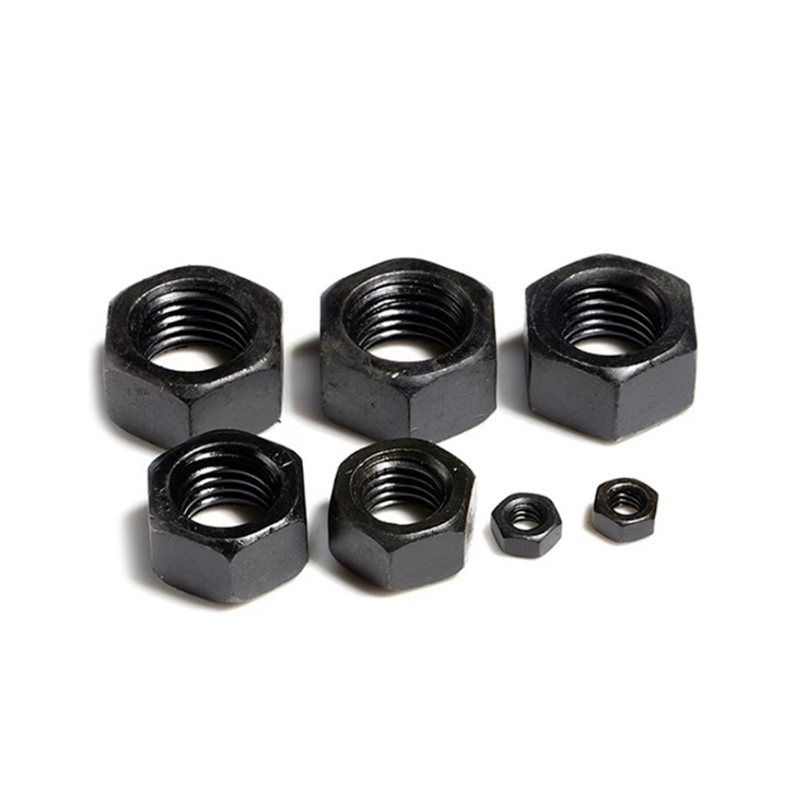
As the dominant nut type across virtually all industries, the hexagon nut deserves more detailed treatment. Its six-sided geometry is not arbitrary — it represents the minimum number of sides that allows wrench engagement at 60-degree intervals, providing adequate purchase for torquing in tight spaces while maintaining sufficient wall thickness between flats for structural integrity. This balance between accessibility and strength is why the hex nut has remained the universal default for over a century of standardized fastener development.
The ANSI and ISO standards governing hexagon nuts specify not only external dimensions — width across flats, width across corners, and nut height — but also mechanical properties including proof load, hardness range, and thread tolerance class. These specifications ensure that a hex nut purchased from any compliant supplier will fit any compliant bolt without modification, a guarantee that underpins the global interchangeability of standardized fasteners. When purchasing hex nuts for critical applications, verifying that the supplier provides certified material test reports (CMTRs) confirming compliance with the specified grade ensures that the parts in hand actually meet the standard they are marked with.
Beyond standard hex nuts, the hexagon form factor is used as the basis for several engineered variants that address specific performance requirements:
Selecting the right variant from the full range of types of nuts and washers available begins with a clear definition of the joint's service conditions — load magnitude, vibration exposure, environmental factors, and assembly constraints. With those parameters defined, the matching process becomes straightforward, and the result is a fastened assembly that performs reliably throughout its intended service life without unexpected loosening, corrosion, or mechanical failure.
 Contact Information
 Address



 中文简体
中文简体 Português
 Español
 Deutsch
 русский
 عربى
عربى