Home / Products / Bolts & Screws / Hexagonal Flange Bolts

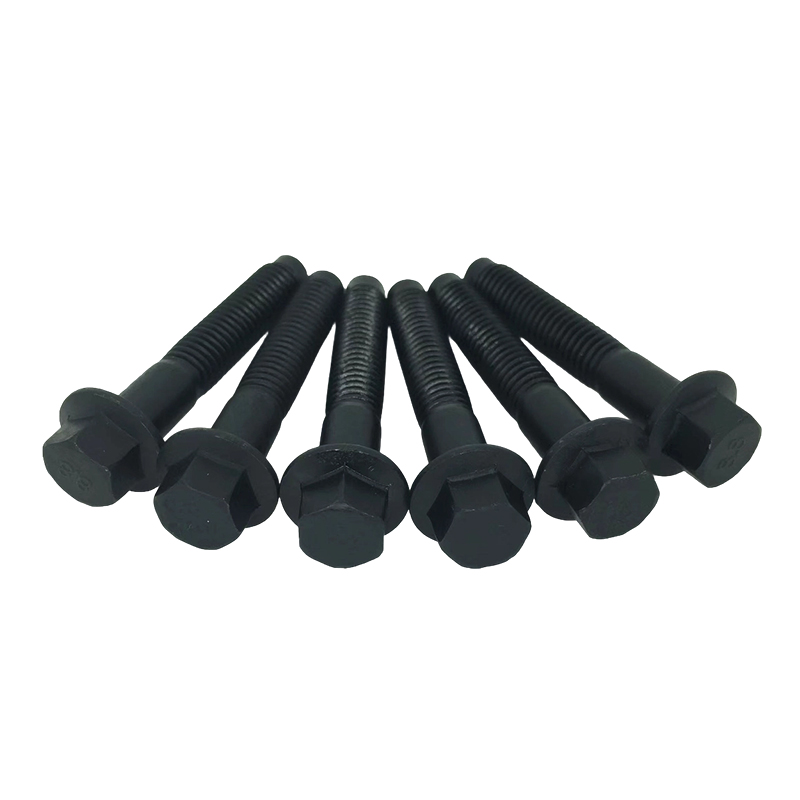
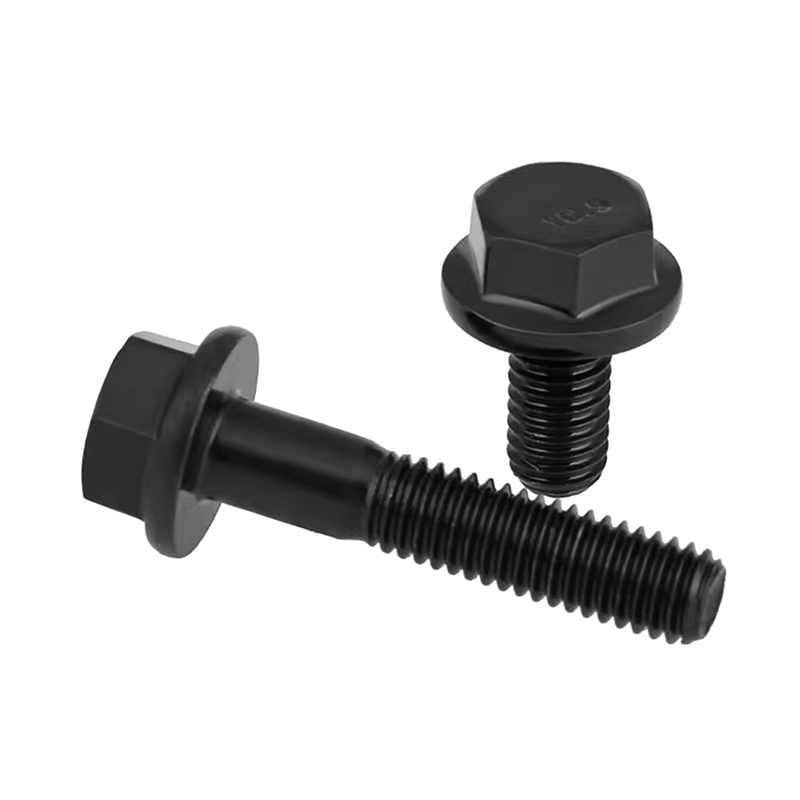
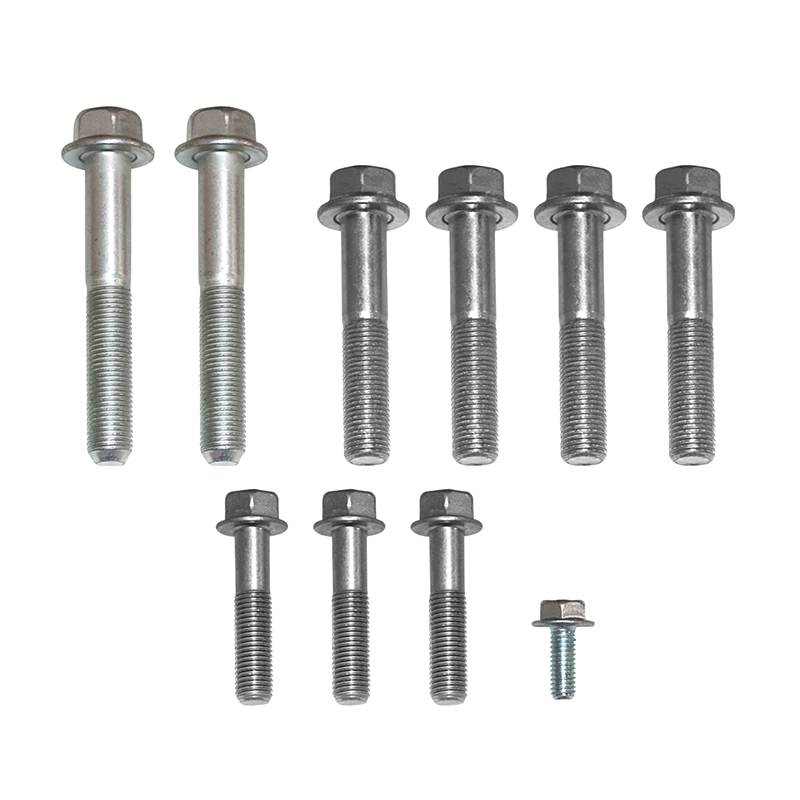
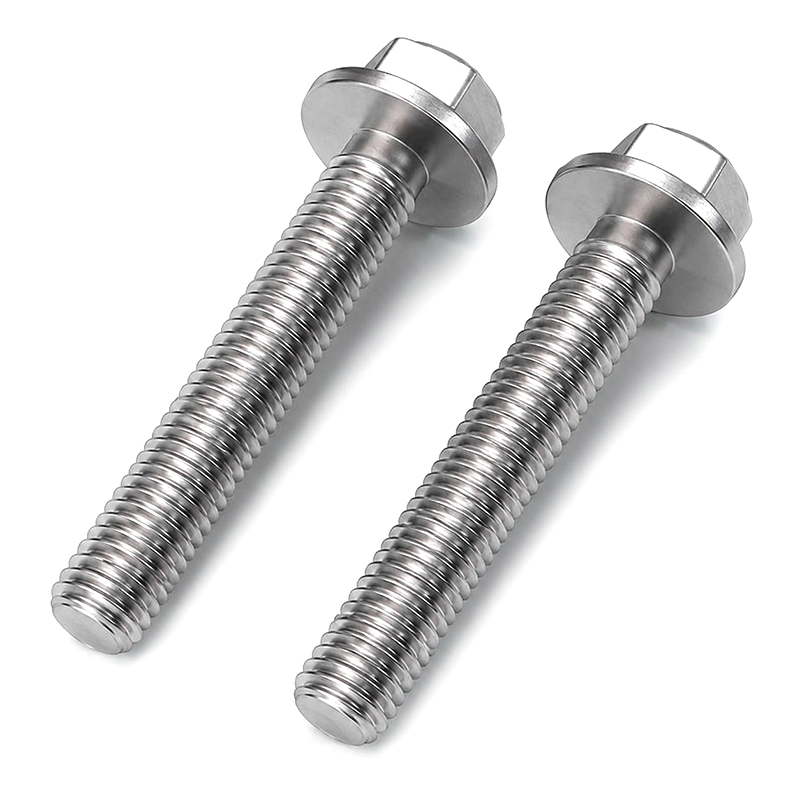
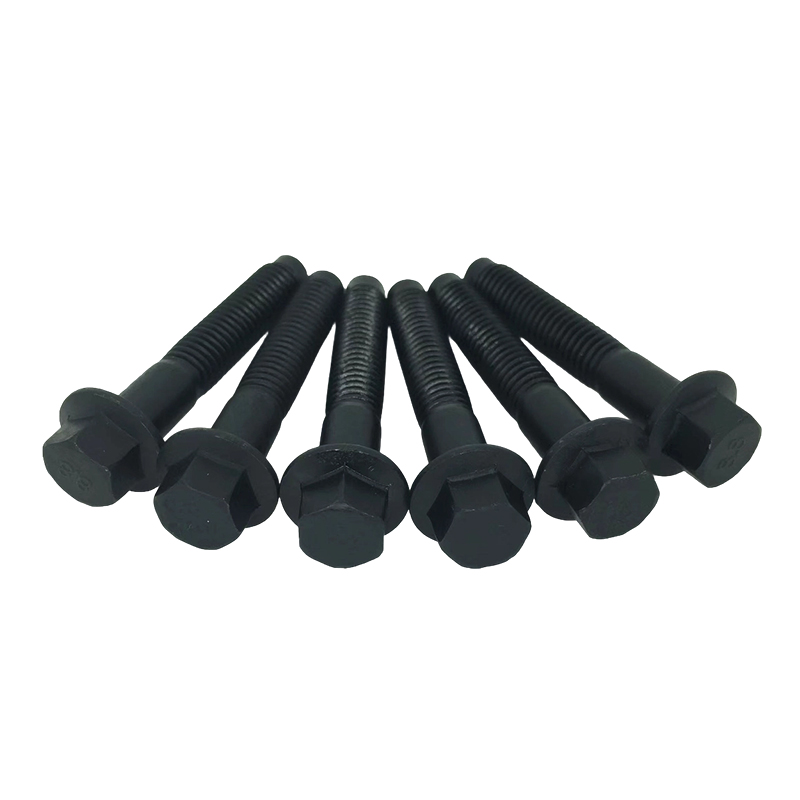
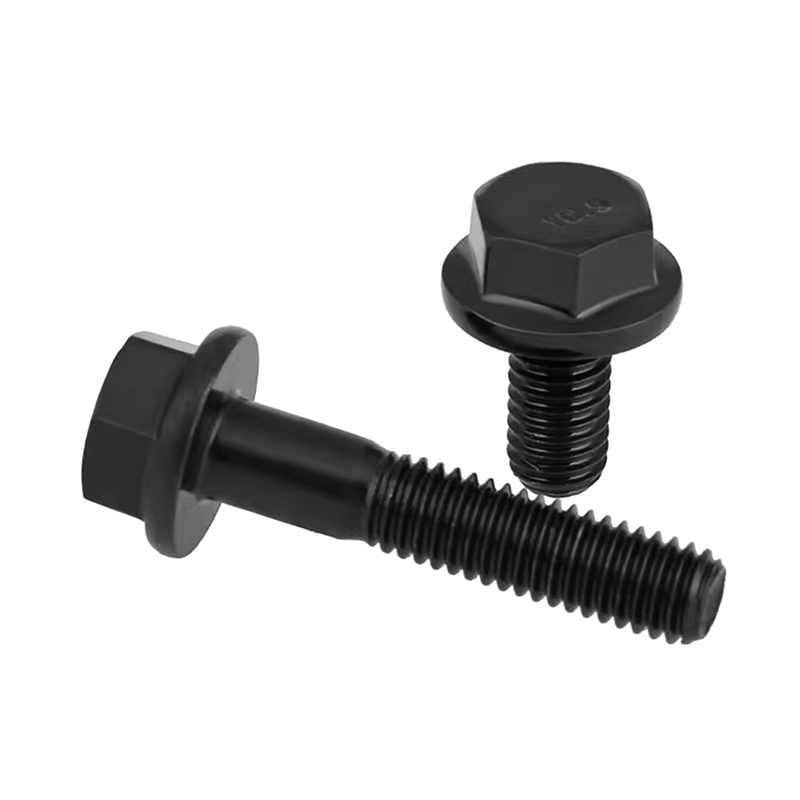
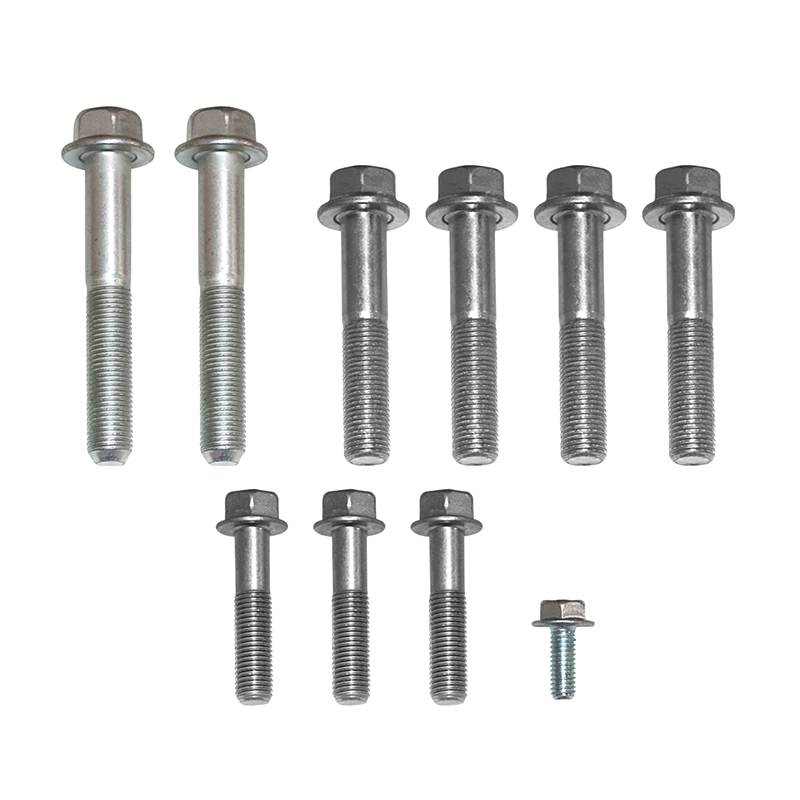
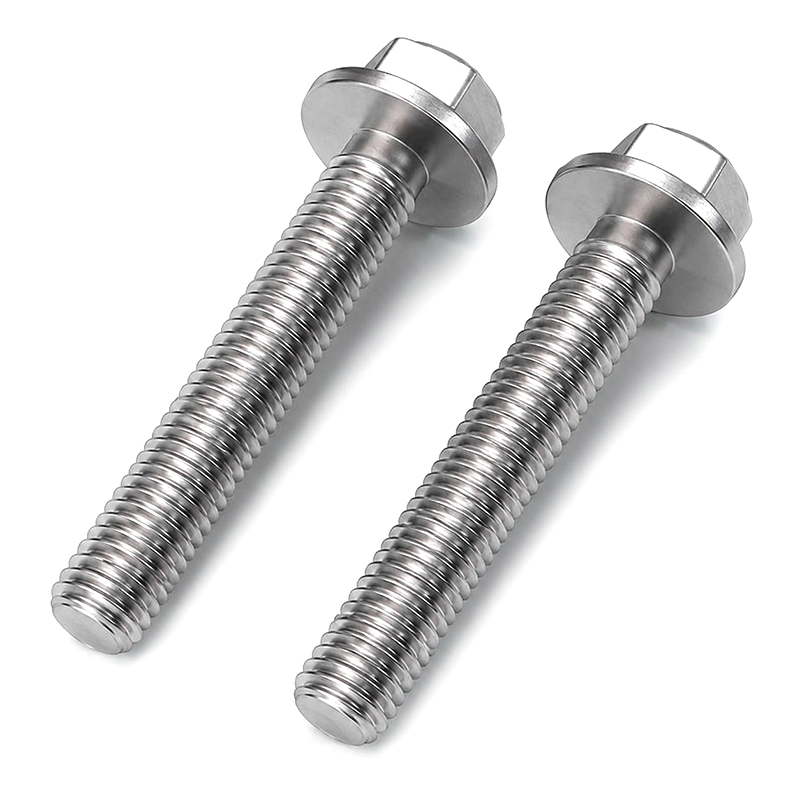
Hexagonal Flange Bolts Factory Direct
Creating enduring value

Struggling to find the right standard part? Let us engineer it. From automotive bolts to unique shaped components, we specialize in custom runs based on your samples or drawings.

Hexagonal Flange Bolts Manufacturers

Typical application areas of hexagonal flange bolts
1. Automotive industry (the largest application)
-Engine compartment: water pump, generator, manifold fixed, selected 8.8/10.9 grade, serrated flange, surface Dacromet/zinc nickel alloy, temperature resistant and corrosion-resistant.
-Chassis/Suspension: Steering and suspension connection, choose level 10.9, enlarged flange, optional fine teeth, impact and loosening resistance.
-Specification: Mainly M6-M12, commonly used in small series (GB/T 16674.1).
2. Construction Machinery and Agricultural Machinery
-Excavator bucket and boom: Grade 10.9/12.9, thickened flange (5-8mm), made of chromium molybdenum alloy steel, resistant to heavy load impact.
-Tractor/harvester gearbox: 10.9 speed, serrated flange, suitable for field bumps.
-Specification: M10-M20, enlarged series (GB 5789/GB 5790).
3. Chemical and Ocean Engineering
-Reactor and valve: 316 stainless steel (A4-70) or duplex steel, flange with sealing gasket, resistant to strong corrosion and low-pressure sealing.
-Seawater desalination/ship: 316L/super duplex steel, or Dacromet-coated carbon steel, salt spray resistance ≥ 1000 hours.
4. General Machinery and Steel Structures
-Machine tool and motor: 8.8 grade, smooth flange, surface oxidation/galvanizing, suitable for general loads.
-Lightweight steel structure/guardrail: 4.8/6.8 grade, galvanized carbon steel, cost-compatible.
5. High-end equipment and special scenarios
-Aerospace/wind power: titanium alloy (TC4) or nickel-based alloy (GH4169), lightweight, high temperature resistant, and creep resistant.
-Medical equipment: Titanium alloy (TA2), biocompatible, can be repeatedly disinfected.
For more information, please contact Shanghai Soverchannel Industrial Co., Ltd

About Us
Shanghai Soverchannel Industrial Co., Ltd.
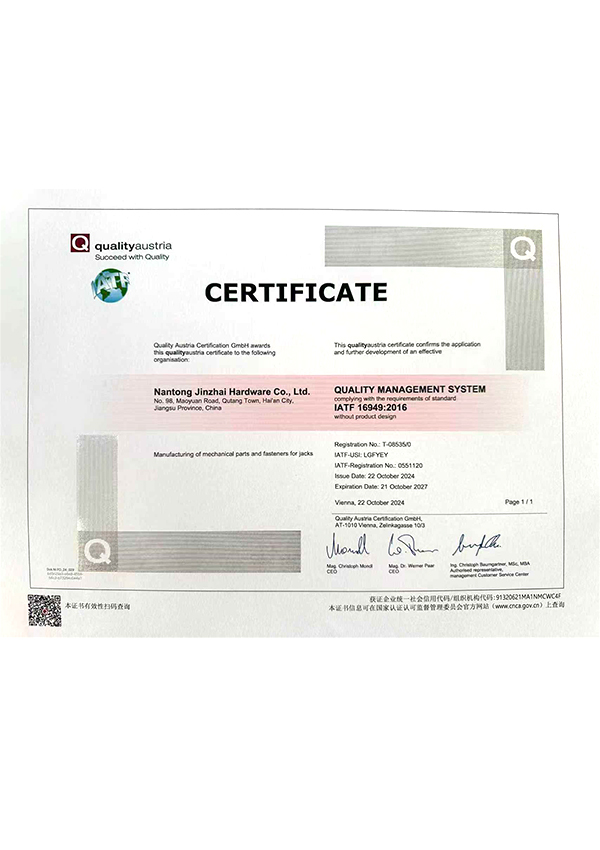
Shanghai Soverchannel Industrial Co., Ltd. is a manufacturer integrating R&D, production, and sales, focusing on providing high-precision non-standard and standard fastening solutions for customers. OEM/ODM Hexagonal Flange Bolts Manufacturers and Hexagonal Flange Bolts Factory in China. The company has been deeply engaged in the automotive fastener industry for many years. It owns its own manufacturing plant, Nantong Jinzhai Hardware Co., Ltd., and has accumulated solid technical strength and rigorous quality control experience.

Our main products cover various high-quality bolts, nuts, steel processing parts, welding components, and customized special-shaped parts. Hexagonal Flange Bolts Custom. Relying on advanced production equipment and a full-process inspection system, we are not only capable of mass-producing high-standard parts but also excel in customizing non-standard bolts and complex special-shaped components according to specific customer requirements. Over the years, we have always adhered to technology-driven development and earned trust through quality, becoming a reliable partner for numerous customers in the automotive and industrial fields.
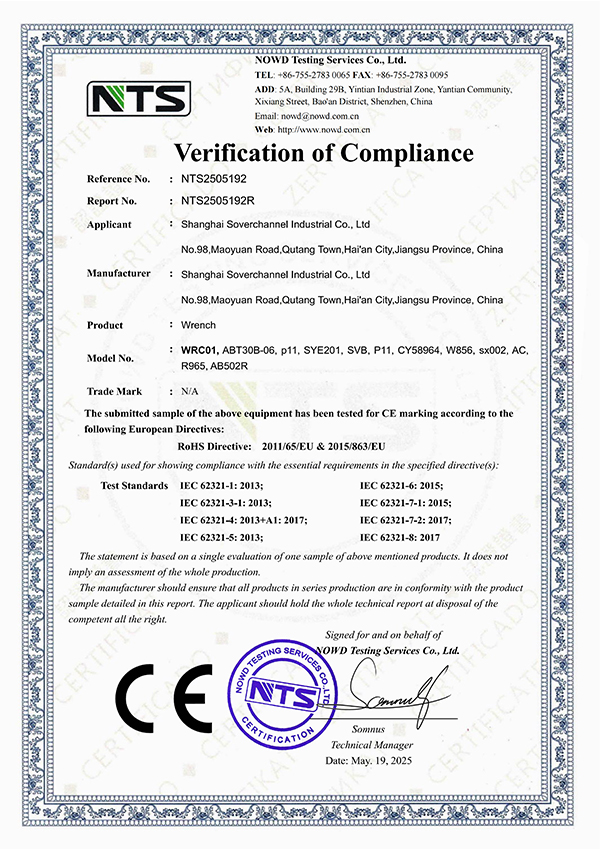
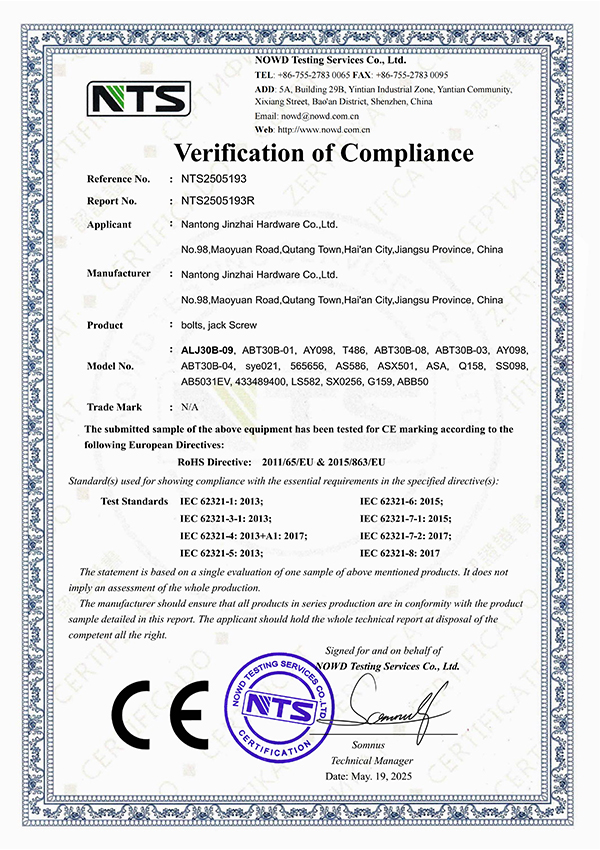
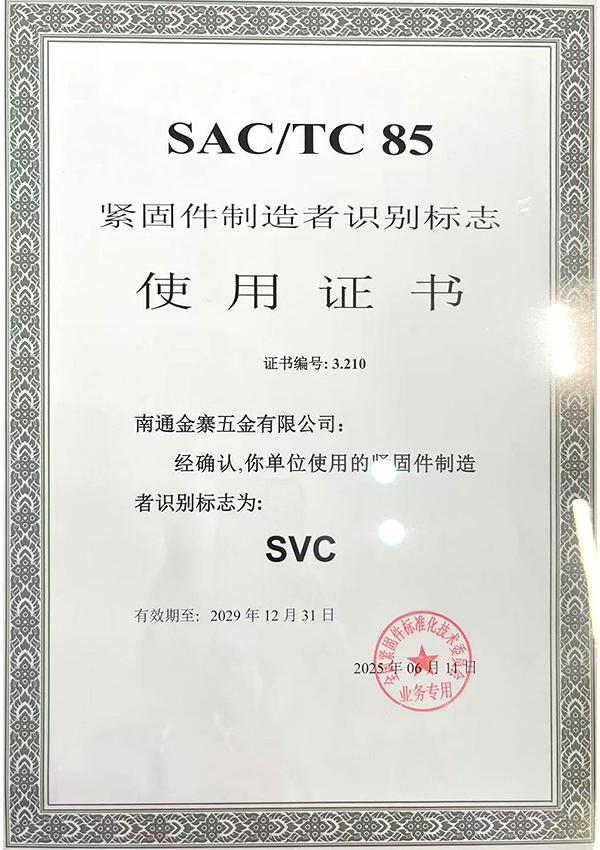
Certificate of Honor
  • RoHS
  • RoHS
  • SAC/TC 85
  • Certificate
Message Feedback
News
    php}$limitNum=5;$limitNum2=160; if($cat_detail['parent_alias']==''){ $limitNum=6; $limitNum2=100; }else if($cat_detail['parent_alias']=='product'){ $limitNum=4; $limitNum2=220; }else{ $limitNum=3; $limitNum2=320; }{/php}
  • A Cylinder Head Bolt Does Not Simply Hold the Head Down—It Is a Calibrated Spring The primary function of a cylinder head bolt is not merely to clamp the head to the block. It is to maintain a precise, uniform clamping force across the entire head gasket sealing surface under conditions of extreme thermal cycling, cylinder pressure spikes, and material expansion differentials. When torqued correctly, the bolt stretches elastically into a state of engineered tension, behaving as a high-strength spring that stores over 8,000 to 12,000 pounds of clamping force per fastener. This stored energy compresses the head gasket sufficiently to seal combustion pressures that can exceed 1,500 psi in a forced-induction engine, while simultaneously sealing high-pressure oil galleries and coolant passages that run between the head and block. A bolt that has yielded, fatigued, or been installed with inadequate preload cannot maintain this seal when the cylinder head and block expand at different rates during warm-up. Understanding that a head bolt is a dynamic, spring-loaded clamping device—not a static threaded pin—is the foundation of every correct installation and diagnosis procedure. Torque-to-Yield vs. Standard Fasteners: A Fundamental Distinction Cylinder head bolts fall into two mutually exclusive categories, and treating one like the other causes immediate engine failure. Standard bolts are torqued within their elastic range, meaning they return to their original length when loosened and can, in many cases, be reused if they meet dimensional inspection criteria. Torque-to-yield bolts are tightened beyond their elastic limit into the plastic deformation zone, where the material permanently stretches and does not return to its original length. The TTY approach provides more consistent clamping force because the bolt's load curve flattens in the plastic region—small variations in turn angle produce minimal variation in clamp load, making the process more repeatable on an assembly line. The irreversible trade-off is that a TTY bolt has been stretched past its yield point and must never be reused. A second torque sequence on a yielded bolt will push it further into plastic deformation until it necking-fails, often snapping during final torque or, worse, days after the engine returns to service. Identifying TTY Bolts by Specification A manufacturer's service manual provides the definitive classification, but physical indicators include a torque specification that lists an initial torque value followed by an angle-based final step such as 90 degrees or 180 degrees. This angle specification, rather than a final torque number, is the hallmark of the TTY procedure because the bolt is being turned a measured rotation into its plastic region. Standard reusable bolts are specified with a final torque value in Newton-meters or foot-pounds, with no angle step, or with an angle step that remains within the elastic range and is explicitly noted as reusable in the service literature. The Torque Sequence and the Geometry of Even Clamping The tightening sequence cast into every cylinder head is not a suggestion—it is a stress-distribution map. Cylinder heads are not infinitely stiff; they flex micro-inches under bolt tension. If bolts are tightened from one end to the other, the head warps into a slight wedge shape, concentrating the clamping force at the last-tightened corner and leaving the starting end under-compressed. The spiral pattern starting from the center and working outward in incremental torque steps gradually pulls the head down evenly, allowing the gasket to compress uniformly and the head to settle parallel to the block deck. A typical procedure involves three to five progressive torque passes: an initial low-torque pass to seat all fasteners, intermediate passes at increasing torque values, and a final angle sweep for TTY fasteners. Skipping a pass or consolidating steps puts the gasket under uneven compression during the critical initial crush phase, and the resulting seal inconsistency may not reveal itself until the engine reaches operating temperature and the unevenly loaded fire ring gives way. Thread Condition and the Torque Wrench Deception A torque wrench measures friction, not clamping force. Of the torque applied to a head bolt, approximately 50% overcomes friction under the bolt head, 40% overcomes thread friction, and only 10% to 15% actually generates the clamping preload. If the threads in the block are corroded, dirty, or damaged, the torque wrench clicks at the specified value while the actual bolt stretch—and therefore the clamping force—falls dramatically short. A bolt torqued to specification on dirty threads may deliver less than half the designed clamping force, while the same torque on threads lubricated with an unapproved compound can over-stretch the bolt past yield. This is why every manufacturer specification includes a thread condition requirement: clean, chase the threads with a bottoming tap if necessary, and use only the specified lubricant—whether that is clean engine oil, a specific assembly lube, or dry threads. The lubricant type changes the friction coefficient, and the torque specification was developed for that specific coefficient. Substituting a molybdenum-disulfide assembly lube on threads specified for engine oil can reduce friction so dramatically that the bolt yields before the target torque is reached. Common Failure Modes and Their Root Causes Cylinder head bolt failures are rarely spontaneous—they follow predictable patterns with identifiable causes. Understanding these patterns allows a technician to diagnose the failure rather than simply replacing the bolt and hoping the problem does not recur. Necking Fracture Under the Bolt Head A bolt that snaps at the junction of the shank and the head flange has been over-torqued, either through a TTY bolt being reused, incorrect torque specification application, or thread lubrication mismatch. The fracture surface typically shows a classic cup-and-cone ductile failure with necking reduction visible on the shank diameter. The fix is procedural: new bolts, verified torque specification, and correct thread preparation. Fatigue Failure Mid-Shank A bolt that fractures in the threaded section or mid-shank with a flat, beach-marked fracture surface has failed from cyclic fatigue. This indicates the bolt was not achieving sufficient preload to keep the joint closed under cylinder pressure. Each combustion cycle pried the head slightly away from the block, cyclically loading the bolt until it cracked. The root cause is chronic under-torque, often from dirty threads, a failing torque wrench, or a stretched TTY bolt reused. Hydrogen Embrittlement High-strength fasteners above roughly 36 HRC hardness are susceptible to hydrogen embrittlement, where atomic hydrogen diffuses into the steel grain structure and causes brittle intergranular fracture. The failure often occurs hours or days after installation, with the bolt snapping at rest. The source is typically acidic chemical exposure during manufacturing or cleaning, or corrosive combustion byproducts in a head gasket breach. The fracture surface appears granular and intergranular under magnification, without the ductile deformation of an overload failure. Cylinder Head Bolt Failure Mode Identification Guide Failure Mode Fracture Appearance Primary Cause Prevention Ductile Overload Cup-and-cone, necked shank Over-torque or reused TTY bolt New bolts, correct torque spec Fatigue Flat, beach marks, no necking Insufficient preload, cyclic loading Clean threads, calibrated wrench Hydrogen Embrittlement Granular, intergranular, brittle Hydrogen ingress, high hardness Source from certified suppliers Corrosion Pitting Pitted surface, reduced cross-section Coolant leak into bolt bore Seal bolt threads, replace gasket Bore Preparation and the Hidden Fluid Lock Hazard Head bolt holes in the block are blind bores that can trap oil, coolant, or cleaning solvent. When a bolt is threaded into a fluid-filled blind hole, the fluid becomes trapped beneath the bolt and cannot compress. As the bolt advances, hydraulic pressure builds in the trapped volume. This pressure can exert enough force to crack the cast iron or aluminum block at the base of the bore, a catastrophic and often non-repairable failure. The prevention is absolute: every blind bolt hole must be thoroughly cleaned with compressed air and a suitable solvent, then inspected with a borescope or probe before bolt installation. Thread chasing with a bottoming tap followed by solvent flushing and air drying is the minimum procedure. Even a few drops of residual oil can crack a block when a bolt is driven to final torque. This step is not optional and is one of the most common causes of block damage during head gasket replacement. Material Selection and the Expansion Rate Problem Modern engines pair aluminum cylinder heads with cast iron or aluminum blocks, creating a material mismatch that cylinder head bolts must accommodate. Aluminum expands at roughly twice the rate of cast iron—approximately 23 x 10⁻⁶ per degree Celsius versus 11 x 10⁻⁶. When an aluminum head on an iron block heats from ambient to operating temperature, the head grows more than the block, increasing the clamp load on the bolts. The bolts must be designed with sufficient elastic stretch range to absorb this differential expansion without yielding. In engines with aluminum blocks and aluminum heads, the expansion rates are matched, but the lower modulus of aluminum means the threaded bores are more susceptible to galling and thread pull-out. Many aluminum-block engines specify torque-to-yield bolts specifically because the consistent clamp load of TTY installation provides a margin of safety against the lower thread strength of the aluminum parent material. Aftermarket Head Studs and the Clamping Force Upgrade For high-performance applications where cylinder pressures exceed the original design envelope, head studs replace head bolts as the clamping solution. A stud is threaded into the block finger-tight and secured with a nut on top, eliminating the combined torsional and tensile stress that a bolt experiences during tightening. A bolt must simultaneously twist and stretch as it is torqued; a stud is loaded purely in tension when the nut is tightened, producing more consistent clamp load and reducing the risk of thread galling in the block. High-performance studs are manufactured from materials such as H11 tool steel or custom-specified 8740 chromoly with tensile strengths exceeding 190,000 psi, significantly above OEM bolt grades. The installation procedure for studs differs from bolts: the stud is installed with minimal torque into clean threads, often with a thread-locking compound on the block side, and the nut is torqued with the manufacturer's specified assembly lubricant on the threads and the nut flange. The torque specification for a stud and nut assembly is different from a bolt specification and must be taken from the stud manufacturer's data, not the OEM manual. Reusability Assessment for Non-TTY Bolts When a manufacturer permits reuse of standard cylinder head bolts, the bolts must pass a dimensional inspection before returning to service. The critical measurements are overall length compared to the specification, shank diameter at multiple points along the unthreaded section, and thread condition under magnification. A bolt that has permanently stretched will measure longer than specification and its shank diameter will be reduced in the stretched region. Any necking, no matter how subtle, disqualifies the bolt. Threads must be inspected for galling, corrosion pitting, and crest deformation. A bolt with damaged threads will produce inaccurate torque readings and inconsistent clamp load. If any bolt in a set fails inspection, the entire set should be replaced—mixing new and used bolts on the same cylinder head creates an uneven clamping force distribution that compromises head gasket sealing. Measure overall length against factory specification; any permanent elongation disqualifies the bolt. Mic the shank diameter at the unthreaded section; any reduction indicates plastic deformation. Inspect threads under magnification for galling, pitting, or crest flattening. Replace the entire set if any single bolt fails inspection. The Cold Engine Installation Imperative Cylinder head bolts must be installed on a completely cold engine. The torque specifications and angle measurements in the service manual are calibrated for ambient temperature, typically 20°C to 25°C (68°F to 77°F). An engine that is even warm to the touch has expanded, and the thermal expansion changes the friction conditions and dimensional relationships that the specification assumes. A bolt torqued on a warm engine will be under-torqued when the engine returns to ambient temperature. The resulting clamp load deficiency may not cause immediate failure, but it reduces the margin against head gasket blowout, particularly under high-load conditions. The engine should sit overnight or for a minimum of several hours until all components are at stable room temperature before the final torque sequence is performed. ...

    READ MORE
  • Pick up a hex head bolt and you are holding the single most deployed industrial fastener on earth. Steel frames, engine blocks, ship hulls, bridge decks — the same six-sided profile shows up everywhere, tightened with the same class of tool, trusted with loads that would destroy lesser connections. That ubiquity is not accidental. It is the result of a geometry that packs genuine mechanical advantage into a compact, standardized form. But ubiquity also breeds complacency: engineers and buyers who treat all hex head bolts as interchangeable routinely end up with wrong-grade fasteners in critical joints, corrosion failures in outdoor assemblies, and dimensional mismatches that slow installation. This guide works through the five dimensions that actually determine whether a hex head bolt will perform — standard system, material, grade, surface treatment, and application fit — so you can select with confidence rather than habit. What Makes a Hex Head Bolt Different from Other Fasteners The hexagonal head provides six flat bearing surfaces for a wrench or socket. That geometry allows high torque application without the tool slipping off, and it does so using tools that every workshop, field crew, and assembly line already owns. An Allen key requires a recessed socket; a Torx bit requires a matching star profile. A hex head works with open-end wrenches, box wrenches, ratchet sockets, and impact drivers — the tool inventory is effectively universal. There is a distinction worth preserving between a hex bolt and a hex cap screw. Both carry a six-sided head and an externally threaded shank, but hex cap screws are manufactured to tighter dimensional tolerances and include a washer face under the head. In practice, hex bolts are the dominant choice for structural and construction assemblies where a nut provides the mating thread; hex cap screws are preferred in precision machinery applications where the fastener threads directly into a tapped bore. When a specification sheet says "hex head bolt," it is almost always referring to the broader category — but confirming the tolerance class before ordering prevents downstream fit problems. One further distinction: external hex bolts for industrial applications are driven from the outside of the head, unlike socket head cap screws where the drive is internal. This matters in any assembly where access space is limited but tool engagement from the side is feasible — steel structures and automotive subframes being the clearest examples. Standard Systems: DIN, ISO, and ASME Compared Three standard families govern the vast majority of hex head bolts in global supply chains. Choosing between them is not an aesthetic decision — it affects wrench size, thread pitch, tolerance class, and cross-border interchangeability. Key differences between the three dominant hex bolt standard systems Standard Thread Coverage Thread Type Common Variants Typical Market DIN 931 / DIN 933 M4 – M64 Metric coarse Part-thread (931), Full-thread (933) Europe, Asia ISO 4014 / ISO 4017 M1.6 – M64 Metric coarse / fine Part-thread (4014), Full-thread (4017) Global (preferred for cross-border specs) ASME B18.2.1 ¼″ – 4″ UNC / UNF Hex bolt, Heavy hex bolt North America, oil & gas The DIN and ISO systems overlap significantly in geometry, but they are not identical. A practical example: an M10 bolt under DIN 933 is designed for a 17 mm wrench, while the same nominal size under ISO 4017 uses a 16 mm wrench. That one millimeter difference is irrelevant in a workshop with a full wrench set — but it can cause installation delays on a large job site where tool inventory is standardized. For international procurement, specifying to ISO is the safer default, as it signals interoperability expectations clearly to suppliers in any country. The ASME system uses inch-based nominal diameters and either Unified National Coarse (UNC) or Fine (UNF) thread profiles. In North American construction and particularly in oil and gas flange bolting — where ASTM material grades intersect with ASME dimensional standards — this system remains the default. Buyers sourcing from China for North American projects should explicitly call out ASME B18.2.1 on purchase orders, since Chinese manufacturers default to metric DIN/ISO unless instructed otherwise. Material and Strength Grade Selection Material and grade are separate decisions that compound each other. The material determines the base corrosion resistance and elemental composition; the grade (and its associated heat treatment) determines the mechanical performance ceiling. Selecting the wrong combination in either direction — overspecifying adds unnecessary cost, underspecifying creates failure risk — is one of the most common procurement errors in industrial fastening. Common hex head bolt materials and strength grades with application guidance Material Metric Grade Min. Tensile Strength Typical Application Medium carbon steel 8.8 800 MPa General machinery, steel structures Alloy steel (quenched & tempered) 10.9 1040 MPa Automotive, heavy equipment Alloy steel (quenched & tempered) 12.9 1220 MPa High-load critical joints Stainless steel 304 A2-70 700 MPa Food processing, indoor corrosive Stainless steel 316 A4-80 800 MPa Marine, offshore, chloride exposure Grade 8.8 carbon steel covers the majority of industrial use cases. It offers a tensile strength of 800 MPa with adequate ductility, is straightforward to source globally, and carries a predictable cost. Grade 10.9 enters the picture where higher preload is required in a compact joint — automotive suspension components and gearbox covers are typical examples. Grade 12.9 is reserved for genuinely critical, high-stress applications; its lower ductility relative to 8.8 means it is more sensitive to improper installation torque, so it demands stricter assembly controls. Stainless grades trade tensile strength for corrosion resistance. A4-80 (316 stainless) caps at 800 MPa — equivalent to 8.8 carbon steel — but maintains that performance indefinitely in chloride-rich environments where a zinc-plated carbon steel bolt would corrode through its coating within months. In marine and coastal construction, the long-term cost calculation almost always favors stainless over repeated replacement of carbon steel fasteners. Surface Treatment Options and When to Use Them Surface treatment is the environmental defense layer of a hex head bolt. Even the correct grade of steel will corrode prematurely if the surface protection is mismatched to the operating environment. The core trade-off is between coating thickness (which affects dimensional fit), corrosion performance, and cost. Electroplated zinc (bright zinc / BZP) — the standard commercial treatment for indoor or sheltered applications. Typically 5–12 µm thick. Cost-effective and widely available, but offers limited protection in wet or outdoor environments. Appropriate for grade 8.8 bolts in covered steel structures and general machinery. Hot-dip galvanizing (HDG) — zinc applied by immersion, producing a 45–85 µm layer that bonds metallurgically to the steel. Provides durable outdoor protection for decades. The thick coating requires allowance in thread tolerance (typically 6AZ/6H class) to maintain fit with standard nuts. Used extensively in construction, infrastructure, and agricultural equipment. Black oxide — a conversion coating that offers mild corrosion resistance and reduces light reflection. Primarily used in automotive interiors and tooling where aesthetics matter more than long-term corrosion protection. Always applied with supplementary oil or wax. Dacromet / geomet — a water-based zinc-aluminum coating applied at 8–12 µm, offering corrosion resistance comparable to hot-dip galvanizing at a fraction of the thickness. Does not affect thread fit, making it the preferred surface treatment for high-grade (10.9, 12.9) bolts where HDG's dimensional impact is unacceptable. Widely specified in automotive and wind energy. For a more detailed breakdown of coating selection by environment and substrate, the bolt surface treatment types and selection guide covers each option against specific operating conditions. One pairing to avoid: hot-dip galvanizing on grade 12.9 bolts. The pickling process prior to galvanizing introduces hydrogen embrittlement risk in high-strength steels — a combination that has caused documented field failures in load-bearing connections. Where maximum vibration resistance is needed alongside corrosion protection, hexagonal flange bolts for high-vibration environments integrate a load-distributing flange directly into the head geometry, reducing the reliance on surface-treated washers that can degrade over time. Industry Applications: Construction, Automotive, Marine, and Machinery The same basic fastener geometry serves radically different demands across industries. Understanding what each sector requires prevents specification errors when a procurement team is sourcing for multiple project types simultaneously. Construction and civil infrastructure consume the largest volume of hex head bolts globally. Structural steel connections in buildings, bridges, and towers are governed by ASTM F3125 (which encompasses the former A325 and A490 grades) in North America, or EN 14399 in Europe. These are not generic hex bolts — they are manufactured and tested as structural fasteners with documented proof load and hardened washer requirements. The construction sector also uses large quantities of standard grade 8.8 hex bolts for secondary connections, formwork, and equipment mounting where structural bolt specifications are not required. Automotive assembly specifies hex head bolts at the component level — engine mounts, suspension subframes, transmission housings, and brake caliper carriers all carry precise torque specifications that assume a known bolt grade and surface treatment. Grade 10.9 is the dominant choice for powertrain and chassis joints. Dacromet coating is widely preferred because it maintains dimensional precision, resists the thermal cycling of underhood environments, and avoids the hydrogen embrittlement risk associated with electroplating on high-strength steel. Marine and offshore applications impose the most aggressive corrosion demands. Salt spray, constant humidity, and biological fouling attack carbon steel finishes rapidly. A4-80 stainless (316 grade) is the standard specification for exposed deck hardware, pipe flanges, and hull fittings. For subsea applications or those involving dissimilar metal contact, duplex stainless or exotic alloys may be required — but for the majority of above-waterline marine work, A4-80 hex head bolts with passivated finish deliver the necessary service life without excessive cost. Industrial machinery spans the widest range of requirements. General fabrication and equipment frames use grade 8.8 with zinc plating. High-cycle or high-vibration assemblies — compressors, fans, pump housings — benefit from flanged variants or prevailing-torque nut pairings to resist self-loosening. Precision equipment may require grade 12.9 to achieve the clamping force needed in a joint with limited bolt engagement length. Key Factors for Procurement and Quality Verification A hex head bolt is only as reliable as the process that produced it. Price-driven sourcing that skips documentation creates traceability gaps — and in industries where fastener failures carry liability, gaps in the paper trail are as problematic as gaps in the metal itself. Three documents should accompany any industrial fastener order: a material test report (MTR) confirming chemical composition and mechanical test results for the production lot; a dimensional inspection report verifying head geometry, thread form, and length tolerances; and a manufacturer's ISO 9001:2015 certificate confirming that the quality management system that produced the bolt is audited and current. Suppliers who cannot provide all three on request should not be in the supply chain for critical applications. Head markings provide a fast visual check. On metric bolts, the grade (8.8, 10.9, 12.9) is stamped on the top of the head, along with a manufacturer identification mark. On imperial bolts, SAE grades are indicated by radial lines: Grade 5 shows three lines, Grade 8 shows six. Absence of marking on a bolt sold as Grade 8 or 10.9 is a disqualifying defect — it means either the bolt was not manufactured to grade, or the marking process failed quality control. Specifying thread class on purchase orders is a detail that separates experienced buyers from novices. ISO metric threads default to 6g (external) and 6H (internal) tolerance classes for general-purpose use. Tighter classes (4g/4H or 5g/5H) are available for precision fits but add cost and extend lead time. Looser classes (8g) are sometimes used in hot-dip galvanized bolts to accommodate the coating thickness — but must be paired with the corresponding oversized nut to ensure proper engagement. Finally, pairing decisions matter. The nuts and washers pairing guide covers the principle that washers, lock washers, and nuts should match the grade and finish of the bolt they accompany. Installing a Grade 8 bolt with a Grade 2 nut creates a weak point at the nut threads; mixing zinc-plated bolts with uncoated nuts accelerates galvanic corrosion at the joint interface. The fastener assembly performs as a system — every component in that system deserves the same specification discipline applied to the bolt itself. .article-section { margin-bottom: 40px; } .article-section h2 { font-size: 22px; font-weight: bold; text-align: left; margin-bottom: 12px; } .article-section h3 { font-size: 16px; font-weight: bold; text-align: left; margin-bottom: 12px; } .article-section p { font-size: 16px; margin-bottom: 12px; } .article-section ul, .article-section ol { margin-bottom: 12px; } .article-section ul { list-style-type: disc; list-style-position: inside; } .article-section ol { list-style-type: decimal; } .article-section li { font-size: 16px; margin-bottom: 5px; } .article-table { display: table; text-align: center; border-collapse: collapse; width: 100%; font-size: 16px; margin-bottom: 15px; } .article-table thead { display: table-header-group; } .article-table tbody { display: table-row-group; } .article-table tr { display: table-row; } .article-table th { display: table-cell; font-weight: bold; border: 1px solid #cccccc; padding: 8px; } .article-table td { display: table-cell; border: 1px solid #cccccc; padding: 8px; } .article-table caption { caption-side: bottom; font-size: 16px; margin-bottom: 12px; font-style: italic; color: #808080; } ...

    READ MORE
  • What Is a Fully Threaded Rod? A fully threaded rod — also called an all-thread rod, threaded stud, or continuously threaded rod — is a straight metal fastener with helical threading running along its entire length, from one end to the other, without any smooth shank section. This uninterrupted thread profile distinguishes it from standard bolts or partially threaded studs, giving engineers complete flexibility in cutting the rod to any required length while maintaining full thread engagement at every point. Unlike conventional bolts that are manufactured to fixed lengths with a defined head, fully threaded rods are headless and designed to work with nuts, couplers, or anchor plates applied at any position along the rod. This makes them indispensable wherever adjustable clamping, suspension, or tension is required across variable spans. Dimensional Specifications and Thread Standards Fully threaded rods are produced across a broad range of diameters and lengths, governed by internationally recognized standards. Understanding the correct specification is critical for load calculations and compatibility with matching hardware. Common Diameter and Length Ranges Standard metric sizes range from M6 to M64, while imperial (UNC/UNF) sizes typically span from 1/4 inch to 2 inches in diameter. Stock lengths of 1 m, 2 m, and 3 m are most common, though custom-cut lengths are widely available for project-specific requirements. Standard Diameter Range Thread Type Typical Stock Length Metric (DIN 975/976) M6 – M64 Coarse / Fine 1 m, 2 m, 3 m Unified (ASME B18.31.3) 1/4″ – 2″ UNC / UNF 1 ft, 3 ft, 6 ft, 12 ft BSW (Whitworth) 3/16″ – 1.1/2″ BSW / BSF 1 m, 2 m Table 1: Common fully threaded rod standards, diameter ranges, and stock lengths Thread Pitch and Tolerance Classes For metric rods, coarse-pitch threads (e.g., M12×1.75) are the default for general structural use, while fine-pitch threads (e.g., M12×1.25) provide better resistance to vibration loosening in dynamic environments. Tolerance classes 6g (external) and 6H (internal) represent the standard commercial fit. For precision or aerospace applications, tighter 4h/4H tolerances are specified to minimize thread play and ensure accurate load transfer. Material Options and Grade Selection Material choice directly determines the tensile strength, corrosion resistance, and service temperature of a fully threaded rod. Selecting the correct grade prevents premature failure in service and ensures long-term structural integrity. Carbon Steel and Alloy Steel Low-carbon steel rods (Grade 2 / DIN 4.6) offer a minimum tensile strength of 400 MPa and suit light-duty, indoor fastening applications. Medium-carbon grades such as ASTM A307 and SAE Grade 5 (DIN 8.8) raise tensile strength to around 830 MPa, making them appropriate for structural steel connections. High-strength alloy steel rods — Grade B7 (ASTM A193) or DIN 10.9 — achieve tensile strengths exceeding 1,000 MPa and are specified for pressure vessels, flanged joints, and heavy structural anchoring where proof load consistency is paramount. Stainless Steel Austenitic stainless steel — primarily A2 (304) and A4 (316) — is the standard choice for corrosive environments. A4-70 rods provide a minimum tensile strength of 700 MPa alongside excellent resistance to chloride-induced pitting, making them the preferred option for marine, coastal, food processing, and chemical plant installations. Duplex grades such as 2205 offer both higher strength (~900 MPa) and superior corrosion resistance compared to standard 316. Other Specialty Materials Brass (C36000): Used in electrical and plumbing fittings for good conductivity and corrosion resistance in water systems. Titanium Grade 5 (Ti-6Al-4V): Extremely high strength-to-weight ratio with outstanding corrosion resistance, specified for aerospace and medical implant structures. Fiberglass / GFRP: Non-conductive and non-magnetic threaded rods for electrical switchgear, MRI facilities, and chemical tanks where metallic fasteners are prohibited. Surface Treatments and Protective Coatings Bare carbon steel fully threaded rods require surface protection to prevent corrosion in service. The correct coating choice depends on environmental exposure, operating temperature, and whether the rod will be embedded in concrete or exposed to chemicals. Zinc electroplating (bright zinc): Provides 5–8 µm of zinc for mild indoor environments; suitable for furniture, HVAC brackets, and shelving systems. Hot-dip galvanizing (HDG): Deposits 45–85 µm of zinc, providing robust protection for outdoor, underground, and concrete-embedded applications. Conforms to ASTM A153 / ISO 1461. Mechanical galvanizing: A cold-process alternative producing uniform coatings on high-strength rods where hydrogen embrittlement from electroplating is a concern (typically Grade B7 and above). Dacromet / geomet coating: Chrome-free zinc-flake coating offering salt spray resistance exceeding 1,000 hours — preferred in automotive and offshore structural work. PTFE (Teflon) coating: Reduces thread friction and prevents galling in stainless-to-stainless assemblies, facilitating consistent torque application. Industrial Applications Across Key Sectors The versatility of fully threaded rods makes them one of the most widely specified fasteners in industrial and construction engineering. Their ability to be cut on-site and adjusted with standard nuts eliminates the need to stock dozens of discrete bolt lengths. Structural Construction and Civil Engineering In structural steel framing, anchor bolts made from fully threaded rods (typically ASTM F1554 Grade 36 or Grade 55) are cast into concrete foundations to secure column base plates, machinery bases, and precast panels. The all-thread configuration allows the projecting end length to be adjusted after the concrete sets by cutting or by selecting the nut position. Seismic bracing systems for suspended ceilings, piping, and ductwork rely heavily on threaded rod hangers combined with beam clamps and hex coupling nuts to achieve code-compliant sway bracing per NFPA 13 and IBC requirements. Mechanical and Process Industries High-pressure flange assemblies in oil refineries and petrochemical plants use B7 stud bolts — a form of fully threaded rod — in conjunction with B2H heavy hex nuts to achieve leak-free sealing on ASME B16.5 and B16.47 flange joints. Operating temperatures can reach 450°C, where the chromium-molybdenum alloy content of B7 material maintains yield strength that plain carbon steel would lose entirely. In the power generation sector, M72 and M80 rods are used to tension turbine casing bolts with hydraulic tensioners, ensuring even gasket compression across the full flange face circumference. Electrical and Mechanical Systems Installation MEP (mechanical, electrical, and plumbing) contractors use 3/8 inch and 1/2 inch threaded rods extensively to suspend conduit racks, cable trays, and pipe runs from structural members. The rod is cut to the required drop length and fitted with conduit clamps or pipe straps, offering a clean, adjustable, and code-compliant support solution. In switchgear and transformer rooms, non-metallic fiberglass threaded rods are used to mount busbars and insulators where electrical isolation between support structure and live components is required. Furniture, Retail Fixtures, and Architecture Modern architectural and retail interior design uses exposed stainless steel threaded rods as a deliberate design element in shelving systems, mezzanine balustrades, glass partition tensioning, and suspended ceiling grids. The clean linear profile of a polished M12 or M16 A4 stainless rod, combined with dome nuts and decorative washers, creates a minimal aesthetic that is both structurally functional and visually refined. Installation Best Practices and Torque Guidance Proper installation of fully threaded rods ensures the intended clamping force is achieved and maintained. Several practical points reduce the risk of under-tensioning, thread stripping, or joint relaxation: Thread engagement depth: A minimum engagement length of 1× the nominal diameter is required for steel-into-steel; 1.5× is recommended for steel into softer materials such as aluminum or cast iron. Lubrication: Apply a thread lubricant or anti-seize compound — particularly important for stainless steel assemblies to prevent galling. Lubricant reduces the torque required to achieve target preload by up to 30%. Torque specification: Always torque to the fastener grade and size-specific value. For example, a Grade 8.8 M16 rod requires approximately 195 Nm dry and 150 Nm lubricated to achieve 75% proof load. Coupling nut selection: When joining two rod sections, use a full-length coupling nut (min. 3× diameter long) rather than a standard hex nut to ensure adequate thread contact area under load. Vibration resistance: In dynamic load environments, supplement standard hex nuts with nylon insert locknuts (ISO 7042), serrated flange nuts, or thread-locking adhesive to prevent loosening. Following these practices consistently reduces joint failures, simplifies future maintenance access, and ensures that the chosen all-thread rod grade performs to its rated capacity throughout the design life of the structure or equipment. ...

    READ MORE
  • A flange joint on a high-pressure oil pipeline does not fail with a warning. Pressure builds, temperature cycles, corrosive media contacts every surface — and when the fastener underperforms, the consequences are immediate and severe. That is why engineers and procurement teams in oil and gas, petrochemical, and power generation do not reach for standard carbon steel threaded rods when specifying critical bolted connections. They specify ASTM A193 Grade B7 threaded rods and stud bolts — and have done so for decades, because the material earns the specification every time. This article explains what makes B7 the default choice for high-pressure fastening, where it is applied across the oil and gas value chain, how it compares to alternative grades, and what to verify before placing a bulk procurement order. Why Standard Threaded Rods Cannot Handle Oil and Gas Service Conditions Most industrial threaded rods are made from low or medium carbon steel and perform reliably in dry, moderate-temperature environments — construction frames, machinery mounts, electrical cable tray supports. These are conditions where tensile strength is constant and corrosion is manageable with a zinc coating. Oil and gas service is different in every dimension. Wellhead equipment, pipeline flanges, and pressure vessel bolting operate at temperatures that can exceed 400°C. Internal pressures in hydrogenation reactors reach hundreds of bar. The media — crude oil, refinery process gases, hydrogen sulfide, acidic condensates — attack surfaces continuously. And the consequence of joint failure is not a loose shelf bracket; it is a process leak, a safety incident, or a shutdown that costs hundreds of thousands of dollars per day. Standard carbon steel loses tensile strength rapidly above 200°C, is not rated for pressure vessel service, and corrodes quickly without surface protection that degrades over time. These limitations are not acceptable in oil and gas bolting. thread rod and stud products engineered for demanding industrial applications are the only appropriate starting point for this class of service. What ASTM A193 Grade B7 Is and Why It Is the Industry Default ASTM A193 is the governing specification for alloy-steel and stainless-steel bolting materials for high-temperature or high-pressure service. Grade B7 is the most widely used grade within that specification. It designates a chromium-molybdenum alloy steel — typically AISI 4140 or 4142 — that has been quenched and tempered to achieve a precise combination of strength, toughness, and heat resistance. The quench-and-temper process is not optional finishing. It is the mechanism that delivers B7's performance. Heating the steel to austenizing temperature, rapidly quenching in oil or water, then tempering at a controlled lower temperature refines the microstructure and imparts the tensile strength, yield strength, and ductility that the ASTM standard requires. Without this treatment, the same alloy steel would not meet specification. ASTM A193 Grade B7 minimum mechanical properties (diameter ≤ 2½ in / ≤ M64) Property Requirement Tensile strength (min) 125 ksi / 862 MPa Yield strength (min) 105 ksi / 724 MPa Elongation (min) 16% Reduction of area (min) 50% Hardness (max) 35 HRC / 321 HBW Max service temperature ~450°C (840°F) The hardness maximum is as important as the minimums. Capping hardness at 35 HRC controls susceptibility to hydrogen embrittlement and stress corrosion cracking — failure modes that matter in environments containing hydrogen or wet hydrogen sulfide. For a full overview of the specification framework, technical guidance on ASTM A193 bolting material classifications provides useful context on grade coverage and historical background. Our ASTM A193 B7 threaded rods certified to high-pressure service requirements are produced to full specification with material test reports available per production lot. Key Applications: Where B7 Stud Bolts Are Specified in Oil and Gas B7 threaded rods and stud bolts appear throughout the oil and gas value chain, from upstream drilling equipment to downstream refinery processing. The common thread is always the same: high pressure, elevated temperature, or aggressive chemical exposure — usually all three simultaneously. Pipeline flange connections Every flanged joint on a high-pressure oil or gas pipeline is a potential leak point. B7 stud bolts, paired with ASTM A194 Grade 2H heavy hex nuts, are the standard fastening system for ASME B16.5 flanges in Class 600, Class 900, and above. The combination delivers the bolt load required to seat the gasket uniformly and maintain a seal through pressure and temperature cycling across the operating life of the pipeline. Pressure vessels and hydrogenation reactors Refinery hydrogenation reactors operate at hydrogen partial pressures that can reach 200 bar or more, at temperatures above 300°C. The bolting that seals the reactor flanges must maintain clamping force at temperature without creep relaxation that would open the joint. B7's yield strength retention at elevated temperatures — significantly better than standard carbon steel — makes it the material specified in ASME Section VIII vessel codes for this service. Wellhead equipment and manifold connections At the wellhead, Christmas tree assemblies and manifold connections are bolted joints that must hold against wellbore pressure throughout the producing life of the well. B7 stud bolts provide the tensile capacity for API 6A and ASME rated equipment while maintaining dimensional stability in the wide temperature swings between surface ambient and produced fluid temperatures. LNG cryogenic infrastructure LNG storage and transfer equipment presents the opposite challenge: extreme cold rather than heat. Standard B7 alloy steel loses impact toughness at sub-zero temperatures, which is why LNG applications require a different grade. For these services, our ASTM A320 L7 threaded rods certified for cryogenic and low-temperature service are the correct specification — engineered to the impact toughness requirements that B7 does not address. B7 vs. High-Strength Alternatives: Choosing the Right Grade B7 is the right choice for most high-pressure oil and gas bolting, but it is not the right choice for every application. Understanding when to specify a variant or an alternative prevents both under-specification and unnecessary cost. B7 vs. Grade 8 (A354 BD) A354 Grade BD has higher tensile strength than B7 — around 150 ksi minimum versus 125 ksi — and is the standard for automotive chassis and heavy structural applications at ambient temperatures. The key distinction is heat resistance. B7 retains meaningful strength up to approximately 450°C; Grade 8 alloy steel does not. For oil and gas flanged service at elevated temperatures, B7 is the correct specification regardless of tensile strength comparison. Grade 8 is suited to ambient-temperature structural bolting where maximum static strength is the design constraint. B7 vs. B7M (sour service environments) B7M is a lower-hardness variant of the same alloy, produced to a maximum of 22 HRC rather than B7's 35 HRC. Lower hardness significantly reduces susceptibility to sulfide stress cracking (SSC) in environments containing wet hydrogen sulfide — the condition defined in NACE MR0175/ISO 15156 as "sour service." If the pipeline or vessel handles sour crude or gas containing H₂S in aqueous phase, B7M is the required specification, not standard B7. The trade-off is lower tensile and yield strength, which affects joint design. Standard B7 is not acceptable for sour service as-specified; the hardness ceiling is too high. B7 vs. B16 (above 450°C) For applications above B7's temperature ceiling — certain reforming reactors, steam superheater flanges, and high-temperature power generation bolting — ASTM A193 B16 (a chromium-molybdenum-vanadium alloy) maintains strength at temperatures where B7 begins to relax. B16 carries a significant cost premium and is a specialist grade; confirm the actual service temperature against design code requirements before upgrading. Grade selection guide for threaded rod and stud bolt applications Grade Key characteristic Typical application ASTM A193 B7 125 ksi tensile, rated to ~450°C Oil & gas flanges, pressure vessels, pipeline ASTM A193 B7M Lower hardness, SSC resistant Sour service (H₂S environments) ASTM A320 L7 High impact toughness at sub-zero LNG, cryogenic storage, cold service A354 Grade BD (Grade 8) 150 ksi tensile, ambient temperature only Structural steel, automotive, heavy machinery ASTM A193 B16 Strength retention above 450°C Steam superheaters, very high-temp reactors Surface Treatments That Extend Service Life in Aggressive Environments B7's alloy steel composition provides excellent mechanical performance but modest inherent corrosion resistance. In offshore platforms, coastal refineries, chemical processing environments, and any service with cyclic moisture exposure, surface treatment is a primary factor in the maintenance interval and total service life of the fastener assembly. Dacromet coating Dacromet is the specification treatment for B7 studs in demanding corrosion environments. The coating — a water-based zinc-aluminum flake system cured at approximately 300°C — provides 500–1,000 hours of neutral salt spray resistance in standardized testing, significantly outperforming electroplated zinc. Critically, Dacromet is applied without electrochemical processes, which means no hydrogen absorption and no hydrogen embrittlement risk. For high-strength B7 fasteners where embrittlement is a concern, this matters. Film thickness of 8–12 microns allows coated threads to remain within tolerance class without the oversize threading required by hot-dip galvanizing. PTFE topcoat A PTFE layer applied over Dacromet addresses the thread friction issue that causes torque scatter during installation of large-diameter stud bolt assemblies. Uniform friction coefficient across all studs in a multi-bolt flange pattern is essential for achieving consistent gasket seating stress — the foundation of a leak-free joint. PTFE topcoat also reduces galling risk on large-diameter studs (M27 and above) where installation torques are high. Zinc plating Electroplated zinc provides adequate protection for B7 rods in moderate indoor or sheltered outdoor environments. It is not specified for offshore service, coastal facilities, or environments with chemical splash. The main advantage is cost and availability; for general-purpose high-strength industrial applications where the installation environment is not aggressive, zinc-plated B7 is the economical choice. Procurement Checklist: What to Verify Before Ordering B7 Threaded Rods B7 threaded rods for regulated pressure equipment service require documentation and verification that goes beyond dimensional check and visual inspection. The following checklist reflects the minimum quality requirements for procurement into oil and gas, petrochemical, and power generation applications. Mill test certificates (MTC) to EN 10204 3.1 or 3.2: Confirm chemical composition and mechanical test results for the specific heat of material used in your order. B7 without a certified MTC is not acceptable for critical service. The heat number on the certificate must trace to the physical product lot. Hardness test records: Verify that heat treatment achieved the target range (typically 26–35 HRC for standard B7) and that no individual piece exceeds 35 HRC. Exceeding the hardness maximum is the primary risk factor for stress corrosion cracking in service. Thread gauge inspection: Confirm that coated thread dimensions remain within the specified tolerance class (6g for metric, 2A for unified inch) after any surface treatment is applied. Dacromet maintains threads within tolerance; hot-dip galvanizing typically does not without post-coating thread chasing. Nut pairing confirmation: B7 rods must be paired with ASTM A194 Grade 2H heavy hex nuts for full-rated service. Our heavy hex nuts for high-strength rod and stud bolt assemblies are available in matching thread standards and surface treatments for complete assembly compatibility. Salt spray test data: For Dacromet or other specialty coatings, request third-party or in-house salt spray test results confirming the coating system meets the agreed corrosion resistance specification before shipment. Thread standard and dimensional specification: Confirm metric (ISO, DIN 975/976) or inch-series (ASME B18.31.3) threading, nominal diameter, pitch, and length. For pressure vessel service, state the applicable design code (ASME Section VIII, EN 13445) so the supplier can confirm dimensional compliance with flanged joint bolt length requirements. Custom length and OEM capability: For large projects with consistent bolt length requirements, ordering pre-cut rods reduces on-site preparation time and material waste. Confirm minimum order quantities for non-standard lengths and whether the manufacturer offers OEM production to drawings or samples for specialized geometry requirements. Sourcing B7 threaded rods and stud bolts from a manufacturer with integrated production capability — cold heading, thread rolling, heat treatment, and surface treatment under one quality management system — provides the traceability and batch consistency that critical service applications demand. For specifications outside standard commercial ranges, custom manufacturing capability is the determining factor in whether a supplier can actually deliver what the engineering specification requires. .article-section { margin-bottom: 40px; } .article-section h2 { font-size: 22px; font-weight: bold; text-align: left; margin-bottom: 12px; } .article-section h3 { font-size: 16px; font-weight: bold; text-align: left; margin-bottom: 12px; } .article-section p { font-size: 16px; margin-bottom: 12px; } .article-section ul, .article-section ol { margin-bottom: 12px; } .article-section ul { list-style-type: disc; list-style-position: inside; } .article-section ol { list-style-type: decimal; } .article-section li { font-size: 16px; margin-bottom: 5px; } .article-table { display: table; text-align: center; border-collapse: collapse; width: 100%; font-size: 16px; margin-bottom: 15px; } .article-table thead { display: table-header-group; } .article-table tbody { display: table-row-group; } .article-table tr { display: table-row; } .article-table th { display: table-cell; font-weight: bold; border: 1px solid #cccccc; padding: 8px; } .article-table td { display: table-cell; border: 1px solid #cccccc; padding: 8px; } .article-table caption { caption-side: bottom; font-size: 16px; margin-bottom: 12px; font-style: italic; color: #808080; } ...

    READ MORE
  • A bolt that loosens under vibration does not announce itself. It simply fails — gradually, then all at once. For engineers specifying fastener assemblies in motors, vehicle frames, fan housings, and industrial machinery, the combination of nuts and spring washers is one of the most cost-effective and widely proven methods of maintaining clamp force under dynamic load. This article covers how the combination works, which types suit which applications, how to match materials to the environment, and what surface treatments extend service life in the field. How Nuts and Spring Washers Work Together A nut alone, threaded onto a bolt and torqued to specification, creates a clamping force that holds the joint together. The problem is that vibration induces micro-movements between the mating threads. Over time, these small lateral movements reduce the preload, and the nut backs off — often without any visible sign until the joint fails. A spring washer sits between the nut and the bearing surface. As the nut is tightened, it compresses the washer. When vibration attempts to loosen the nut, the washer's stored elastic energy resists the backward rotation by pushing back against the underside of the nut. The result is a maintained preload that a nut alone cannot sustain in dynamic conditions. This is not a redundant pairing. The nut provides clamping strength and load transfer; the spring washer provides the preload retention mechanism. Together they address both requirements of a reliable mechanical connection: initial clamping force and sustained anti-loosening performance. For procurement teams sourcing complete fastener assemblies, selecting both components from a single supplier who understands this interaction — such as reviewing a full nuts and washers product range from a specialized fastener manufacturer — simplifies specification and ensures dimensional compatibility. Types of Nuts Used in Vibration-Prone Assemblies Not all nuts are equal in vibration resistance, and the right choice depends on load magnitude, assembly frequency, and the severity of the vibration environment. Hexagonal nuts (standard and heavy hex): The most common type, used across general industrial, construction, and mechanical applications. Heavy hex nuts have a wider bearing face and greater thread engagement, making them preferable for high-load structural connections. They are the standard pairing for spring washers in most assembly specifications. Flange nuts: Incorporate an integrated wide bearing surface that distributes clamping load over a larger area. Useful where the base material is soft or where precise spring washer positioning is difficult during assembly. Nylon lock nuts: Contain a nylon insert that deforms against the bolt threads, creating friction-based locking. Suitable for lighter vibration loads and assemblies that are not frequently disassembled. Unlike spring washers, the locking mechanism degrades with repeated use. Wing nuts: Designed for hand-tightening in applications requiring frequent removal. Not typically used with spring washers in high-vibration scenarios, but common in low-load maintenance assemblies. For most vibration-critical applications — motors, pumps, vehicle subframes, HVAC equipment — the grade 8 or grade 10 hexagonal nut paired with a standard or heavy-duty spring washer remains the industry default. Grade 4 nuts are reserved for light-duty, low-vibration applications where cost is the primary driver. Types of Spring Washers and When to Use Each Spring washers are not a single product. The three main types have distinct mechanical characteristics that make them suitable for different loading conditions. Standard (split) spring washers: The most widely used type. A helical split in the washer creates two sharp ends that bite into the nut and bearing surface, adding friction resistance alongside elastic preload. Effective in general machinery, electrical enclosures, and automotive non-powertrain applications. Available in sizes M3 through M48 under GB/T 94.1 and equivalent DIN 127 specifications. Heavy-duty spring washers: Thicker cross-section and higher spring rate than standard washers. Used where bolt preload is high and the vibration environment is severe — compressors, heavy industrial machinery, and structural steel connections subject to dynamic loads. They maintain preload under conditions where a standard washer would flatten out and lose effectiveness. Corrugated (wave) spring washers: Multiple wave-form undulations distributed around the washer circumference. They provide smoother, more uniform load distribution than split washers and are preferred in precision instruments, electronics, and light mechanical assemblies where the bite marks left by split washers are unacceptable on the bearing surface. Carbon Steel vs. Stainless Steel: Choosing the Right Material Material selection for nuts and spring washers is driven by three factors: strength requirement, environmental exposure, and cost. Carbon steel is the default for general industrial and construction applications. It offers high tensile strength at low cost and is available in the full range of grades (4, 8, 10). Its limitation is corrosion susceptibility — without a surface treatment, carbon steel fasteners will rust in humid or outdoor environments. For indoor machinery, enclosed enclosures, and dry environments, carbon steel with a galvanized or phosphated finish is the practical and economical choice. Stainless steel 304 is the standard corrosion-resistant grade, suitable for food processing equipment, architectural applications, coastal structures, and general wet environments. It offers good corrosion resistance in most atmospheric conditions and is non-magnetic, which matters in certain electrical applications. The trade-off is lower hardness compared to heat-treated carbon steel — stainless steel spring washers are generally rated for lighter to medium loads. Stainless steel 316 adds molybdenum to the alloy, significantly improving resistance to chloride-induced corrosion (salt water, chemical exposure). It is specified for marine hardware, offshore equipment, chemical processing plants, and coastal infrastructure where 304 would eventually pit and fail. The cost premium over 304 is roughly 20–30%, justified entirely by the environment. A common mistake is specifying stainless steel nuts with carbon steel spring washers, or vice versa, without considering galvanic compatibility. In wet environments, dissimilar metals in contact will accelerate corrosion of the less noble material. Match materials across the complete fastener assembly. Surface Treatments: Matching the Finish to the Environment For carbon steel fasteners, surface treatment is not optional — it determines service life. The three most common treatments each suit a different exposure level. Zinc galvanizing (electroplated or hot-dip): The standard treatment for indoor and light outdoor use. Electroplated zinc provides moderate protection at low cost and is suitable for most general industrial and construction applications in non-aggressive environments. Hot-dip galvanizing offers a thicker coating with better outdoor durability but can affect thread tolerance on smaller fasteners. Dacromet coating: A water-based zinc-aluminum flake coating applied at low temperature. It outperforms electroplated zinc in salt spray resistance by a factor of five to ten, making it the specified treatment for automotive underbody components, bridge hardware, and outdoor structural fasteners. Dacromet is also free of hydrogen embrittlement risk, which matters for high-strength (grade 10+) bolts and nuts. Blackening (black oxide): A conversion coating that provides minimal corrosion protection on its own but reduces reflectivity and is typically used in combination with oil or wax. Common in optical equipment, precision machinery, and applications where appearance and mild rust resistance are both required. Not suitable for outdoor or wet environments without additional protective coating. For outdoor applications and environments with high humidity, chemical exposure, or salt air, the selection hierarchy is clear: stainless steel as the first choice, Dacromet-coated carbon steel as the cost-effective alternative, and standard galvanizing only where exposure is genuinely light. Specifying the wrong treatment is one of the most common causes of premature fastener failure in field installations. Application Scenarios: Where This Combination Performs Best The nuts-and-spring-washer pairing covers a broad range of industries, but its value is most pronounced in three categories of application. Motors and rotating machinery: Electric motors, pumps, and fans generate sustained vibration at consistent frequencies. Fasteners securing motor mounts, terminal boxes, and bearing housings are under constant cyclic load. Standard spring washers with grade 8 hexagonal nuts are the assembly specification in most motor manufacturer guidelines precisely because this combination has decades of field-proven performance in these conditions. Vehicles and transport equipment: Chassis connections, suspension mounting points, exhaust brackets, and body panel fixings all operate in high-vibration environments with temperature cycling and road-induced shock. Automotive OEMs and tier-1 suppliers specify spring washers extensively in non-torque-to-yield bolted joints. For procurement managers sourcing fasteners for vehicle assembly or aftermarket applications, ensuring the spring washers are dimensionally matched to the nut grade and bolt size is as important as material selection. Industrial construction and structural steel: Bolted steel connections in industrial buildings, platforms, and equipment supports benefit from heavy-duty spring washers when the structure is subject to operational vibration from adjacent machinery, wind load, or seismic activity. In these applications, high-strength structural bolts paired with correctly specified nuts and washers form the complete connection assembly that structural engineers design to. Sourcing and Specification: What to Check Before Ordering Nuts and spring washers are catalog items, but catalog items vary considerably in actual quality. When specifying for production or maintenance procurement, verify the following before placing volume orders. First, confirm the material certificate. Carbon steel grade 8 nuts and stainless steel 304 nuts look identical on a shelf; the certificate confirms the actual material composition and mechanical properties. Reputable manufacturers supply material test reports as standard. Second, check dimensional conformance to the relevant standard — DIN 934 for hexagonal nuts, DIN 127 for split spring washers, or the equivalent ISO/ANSI specification for your application. Third, for surface-treated parts, request salt spray test results. A Dacromet-coated fastener claiming 480+ hours of salt spray resistance should have the test data to prove it. For OEM applications requiring custom dimensions, specific grade combinations, or proprietary surface treatments, working with a manufacturer who offers OEM and ODM fastener customization services ensures the assembly specification can be met without compromise. Standard catalog products cover the majority of applications; the edge cases are where custom capability becomes the deciding factor in supplier selection. .article-section { margin-bottom: 40px; } .article-section h2 { font-size: 22px; font-weight: bold; text-align: left; margin-bottom: 12px; } .article-section h3 { font-size: 16px; font-weight: bold; text-align: left; margin-bottom: 12px; } .article-section p { font-size: 16px; margin-bottom: 12px; } .article-section ul, .article-section ol { margin-bottom: 12px; } .article-section ul { list-style-type: disc; list-style-position: inside; } .article-section ol { list-style-type: decimal; } .article-section li { font-size: 16px; margin-bottom: 5px; } .article-table { display: table; text-align: center; border-collapse: collapse; width: 100%; font-size: 16px; margin-bottom: 15px; } .article-table thead { display: table-header-group; } .article-table tbody { display: table-row-group; } .article-table tr { display: table-row; } .article-table th { display: table-cell; font-weight: bold; border: 1px solid #cccccc; padding: 8px; } .article-table td { display: table-cell; border: 1px solid #cccccc; padding: 8px; } .article-table caption { caption-side: bottom; font-size: 16px; margin-bottom: 12px; font-style: italic; color: #808080; } ...

    READ MORE
  • Carbon steel corrodes. In most indoor, dry, and protected environments, that is a manageable reality — a coating of zinc or paint keeps the rust at bay for the service life of the assembly. But in coastal construction, chemical processing plants, food production facilities, offshore platforms, and petrochemical pipelines, corrosion is not a slow background process. It is an active, continuous threat that undermines structural integrity, contaminates product streams, and drives expensive maintenance cycles. Stainless steel threaded rods eliminate the corrosion variable at the material level, rather than managing it with surface treatments that degrade over time. This guide explains how to choose between grades, which industries rely on stainless rods and why, and what to confirm before placing a bulk procurement order. Why Stainless Steel Threaded Rods Outperform Carbon Steel in Corrosive Environments The corrosion resistance of stainless steel comes from its chromium content — a minimum of 10.5% by mass. Chromium reacts with oxygen to form a thin, stable oxide layer on the surface of the metal. This passive film is self-repairing: if the surface is scratched or cut, the chromium re-oxidizes in the presence of air or moisture, restoring protection. Carbon steel has no equivalent mechanism. Once its zinc or paint coating is breached, oxidation proceeds at the base metal and accelerates from there. For threaded rods, this difference is particularly significant. Threading creates a high surface-area geometry — the helical grooves are exactly the kind of crevice geometry that traps moisture, concentrates chlorides, and accelerates corrosion on carbon steel. A stainless rod maintains its thread profile and cross-sectional strength in environments where a galvanized carbon rod would show significant corrosion within a single season. The practical consequence for procurement is total cost of ownership. A stainless steel threaded rod carries a higher unit price than a galvanized carbon steel rod of equivalent size. But in a corrosive environment, a carbon steel rod may require replacement every three to five years, while a correctly specified stainless rod delivers twenty years or more of service without maintenance. Over the asset's life, stainless is typically the more economical choice wherever the environment justifies it. Our stainless and standard fully threaded rod options are available in a full range of diameters and lengths to compare directly against your current specification. Grade 304 vs Grade 316: Choosing the Right Stainless Steel The two grades that cover the vast majority of stainless threaded rod applications are 304 and 316. They share the same base austenitic microstructure and similar mechanical properties — the critical difference is corrosion resistance, specifically in chloride-bearing environments. Grade 304 vs Grade 316 stainless steel threaded rod: key differences Property Grade 304 (A2) Grade 316 (A4) Chromium content 18% 16–18% Nickel content 8–10% 10–14% Molybdenum None 2–3% (key differentiator) Chloride resistance Moderate — suitable for most indoor and dry outdoor environments High — resists saltwater, acid wash, and chemical splash Typical applications Construction, HVAC, general outdoor, architectural Marine, petrochemical, food processing, chemical plants Relative cost Lower Higher (molybdenum premium) The molybdenum in Grade 316 is the defining difference. Molybdenum significantly raises the critical pitting potential of the alloy — the electrochemical threshold at which chloride ions can initiate corrosion pits in the passive film. In practical terms, this means 316 resists corrosion in saltwater, chlorinated water, acid-wash cleaning cycles, and industrial chemical environments where 304 would pit and eventually fail. The decision rule is straightforward: use 304 for general corrosion resistance in environments free of significant chloride exposure; specify 316 wherever chlorides, seawater, or chemical reagents are present. An easy field check — if the installation is within one kilometer of a coastline, or will be exposed to any chlorine-bearing cleaning agent, 316 is the correct choice. As noted in guidance from fastener specification resources, 304 resists corrosion in most kitchens and wash-down areas, while 316 is the marine-grade choice for salt, chemicals, and harsh industrial exposure. One practical note on galling: both 304 and 316 are susceptible to thread galling — the friction-welding of stainless threads under torque that makes nuts impossible to remove without cutting. Always apply anti-seize lubricant (molybdenum disulfide or PTFE-based) to stainless threaded rod before assembling nuts, and tighten by hand before applying torque tools. Pairing a 316 rod with a 304 nut (dissimilar alloys) also reduces galling risk compared to same-grade pairings. Common Applications by Industry Stainless steel threaded rods are not a universal upgrade over carbon steel — they are the correct specification for specific environments. Here is where they are routinely required. Petrochemical and Pipeline Engineering Refineries, chemical processing plants, and pipeline infrastructure expose fasteners to hydrocarbon vapors, acid gases, high temperatures, and aggressive cleaning media. Carbon steel corrodes rapidly in these environments without constant maintenance. Stainless rods — typically Grade 316 or higher-specification alloys for extreme-temperature service — are used to support pipelines on pipe racks, fix valve and instrument assemblies, and secure tanks and pressure vessels to structural frames. For high-pressure and high-temperature service within this sector, our ASTM A193 B7 threaded rods for high-pressure service provide certified alloy-steel performance where stainless strength grades are insufficient. Food Processing and Pharmaceutical Facilities Hygiene regulations in food and pharmaceutical production require fasteners that can withstand frequent high-temperature wash-downs with caustic or acidic cleaning agents without corroding, pitting, or shedding particulates. Grade 316 stainless is the standard specification for these environments — its smooth surface finish resists bacterial adhesion, its passive film survives chlorinated cleaning cycles, and it meets FDA and EHEDG material requirements for food-contact zones. Grade 304 is acceptable in dry areas of food plants away from direct product contact or wet cleaning zones. Architectural and Curtain Wall Construction In façade engineering and curtain wall systems, stainless steel threaded rods serve as the adjustable connection between structural brackets and cladding panels. The rods are exposed to weather, atmospheric moisture, and in coastal locations, salt-laden air. Grade 304 is adequate for most inland architectural applications; coastal and marine façades require Grade 316. The aesthetic dimension also matters — stainless rods in visible architectural applications are typically specified with a polished or brushed finish that matches surrounding hardware. Marine and Offshore Installations Continuous saltwater exposure, high humidity, and salt spray make marine environments among the most demanding for fasteners. Grade 316 is the minimum acceptable specification for marine use; for submerged or splash-zone applications in seawater, duplex stainless steel (combining austenitic and ferritic microstructure) offers superior chloride resistance at a higher cost. Standard carbon steel — even hot-dip galvanized — has a limited service life measured in months, not years, in direct saltwater exposure. Electrical and Power Infrastructure Cable tray suspension, transformer mounting, and outdoor electrical enclosure fastening in industrial and coastal environments require corrosion-resistant rods. Stainless steel maintains electrical conductivity properties that are important in certain grounding and bonding applications, and its non-magnetic properties (particularly in austenitic grades) are relevant where electromagnetic interference must be minimized near sensitive equipment. Our ASTM A320 L7 threaded rods for cryogenic applications address the low-temperature requirements of LNG facilities and refrigerated electrical infrastructure. Thread Standards and Sizing: DIN, ISO, ASTM for Stainless Rods Stainless steel threaded rods are produced to the same dimensional standards as carbon steel rods — the material grade is a separate specification from the thread geometry. Confirming the correct thread standard is essential for ensuring nut compatibility and achieving rated assembly strength. Metric threads follow ISO 261 and are designated by diameter and pitch (e.g., M12 × 1.75). In most international construction and industrial projects outside North America, metric is the default. Common sizes for structural and mechanical work range from M8 to M36; larger diameters up to M64 and beyond are available for heavy industrial applications. Inch-series threads follow UNC (Unified National Coarse) or UNF (Unified National Fine) per ASME B1.1. UNC is the standard for most structural and general fastening applications in North American projects; UNF is used where finer thread pitch provides better vibration resistance or higher pull-out strength in thin material. ASTM F593 is the governing specification for stainless steel bolts, screws, and studs — including threaded rod — in the American market. It covers chemical composition, mechanical properties, and dimensional tolerances for 18-8 type stainless (which includes both 304 and 316). For stainless rods used in pressure vessel and pipeline service, ASTM A193 Grade B8 (304) and B8M (316) provide higher-level mechanical certification appropriate to those applications. Nut compatibility is a non-negotiable check. Stainless threaded rods must be paired with nuts of matching thread standard, compatible grade, and — ideally — dissimilar alloy to reduce galling. Our matching nuts and washers for stainless assemblies are available in both metric and inch series across 304 and 316 grades, ensuring consistent material compatibility across the fastener system. Sourcing Checklist: What to Confirm Before Placing a Bulk Order For procurement teams ordering stainless threaded rods in volume, the following checklist prevents the most common sourcing failures. Material Test Reports (MTRs): Request full chemical and mechanical test reports for each production lot. MTRs confirm that the rods meet the specified grade — particularly important for Grade 316, which is sometimes substituted with 304 by less scrupulous suppliers. Each rod lot should be traceable to its heat number and corresponding MTR. Thread standard and tolerance class: Confirm whether the project requires metric (ISO) or inch-series (ASME) threading, and the thread tolerance class (6g for standard metric; 2A for inch-series). Undersized threads within tolerance may still cause difficulties with close-tolerance nuts. Surface finish: Standard stainless rods are typically supplied in a mill finish or lightly pickled and passivated condition. For architectural or hygienic applications requiring a specific surface roughness, confirm the finish grade (e.g., Ra value) and whether additional passivation treatment per ASTM A967 is required. Custom length availability: Standard supply lengths are typically 1 m and 3 m. For large projects where rods will be used at a consistent custom length, ordering pre-cut rods eliminates on-site cutting labor and material waste. Confirm the manufacturer's minimum order quantity for custom lengths. Dimensional tolerances for non-standard diameters: For diameters outside the standard commercial range, confirm that the supplier can produce to the required DIN 975 or ASME B18.31.3 dimensional tolerance rather than to a house standard that may not be compatible with specified mating hardware. OEM and custom specification capability: For projects requiring non-standard alloys, proprietary coatings, or special marking requirements, confirm whether the supplier offers custom OEM threaded rod manufacturing and the lead time implications for non-standard production runs. Stainless steel threaded rods are a long-term infrastructure investment. Specifying the correct grade, confirming dimensional compatibility, and sourcing from a manufacturer who provides full traceability documentation eliminates the risk of material non-conformance in the field — where the cost of replacement and remediation far exceeds any savings from under-specification at the procurement stage. .article-section { margin-bottom: 40px; } .article-section h2 { font-size: 22px; font-weight: bold; text-align: left; margin-bottom: 12px; } .article-section h3 { font-size: 16px; font-weight: bold; text-align: left; margin-bottom: 12px; } .article-section p { font-size: 16px; margin-bottom: 12px; } .article-section ul, .article-section ol { margin-bottom: 12px; } .article-section ul { list-style-type: disc; list-style-position: inside; } .article-section ol { list-style-type: decimal; } .article-section li { font-size: 16px; margin-bottom: 5px; } .article-table { display: table; text-align: center; border-collapse: collapse; width: 100%; font-size: 16px; margin-bottom: 15px; } .article-table thead { display: table-header-group; } .article-table tbody { display: table-row-group; } .article-table tr { display: table-row; } .article-table th { display: table-cell; font-weight: bold; border: 1px solid #cccccc; padding: 8px; } .article-table td { display: table-cell; border: 1px solid #cccccc; padding: 8px; } .article-table caption { caption-side: bottom; font-size: 16px; margin-bottom: 12px; font-style: italic; color: #808080; } ...

    READ MORE
  • Walk through any large construction site, industrial plant, or electrical installation and you will find threaded rods running through it — holding ceiling grids in place, anchoring equipment bases, supporting cable trays, and tying structural steel together. Among the different types available, fully threaded rods stand out as the most versatile: threaded continuously from one end to the other, they can be cut to any required length on site, positioned at any point along their length, and adjusted after installation. For engineers and procurement teams sourcing fasteners across multiple applications, that flexibility is a significant operational advantage. This guide covers what fully threaded rods are, where they are used, how to select the right grade, and what to watch for during installation. What Makes Fully Threaded Rods Different from Other Fasteners The defining characteristic of a fully threaded rod is continuous threading along its entire length — no smooth shank, no unthreaded mid-section. This single design feature creates capabilities that partially threaded fasteners cannot match. Compare the main types side by side: Comparison of threaded rod types and their primary use cases Fastener Type Thread Coverage Primary Advantage Typical Use Fully threaded rod 100% of length Cut-to-length flexibility, adjustable positioning Construction, HVAC, general anchoring Partially threaded rod Ends only, smooth shank Higher shear strength at unthreaded section Tension-critical load-bearing joints Double-end stud bolt Both ends, plain middle Precise clamping at flanged connections Pipeline flanges, pressure vessels Tap-end stud Short thread + long thread Fits tapped holes without through-bolting Engines, turbines, high-pressure fittings Because a fully threaded rod has no head and no fixed length dependency, it is uniquely suited to long-span applications — ceiling suspensions, overhead pipe supports, structural tie rods — where the connection point varies and on-site cutting is standard practice. A nut can be positioned anywhere along the rod, and two rods can be joined end-to-end using a coupling nut, extending reach without specialist fabrication. Explore our fully threaded rod product range for standard and custom dimensions across carbon steel, alloy steel, and stainless steel grades. Key Industrial Applications of Fully Threaded Rods Few fasteners appear in as many distinct industries as the fully threaded rod. Its combination of adjustability, tensile strength, and availability in corrosion-resistant materials makes it the default choice for long-reach fastening tasks across the following sectors. Construction — Steel Structure, Ceiling Joists, and Pre-Embedded Fixing In structural construction, fully threaded rods are used to tie steel frame components together, connect concrete-embedded anchor systems to above-grade structures, and suspend ceiling grid systems from overhead slabs. Their ability to be cut to precise lengths on site eliminates the need for custom-fabricated fasteners for each connection point. Pre-embedded rods cast into concrete during pouring create anchor points for subsequent structural connections — a technique widely used in column bases, equipment foundations, and curtain wall support systems. For structural steel connections, steel structure high-strength bolts complement threaded rods where higher clamping force in compact bolt patterns is required. Machinery — Equipment Assembly and Frame Connections In machinery manufacturing and industrial equipment assembly, fully threaded rods serve as frame tie bolts, jig positioning elements, and adjustable lead screws where a sliding nut must move along the rod's length. The continuous thread allows the position of connected components to be adjusted after assembly — a capability that fixed-length bolts cannot provide. This makes them standard components in machine frames, test fixtures, and modular assembly systems where dimensional fine-tuning is part of the installation process. Power Industry — Cable Trays, Cable Supports, and Transformer Fastening Electrical installations depend heavily on threaded rods for suspending cable trays from structural ceilings and walls, supporting conduit runs, and fastening transformer and switchgear equipment to mounting frames. The rods are typically paired with channel nuts and spring nuts for tool-free repositioning along strut channel systems — the standard suspension method in commercial and industrial electrical work. Installation speed and positional flexibility make fully threaded rods the preferred fastener for these systems. Petrochemical and Pipeline Engineering — Long-Distance Connections and Corrosion-Resistant Fixing In petrochemical plants and pipeline infrastructure, threaded rods are used to support pipelines over long horizontal runs, fix valves and instrumentation to pipe racks, and secure tanks and pressure vessels to structural supports. The demanding environments of refineries and chemical processing plants — high temperatures, chemical exposure, elevated humidity — require grade-specified materials rather than standard carbon steel. This is where alloy steel grades and stainless steel variants become essential, as covered in the materials section below. Decoration Engineering — Indoor Hanging, Lighting, and Curtain Wall Adjustment In architectural and interior fit-out work, fully threaded rods provide the adjustable hanging system for suspended lighting fixtures, decorative ceiling elements, and curtain wall bracket adjustment. The ability to position a nut anywhere along the rod's length and lock it in place allows contractors to fine-tune installation heights after the rod is fixed — a practical advantage when working with uneven structural ceilings or sloped surfaces. Material Grades and Performance Requirements Selecting the correct material grade is the most consequential specification decision for fully threaded rods. The three primary categories each address a distinct set of working conditions. Standard Carbon Steel — General-Purpose Applications Low and medium carbon steel threaded rods (commonly meeting ASTM A307 Grade A or equivalent DIN/ISO standards) are the default choice for indoor structural applications, dry environments, and non-critical assemblies. They offer the best value per unit of tensile strength and are straightforward to cut, thread, and galvanize for moderate corrosion protection. For standard construction, machinery framing, and interior electrical work in protected environments, carbon steel is typically the appropriate specification. High-Strength Alloy Steel — Heavy-Load and High-Temperature Service Where standard carbon steel is insufficient — high-pressure pipeline systems, power generation equipment, pressure vessel assemblies, and structural connections requiring elevated tensile strength — alloy steel grades are specified. The most widely used is ASTM A193 Grade B7, a chromium-molybdenum alloy steel that is quenched and tempered to achieve minimum yield strength of 105 ksi and tensile strength of 125 ksi. It is rated for service temperatures up to 427°C (800°F), making it the standard specification for oil and gas, power generation, and heavy industrial fastening. Our ASTM A193 B7 threaded rods for high-temperature service are produced to full specification with material test reports available per lot. For low-temperature and cryogenic applications — common in LNG facilities and cold storage infrastructure — ASTM A320 Grade L7 provides the required impact toughness at sub-zero temperatures that standard B7 alloy steel cannot deliver. See our ASTM A320 L7 threaded rods for low-temperature service for specifications and available sizes. Stainless Steel — Corrosion-Resistant and High-Cleanliness Environments In environments where carbon steel corrodes unacceptably fast — coastal construction, chemical processing, food and pharmaceutical facilities, outdoor architectural work — stainless steel threaded rods are specified. Grade 304 covers most indoor and general outdoor applications. Grade 316, which contains molybdenum for enhanced resistance to chlorides and chemical exposure, is required in marine, petrochemical, and acid-wash environments. The trade-off is cost: stainless rods carry a significant price premium over carbon steel, which is why correct environment assessment before specification is important. Material grade selection guide for fully threaded rods Material Grade Standard Key Properties Recommended For Carbon Steel ASTM A307 / DIN 975 Cost-effective, high strength-to-cost ratio Indoor construction, machinery, general assembly Alloy Steel B7 ASTM A193 B7 125 ksi tensile, rated to 427°C High-pressure/temperature: oil & gas, power generation Alloy Steel L7 ASTM A320 L7 High impact toughness at sub-zero temperatures Cryogenic service, LNG, cold storage Stainless 304 ASTM F593 / ISO 3506 General corrosion resistance Outdoor, moderate humidity, architectural Stainless 316 ASTM F593 / ISO 3506 Chloride and chemical resistance Marine, petrochemical, food processing How to Select the Right Fully Threaded Rod for Your Project Four specification dimensions determine whether a fully threaded rod will perform correctly in a given application. 1. Diameter and Thread Pitch Thread diameter and pitch must match the nuts and tapped holes in the assembly. Metric rods follow ISO standards (M6 through M64 being most common in industrial work); inch-series rods follow UNC or UNF per ASME B1.1. Mixing metric and inch hardware is a common installation error that causes thread stripping — confirm the thread standard of all mating components before ordering. 2. Length and On-Site Cutting Fully threaded rods are typically supplied in standard lengths of 1 meter or 3 meters (or equivalent imperial lengths) and cut to size on site using a hacksaw, angle grinder, or rod cutter. After cutting, the cut end should be deburred and, where required, re-chased with a thread-restoring die to ensure clean nut engagement. Ordering rods close to the required length reduces both material waste and cutting time. 3. Surface Treatment For carbon steel rods in outdoor or moderately corrosive environments, zinc plating (electrogalvanized) provides basic protection. Hot-dip galvanizing offers heavier coating and significantly longer outdoor service life. For severe corrosion environments, specifying stainless steel is more reliable than relying on surface coatings on carbon steel. Our heavy hex nuts for threaded rod assemblies are available in matching surface treatments to ensure galvanic compatibility across the fastener assembly. 4. Mating Hardware Compatibility A fully threaded rod performs as part of a system. The nuts, washers, and couplings paired with it must match in thread standard, grade, and surface treatment. For high-strength alloy rod (B7), the standard pairing is ASTM A194 Grade 2H heavy hex nuts. For stainless rods, use stainless nuts of the same grade to avoid galvanic corrosion at the interface. Mismatching nut grade to rod grade — particularly using standard-strength nuts on high-strength rods — transfers stress to the weaker component and compromises the assembly's rated capacity. Installation Tips and Common Mistakes to Avoid Fully threaded rods are straightforward to install, but a handful of recurring errors account for most field failures. Cutting without deburring. A cut end with a burr or compressed thread will not engage a nut cleanly. Always deburr cut ends with a file or grinder, and re-chase the thread with a die if the cut was made with a blade that distorted the thread profile. Forcing a nut onto a damaged thread causes galling and makes subsequent disassembly difficult or impossible. Under-tightening in suspension applications. Threaded rods in overhead suspension duty — ceiling grids, cable trays, lighting — rely on correct nut torque to maintain clamping load against vibration. Under-tightened connections back off gradually, especially in environments with mechanical vibration from HVAC equipment or foot traffic on floors above. Use a torque wrench or calibrated impact driver, and apply thread-locking compound where vibration is expected. Skipping anti-seize on stainless assemblies. Stainless steel threads are prone to galling — the oxide layer that gives stainless its corrosion resistance also increases friction between mating stainless threads under torque. Once galling starts, the nut seizes and the rod must be cut off. Apply molybdenum disulfide or PTFE-based anti-seize compound to stainless threads before assembly, and tighten slowly by hand before applying torque. Using the wrong nut grade. In high-load structural and pressure applications, the nut must be rated to match the rod. A standard hex nut on an A193 B7 rod will strip before the rod yields — the failure mode is in the nut, not the rod, and the assembly gives no warning before it lets go. Specify heavy hex nuts to the appropriate ASTM A194 grade for all high-strength rod assemblies. Ignoring thermal expansion in high-temperature service. In power generation and petrochemical applications where rods operate at elevated temperatures, the assembly must accommodate thermal expansion. Fixed-end connections with no allowance for expansion create bending stress in the rod as the system heats up. Consult the applicable engineering standard for expansion joint requirements when specifying fully threaded rods for high-temperature service. .article-section { margin-bottom: 40px; } .article-section h2 { font-size: 22px; font-weight: bold; text-align: left; margin-bottom: 12px; } .article-section h3 { font-size: 16px; font-weight: bold; text-align: left; margin-bottom: 12px; } .article-section p { font-size: 16px; margin-bottom: 12px; } .article-section ul, .article-section ol { margin-bottom: 12px; } .article-section ul { list-style-type: disc; list-style-position: inside; } .article-section ol { list-style-type: decimal; } .article-section li { font-size: 16px; margin-bottom: 5px; } .article-table { display: table; text-align: center; border-collapse: collapse; width: 100%; font-size: 16px; margin-bottom: 15px; } .article-table thead { display: table-header-group; } .article-table tbody { display: table-row-group; } .article-table tr { display: table-row; } .article-table th { display: table-cell; font-weight: bold; border: 1px solid #cccccc; padding: 8px; } .article-table td { display: table-cell; border: 1px solid #cccccc; padding: 8px; } .article-table caption { caption-side: bottom; font-size: 16px; margin-bottom: 12px; font-style: italic; color: #808080; } ...

    READ MORE
  • Why Dacromet Coating B7 Threaded Rods Studs Are Specified for Critical Industrial Fastening In heavy industrial environments—offshore oil platforms, petrochemical processing plants, power generation facilities, and marine infrastructure—the failure of a single fastener can trigger catastrophic consequences. Flange joints operating under high pressure, elevated temperature, and aggressive chemical exposure demand Thread Rods & Studs that deliver consistent mechanical performance and corrosion resistance over extended service intervals without maintenance intervention. This is precisely the performance gap that Dacromet Coating B7 Threaded Rods Studs are engineered to fill. ASTM A193 Grade B7 alloy steel is the industry-standard material for high-strength bolting in pressure vessels, heat exchangers, and pipeline flanges. Its chromium-molybdenum composition delivers tensile strength exceeding 125 ksi (862 MPa) across a broad temperature range. When this proven alloy is combined with Dacromet surface treatment—and in some specifications, an additional PTFE topcoat—the result is a fastener that resists corrosion in the harshest chemical and atmospheric environments while maintaining full compliance with ASME, ASTM, and international pressure equipment standards. B7 Alloy Steel: Mechanical Properties That Define High-Performance Fastening The B7 designation under ASTM A193 specifies chromium-molybdenum alloy steel (4140/4142 composition) that has been quenched and tempered to achieve a precise combination of tensile strength, yield strength, hardness, and toughness. These properties make B7 Thread Rods & Studs the default choice for bolting applications governed by ASME B16.5, ASME VIII, and equivalent pressure equipment codes. Key Mechanical Properties of B7 Alloy Steel The following table summarizes the minimum mechanical requirements for ASTM A193 Grade B7 threaded rods and studs across standard diameter ranges: Diameter Range Tensile Strength (min) Yield Strength (min) Hardness (max) ≤ 2½ in (≤ M64) 125 ksi / 862 MPa 105 ksi / 724 MPa 35 HRC / 321 HBW 2½ – 4 in 115 ksi / 793 MPa 95 ksi / 655 MPa 35 HRC / 321 HBW 4 – 7 in 100 ksi / 690 MPa 75 ksi / 517 MPa 35 HRC / 321 HBW ASTM A193 Grade B7 minimum mechanical property requirements by diameter range For M27×300 studs—a common specification for DN50 to DN100 Class 600 and Class 900 flanges—the full 125 ksi tensile requirement applies. This strength level is what enables designers to achieve adequate bolt load on high-pressure gasketed joints with fewer fasteners per flange, reducing assembly complexity without compromising joint integrity. B7 alloy steel also retains meaningful strength at elevated temperatures, remaining suitable for continuous service up to approximately 450°C (840°F). Above this threshold, relaxation rates increase significantly and alternative grades such as B16 should be evaluated. For the majority of refinery, chemical plant, and offshore platform bolting applications, B7's temperature envelope is more than sufficient. Dacromet Coating: Corrosion Protection Mechanism and Performance Advantages Dacromet is a water-based inorganic coating system consisting of zinc and aluminum flakes suspended in a chromate binder. Applied in multiple thin layers and cured at approximately 300°C, it forms a densely packed, lamellar barrier on the fastener surface that provides corrosion protection through two simultaneous mechanisms: physical barrier action and cathodic (sacrificial) protection from the zinc-aluminum matrix. The performance profile of Dacromet coating on Dacromet Coating B7 Threaded Rods Studs is well-documented through standardized salt spray testing. A standard Dacromet application of 8–12 microns achieves 500–1,000 hours of resistance in the ASTM B117 neutral salt spray test before first signs of red rust—significantly outperforming hot-dip galvanizing, electroplated zinc, and many organic coating systems at equivalent or lower film thickness. Specific Advantages of Dacromet Over Alternative Coatings No hydrogen embrittlement risk: Dacromet is applied without electrochemical processes, eliminating the hydrogen absorption risk that makes electroplated zinc coatings problematic for high-strength fasteners like B7. This is a critical safety advantage for applications where stress corrosion cracking or delayed fracture would be unacceptable. Dimensional consistency: The thin, controlled film thickness (typically 6–12 microns per coat) allows Dacromet-coated Thread Rods & Studs to maintain thread tolerance class without requiring oversize threading—a significant advantage over hot-dip galvanizing, which deposits 45–85 microns and often necessitates thread oversize or post-coating thread chasing. Chemical resistance: The inorganic matrix resists acids, alkalis, fuels, and many industrial solvents, making it suitable for the aggressive chemical environments found in refining and petrochemical service. Temperature stability: Dacromet coating retains its protective function at temperatures up to 300°C, making it compatible with B7's elevated-temperature service range without coating breakdown or adhesion failure. PTFE Topcoat: What It Adds to Dacromet-Coated Studs In many specifications for Dacromet Coating B7 Threaded Rods Studs, a PTFE (polytetrafluoroethylene) topcoat is applied over the base Dacromet layer. This combination—sometimes referred to as Geomet® + TopCoat or Dacromet + PTFE in supplier documentation—addresses the one functional limitation of Dacromet alone: its relatively high thread friction coefficient. Uncoated or Dacromet-only B7 studs installed into heavy flanges can exhibit significant torque-to-tension scatter during bolting, making it difficult to achieve consistent and predictable bolt load across all studs in a multi-bolt flange pattern. PTFE's inherently low friction coefficient (approximately 0.04–0.08) dramatically reduces this variability when applied as a topcoat, enabling tighter torque-tension correlation, more uniform gasket seating stress, and reduced risk of bolt under-load or over-tightening in the same assembly operation. The PTFE layer also provides an additional barrier against galling—the adhesive wear mechanism that can permanently damage thread surfaces during installation, particularly on large-diameter studs like M27 that require high installation torque. For offshore applications where studs must be removed and reinstalled during periodic flange inspection, galling prevention directly reduces lifecycle maintenance costs and turnaround time. M27×300 Specification: Dimensional Context and Application Fit The M27×300 dimension specifies a metric thread diameter of 27mm with a nominal length of 300mm. In the context of ASME B16.5 and EN 1515 flanged joint design, this stud dimension is commonly associated with the following service configurations: DN80–DN100 Class 600 flanges: Pressure-temperature ratings up to approximately 100 bar at ambient temperature, reducing at elevated service temperature per ASME B16.5 rating tables. DN50–DN80 Class 900 flanges: Higher-pressure service in refinery and gas processing applications where compact flange size combined with elevated bolt load is required. Heat exchanger and pressure vessel nozzle connections: Where ASME VIII code compliance requires full-strength B7 bolting with documented material traceability. Offshore topside and subsea equipment mounting: Where the combination of Dacromet corrosion protection and B7 mechanical strength enables extended maintenance intervals in salt-laden environments. The 300mm length accommodates standard flange face-to-face dimensions plus two heavy hex nuts (ASTM A194 Grade 2H) with sufficient thread engagement on each end to develop full fastener proof load. Specifying the correct engaged thread length—minimum of one nominal diameter per end for full-strength engagement—is a basic but frequently overlooked requirement in fastener procurement documents. Procurement and Quality Verification for B7 Dacromet Studs Sourcing Dacromet Coating B7 Threaded Rods Studs for regulated industrial service requires more than a dimensional match. The following quality documentation should be requested and verified for every procurement lot: Mill test certificates (MTC) to EN 10204 3.1 or 3.2: Confirming the alloy chemistry and mechanical test results for the specific heat of material used in your order. B7 material not accompanied by certified MTCs should not be accepted for critical service. Hardness test records: Verifying that the quench-and-temper heat treatment achieved the target hardness range (26–35 HRC for standard B7) and that no individual piece exceeds the 35 HRC maximum specified to control stress corrosion cracking susceptibility. Dacromet coating application certificate: Specifying the number of coats, cured film thickness per coat, and total dry film thickness. Confirm PTFE topcoat application method and measured friction coefficient if low-friction performance is part of the specification. Thread gauge inspection records: Verifying that coated thread dimensions remain within the specified tolerance class (typically 6g for metric or 2A for unified threads) after coating application. Salt spray test reports: Third-party or in-house test results confirming the coating system meets the agreed corrosion resistance specification before shipment. For critical flange bolting in offshore, refinery, or pressure vessel service, specifying Thread Rods & Studs from suppliers with ISO 9001 quality management systems and demonstrable experience supplying to PED (Pressure Equipment Directive), NORSOK, or equivalent regulated frameworks provides the strongest baseline assurance of consistent product quality across repeat orders. ...

    READ MORE
  • How Machine Screw Jacks Work: Spiral Transmission Explained A machine screw jack converts rotary motion into precise linear displacement through the principle of spiral transmission. When an input shaft — driven by an electric motor and reducer — rotates the worm gear assembly, the lifting screw is forced to translate axially, pushing or retracting the load platform with controlled, continuous movement. The mechanical relationship between screw lead and input rotation means that every degree of motor rotation produces a defined, repeatable increment of vertical travel, which is the foundation of the screw jack's reputation for positioning accuracy in demanding industrial environments. Within the assembly, sliding bearings positioned between the screw shaft and the lifting platform serve a dual function: they transmit both power and displacement while reducing friction losses at the interface between the rotating screw and the load-bearing structure. This bearing arrangement allows the platform to ascend or descend smoothly without lateral deflection or stick-slip behavior, even under asymmetric loading conditions. The result is a linear motion profile that remains consistent across the full travel range — a characteristic that separates quality machine screw jacks from hydraulic alternatives that can exhibit drift and settling under sustained loads. The reducer coupled between the motor and the jack input shaft serves two purposes: it multiplies available torque to move heavier loads, and it reduces the rotational speed at the worm gear input to a range that maximizes mechanical efficiency. Most industrial worm gear reducers used in screw jack applications operate at ratios between 5:1 and 50:1, with the selection depending on required travel speed, load magnitude, and motor output characteristics. Self-Locking: The Safety Mechanism Built Into the Screw One of the most operationally significant properties of a lifting screw jack is its inherent self-locking behavior. Unlike hydraulic cylinders that require an external valve or accumulator to hold position under load, a self-locking screw jack maintains its position the moment the driving motor stops — with no additional braking hardware required. This characteristic stems directly from the geometry of the screw thread: when the lead angle of the thread is smaller than the friction angle of the screw-nut interface, back-driving force from the load cannot overcome static friction to reverse the screw's direction. In practical terms, self-locking makes lifting screw jacks the preferred choice for applications where the load must be held at a fixed height for extended periods — maintenance platforms, adjustable work tables, solar tracker supports, and precision alignment fixtures among them. There is no power consumption required to maintain position, no risk of slow creep under sustained load, and no dependence on external locking mechanisms that could fail independently of the jack itself. It is important to note that self-locking is a function of lead angle, not simply screw thread type. Single-lead screws in standard worm gear machine screw jack configurations are self-locking. Double-lead screws, used when higher travel speeds are required, typically are not self-locking and require brake motors or external locking devices to hold position safely. Specifying the correct lead configuration for the application's holding requirement is therefore a critical selection step — not a detail to defer until installation. High Precision Screw Rods: Why Manufacturing Quality Determines System Performance The performance ceiling of any lifting screw jack system is determined primarily by the quality of the screw rod itself. A high precision screw rod — manufactured with tight tolerances on lead accuracy, straightness, and surface finish — ensures that positional repeatability remains consistent across thousands of operating cycles. Conversely, a screw rod with accumulated lead error, surface roughness, or geometric deviation introduces positioning offset that compounds over travel distance, making precise motion control impossible regardless of how sophisticated the motor control system is. Key manufacturing parameters that define screw rod precision include: Lead accuracy: The deviation between the actual axial displacement per revolution and the nominal lead specification. High precision screws hold lead error to within ±0.05 mm per 300 mm of travel, ensuring positional fidelity across the full stroke. Straightness: A screw rod with bow or camber introduces lateral forces at the nut interface, accelerating wear and reducing load capacity. Precision-ground screws maintain straightness within 0.1 mm per meter. Surface hardness and finish: Thread flanks should be hardened to resist wear at the screw-nut contact zone. A ground or rolled surface finish (Ra ≤ 0.8 μm) reduces friction, lowers operating temperature, and extends service life significantly compared to cut-thread screws. Material selection: Cold-drawn steel (CDS) provides the combination of tensile strength and machinability required for precision screw production. Alloy steels with additional heat treatment are used for heavy-duty applications requiring high column load resistance. Stable quality across production batches is equally important for procurement teams sourcing screw jacks for fleet replacement or multi-unit system builds. Variation between batches — in hardness, surface finish, or dimensional tolerance — introduces inconsistency in system behavior that is difficult to diagnose once equipment is installed. Suppliers with documented process controls and outgoing quality inspection protocols provide the traceability needed to verify batch-to-batch consistency before components enter service. Structural Advantages That Make Screw Jacks a Practical Industrial Choice Beyond precision and self-locking, lifting screw jacks offer a combination of structural and operational advantages that make them genuinely competitive with hydraulic and pneumatic alternatives across a broad range of industrial lifting applications. These advantages are not marketing claims — they reflect concrete engineering trade-offs that favor the screw jack format in specific operating conditions. Advantage Practical Implication Comparison vs. Hydraulic Simple structure Fewer components, lower assembly complexity No hydraulic lines, seals, or fluid management Easy maintenance Periodic lubrication; no fluid changes Eliminates oil contamination and leak risk Compact size Small footprint fits constrained installations No pump unit or reservoir space required Self-locking Holds position without power or brake Hydraulic requires counterbalance valve to hold High stability No position drift or load-induced settling Hydraulic can creep under sustained pressure Positioning accuracy Repeatable to within fractions of a millimeter Exceeds typical hydraulic positional repeatability Machine screw jack structural advantages compared to hydraulic lifting systems The compact form factor of a machine screw jack is particularly relevant in retrofit and upgrade projects where available installation space is limited. A worm gear screw jack unit can typically be mounted in upright or inverted orientation, and multiple jacks can be mechanically synchronized through a common driveshaft to lift a shared load platform evenly — without the complexity of a hydraulic manifold system balancing pressure across multiple cylinders. Selecting the Right Lifting Screw Jack: Key Parameters for Engineers and Buyers Specifying a lifting screw jack correctly requires working through a structured set of application parameters before consulting product data sheets. Starting with the wrong assumption — typically underestimating dynamic load or overestimating available duty cycle — leads to premature component wear and system downtime that could have been avoided at the design stage. Load, Speed, and Travel Static thrust capacity is the rated load a screw jack can support in compression or tension at rest. Dynamic load — the force acting on the jack during motion — is typically lower but must account for acceleration forces and load eccentricity. Travel speed is determined by the product of screw lead and input shaft RPM; applications requiring faster cycle times may require a double-lead screw or a ball screw jack rather than a standard single-lead machine screw jack. Total rise (travel distance) affects screw rod length and, critically, the column load capacity when the screw is extended — longer exposed screws buckle at lower axial loads, requiring a larger diameter or intermediate support guide. Duty Cycle and Thermal Management Heat accumulates at the screw-nut interface during operation due to sliding friction between the thread flanks. Machine screw jacks must operate within specified duty cycles — defined as a ratio of running time to total cycle time — to allow thermal dissipation between operating periods. Exceeding the rated duty cycle accelerates lubricant degradation and accelerates thread wear in the nut, which is a consumable component in high-cycle applications. For continuous or near-continuous duty, ball screw jacks offer significantly lower friction and heat generation, making them the appropriate choice when the application's cycle demands exceed what a sliding-contact machine screw jack can handle without excessive maintenance intervals. For buyers sourcing high precision lifting screw jacks for multi-unit systems — conveyor adjustments, synchronized platform lifts, antenna positioning structures — the combination of tight screw rod tolerances, verified self-locking performance, and documented load ratings across the full travel range provides the technical foundation needed to build reliable, long-service systems with predictable maintenance schedules and minimal unplanned downtime. ...

    READ MORE
  • Jack Bolts and Thread Rods: The Hidden Core of Every Car Jack When a driver pulls over on the side of the road and reaches for a scissor car jack, the last thing on their mind is the engineering inside it. Yet the performance, safety, and longevity of that jack depend almost entirely on a single component: the jack bolt. Also referred to as a lead screw or thread rod, this elongated fastener converts manual rotational force into the vertical lift that raises a vehicle off the ground. At Soverchannel Industrial CO.,Ltd., we specialize in manufacturing and wholesale supply of these precision-engineered components — and we believe buyers deserve a thorough understanding of what separates a reliable jack bolt from a failure waiting to happen. What Is a Jack Bolt and How Does It Work in a Scissor Car Jack A jack bolt is an elongated threaded fastener that serves as the mechanical core of a scissor-type car jack. Unlike standard hex bolts, a jack bolt typically features a flat or looped head at one end, a shoulder zone, and a precision-cut thread shaft that can range from 300 mm to 800 mm in length depending on the load rating. When the crank handle engages the looped end and the operator turns it, the thread rod drives the scissor arms open or closed, translating rotation into vertical displacement. The scissor car jack is widely used for roadside tire changes and underbody vehicle maintenance — situations that call for a compact, portable, and reliable lifting tool. Common load ratings include 0.8T, 1T, 1.5T, and 2T, and each tier demands a thread rod with proportionally greater diameter, tensile strength, and thread precision. A heavier-duty jack means a thicker, longer jack bolt — there is no shortcut around this engineering reality. Thread Standards That Matter: Stub Acme, Trapezoidal, and Metric Thread form is arguably the most consequential design decision in any jack bolt. The thread must transfer enormous compressive and tensile loads cycle after cycle while resisting wear and maintaining dimensional stability. Three thread systems dominate the global market: Stub Acme (ANSI/ASME B1.8): The 1/2-10 Stub Acme is by far the most common thread specification used in North American and export-market scissor car jacks. Compared to a standard Acme profile, the stub variant has a shallower thread depth, which increases the thread root cross-section and improves resistance to stripping under shock loads. The 5/8"-8 Stub Acme is used in higher-capacity jacks. Double-lead Acme screws further increase lifting speed and are standard in heavy industrial applications. Trapezoidal Thread (GB/T 5796 / DIN 103): Widely adopted in European and Asian jack markets, trapezoidal threads such as Tr 16×2, Tr 14×2, and Tr 18×3 offer efficient load transfer and are straightforward to manufacture with rolling equipment. Round Thread (DIN 405): Profiles such as RD 16×2 and RD 18×1/8 are found in specialized jacks where shock resistance and debris tolerance are priorities, since the rounded root geometry reduces stress concentrations. Standard Metric (M12, M14): Conventional metric threads remain cost-effective for lighter-duty jacks and domestic aftermarket replacements, though they are less efficient under sustained high loads. Selecting the right thread form is not merely a specification exercise — it directly determines whether a jack will operate smoothly for years or develop play, noise, and eventual failure within a few uses. Material and Process: From Raw Steel to Finished Thread Rod Premium jack bolts begin with medium-carbon or alloy steel: grades such as 45#, 35K, and 45K deliver the baseline hardness and ductility required for jack applications, while alloy grades like 40Cr and 35CrMo are specified for high-load or safety-critical jacks where yield strength and fatigue resistance must exceed standard carbon steel limits. These selections ensure that both tensile pull and torsional stress during lifting are well within safe operating margins — key factors verified through vehicle lift tests and pressure trials. The manufacturing sequence for a typical jack bolt runs: raw material pickling and phosphating → spheroidizing annealing → shot blasting and wire drawing → straightening and shearing → cold heading or hot forging → thread rolling (covering M8 through M60) → surface treatment. For thread rods under 500 mm, cold heading is preferred because it delivers tighter dimensional tolerances and superior surface finish compared to hot-forged equivalents. Longer rods often require hot forging followed by CNC finish machining. Surface protection completes the process. Zinc plating is standard for general automotive aftermarket jacks, while phosphate coating combined with anti-rust oil is used where the jack will see prolonged outdoor or humid environments. Both treatments are applied in-house at Soverchannel Industrial's integrated production facility. ASTM A193 and Other Standards That Define Quality Fasteners Buyers sourcing wholesale fasteners for jack assemblies should pay close attention to material certifications. ASTM A193 is a widely recognized American standard for alloy-steel and stainless-steel bolting materials intended for high-temperature or high-pressure service — and its grading system (B7, B8, etc.) provides a reliable vocabulary for communicating mechanical property requirements across global supply chains. While ASTM A193 is more commonly cited for studs used in pressure vessels and flanged joints, its influence on fastener specification culture has made it a useful reference even in automotive and industrial jack procurement discussions. Beyond ASTM, jack bolt procurement should verify: Thread tolerance class (e.g., 6g for external threads in metric systems) Hardness range (typically 28–34 HRC for mid-carbon alloy jack bolts) Straightness tolerance across the full shaft length Surface treatment adhesion and salt-spray resistance Reputable source factories provide material test reports (MTRs) and dimensional inspection reports with each shipment. If a supplier cannot supply these documents, that is a red flag regardless of price. Studs and Hex Bolts in Jack Assembly: Supporting Roles That Cannot Fail A scissor jack is not simply a thread rod — it is an assembly of interlocking components, and the studs and hex bolts at the pivot joints are just as critical as the central jack bolt. These pivot fasteners must absorb both dynamic shear loads and bending moments each time the jack is cranked under load. Undersized or low-grade pivot bolts are a common failure point in budget scissor jacks, causing the arms to wobble, the jack to lean, or in extreme cases the assembly to collapse. Soverchannel Industrial supplies pivot studs and hex bolts as coordinated components alongside our jack bolt line, ensuring thread compatibility, matched surface treatment, and consistent mechanical grade across the entire fastener set. This is one of the key advantages of sourcing from a source factory with vertical production capabilities rather than assembling a bill of materials from multiple unrelated suppliers. Wholesale Fasteners from a Source Factory: Why It Matters for OEMs and Distributors For jack manufacturers, automotive parts distributors, and MRO wholesalers, sourcing jack bolts and associated fasteners from a vertically integrated source factory delivers three concrete advantages. First, cost control: eliminating trading company markups and reducing the number of supplier relationships directly compresses landed cost, which matters when competing on wholesale fastener pricing at scale. Second, specification flexibility: a factory with its own thread-rolling equipment (covering M8–M60), cold heading lines, high-frequency forming presses, and CNC finishing capabilities can accommodate custom thread profiles, non-standard shaft lengths, and proprietary surface treatments that off-the-shelf distributors simply cannot match. Third, quality accountability: when a single facility controls raw material incoming inspection, forming, threading, and surface treatment, traceability is unambiguous — a necessity for automotive-grade components subject to safety-related recalls or field audits. Soverchannel Industrial CO.,Ltd. operates precisely this kind of integrated facility, with production capacity covering the full range of jack bolt and fastener types described above. We welcome inquiries from OEM scissor jack manufacturers, wholesale fastener distributors, and automotive aftermarket buyers seeking a reliable, transparent, and specification-capable supply partner. Selecting the Right Jack Bolt: A Practical Checklist When specifying or sourcing a jack bolt for a scissor car jack application, the following parameters should be confirmed before placing an order: Key specification parameters for scissor jack thread rods Parameter Typical Range / Options Impact Jack load rating 0.8T / 1T / 1.5T / 2T+ Determines minimum shaft diameter and material grade Thread form 1/2-10 Stub Acme, Tr16×2, M14, RD16×2 Governs load efficiency, wear rate, and regional standard compliance Shaft length 300–800 mm Must match jack travel range; longer rods require straightness verification Material grade 45#, 40Cr, 35CrMo Directly affects tensile and yield strength under vehicle load Surface treatment Zinc plating / Phosphate + oil Corrosion protection for service life expectations Manufacturing process Cold heading (≤500 mm) / Hot forging Dimensional precision and surface finish Matching each parameter to the actual service requirement — rather than defaulting to the cheapest available option — is what separates a jack that passes a 50,000-cycle fatigue test from one that fails on the roadside. Conclusion The jack bolt is not a commodity. Whether it carries a 1/2-10 Stub Acme profile for an American-market scissor car jack, a trapezoidal thread for a European OEM assembly, or a custom specification for a heavy-duty industrial lift, its design, material, thread form, and surface treatment collectively determine whether the product succeeds or fails under real-world conditions. Soverchannel Industrial CO.,Ltd. brings over a decade of dedicated experience in jack bolt and wholesale fastener manufacturing, with full process control from raw material through final inspection. We invite you to contact our team to discuss your specifications, request samples, or explore our factory audit process. Contact Person: Manager PengPhone: 15921208398 .article-section { margin-bottom: 40px; } .article-section h2 { font-size: 22px; font-weight: bold; text-align: left; margin-bottom: 12px; } .article-section h3 { font-size: 16px; font-weight: bold; text-align: left; margin-bottom: 12px; } .article-section p { font-size: 16px; margin-bottom: 12px; } .article-section ul, .article-section ol { margin-bottom: 12px; } .article-section li { font-size: 16px; margin-bottom: 5px; } .article-table { display: table; text-align: center; border-collapse: collapse; width: 100%; font-size: 16px; margin-bottom: 15px; } .article-table thead { display: table-header-group; } .article-table tbody { display: table-row-group; } .article-table tr { display: table-row; } .article-table th { display: table-cell; font-weight: bold; border: 1px solid #cccccc; padding: 8px; } .article-table td { display: table-cell; border: 1px solid #cccccc; padding: 8px; } .article-table caption { caption-side: bottom; font-size: 16px; margin-bottom: 12px; font-style: italic; color: #808080; } ...

    READ MORE

Industry Knowledge

How the Integrated Flange Changes Clamping Force Distribution — and Why It Matters More Than Most Buyers Realize

The mechanical difference between a standard hex bolt and a Hexagonal Flange Bolt is not cosmetic. When a hex bolt is tightened without a washer, clamping force is concentrated across the six contact edges of the head — a relatively small area. Even with a flat washer added, there is an additional friction interface between the bolt head and the washer face that introduces variability into torque-to-preload conversion. The integrated flange on a flange bolt eliminates that variable entirely. Because the flange is machined as one piece with the head, it does not rotate relative to the bolt during tightening, which means the torque applied translates more consistently and predictably into actual clamping force at the joint.

The bearing surface area of a flange bolt is substantially larger than its hex-head equivalent in the same diameter. On an M10 flange bolt, for instance, the flange diameter typically extends to approximately 21–24 mm depending on the standard, compared to the 17 mm wrench flat span of a standard M10 hex head. This wider footprint reduces localized bearing stress on the mating material — a meaningful advantage when fastening into aluminum housings, composite panels, or thin sheet metal where a narrow contact area would cause surface yielding or damage over time. In automated assembly environments where torque consistency directly affects production quality, this repeatability advantage becomes a measurable process control benefit rather than just a design preference.

Serrated vs. Non-Serrated Flange: Selecting the Right Anti-Loosening Configuration

Hexagonal Flange Bolts are manufactured in two distinct flange configurations, and the selection between them has concrete consequences for joint reliability under vibration. The smooth (non-serrated) flange distributes load over a wider area and protects the mating surface from marking, making it the standard choice for most industrial assemblies, painted surfaces, and applications where disassembly and re-use are anticipated. The serrated (toothed) flange variant adds radial micro-teeth on the underside of the flange that bite into the joint surface during tightening, creating a mechanical locking action that resists rotational loosening without any additional hardware.

The practical value of serrated flanges is most evident in continuously vibrating machinery — engine mounts, compressor brackets, conveyor frames, automotive subframes — where conventional spring washers tend to flatten and lose their locking effect over time. A serrated flange bolt maintains its grip through the mechanical interlock of the teeth rather than relying on washer spring-back, which degrades under cyclic loading. The trade-off is surface damage: serrated flanges are not appropriate on soft materials like aluminum alloy housings, plastic components, or coated surfaces where the teeth would embed too deeply and compromise surface integrity.

Flange Type Anti-Loosening Mechanism Best Suited For Avoid On
Smooth (Non-Serrated) Friction from wide bearing area General assemblies, painted surfaces, re-usable joints High-vibration without additional locking
Serrated (Toothed) Mechanical tooth interlock into mating surface Engine mounts, compressors, vibrating machinery Aluminum, plastics, coated or painted surfaces

One critical installation note: adding a separate flat washer under a serrated flange bolt defeats the locking mechanism entirely. The washer prevents the teeth from contacting the joint surface, removing the mechanical interlock while also introducing the variable friction interface that the flange design was meant to eliminate. This is one of the more common field installation errors seen in high-volume assembly operations.

Surface Treatment Selection for Hexagonal Flange Bolts Across Different Operating Environments

The surface treatment applied to a Hexagonal Flange Bolt affects not only corrosion resistance but also torque-to-preload behavior, dimensional tolerance on the threads, and compatibility with the mating material. Selecting the wrong coating for the environment — or applying an incorrect coating thickness — can cause joint failures that have nothing to do with the bolt's base material strength.

Zinc Electroplating (Blue-White or Yellow Passivated)

The most common commercial surface treatment for standard carbon steel flange bolts under DIN 6921. Blue-white zinc provides moderate corrosion protection (typically 72–120 hours salt spray resistance) and is cost-effective for indoor or sheltered assemblies. Yellow passivated zinc extends this slightly and adds a distinctive gold tint often used for visual identification. Both coatings add 5–8 µm per side to thread dimensions, so thread tolerances for plated bolts shift from 6g (plain) to 6h to accommodate the coating build-up — a dimensional factor that matters when selecting matching nuts.

Zinc-Nickel Alloy Plating

Preferred in the automotive industry for underbody and under-hood components where combined exposure to road salt, moisture, and elevated temperatures is routine. Zinc-nickel alloy coatings typically achieve 500–1,000 hours of salt spray resistance and maintain performance up to approximately 200°C — significantly beyond the useful range of standard zinc plating. This coating is a common specification in automotive OEM supply chains for engine bracket bolts, exhaust system fasteners, and suspension components.

Dacromet / Geomet (Zinc-Flake Coatings)

Zinc-flake coatings applied without electroplating, eliminating any risk of hydrogen embrittlement — a critical advantage for high-strength bolts at grade 10.9 and above. Dacromet provides 500+ hours salt spray resistance with an extremely thin coating layer (typically 8–10 µm total), which makes it suitable for tight-tolerance threaded applications where electrolytic coatings would compromise fit. It is widely specified for flange bolts used in wind turbine tower structures, infrastructure hardware, and automotive chassis applications where both corrosion resistance and dimensional precision are non-negotiable.

Hot-Dip Galvanizing

Reserved for outdoor structural and civil engineering applications where maximum zinc thickness (45–85 µm) is required for long-term atmospheric corrosion protection. The heavy coating build-up requires matching nuts to be tapped oversize to accommodate the added material on bolt threads. Hot-dip galvanized flange bolts are less common in precision industrial assemblies due to coating roughness and thickness variation, but remain the standard specification for highway infrastructure, transmission towers, and outdoor steel structures.

Why Automotive-Grade Manufacturing Discipline Matters When Sourcing Hexagonal Flange Bolts for Industrial Applications

Hexagonal Flange Bolts are among the most common fasteners used across automotive, machinery, and industrial assembly — and that ubiquity creates a widespread misconception that all suppliers producing to the same nominal standard (DIN 6921, for example) deliver equivalent products. In practice, the critical differentiators are manufacturing process control, heat treatment consistency, dimensional tolerance management, and the robustness of the inspection system in place — not simply whether the bolt carries the right grade marking on its head.

Shanghai Soverchannel Industrial Co., Ltd. is an OEM/ODM Hexagonal Flange Bolt manufacturer whose production base, Nantong Jinzhai Hardware Co., Ltd., was built on years of deep engagement in the automotive fastener supply chain. Automotive OEM requirements are structurally more demanding than most industrial specifications: every lot must carry full material traceability, mechanical property test reports, dimensional inspection records, and surface treatment certification. Deviation tolerances are tighter. Sampling plans follow statistical process control methodology rather than simple pass/fail sampling. Heat treatment validation — including hardness testing and metallographic inspection of tempered microstructure — is standard practice, not an optional add-on.

This full-process quality infrastructure translates directly into reliability advantages for industrial customers purchasing flange bolts for machinery, construction equipment, and heavy manufacturing applications. When a bolt is produced under automotive-grade quality control, the clamping force it delivers after installation closely matches the torque table specification — not because the bolt happened to be correct, but because the entire production chain was designed to make deviations detectable before shipment. Shanghai Soverchannel Industrial Co., Ltd. applies this same standard across both its catalog flange bolt range and its custom non-standard fastener production, providing customers with a level of traceability and process consistency typically associated with automotive Tier 1 supply rather than general industrial hardware.

Torque Specification Considerations Specific to Flange Bolt Joints

Torque tables published for standard metric bolts cannot be applied directly to Hexagonal Flange Bolts without adjustment. The friction conditions under a flange head differ from those under a hex head with a separate washer, and these differences affect the torque-to-preload conversion factor (K factor) used to calculate installation torque. Using an incorrect torque value results in either under-clamped joints — susceptible to loosening — or over-tightened bolts that exceed proof load and risk yield failure or fatigue cracking.

The following factors are specific to flange bolt torque calculation and must be accounted for in the joint design:

  • Bearing surface friction coefficient: The smooth flange has a defined friction coefficient that differs from a hardened flat washer. Surface treatment affects this value — a Dacromet-coated flange bolt has a lower friction coefficient than a plain-finish or zinc-plated equivalent, meaning the same torque produces higher preload. Manufacturer torque specifications should always state the surface condition assumed.
  • Serration engagement force: Serrated flange bolts require additional torque to embed the teeth during initial tightening, above what a smooth flange of the same size demands. This initial embedding torque must be distinguished from the final clamping torque when verifying joint preload.
  • Lubrication interaction with serrations: Lubricating a serrated flange bolt reduces thread friction (potentially good for preload) but also reduces the serration bite into the mating surface, partially defeating the locking function. In vibration-critical joints using serrated flange bolts, dry installation is generally preferred over lubricated installation.
  • Re-use limits: Serrated flange bolts should not be reused without re-inspection of both the bolt and the mating surface. The surface indentations from the first installation alter the friction and locking behavior on subsequent assemblies, making torque-to-preload prediction less reliable.

For OEM applications, torque values for Hexagonal Flange Bolts are typically derived from pre-installation testing using representative fastener and joint configurations — not from generic torque charts. This is standard practice in the automotive supply chain and applies equally in precision industrial machinery assembly. When in doubt, request torque specification guidance from the fastener manufacturer based on the actual bolt grade, coating, and mating material combination in use.

Custom and Non-Standard Hexagonal Flange Bolt Manufacturing: When Catalog Dimensions Are Not Enough

Standard catalog Hexagonal Flange Bolts cover the most common diameter, length, and flange geometry combinations defined by DIN 6921 and equivalent specifications. But a significant share of industrial and automotive assembly requirements fall outside these boundaries — oversized flange diameters for covering irregular or elongated holes, reduced-shank sections for weight optimization in aluminum structures, non-standard thread pitches for legacy equipment maintenance, or flange geometry modified to fit within constrained tool-access zones where a standard hex drive envelope does not clear adjacent components.

Shanghai Soverchannel Industrial Co., Ltd. specializes in exactly these scenarios. As a manufacturer integrating R&D, production, and sales, and operating through its factory Nantong Jinzhai Hardware Co., Ltd., the company handles OEM/ODM Hexagonal Flange Bolt orders with non-standard dimensions, modified flange profiles, and custom material or coating specifications. The engineering capability developed through years of automotive fastener production — where non-standard fastener geometries are the rule rather than the exception — translates directly into reliable execution of custom flange bolt programs. Customers receive prototype samples with full dimensional and mechanical property reports, followed by production lots backed by the same inspection rigor applied to standard catalog items.

The full product scope at Shanghai Soverchannel Industrial Co., Ltd. extends beyond flange bolts alone. The company produces standard and non-standard bolts, nuts, steel processing parts, welding components, and complex special-shaped fastening components — making it a single-source supplier for customers who require multiple fastener types with consistent quality management across the entire product mix. For customers in automotive and industrial fields who have experienced the fragmentation and quality inconsistency that comes from managing multiple low-volume fastener suppliers, this breadth of capability under one production system is a meaningful supply chain simplification.