Industry Knowledge
Why the Domed Head Profile of Button Screws Affects More Than Just Appearance
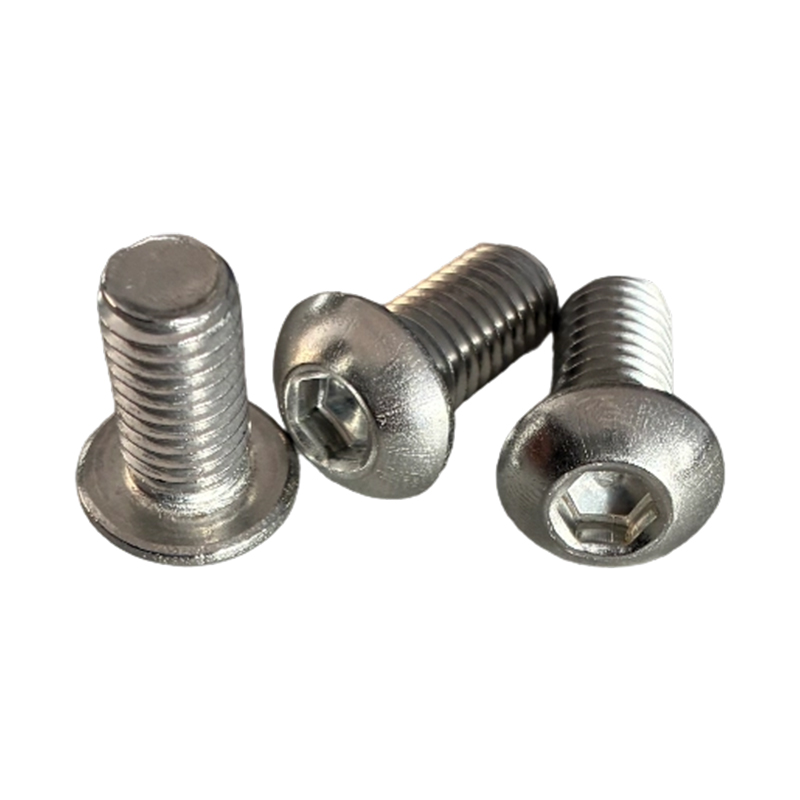
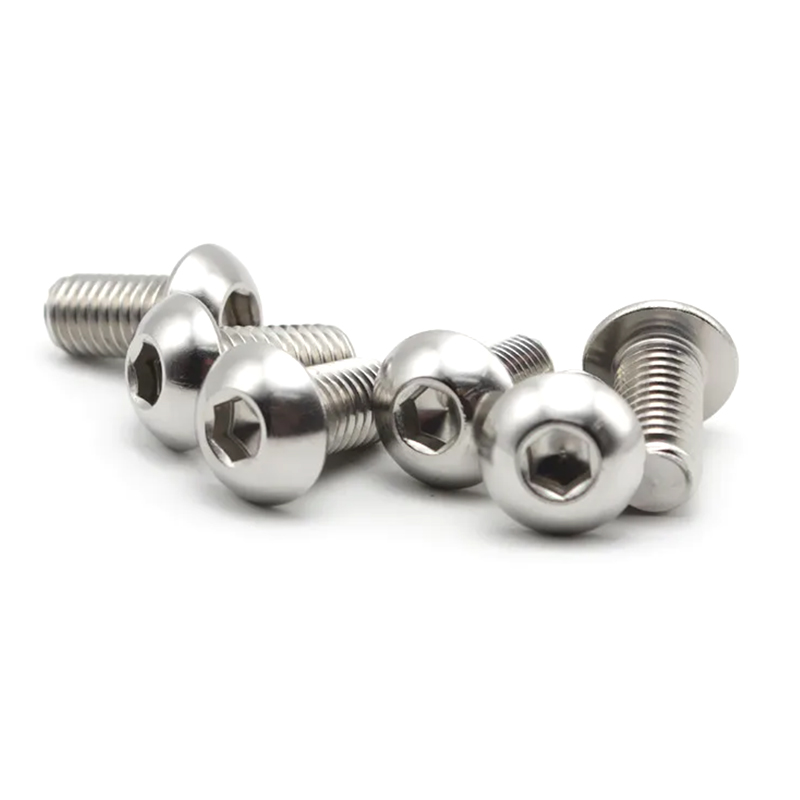
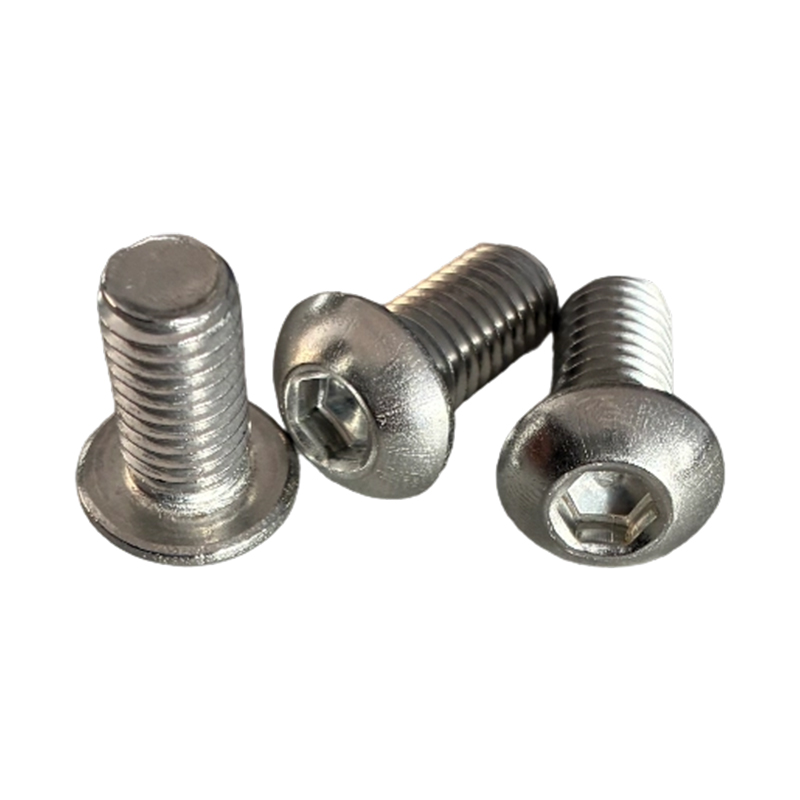
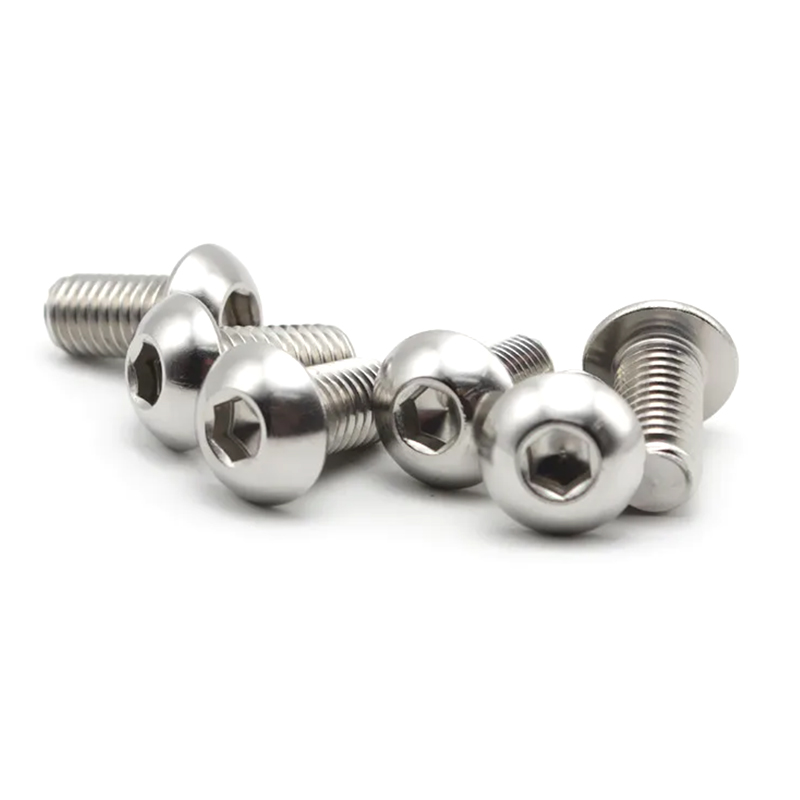
The low-profile domed head that defines button screws is engineered geometry, not a styling choice. The dome radius determines how the bearing surface area relates to the overall head diameter, and this has direct functional consequences in the materials most commonly fastened with this screw type. For home appliances, digital product casings, and instrument enclosures—where the joined material is often sheet aluminum, ABS, or thin steel—the wider bearing annulus of a button head distributes the clamping load over a significantly larger area than a standard cap head of the same thread diameter. This reduces the risk of surface marking, embedment into soft substrates, and visible deformation around the fastener hole, which matters both structurally and aesthetically in finished consumer products.
The dome geometry also contributes to snag resistance. In furniture, fitness equipment, and children's toys, external fastener heads must not present sharp edges that could catch fabric, skin, or adjacent components during use or assembly. The continuous convex profile of a button head eliminates the sharp rim edge present on cap head and countersunk fasteners, which is one reason ISO 7380 button screws have become the default fastener choice for exposed surfaces in consumer goods. In rail transit seating assemblies, the same property satisfies passenger safety requirements that explicitly prohibit sharp projections on interior surfaces.
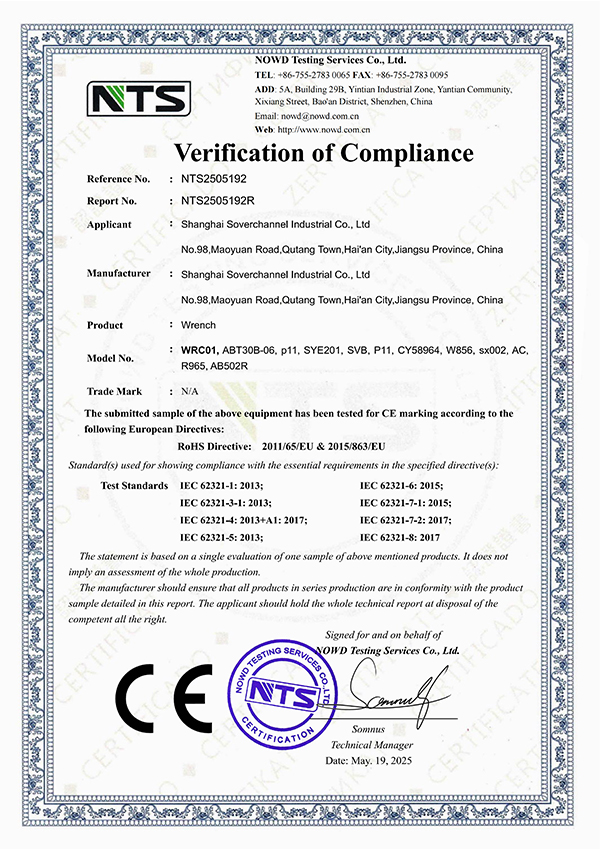
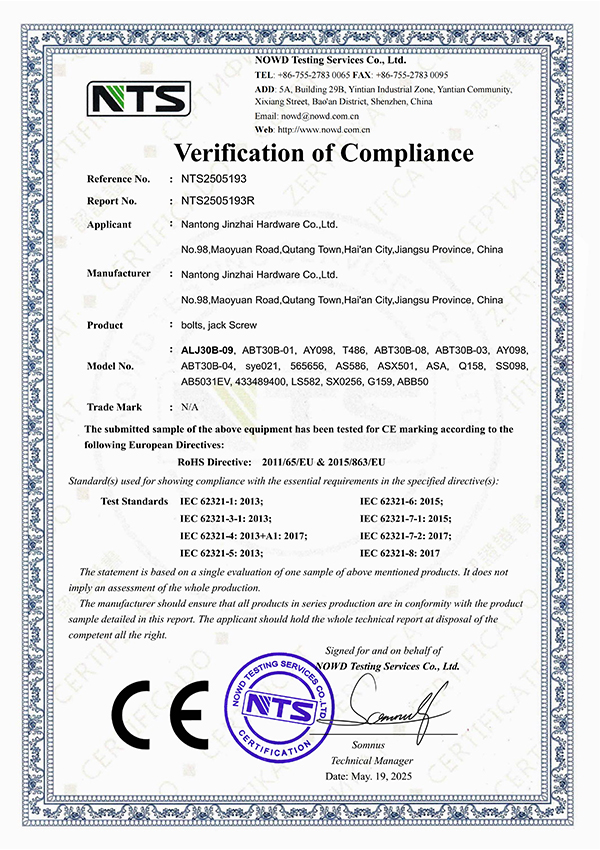
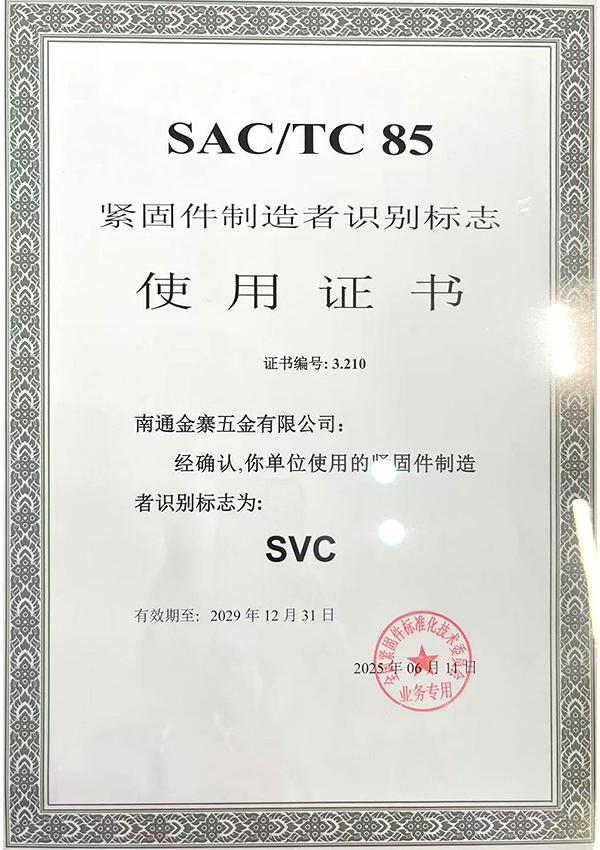
At Shanghai Soverchannel Industrial Co., Ltd., the dome radius and head height dimensions for button screws are held to tighter tolerances than the ISO 7380 minimum specification, particularly for customers in the home appliance and digital products sectors where visual uniformity across a product's fastener pattern is part of the industrial design brief. The manufacturing process at Nantong Jinzhai Hardware Co., Ltd. uses precision cold-forming dies maintained to strict dimensional schedules, ensuring head profile consistency across high-volume production lots.
Torque Limits on Button Screws: Understanding the Drive Depth Trade-Off and How to Work Within It
The most important engineering constraint of button screws is one that product designers frequently discover too late: the shallow head height that makes them visually clean and space-efficient also limits the socket depth, which in turn caps the maximum drive torque before cam-out occurs. An M6 ISO 7380 button head screw has a head height of approximately 2.0 mm and a socket depth of roughly 1.9 mm—compared to 6.0 mm head height and 4.0 mm socket depth for an equivalent ISO 4762 cap head. This means the maximum reliable installation torque for the button head is typically 60–70% of the cap head equivalent, and attempting to torque a button screw beyond its drive limit damages the socket irreversibly, since the shallow socket walls deform under the wrench load.
In practice, this constraint is workable when the joint design is aligned with it from the start. Automation equipment and medical devices that specify button screws correctly do so by ensuring the required clamp load falls within the screw's actual torque capacity—not by treating it as a drop-in replacement for a cap head and applying the same torque value. The following reference points are useful for design engineers working with standard property class 10.9 carbon steel button screws:
| Thread Size |
Head Height (ISO 7380) |
Approx. Max Drive Torque |
Cap Head Equivalent Torque |
| M3 |
1.15 mm |
0.9 N·m |
1.4 N·m |
| M4 |
1.4 mm |
2.2 N·m |
3.2 N·m |
| M5 |
1.7 mm |
4.3 N·m |
6.5 N·m |
| M6 |
2.0 mm |
7.4 N·m |
11.5 N·m |
| M8 |
2.8 mm |
17.5 N·m |
28.0 N·m |
For precision assembly scenarios where both appearance and maximum joint integrity are required, the correct engineering response is to increase the thread diameter rather than exceed the drive torque limit. Moving from M5 to M6 button screws adds only 1.5 mm to the head diameter while nearly doubling the available drive torque—a trade-off that almost always makes more sense than trying to squeeze extra preload out of an undersized fastener.
Surface Finish and Coating Selection for Button Screws in Consumer-Facing Applications
For button screws installed on visible surfaces of home appliances, digital products, and furniture, the surface finish is part of the product's visual design—not just a corrosion protection measure. This shifts the coating selection criteria from purely functional (salt spray hours, friction coefficient) to a combination of functional and aesthetic requirements that must be specified together. A finish that looks correct on a sample bolt but varies in gloss level or color across a production lot creates visible inconsistency in the assembled product that consumers notice immediately.
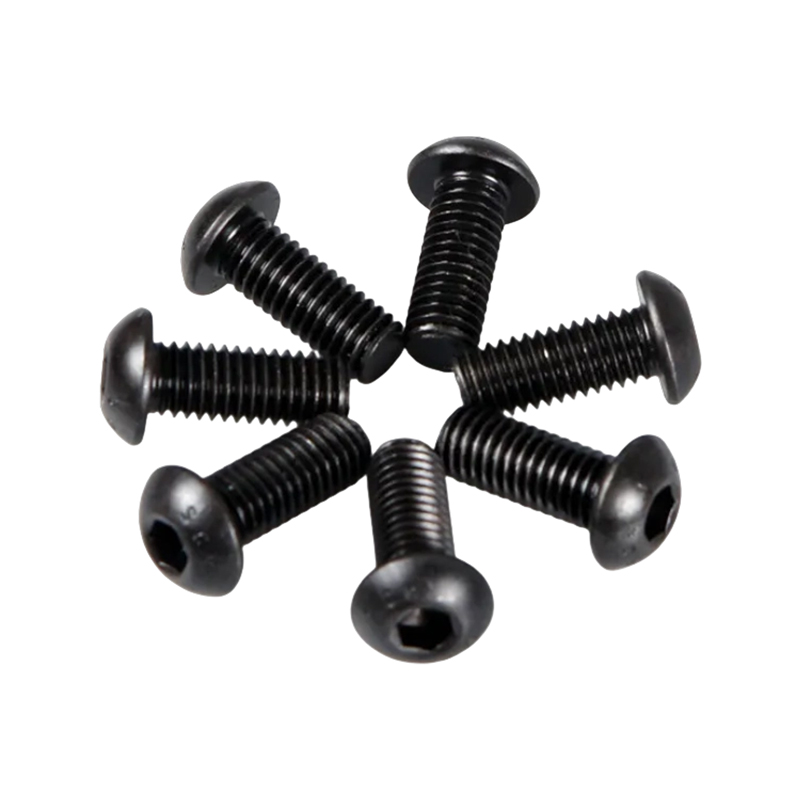
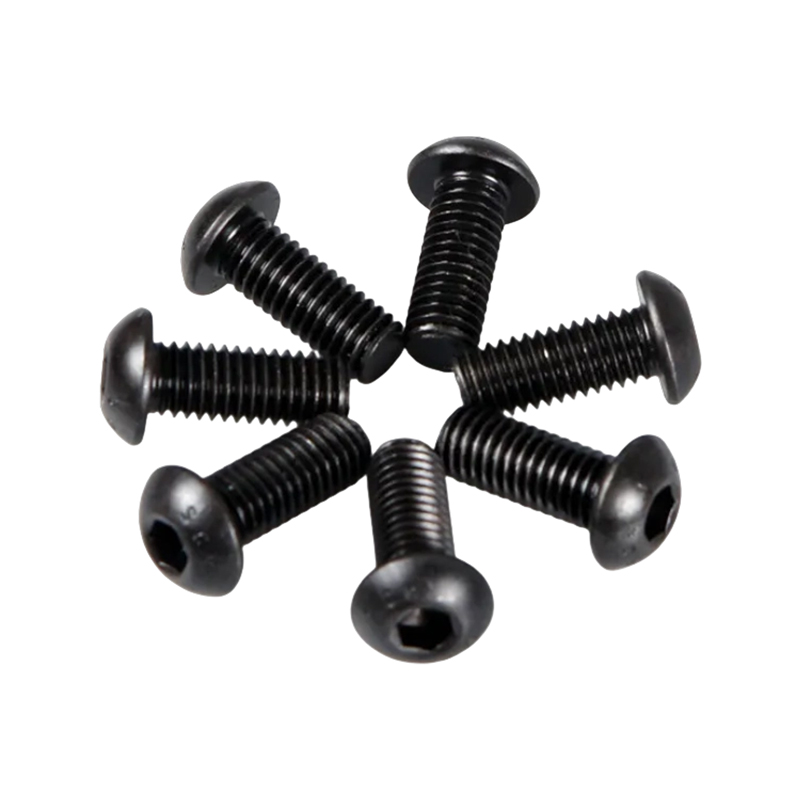
- Black oxide with oil seal: Produces a matte black appearance with minimal reflectivity variation across a lot. Dimensional impact is negligible (nanometer-scale). Common on fitness equipment, rack-mount electronics, and instrument casings where a subdued, industrial aesthetic is the design intent. Corrosion resistance is moderate—adequate for indoor environments but not outdoor or humid exposure.
- Zinc electroplating (clear or blue passivate): The most cost-effective option for decorative corrosion protection on carbon steel button screws. Clear passivate produces a silver-bright finish; blue passivate introduces a slight blue-silver tint that reads as a premium finish on white or light-colored home appliance panels. Salt spray resistance of 72–120 hours meets most indoor consumer product requirements. Plating thickness of 5–8 µm has minimal impact on thread fit but should be factored into tolerance calculations for precision assemblies.
- Nickel plating: Delivers a bright, warm silver finish with higher corrosion resistance than zinc (120–200 hours salt spray at 8–12 µm). Preferred for children's toys and digital product accessories where a polished metallic appearance is part of the product's perceived quality. Nickel plating also provides a hard, abrasion-resistant surface that resists scratching from repeated assembly and disassembly—important for products that users open for battery replacement or configuration changes.
- Passivated stainless steel: For rail transit interiors, medical devices, and automation equipment operating in humid or cleanable environments, passivated stainless button screws eliminate the corrosion risk entirely without adding any coating layer. The natural stainless surface achieves a brushed or polished appearance depending on the final machining operation, and the finish is inherently permanent rather than dependent on coating adhesion. Shanghai Soverchannel Industrial Co., Ltd. supplies stainless button screws in both 304 and 316 grades as part of its stainless steel fasteners product line.
Button Screws in Space-Constrained Assemblies: Clearance Planning for Automated and Medical Equipment
The low-profile head height of button screws is frequently the reason they are specified in the first place in automation equipment and medical devices—there is simply not enough axial clearance above the joint surface to accommodate a standard cap head. But designing for button screw clearance requires more than checking that the head height clears the adjacent component. The hex key access angle, driver clearance, and tool engagement requirements all need to be verified in the three-dimensional assembly context before the design is finalized.
The minimum wrench access angle for a button screw in a pocket or recess is constrained by the hex key insertion path. A standard L-shaped hex key requires a clear approach angle of approximately 15–20° from perpendicular to the joint surface to engage the socket cleanly. In confined assemblies where only a ball-end hex key can reach the fastener, the maximum reliable torque drops by approximately 30% compared to a full-engagement straight key—a factor that must be incorporated into the torque specification if ball-end installation is anticipated. For medical device assemblies where torque traceability is a regulatory requirement, the installation procedure must explicitly specify key type and verify that the assembly geometry permits the documented tool engagement.
Panel thickness relative to screw length is a second clearance consideration that is frequently overlooked. The grip length of a button screw (the distance from the underside of the head to the start of the thread) must match the total thickness of the clamped material. If the grip is too short, the threaded portion engages within the clamped material rather than in the tapped bore below, reducing effective thread engagement. If the grip is too long, the unthreaded shank projects into the tapped hole, preventing full thread engagement depth. In precision assembly scenarios for digital products and instruments, specifying the exact grip length—rather than simply the nominal bolt length—is the correct procurement practice.
Flange Button Head vs. Standard Button Head: When the Larger Bearing Surface Justifies the Wider Footprint
The flanged button head variant—where a flat annular flange extends outward from the base of the dome—addresses a specific limitation of the standard button head in soft substrate applications. In standard ISO 7380 geometry, the bearing surface is the relatively narrow annular ring at the base of the dome, where the dome profile meets the flat underhead surface. In furniture assemblies, children's toy frames, and fitness equipment panels where the joined material is engineered wood, plastic composite, or thin-gauge aluminum, this bearing surface area may not be sufficient to prevent the head from pulling through the clearance hole under load—particularly for larger diameter screws in thin materials.
The flanged variant (ISO 7380-2) adds a flat bearing flange with an outer diameter typically 30–40% larger than the standard head diameter, increasing the bearing area proportionally without adding head height. The dome profile above the flange remains low, so the clearance advantage is preserved while the pull-through load capacity increases significantly. For M6 flanged button screws, the bearing area increases from approximately 70 mm² (standard) to approximately 120 mm² (flanged)—a 70% improvement in load distribution with essentially no increase in installed height.
The trade-off is footprint: the larger flange diameter requires more lateral space around the fastener hole, which must be verified against adjacent features in the component layout. In high-density electronic enclosures and compact medical device housings, this lateral clearance is often not available—making the standard button head the correct choice despite its lower pull-through capacity. Shanghai Soverchannel Industrial Co., Ltd. produces both ISO 7380-1 and ISO 7380-2 geometry button screws as standard catalog items, with non-standard flange diameters and dome heights available as custom alloy steel fasteners for customers whose applications fall between the two standard profiles.
Property Class Selection for Button Screws Across Consumer and Industrial Applications
Button screws are commercially available in property classes 8.8 and 10.9 for carbon steel, and A2-70 or A4-70 for stainless steel. The class selection interacts with the drive torque limit in a way that is not always intuitive: specifying a higher property class does not automatically improve joint performance if the screw's drive torque limit is reached before the higher-grade material's proof load is utilized. For small-diameter button screws (M4 and below), the socket depth constraint caps the achievable preload well below the difference between 8.8 and 10.9 proof loads—meaning the property class upgrade delivers no functional benefit while adding cost. The upgrade becomes meaningful at M6 and above, where the socket geometry can transmit enough torque to differentiate the two grades' clamping performance.
For rail transit and automation equipment applications where vibration loading is a design consideration, property class 10.9 button screws are the standard specification regardless of diameter, because the higher proof load generates a higher joint preload that improves resistance to vibration-induced loosening—even if the absolute preload difference between 8.8 and 10.9 is modest at small diameters. The logic is that the marginal cost of specifying 10.9 is small, while the cost of a fastener failure in an installed transit or automation system is very large.
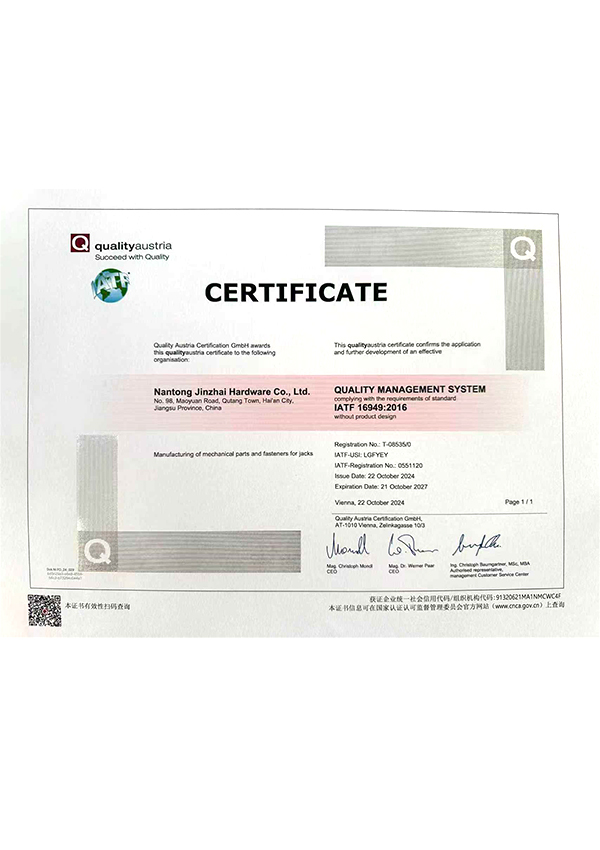
As a carbon steel fasteners supplier with deep expertise in the automotive fastener sector, Shanghai Soverchannel Industrial Co., Ltd. provides property class certification documentation for every production lot of button screws—hardness verification, tensile testing results, and material heat certificates—allowing customers in regulated industries such as medical devices and rail transit to maintain full traceability in their supply chain quality records. This full-process inspection system, developed and refined at Nantong Jinzhai Hardware Co., Ltd., is what allows the company to serve both high-volume consumer goods manufacturers and lower-volume precision assembly customers from the same production infrastructure.
Custom Button Screw Configurations: Non-Standard Dimensions and Special Features for Precision Assembly
Standard catalog button screws cover the majority of industrial and consumer applications, but precision assembly scenarios in digital products, medical devices, and high-end automation equipment regularly require configurations that fall outside ISO 7380 dimensional tables. The most common non-standard requirements are not dramatic departures from the standard form—they are specific dimensional adjustments that the standard catalog cannot accommodate, but which have significant functional consequences if not met correctly.
- Reduced head height variants: For assemblies where even the standard button head protrudes above a surrounding panel feature, a custom reduced-height dome profile—typically 15–25% lower than ISO 7380 nominal—achieves true flush or sub-flush installation while retaining the wide bearing surface advantage of the button head format.
- Non-standard grip lengths: Consumer product enclosures frequently use material stack-ups that do not align with standard screw length increments. A custom grip length ensures the unthreaded shank spans exactly the clamped thickness, maximizing thread engagement depth in the tapped feature below without allowing the shank to bottom before full clamping force is achieved.
- Integrated captive washer designs: A permanently attached washer element below the button head flange—swaged in place during manufacturing—eliminates the assembly step of positioning a separate washer, reduces part count, and prevents washer loss in small-component assembly environments such as children's toy factories and instrument production lines.
- Pre-applied thread locker patches: Microencapsulated anaerobic adhesive applied to the thread during manufacturing provides vibration resistance without requiring operators to apply liquid thread locker at the point of assembly—critical for automation equipment and medical device assembly lines where process consistency and cleanliness are controlled requirements.
- Custom head markings or branding: For consumer electronics and premium home appliances where the fastener head is a visible design element, laser-etched or stamped identification marks, grade symbols, or brand identifiers on the dome surface are available as part of a custom order from Shanghai Soverchannel Industrial Co., Ltd.'s non-standard fastening solutions program.
As a manufacturer integrating R&D, production, and sales, Shanghai Soverchannel Industrial Co., Ltd. handles custom button screw development from drawing review through prototype production and into mass supply—providing engineering consultation on head geometry, material grade, surface treatment, and thread specification as an integrated package rather than expecting customers to resolve these trade-offs independently before placing an order.


 中文简体
中文简体 Português
 Español
 Deutsch
 русский
 عربى
عربى