Industry Knowledge
Why Hex Drive Geometry Outperforms Phillips and Torx in High-Torque Timber Connections
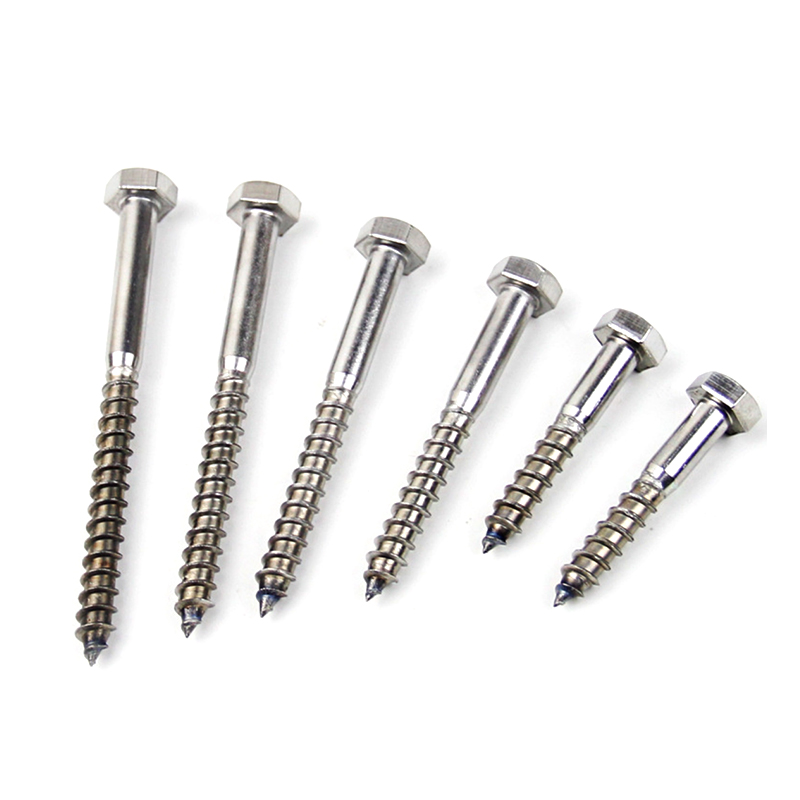
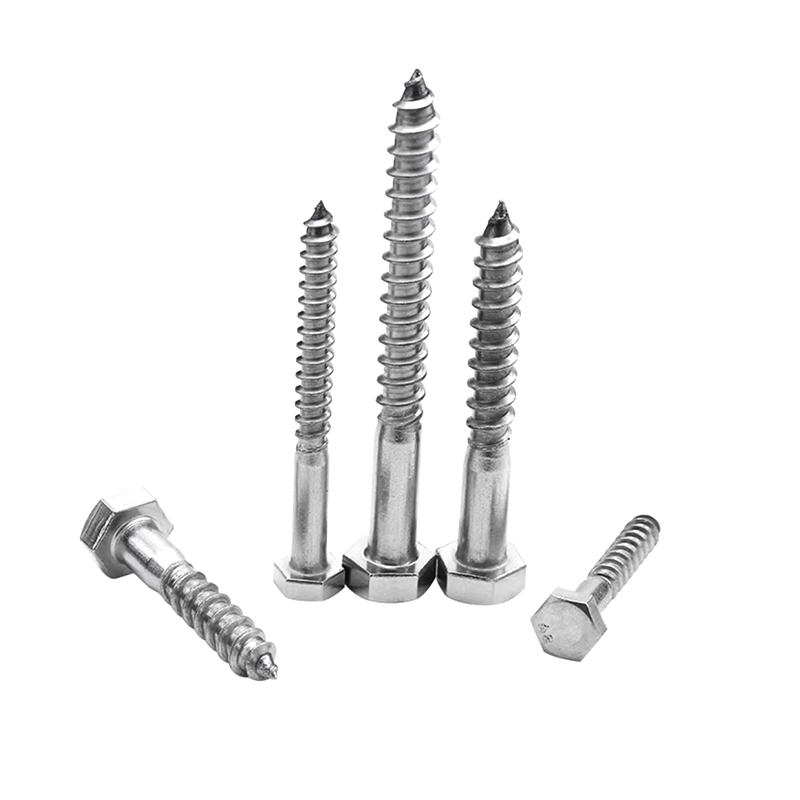
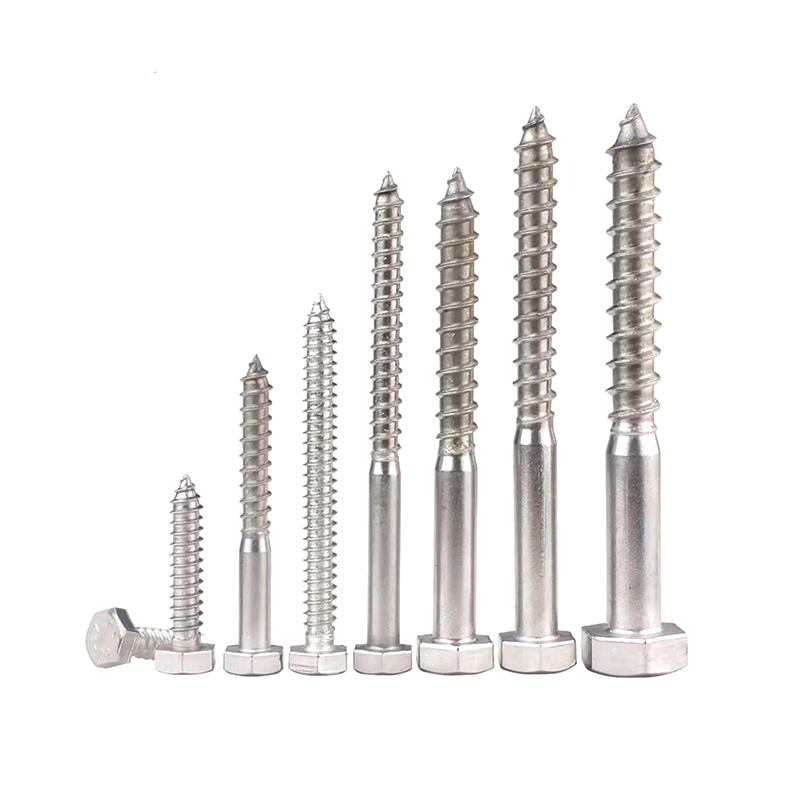
The external hex head on Hex Head Wood Screws is not merely a design convention — it is a functional response to the torque demands of structural timber fastening. Phillips and Pozidriv drive recesses are cam-out designs: the driver bit is intentionally engineered to disengage at a threshold torque to prevent over-driving in sheet materials. This same property becomes a liability in dense hardwoods and engineered lumber products like LVL (laminated veneer lumber) and glulam beams, where thread engagement resistance far exceeds the cam-out threshold, resulting in stripped drive recesses before the screw reaches full seating depth.
The external hex configuration eliminates cam-out entirely. Torque is applied through six flat contact faces on the fastener perimeter, distributing the load across a much larger bearing area than any internal recess drive. A standard M8 hex head wood screw driven with a 13mm socket can sustain installation torques exceeding 35 Nm without drive interface failure — approximately three to four times the practical torque limit of a comparably sized Phillips head before stripping. This higher achievable installation torque translates directly into greater thread engagement depth in the substrate and higher joint preload, both of which are critical for connections that must resist cyclic wind and seismic loading in roof frame and beam-column assemblies.
A secondary advantage specific to construction environments is tool versatility. Unlike Torx or square drive bits that require dedicated tooling, hex head wood screws can be driven with standard open-end wrenches, ratchets, impact drivers with hex sockets, or even adjustable spanners — meaning installation can proceed on site without specialty bit sets, reducing delay risk when tools are lost, damaged, or not brought to the work area.
Embedment Depth, Pilot Hole Sizing, and Splitting Risk in Structural Timber Applications
Correct pilot hole specification is one of the most consequential and most frequently miscalculated parameters in structural timber fastening. A pilot hole that is too small generates excessive radial hoop stress during installation — the dominant mechanism behind end-grain splitting in beam-column connections and door and window frame installations. A pilot hole that is too large reduces thread engagement area and can cut pull-out resistance by 30–50% even when screw embedment depth is maintained. The correct pilot hole diameter depends on three variables that interact: wood species density (measured as specific gravity), screw shank diameter, and the ratio of thread root to outer diameter.
As a practical reference, the following pilot hole ratios apply for Hex Head Wood Screws driven into common structural timber species:
| Wood Species / Type |
Specific Gravity |
Pilot Hole (% of Shank Ø) |
Splitting Risk Without Pilot |
| Southern Yellow Pine (SYP) |
0.55 |
60–70% |
High — resinous grain splits readily |
| Douglas Fir |
0.50 |
55–65% |
Moderate — tolerable in mid-grain, high at end |
| European Spruce (C24) |
0.43 |
50–60% |
Low-to-moderate in dry conditions |
| Glulam / LVL (engineered) |
0.50–0.55 |
65–75% |
High at glue-line interfaces without pilot |
| Tropical Hardwood (Merbau, Teak) |
0.70–0.85 |
75–85% |
Very high — pilot mandatory in all locations |
Pilot hole sizing guidance for hex head wood screws by timber species and engineered wood type.
Embedment depth — the length of threaded shank within the primary member — should be a minimum of eight times the screw diameter for withdrawal-critical connections such as rafter-to-ridge or purlin-to-rafter joints in roof frames. For shear-dominant connections like beam-to-column brackets, embedment depth matters less than screw diameter and steel member thickness, but maintaining adequate edge distances (minimum 4× diameter from any end or edge) prevents shear-out of the timber fiber around the fastener regardless of embedment length.
Surface Treatment Selection for Hex Head Wood Screws in Structural and Outdoor Exposures
Corrosion of structural timber fasteners is a slow failure mode that is systematically underestimated in building maintenance. Unlike visible surface rust on exposed metalwork, corrosion within a timber joint is concealed by the surrounding wood fiber and may progress for years before the structural capacity of the connection is compromised. The selection of surface treatment for Hex Head Wood Screws must therefore account for the moisture environment the joint will experience over the full design life of the structure — not just the installation condition.
- Electro-galvanizing (5–12 µm zinc) — Suitable for fully enclosed, dry interior applications such as interior door and window frame assembly and indoor cabinet structural connections. The thin zinc layer provides adequate protection in Service Class 1 (interior, heated, relative humidity below 65%) but should not be used in exposed or semi-exposed timber connections where seasonal moisture variation will accelerate zinc depletion at the thread roots. Expected protection life in dry interior conditions: 15–25 years.
- Hot-dip galvanizing (45–85 µm zinc-iron alloy) — The standard specification for outdoor structural timber connections: roof frame assemblies, external beam-column joints, and garden structures. The thick zinc-iron intermetallic layer formed during hot-dip processing provides meaningful protection even after surface zinc is consumed, extending service life to 30–50 years in moderate outdoor exposure. Note that hot-dip coating on threaded fasteners increases thread diameter, requiring oversized nut or socket selection — a practical detail that is frequently missed when substituting hot-dip for electro-galvanized screws on site.
- Phosphating with oil or paint coat — Primarily used as a base treatment to improve paint adhesion or as a short-term anti-galling treatment in machined timber connections. Not a standalone outdoor corrosion protection measure. Phosphated Hex Head Wood Screws are appropriate for factory-assembled joinery units that receive a full paint or lacquer finish that encapsulates the fastener head.
- Stainless steel (304 / 316) — Required in three scenarios: preservative-treated timber containing copper azole (CA) or alkaline copper quaternary (ACQ) compounds, which are highly corrosive to zinc coatings; coastal environments within 1–5 km of saltwater where chloride concentration exceeds zinc's protective capacity; and visible architectural connections where fastener head appearance is part of the finished aesthetic. Grade 316 adds molybdenum for chloride pitting resistance and should be the default in any marine or coastal wooden structure installation.
A critical compatibility issue specific to timber: several modern wood preservatives — including the copper-based systems that have replaced CCA (chromated copper arsenate) in most markets — actively corrode zinc at rates up to 10 times higher than in untreated wood. Using electro-galvanized or even hot-dip galvanized Hex Head Wood Screws in ACQ or CA-treated lumber will reduce the fastener's service life to as little as 3–5 years in an outdoor exposure, compared to the 30+ year design life of the treated timber itself. Stainless steel is the only fastener material compatible with all current preservative systems in structural applications.
Wind and Seismic Load Transfer Through Hex Head Wood Screw Connections: Engineering Considerations
In engineered timber structures — including light-frame wooden houses, prefabricated roof frame systems, and modular construction — Hex Head Wood Screws function as primary structural connectors rather than secondary fasteners. This distinction matters because connections subject to wind pressure and seismic loading experience force demands that differ fundamentally from static gravity loads: they are cyclic, reversible, and often applied at angles oblique to the screw axis. Designing these connections requires understanding how hex head wood screws perform under combined withdrawal and shear loading, not just under the pure withdrawal or pure lateral conditions typically presented in manufacturer load tables.
Under lateral (shear) loading — the dominant demand in wall-to-foundation and rafter-to-wall plate connections during seismic events — screw capacity depends on the yield mode of the fastener-timber system. Eurocode 5 and NDS (National Design Specification) both define multiple yield modes based on the relative stiffness of the screw and the timber members. For hex head wood screws in double-shear connections (screw passing through two timber members with a steel plate between them), Mode IIIs typically governs: the screw forms a plastic hinge within the timber member while the steel plate remains rigid. This mode provides ductile energy absorption — critical for seismic resistance — compared to the brittle splitting failure that governs when fastener spacing or edge distances are inadequate.
- Spacing requirements for seismic zones — Minimum fastener spacing in the direction of load should be 10× the screw diameter for connections designed to yield under seismic loading. Reducing spacing to the code minimum (typically 5–7× diameter for non-seismic conditions) in seismic applications increases the risk of group failure — simultaneous splitting of the timber through multiple fastener rows before individual fasteners reach their yield capacity.
- Inclined screw configurations — For withdrawal-dominated connections such as rafter heel joints, driving hex head wood screws at 30–45° to the grain rather than perpendicular maximizes the axial component of load transfer through the threaded shank while the lateral component is absorbed through the stiffer bearing of the shank against the timber. This inclined screw technique, specified in Eurocode 5 Annex A, can increase the effective withdrawal capacity of a group of screws by 30–50% compared to perpendicular installation at the same embedment depth.
- Connection rigidity under cyclic loading — Unlike nailed connections that have inherent slip before load transfer begins, properly torqued hex head wood screw connections develop a clamping force between members that delays slip initiation. This initial rigidity is beneficial for serviceability (limiting deflection under normal loads) but requires that the design accounts for the transition from rigid to pinned behavior after the first few seismic cycles in a ductile design philosophy. Structures designed to DFL or equivalent seismic categories must verify that connection ductility is sufficient to absorb energy after clamp preload is overcome.
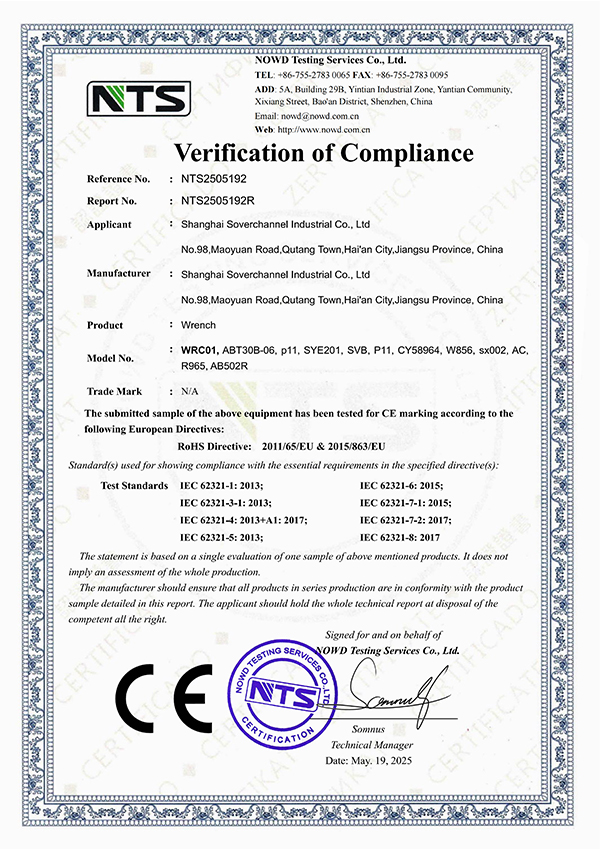
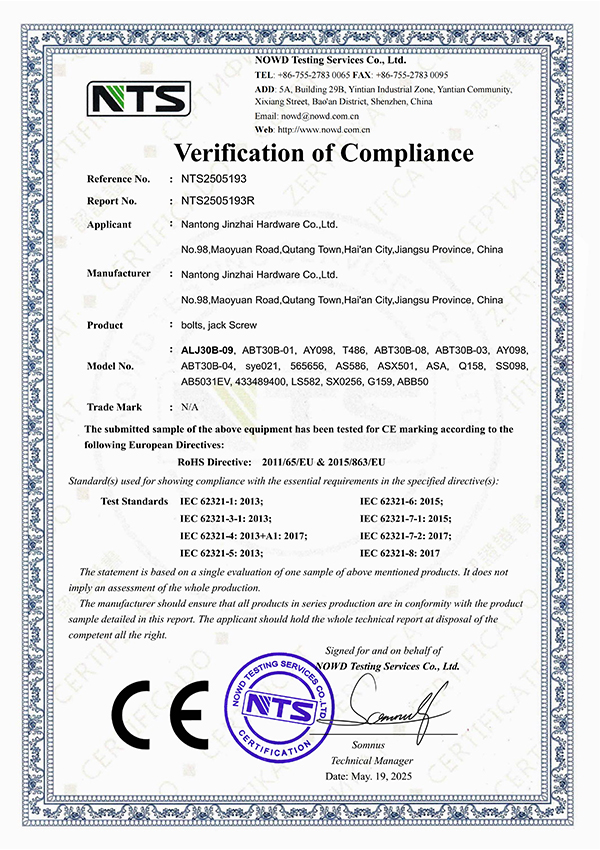
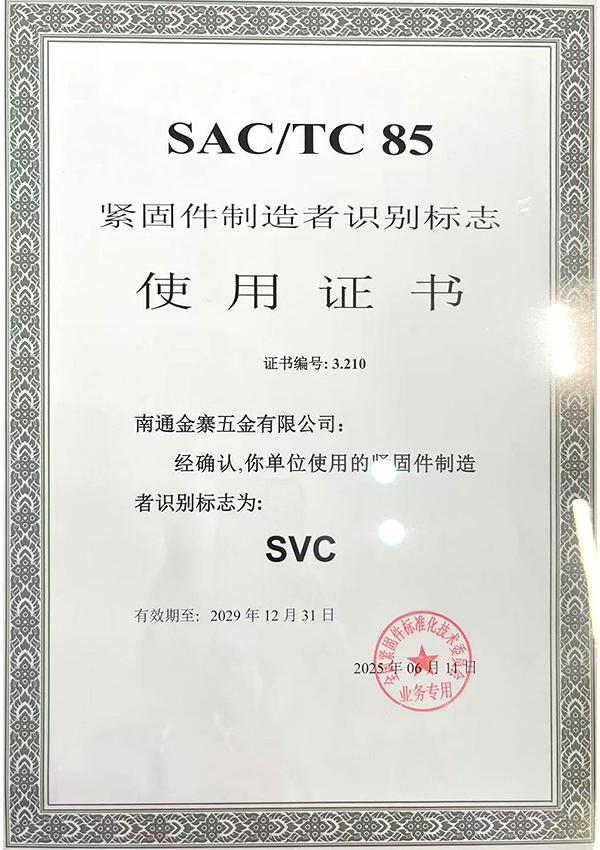
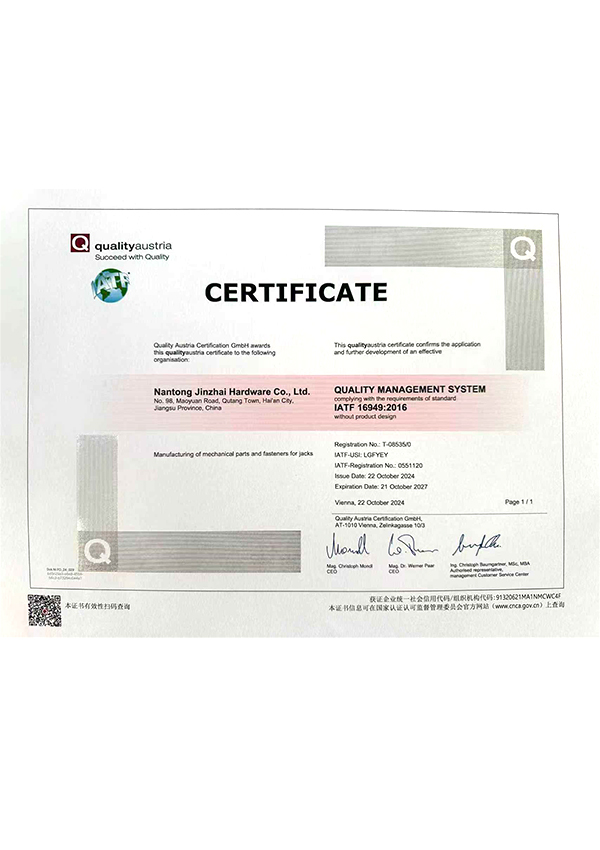
With extensive manufacturing experience in high-precision fastener production and a dedicated facility at Nantong Jinzhai Hardware Co., Ltd., Shanghai Soverchannel Industrial Co., Ltd. supplies Hex Head Wood Screws to specifications that include documented mechanical properties, dimensional tolerances, and surface treatment verification — the complete data package that structural engineers and building certification bodies require for connection design in wind and seismic applications. For more details, contact Shanghai Soverchannel Industrial Co., Ltd. directly to discuss project-specific requirements.


 中文简体
中文简体 Português
 Español
 Deutsch
 русский
 عربى
عربى