Industry Knowledge
Why Thread Engagement Length Matters More Than Rod Diameter
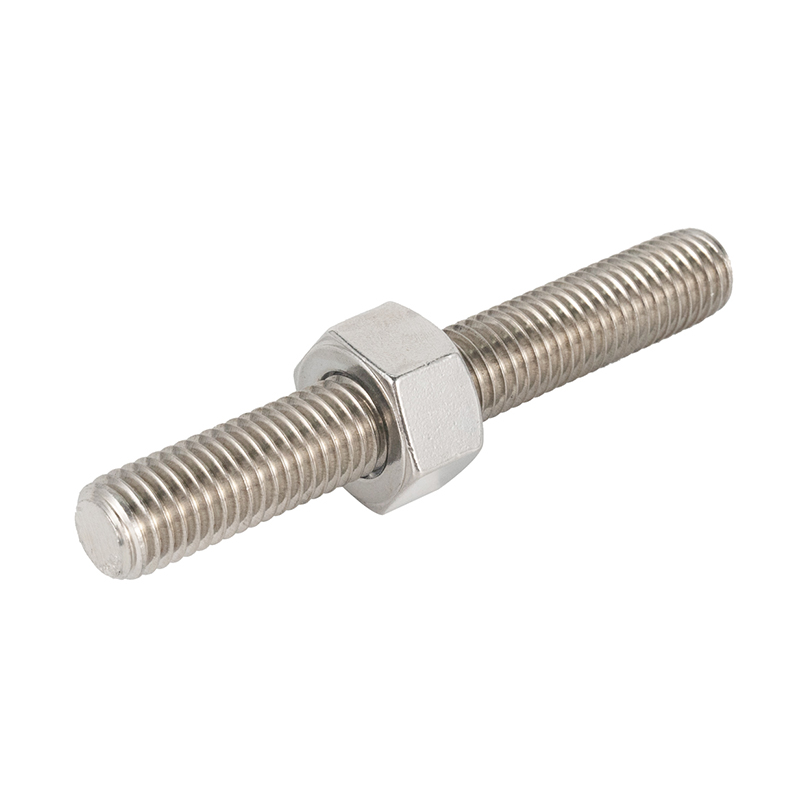
Most engineers focus on the diameter and grade of a Fully Threaded Rod when specifying a fastening assembly, but thread engagement length — the axial distance over which the nut or tapped hole contacts the rod — is often the real limiting factor in joint strength. As a rule of thumb, a steel-into-steel engagement of at least 1× the nominal diameter is required to develop the full tensile capacity of the fastener. Drop below that threshold and the internal thread strips before the rod body yields, regardless of how high the material grade is.
The situation becomes more complex when a fully threaded rod is installed into a softer material such as aluminum or cast iron. In those cases, engagement of 1.5× to 2× the nominal diameter is typically necessary. This is why many structural and automotive applications use thicker flanged nuts or custom hex coupling nuts rather than standard thin nuts — they provide more engagement length within a compact package.
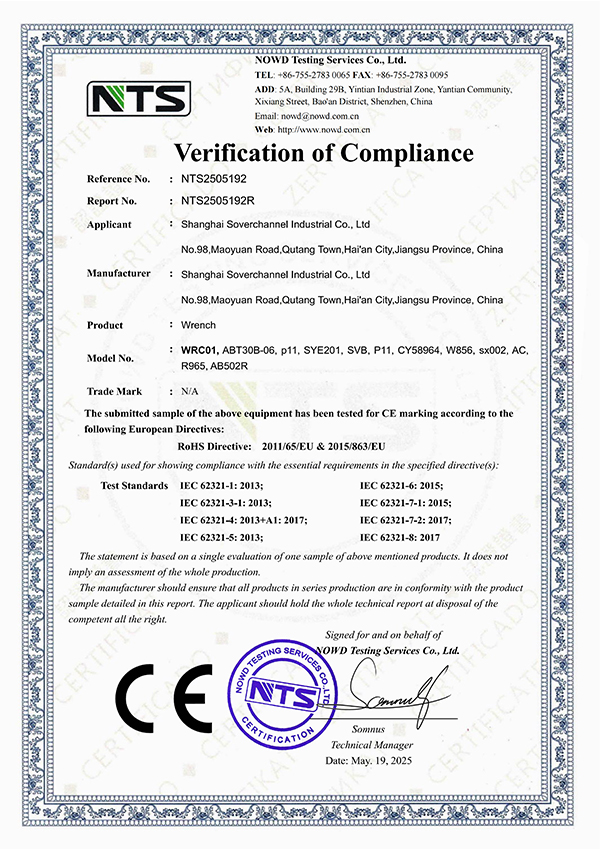
Shanghai Soverchannel Industrial Co., Ltd. manufactures fully threaded rods with consistent thread-form geometry verified through full-process inspection, ensuring that the pitch diameter tolerance and flank angle remain within spec across every production batch — a detail that directly affects how predictably engagement length translates to load capacity in the field.
Comparing Thread Forms: UNC, UNF, and Metric Coarse vs. Fine for Threaded Rod Applications
Selecting the right thread form for a fully threaded rod goes beyond simply matching the mating component. Coarse threads (UNC or metric coarse) are more tolerant of contamination and minor surface damage, assemble faster, and resist cross-threading. Fine threads (UNF or metric fine) provide greater tensile stress area for a given nominal diameter, offer finer load adjustment, and exhibit better resistance to loosening under vibration — which is a key reason automotive applications often specify fine-pitch rods even in non-critical locations.
| Property |
Coarse Thread |
Fine Thread |
| Tensile Stress Area (M12 example) |
84.3 mm² |
92.1 mm² |
| Vibration Resistance |
Moderate |
High |
| Assembly Speed |
Fast |
Slower |
| Tolerance of Contamination |
High |
Low |
| Typical Use Case |
General construction, structural anchoring |
Automotive, precision machinery |
Coarse vs. Fine thread comparison for fully threaded rod selection
One frequently overlooked factor is thread class tolerance. A rod produced to tolerance class 6g (metric) or 2A (unified) is intended for general use, but if the downstream assembly involves a coated nut or a plated hole, the effective clearance tightens significantly. Specifying a 6e or 1A class rod pre-compensates for coating buildup and prevents galling during installation.
Surface Treatment Selection for Fully Threaded Rods in Corrosive or High-Temperature Environments
The surface treatment of a fully threaded rod determines both its corrosion resistance and its friction coefficient — and the two goals often pull in opposite directions. A thick hot-dip galvanized coating (typically 45–85 µm) provides excellent outdoor corrosion protection but increases the effective diameter of every thread, requiring a tapped hole or nut to be oversized accordingly. Electroplated zinc (8–12 µm) avoids this problem but offers far less long-term protection in salt-spray environments.
For automotive underbody applications, dacromet (zinc-aluminum flake coating) has become a widely adopted alternative. It delivers salt-spray performance exceeding 720 hours without the hydrogen embrittlement risk associated with electroplating — a critical concern for high-strength rods above grade 10.9 or SAE Grade 8. The coating is thin enough (4–8 µm per layer) to maintain thread tolerances, and it can be applied with a controlled friction coefficient, simplifying torque-to-clamp-force calculations.
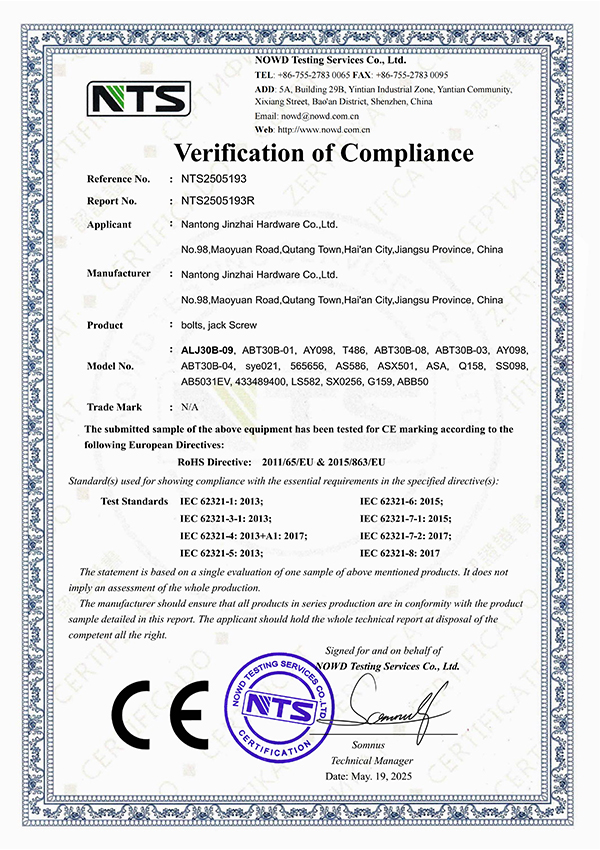
In high-temperature settings above 300 °C, neither zinc-based coatings nor standard electroplating remain effective. Here, the options narrow to stainless steel base material (A2 or A4 grade), molybdenum disulfide-based solid-film lubricants, or nickel plating for oxidation resistance. It is worth noting that stainless Fully Threaded Rods must be handled carefully to prevent galling during assembly — using anti-seize compound or selecting a different alloy for the mating nut (e.g., a bronze nut against a stainless rod) is standard practice. Nantong Jinzhai Hardware Co., Ltd., the manufacturing plant under Shanghai Soverchannel Industrial Co., Ltd., applies rigorous surface-treatment process controls with documented adhesion and thickness checks at each stage, ensuring treatment consistency across large production runs.
Custom Fully Threaded Rods: Key Parameters to Define Before Placing an OEM Order
When sourcing custom or non-standard fully threaded rods from an OEM/ODM manufacturer, vague specifications are the most common source of costly rework. Providing a complete technical brief from the outset compresses lead time and reduces back-and-forth. The following parameters should be explicitly defined in every custom inquiry:
- Nominal diameter and thread pitch — specify both the diameter and pitch explicitly (e.g., M10×1.25, not just "M10"), and confirm whether left-hand thread is required.
- Overall length and tolerance — state the finished length after any secondary operations such as pointing, chamfering, or end drilling, along with acceptable length tolerance (±0.5 mm is common for standard rods; tighter for precision assemblies).
- Material grade and certification — indicate the required property class (e.g., 8.8, 10.9, 12.9 for metric; Grade B7 for ASTM applications) and whether mill test reports or material traceability certificates are required for your quality system.
- Surface treatment and functional requirements — specify the coating type, minimum thickness, and the salt-spray or adhesion standard it must meet, not just the coating name alone.
- End-feature geometry — if the rod requires a reduced shank, drilled end, flat milled, or any non-standard termination, include a 2D drawing with GD&T callouts rather than a verbal description.
As a manufacturer with in-house tooling and a dedicated R&D team, Shanghai Soverchannel Industrial Co., Ltd. supports customers in reviewing and refining their specifications before production begins — particularly for complex non-standard geometries where early feedback on manufacturability can prevent design changes mid-run. Customers seeking Fully Threaded Rods Custom solutions benefit from this collaborative engineering approach, which reduces prototype cycles and accelerates time to volume production.


 中文简体
中文简体 Português
 Español
 Deutsch
 русский
 عربى
عربى