Industry Knowledge
What Sets ASTM A193 B7 Apart from Other High-Strength Threaded Rod Grades
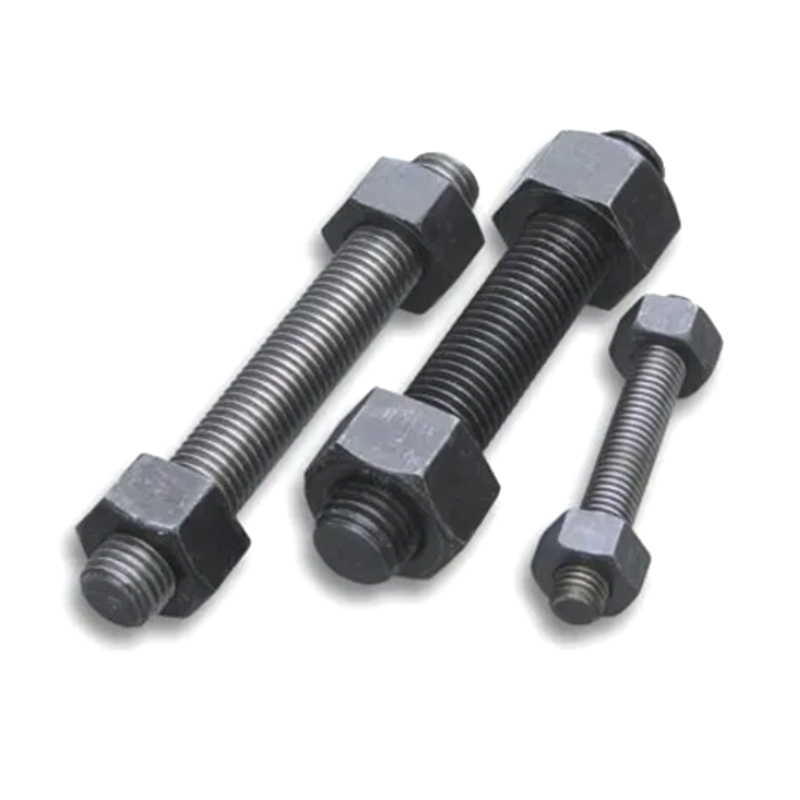
ASTM A193 B7 Threaded Rods are produced from chromium-molybdenum alloy steel (Cr-Mo, typically 4140 or 4142), then quenched and tempered to achieve a minimum tensile strength of 125 ksi (862 MPa) for diameters up to 2½ inches. That heat-treatment requirement is what fundamentally distinguishes B7 from commodity grades such as SAE Grade 5 or metric 8.8 — both of which may use plain carbon steel without the alloy content necessary for deep hardenability in larger cross-sections. When a threaded rod exceeds roughly 1 inch in diameter, the Cr-Mo chemistry of B7 ensures that the core of the rod achieves the same hardness and strength as the surface, whereas plain carbon steel rods of equivalent size often show a significant drop-off in core hardness after quench-and-temper treatment.
The ASTM A193 specification also breaks B7 into three diameter-based subgroups with distinct minimum mechanical requirements. Understanding these distinctions is essential when specifying rods for high-load flanged joints or pressure vessel stud applications:
| Diameter Range |
Min. Tensile Strength |
Min. Yield Strength (0.2% offset) |
Min. Elongation |
Max. Hardness |
| ≤ 2½ in (63.5 mm) |
125 ksi (862 MPa) |
105 ksi (724 MPa) |
16% |
35 HRC |
| 2½ in to 4 in |
115 ksi (793 MPa) |
95 ksi (655 MPa) |
16% |
35 HRC |
| 4 in to 7 in |
100 ksi (690 MPa) |
75 ksi (517 MPa) |
18% |
35 HRC |
ASTM A193 B7 mechanical property requirements by diameter range
The stepped-down properties for larger diameters are not a quality compromise — they reflect the physical limits of heat treatment in large cross-sections and are deliberately built into the specification so that engineers can rely on verified, achievable properties rather than theoretical values. Shanghai Soverchannel Industrial Co., Ltd. manufactures ASTM A193 B7 Threaded Rods with full traceability documentation, ensuring each production lot is matched to the correct diameter subgroup requirements and accompanied by certified mill test reports.
Correct Nut Pairing for B7 Threaded Rods: Why A194 2H Is the Standard and When to Deviate
A fully loaded ASTM A193 B7 Threaded Rod assembly is only as reliable as the nut it is paired with. The standard mating nut specified by ASTM A194 Grade 2H is a heavy hex nut manufactured from medium-carbon steel, with a proof load stress of 175 ksi — intentionally higher than the B7 rod's minimum yield strength. This ensures that if an assembly is over-torqued, the rod yields first (a more detectable and recoverable failure mode) rather than the nut stripping, which can be catastrophic and difficult to diagnose under insulation or in buried flanges.
There are specific operating conditions where A194 2H nuts are not the best choice and alternative grades should be considered:
- Cryogenic service (below −50 °F / −46 °C): A194 Grade 4 or Grade 7 nuts, both produced from alloy steel with better low-temperature impact toughness, are preferred. A194 2H carbon steel loses ductility rapidly at cryogenic temperatures and may exhibit brittle fracture under bolt-up loads.
- High-temperature service (above 800 °F / 427 °C): B7 rod itself begins to lose strength above this threshold due to tempering of the martensite microstructure. In such cases, the entire fastener system should be upgraded to B16 rod (alloy steel with vanadium) paired with A194 Grade 4 or 7M nuts, not simply substituting the nut alone.
- Corrosive environments requiring stainless: Pairing a B7 rod with an A194 8M (316 SS) nut creates a galvanic couple in aggressive chloride environments. If the application demands stainless hardware, both the rod and nut should be upgraded to the same alloy family to minimize galvanic potential.
- Flanged joints requiring controlled bolt load: When using torque-controlled or tension-indicating washers, the friction coefficient of the nut bearing face must match the lubrication assumption in the torque-tension table. Heavy wax or PTFE-coated A194 2H nuts shift the K-factor significantly — always verify the nut surface treatment against the torquing procedure.
Understanding these pairings prevents the common procurement error of ordering B7 rods and generic metric nuts simply because they thread together — compatibility in thread form does not imply compatibility in mechanical performance or safety factors.
Hydrogen Embrittlement Risk in B7 Rods: Surface Treatment Choices That Avoid It
High-strength fasteners with hardness above 32 HRC are susceptible to hydrogen embrittlement (HE) — a phenomenon where atomic hydrogen diffuses into the steel lattice during electroplating or acid pickling and causes delayed fracture under sustained tensile load. ASTM A193 B7 Threaded Rods, which can reach up to 35 HRC, sit squarely in the at-risk zone. This makes the choice of corrosion protection coating a critical engineering decision, not merely an aesthetic or cost consideration.
Electroplated zinc, while widely used on lower-strength fasteners, generates significant hydrogen during the plating bath process. Even with a post-bake embrittlement relief treatment (typically 4 hours at 375–400°F / 190–204°C within 4 hours of plating as required by ASTM B633), residual hydrogen can remain in highly stressed regions such as thread roots, leading to cracking days or weeks after installation. For B7 rods, the following surface treatments are generally considered safer alternatives:
- Mechanical zinc plating (ASTM B695): Zinc particles are mechanically impacted onto the surface without electrochemical reaction, eliminating the hydrogen generation step entirely. Coating thickness is consistent and thread tolerances are maintainable up to about Class 3A fit.
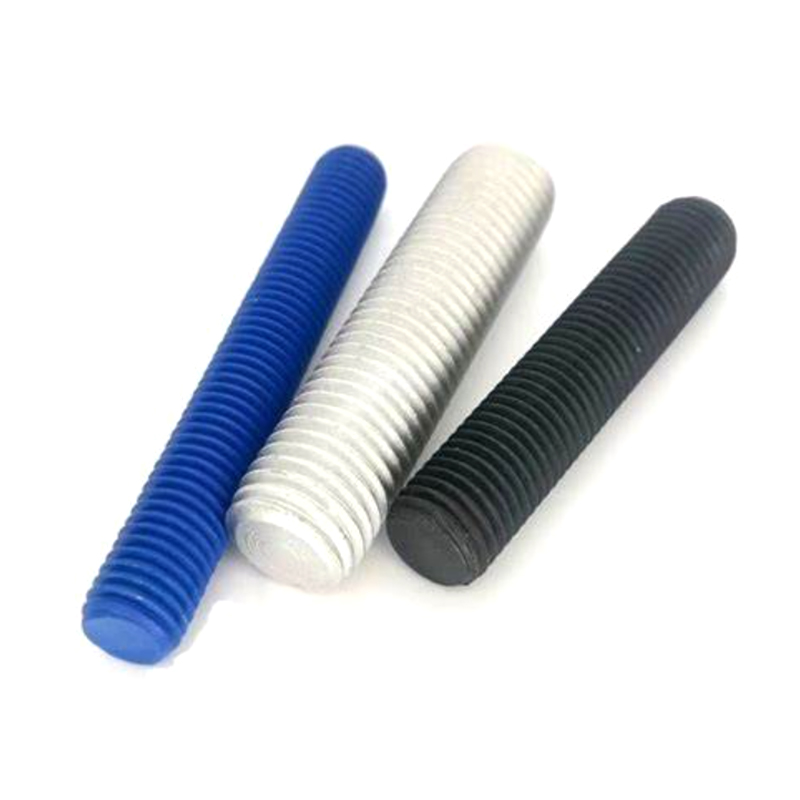
- Dacromet / geomet (zinc-aluminum flake coatings): Applied by dip-spin or spray at curing temperatures around 300°C, these coatings involve no acid pickling and no electrochemical hydrogen generation. They provide 480–1,000+ hours of salt-spray resistance depending on layer count and are widely specified in automotive and petrochemical applications.
- Hot-dip galvanizing (ASTM A153): Acceptable for B7 rods when properly controlled, but requires careful temperature management — if the zinc bath temperature causes the rod to reach the tempering range of the alloy steel (typically above 400°F / 204°C), mechanical properties may be degraded. Centrifuging after dipping is essential to prevent thread fill.
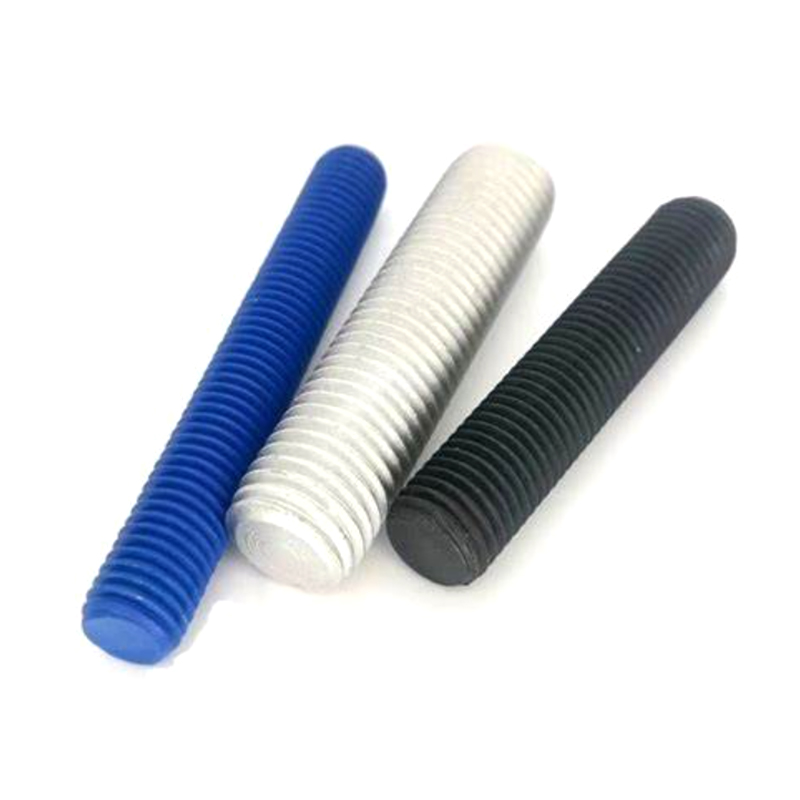
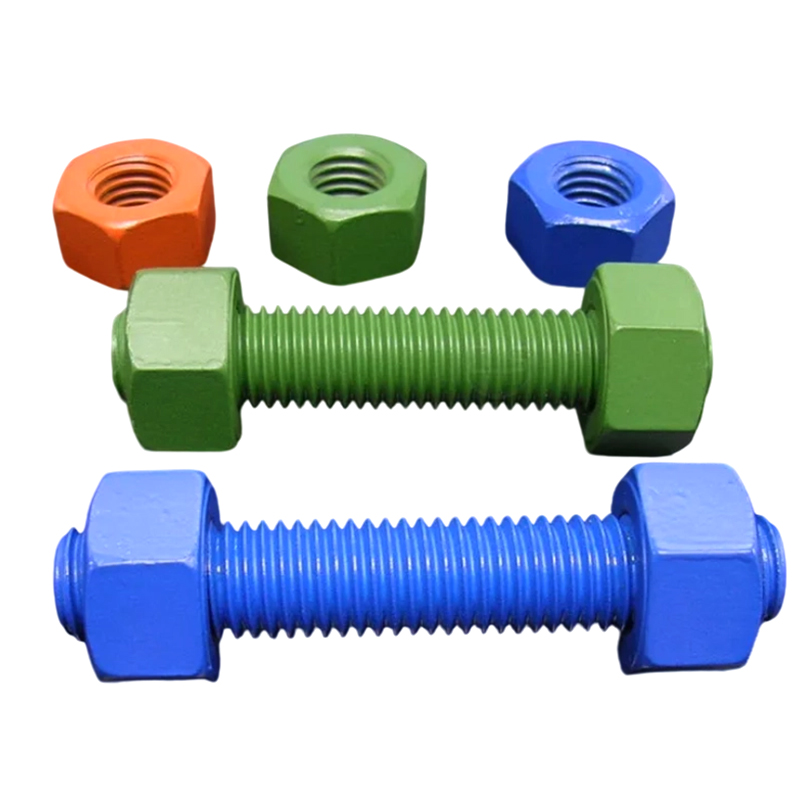
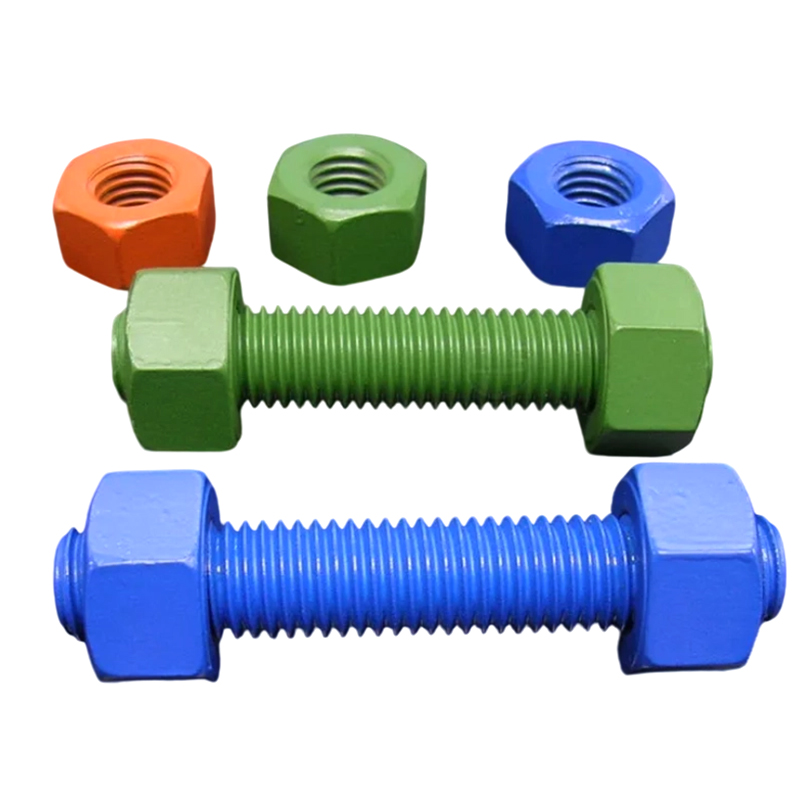
- PTFE / fluoropolymer dry-film coatings: Provide consistent low-friction surfaces ideal for torque-controlled assemblies where predictable K-factor is required, with zero HE risk. Thickness is typically 15–25 µm and adds negligible diameter change.
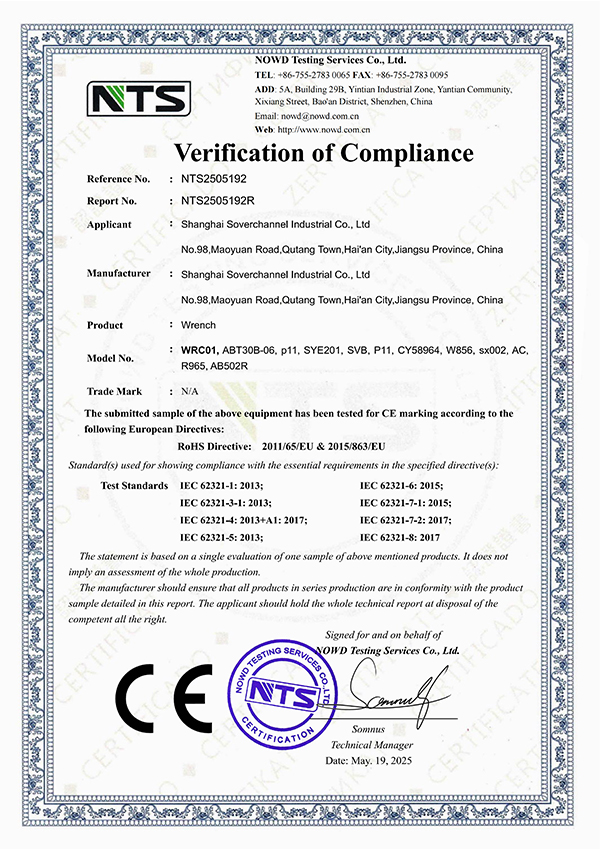
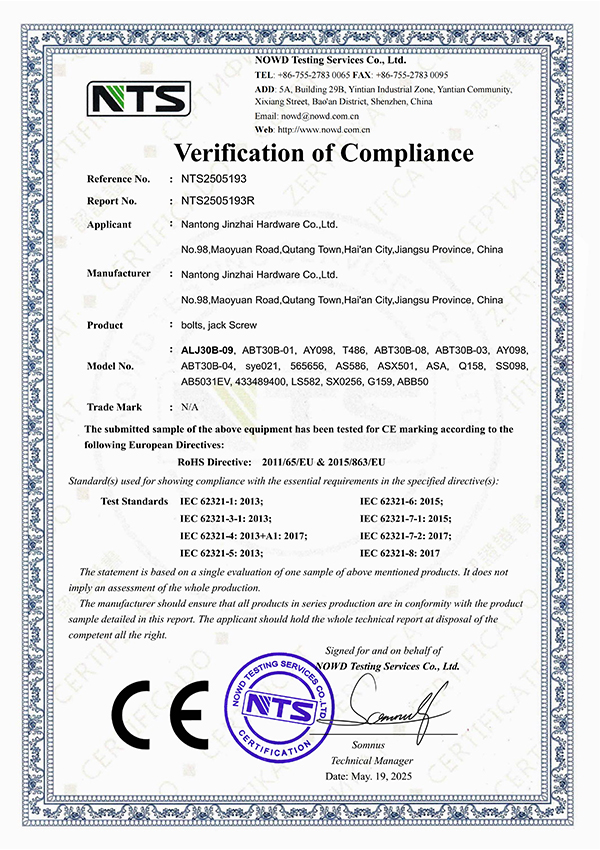
At Nantong Jinzhai Hardware Co., Ltd. — the production plant of Shanghai Soverchannel Industrial Co., Ltd. — surface treatment selection for high-strength rods is handled as part of the engineering review process, with each coating option evaluated against the customer's operating environment, torquing method, and regulatory requirements before production begins.
Dimensional Tolerances and Thread Inspection Methods for ASTM A193 B7 Threaded Rods in Critical Joints
Unlike structural bolts where the fastener geometry is largely standardized, ASTM A193 B7 Threaded Rods used in pressure equipment or pipeline flanges are subject to tighter scrutiny because they are often custom-cut, double-end threaded, or produced with non-standard end features. Dimensional nonconformance in these rods — particularly in thread pitch diameter, straightness, and end squareness — can translate directly into uneven bolt load distribution across a flange, leading to leak paths that thermal cycling will progressively worsen.
Thread Pitch Diameter Verification
The pitch diameter of an external thread on a B7 rod must fall within the tolerance band defined by ASME B1.1 (for unified threads) or ASME B1.13M (for metric threads). Go/No-Go ring gauges are the production-floor standard for pass/fail verification, but for critical joints subject to ASME PCC-1 or equivalent bolt-up procedures, 3-wire measurement of pitch diameter is used to obtain an actual numerical value. This method places three wires of a known diameter into the thread grooves and measures the over-wire distance with a micrometer, then applies the appropriate wire-measurement constant to back-calculate pitch diameter. It is more time-consuming than gauge checking but provides objective measurement data that can be included in inspection records.
Straightness and End-Squareness Tolerances
ASTM A193 does not specify rod straightness directly; straightness tolerances for threaded rod are governed by ASME B18.31.2 for inch series rods, which sets maximum bow at 1/8 inch per 3 feet of length for standard rods. For flanged joint applications, stricter straightness requirements are often imposed by the end-user's engineering standard — a common threshold is 0.010 inch per foot of rod length. End squareness (the perpendicularity of the end face to the rod axis) affects how evenly the nut bearing face loads the flange; out-of-square ends effectively reduce the contact area and create bending moments that add to the nominal tensile stress in the rod.
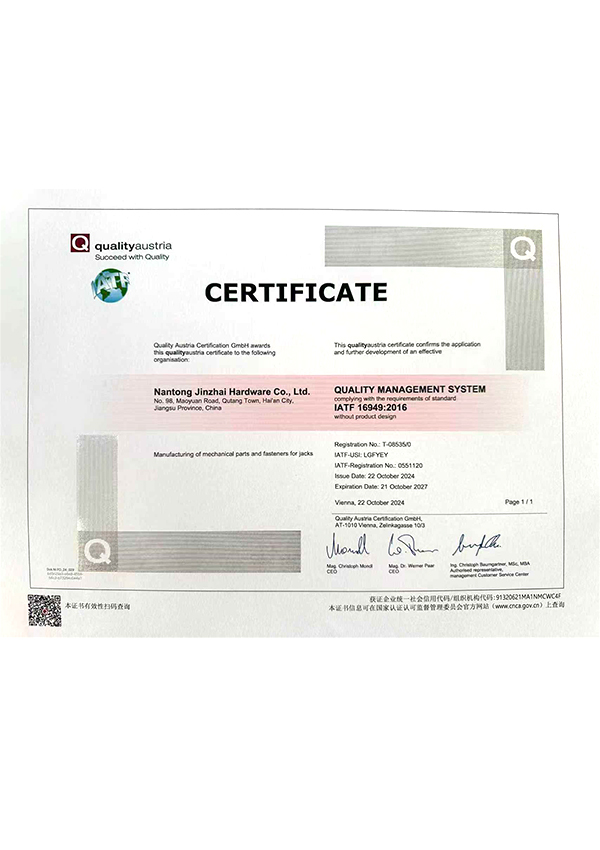
As a manufacturer experienced in producing precision fastening components for demanding industrial applications, Shanghai Soverchannel Industrial Co., Ltd. implements full-process dimensional inspection covering thread gauge checks, straightness measurement, and hardness verification on every lot of ASTM A193 B7 Threaded Rods — providing customers with the inspection data needed to satisfy third-party audits and engineering hold-point requirements.


 中文简体
中文简体 Português
 Español
 Deutsch
 русский
 عربى
عربى