Industry Knowledge
How Load Type Determines the Right Grade of Thread Rods & Studs
Selecting a threaded rod by diameter alone is one of the most common specification errors in both construction and machinery applications. The load type — whether static, dynamic, or cyclic — governs which grade is appropriate, because a rod that holds 10 tons under steady tension can fracture unpredictably under the same load applied in repeated pulses. Understanding the mechanical behavior of each grade before placing an order prevents costly retrofits and safety incidents.
The three functional categories of fully threaded rods map to distinct working conditions:
| Rod Type |
Typical Tensile Strength |
Characteristic Load |
Representative Use |
| Ordinary Threaded Rod (4.6 / 4.8) |
400–420 MPa |
Low static tension |
Ceiling joists, light decoration hanging |
| High-Strength Threaded Rod (8.8 / 10.9) |
800–1040 MPa |
Heavy static + moderate cyclic |
Steel structure tying, machinery frame |
| Stainless Steel Corrosion-Resistant Rod |
500–700 MPa (A2/A4) |
Moderate load in corrosive media |
Pipeline flanges, transformer mounting |
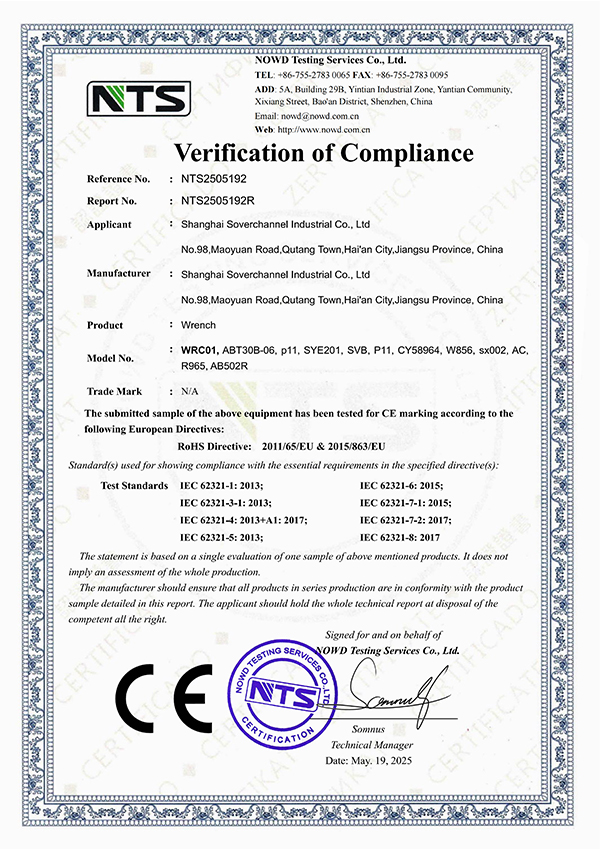
For cyclic loading environments — cable tray support systems subject to wind-induced vibration, or equipment isolation mounts with continuous mechanical pulse — fatigue life becomes the limiting factor, not ultimate tensile strength. Engineers should request S-N curve data or a fatigue rating from the supplier rather than relying on static load tables alone. Shanghai Soverchannel Industrial Co., Ltd. provides material certifications and technical data sheets that include these parameters for customers working in power and petrochemical environments.
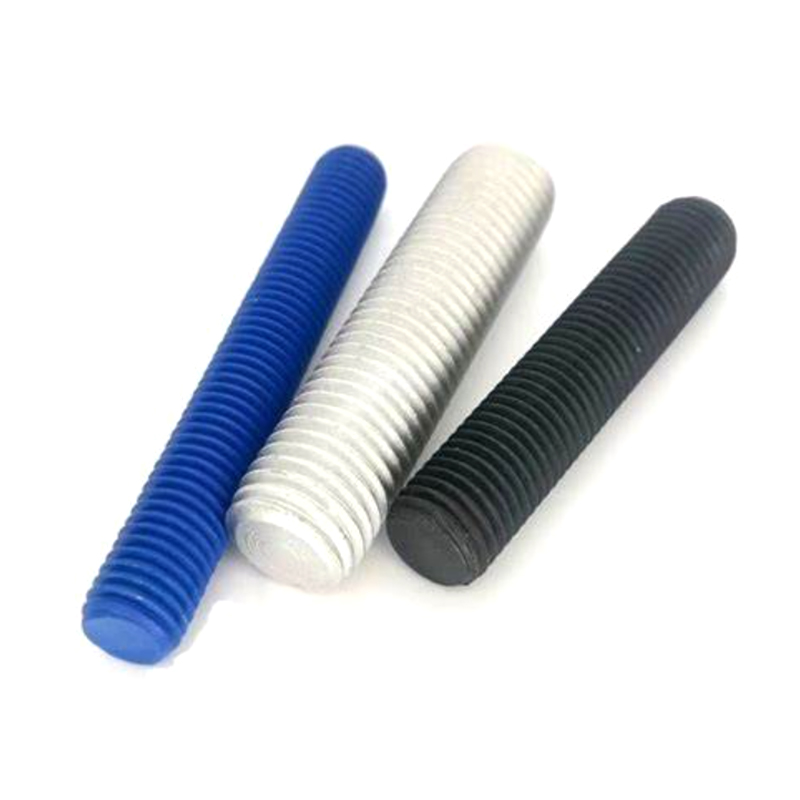
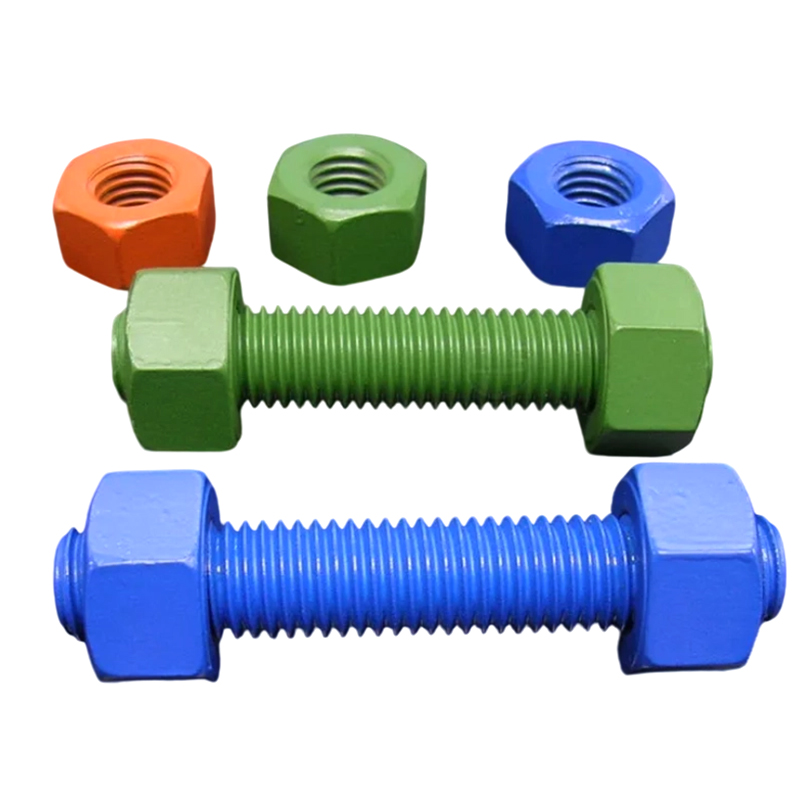
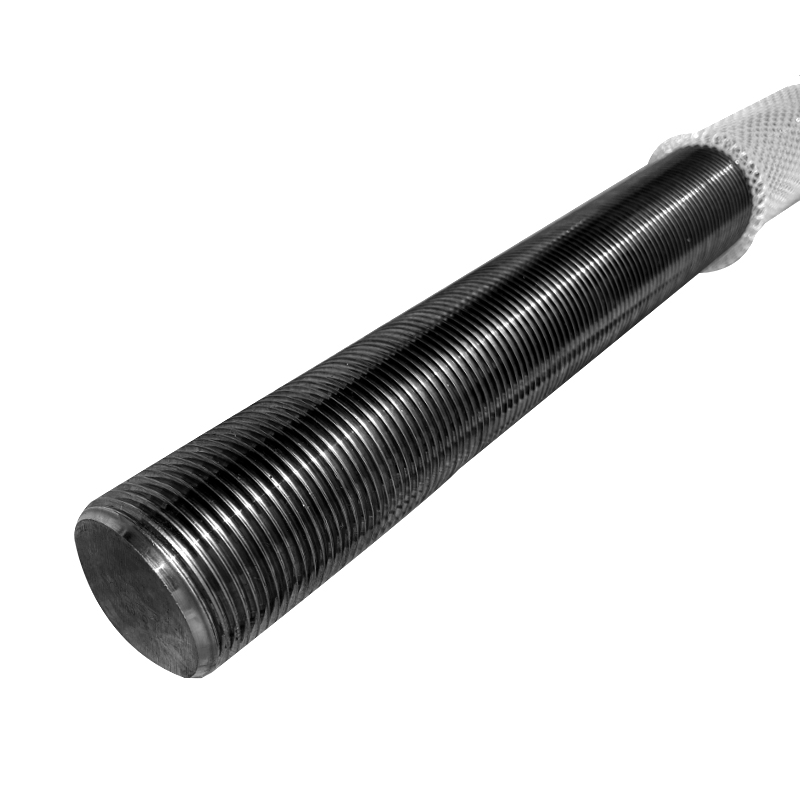
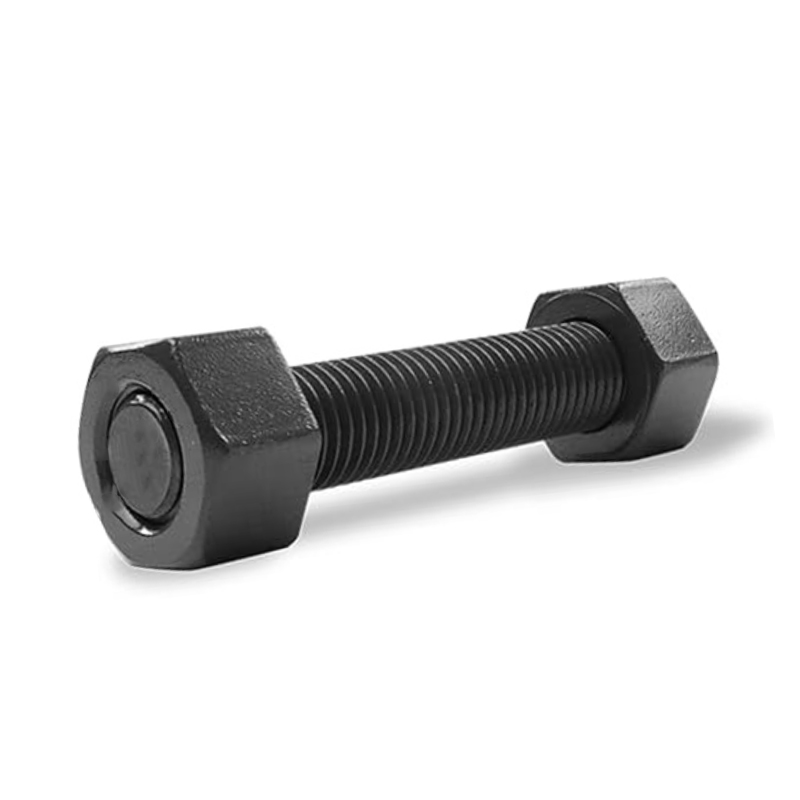
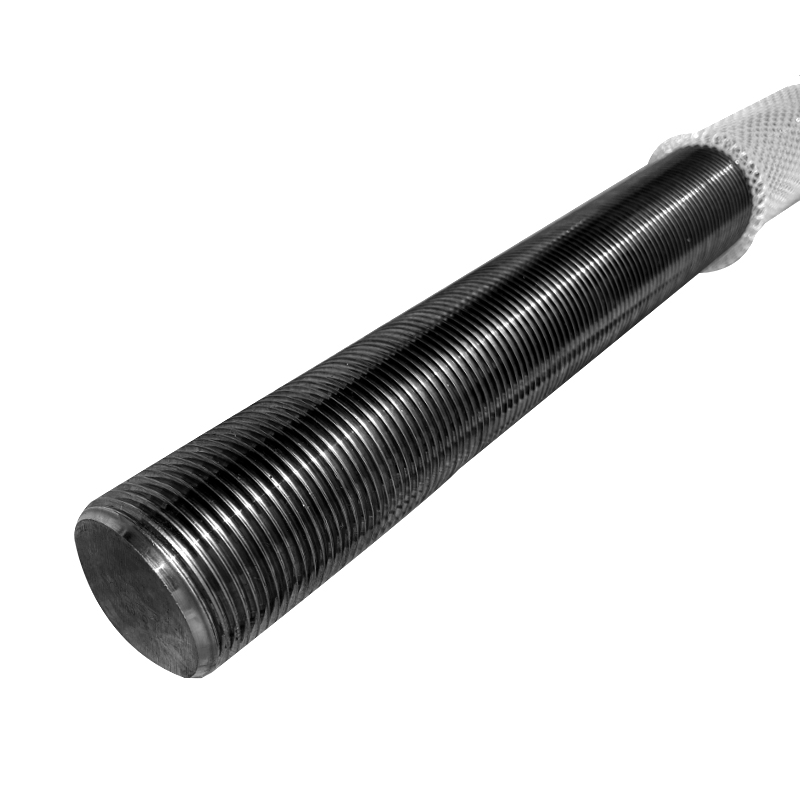
Bare Carbon Steel Thread Rods have a service life measured in months when exposed to moisture, not years. The coating system applied after manufacturing largely determines whether a rod survives its design life in construction, power, or industrial environments. Specifying a coating without matching it to the corrosion category of the installation site is a common procurement gap that leads to premature replacement cycles.
ISO 9223 Corrosion Categories and Suitable Coatings
| ISO Category |
Environment Description |
Recommended Coating |
Typical Salt Spray Resistance |
| C1 / C2 |
Dry indoor, low humidity |
Electro-zinc plating (5–8 µm) |
72–96 hours |
| C3 |
Urban/industrial, moderate humidity |
Hot-dip galvanizing (45–85 µm) |
500+ hours |
| C4 |
Industrial with chloride, coastal |
Dacromet or mechanical zinc (8–12 µm) |
720–1000 hours |
| C5 |
Marine, heavy chemical industrial |
Geomet® or duplex coating systems |
1000–2000 hours |
One practical consideration often overlooked in construction projects: hot-dip galvanizing adds 45–85 µm per side to the thread profile, which can make standard nuts difficult or impossible to install without re-tapping. When specifying HDG carbon steel thread rods for pre-embedded fixing or steel structure tying, buyers should confirm that mating nuts are also HDG-rated and ordered with the appropriate oversize tolerance (typically 6AZ per ISO 10684) to allow proper assembly without forcing the thread fit.
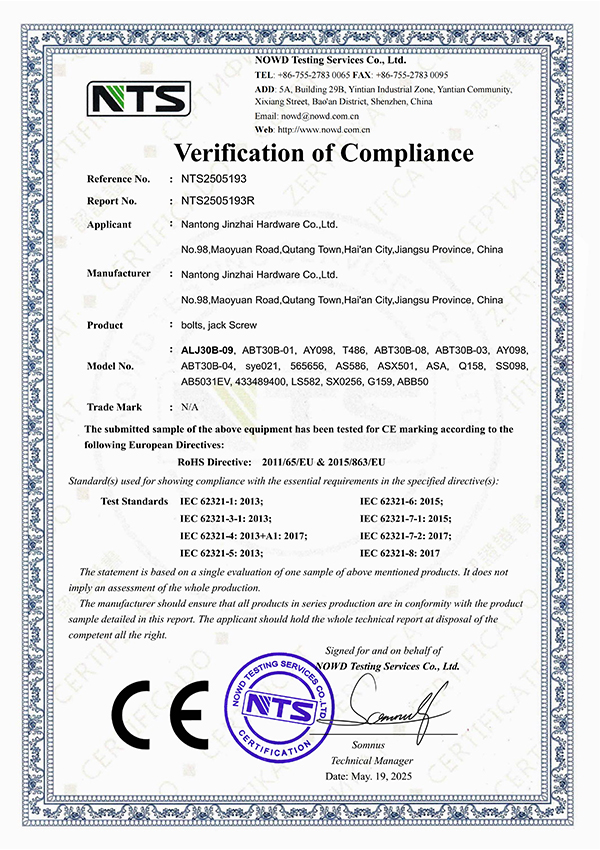
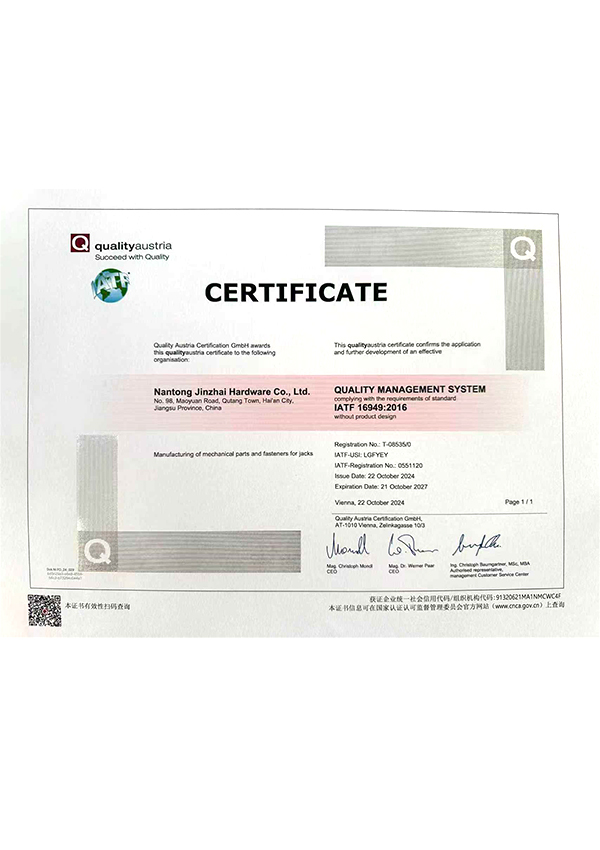
Shanghai Soverchannel Industrial Co., Ltd., operating through its Nantong Jinzhai Hardware Co., Ltd. manufacturing facility, supplies carbon steel threaded rods with documented coating thickness reports and lot-traceable salt spray test records, which are especially requested by clients in petrochemical pipeline and power infrastructure projects.
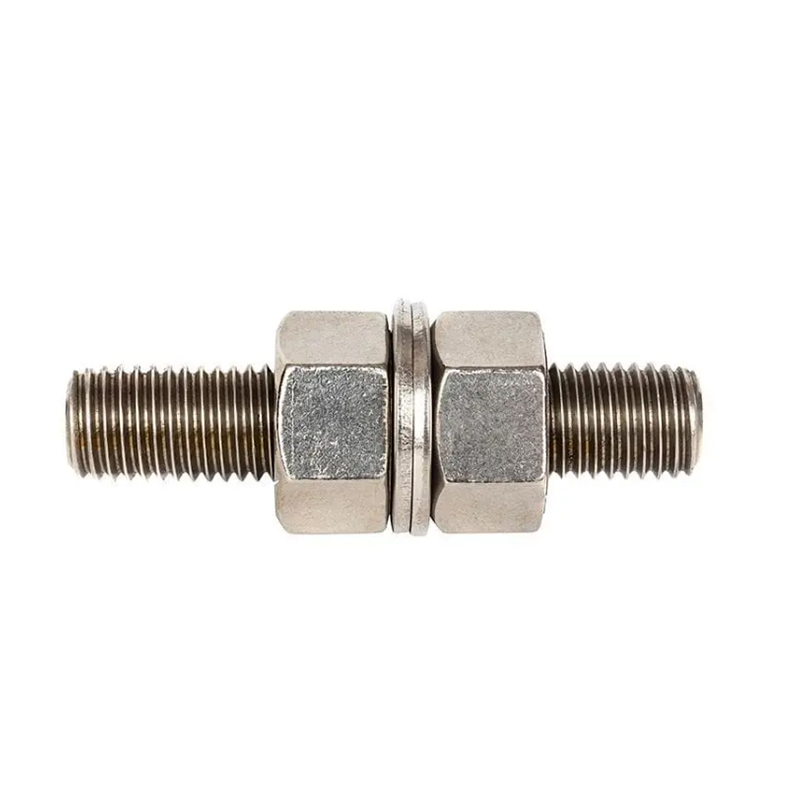
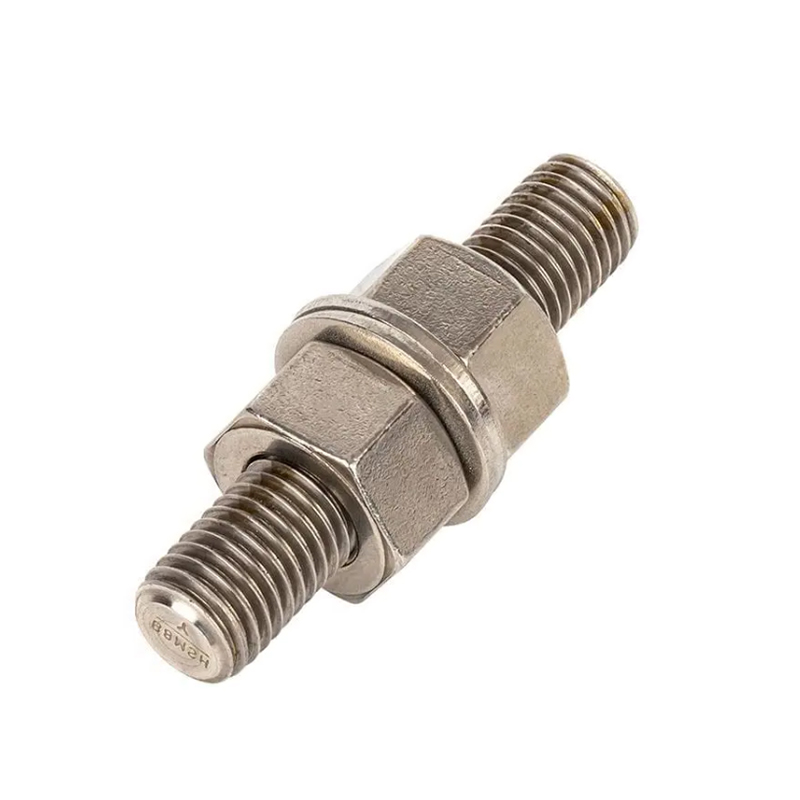
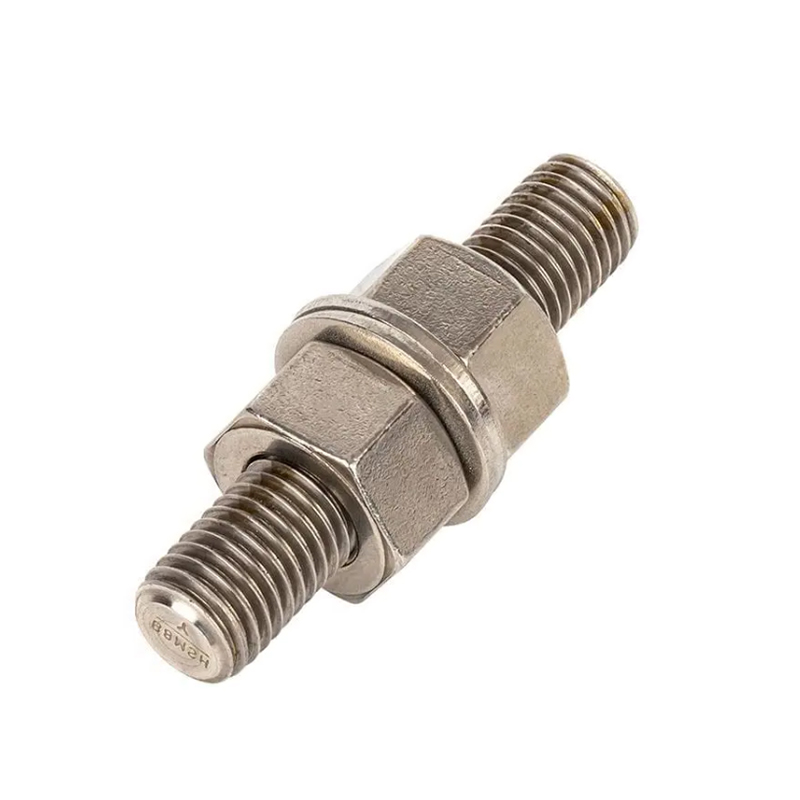
Specifying Stainless Steel Thread Rods for petrochemical and pipeline applications involves more than choosing "stainless" as a category. Chloride concentration, operating temperature, and the presence of reducing or oxidizing acids each determine which stainless alloy will perform — and which will suffer localized corrosion failure within months despite looking intact at installation.
Alloy Selection Guide for Corrosive Service Environments
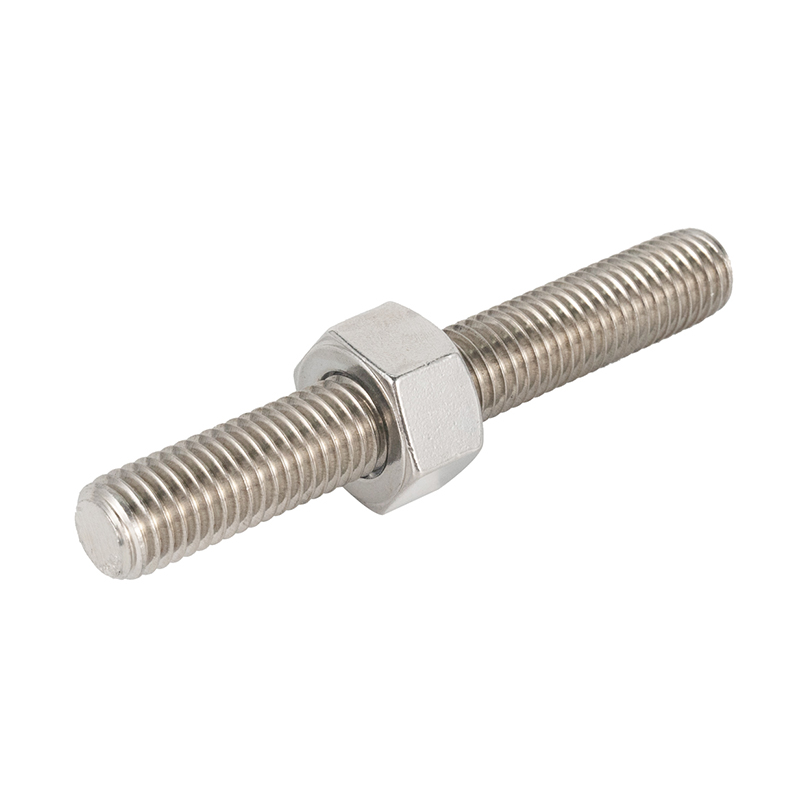
- A2 (304 / 1.4301): Suitable for clean water systems, indoor chemical storage, and mild acidic environments below 60°C. Not suitable where chloride concentrations exceed 200 ppm — pitting corrosion initiates rapidly on 304 in marine or coastal chemical plants.
- A4 (316 / 1.4401): The standard choice for saltwater, coastal petrochemical, and dilute acid environments. The 2–3% molybdenum addition raises the pitting resistance equivalent number (PREN) to approximately 24, compared to 18 for A2, providing meaningful protection in seawater-cooled equipment and offshore pipelines.
- 316L (low carbon): Required when welding stainless threaded components into assemblies. Standard 316 can suffer sensitization at heat-affected zones, precipitating chromium carbides at grain boundaries and creating pathways for intergranular corrosion. 316L limits carbon to ≤0.03% to prevent this.
- Duplex 2205 (1.4462): For high-chloride or H₂S-containing environments such as sour gas pipelines or desalination plant hardware. PREN ≥35 and yield strength roughly double that of A4, allowing smaller-diameter rods to carry equivalent loads — valuable in congested piping racks.
- 904L (1.4539): Specified for concentrated sulfuric acid service and highly reducing acid environments where standard austenitic grades fail. High nickel (24–26%) and copper additions provide stability in conditions that would aggressively attack 316.
A frequently missed detail in stainless rod procurement: the surface finish condition of the rod affects corrosion resistance independently of alloy grade. Bright-drawn or pickled-and-passivated surfaces resist crevice and pitting corrosion better than as-rolled finishes, because they remove the scale layer that can harbor chloride under operating conditions. Shanghai Soverchannel Industrial Co., Ltd. specifies passivation treatment as a default for stainless threaded rod orders destined for chemical and pipeline applications, with test records available per ASTM A967.
Pre-Embedded Threaded Rod Installations: Anchor Depth, Edge Distance, and Pull-Out Resistance
Fully threaded rods are among the most common pre-embedded fasteners in construction, used for steel structure column base plates, equipment anchor frames, and curtain wall sub-structure connections. Their pull-out strength — the maximum tensile force before the rod extracts from the concrete — is not solely a function of the rod's tensile grade. Concrete compressive strength, embedment depth, edge distance, and group spacing all govern the failure load, often more than the steel grade itself.
Key Parameters Governing Concrete Cone Failure (ACI 318 / EN 1992)
- Embedment depth (hef): Pull-out resistance scales with hef^1.5 under the concrete breakout model. Doubling the embedment depth increases theoretical pull-out capacity by approximately 2.8×, not 2×. This is why increasing rod length is disproportionately effective when concrete strength is the limiting factor.
- Edge distance (ca1): When the edge distance is less than 1.5 × hef, the concrete cone is geometrically truncated and pull-out capacity is reduced. For curtain wall joist anchor rods near slab edges, this is frequently the critical dimension that governs minimum anchor spacing layout.
- Group effect: Closely spaced anchor rods share overlapping failure cones, reducing per-rod capacity relative to isolated anchors. ACI 318-19 Section 17.6 provides the modification factor (Ψec,N) for eccentric loading on anchor groups — a calculation step often skipped in fast-track projects but critical for seismic zones.
- Concrete compressive strength (f'c): Pull-out capacity scales with √f'c. Moving from 25 MPa to 40 MPa concrete increases breakout resistance by approximately 26%. This makes concrete specification — not just rod grade — a meaningful variable in anchor system design.
For equipment pre-embedded fixing in power and industrial plants, the rod projection length above the concrete surface must also account for the full assembled height: base plate thickness, leveling nut, washer, and structural nut, with sufficient thread engagement remaining. A minimum of one full diameter of thread engagement in the nut is the practical floor; structural applications typically require 1.5× diameter engagement per ISO 898-2 guidance.
Thread Form and Pitch Selection for Adjusting Lead Screws in Machinery
When Thread Rods & Studs are used as adjusting lead screws in machinery — setting frame alignment, tensioning drive systems, or positioning precision tooling — the thread form and pitch selection directly affect both positional resolution and the tendency to self-lock or back-drive. This is a functional engineering decision, not just a dimensional one, and choosing the wrong pitch creates either excessive backlash or a mechanism that requires destructive force to adjust in the field.
Metric Coarse vs. Fine Thread in Adjusting Applications
| Property |
Coarse Thread (e.g., M16×2.0) |
Fine Thread (e.g., M16×1.5) |
| Linear advance per turn |
2.0 mm |
1.5 mm |
| Self-locking tendency |
Higher (lower helix angle) |
Higher (even lower helix angle) |
| Adjustment resolution |
Lower (coarser per turn) |
Higher (finer per turn) |
| Stress area (M16) |
157 mm² |
167 mm² |
| Dirt/debris tolerance |
Better (deeper thread root) |
Lower (shallower profile) |
For trapezoidal lead screws (ISO 2903 / DIN 103) used in heavy machinery alignment jigs, the thread form changes fundamentally from the V-profile of standard metric threads. Trapezoidal threads have a 30° flank angle versus 60° for metric, reducing the radial force component during axial loading and improving efficiency from approximately 30–40% (metric V-thread) to 50–70% per turn. This matters in precision machinery where manual adjustment torque is constrained. Shanghai Soverchannel Industrial Co., Ltd. manufactures custom-pitch lead screw rods to customer drawings, with full-form thread gauging and surface hardness reports included for wear-critical machinery components.
Cable Tray and Support System Loading: Sizing Threaded Suspension Rods Correctly
In power infrastructure and industrial electrical installations, suspension rods for cable trays are frequently undersized because designers apply linear load estimates that don't account for fill factor changes over the installation's service life. A cable tray initially carrying 15 kg/m of cable is often at 90% fill within five years as circuits are added, pushing rod stress close to or above the design limit for the original rod diameter. Selecting threaded suspension rods with an appropriate margin at installation — rather than designing to exact calculated load — is a practical engineering discipline that reduces costly retrofits.
Suspension Rod Sizing Reference (Single Rod, 1.2 m Span)
| Rod Diameter |
Grade 4.8 Safe Load |
Grade 8.8 Safe Load |
A4-70 Stainless Safe Load |
| M8 |
~1.1 kN |
~2.2 kN |
~1.5 kN |
| M10 |
~1.8 kN |
~3.6 kN |
~2.4 kN |
| M12 |
~2.6 kN |
~5.2 kN |
~3.5 kN |
| M16 |
~4.7 kN |
~9.4 kN |
~6.3 kN |
Safe loads in the table above apply a factor of safety of approximately 2.5 against the tensile stress area yield load, consistent with general mechanical engineering practice. For seismic zone installations, additional bracing rods at 45° are required per NFPA 13 / IBC Chapter 16 to resist horizontal acceleration loads — the vertical suspension rod alone carries only gravitational load and cannot be relied upon for lateral restraint.
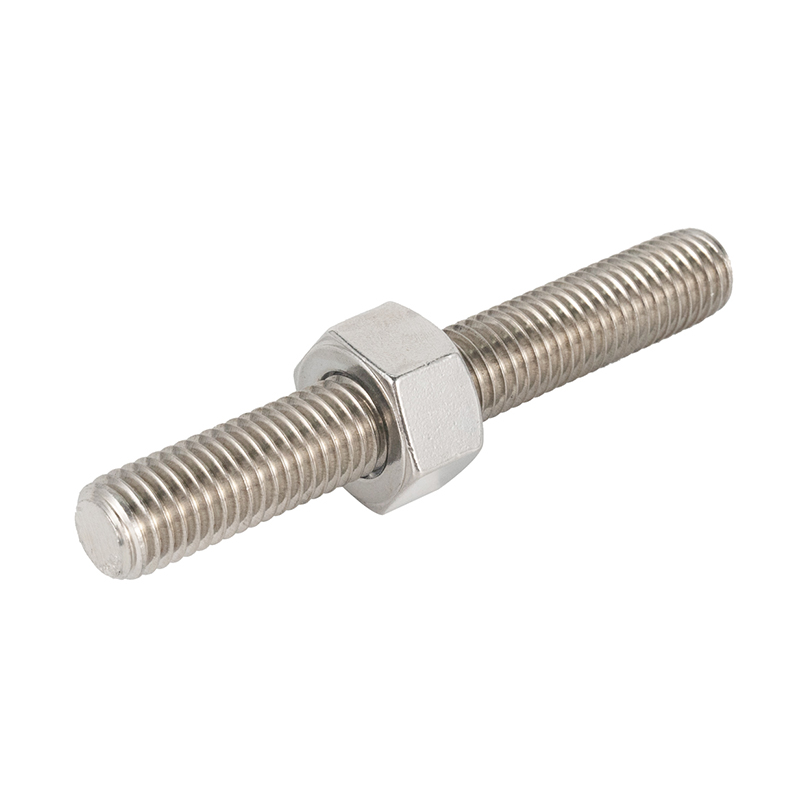
For transformer equipment fastening and cable support structures in outdoor power substations, the corrosive effect of industrial atmosphere on standard carbon steel rods makes Stainless Steel Thread Rods the operationally rational choice despite higher upfront material cost. A4-70 stainless rods in outdoor transformer environments typically outlast hot-dip galvanized carbon steel by a factor of three to five in C4-category atmospheres — a service life difference that eliminates at least one full replacement cycle over a 30-year substation design life. Shanghai Soverchannel Industrial Co., Ltd. supplies both Carbon Steel Thread Rods and stainless variants with matched nuts and washers, allowing buyers to consolidate their suspension hardware sourcing under a single, quality-certified supplier.


 中文简体
中文简体 Português
 Español
 Deutsch
 русский
 عربى
عربى