Industry Knowledge
Why Trapezoidal Thread Geometry Is the Engineering Standard for Jack Screws
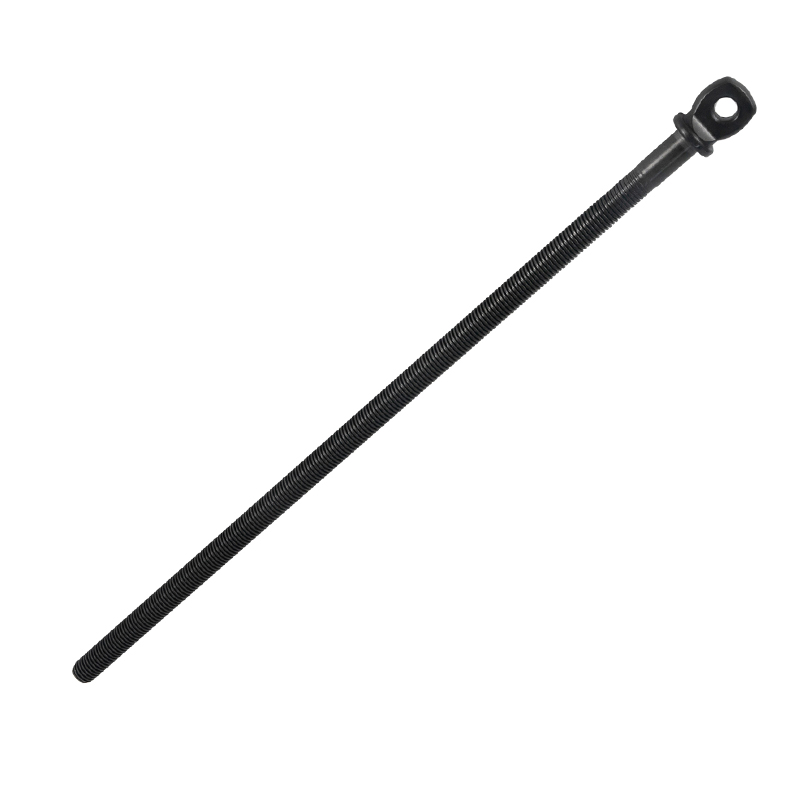
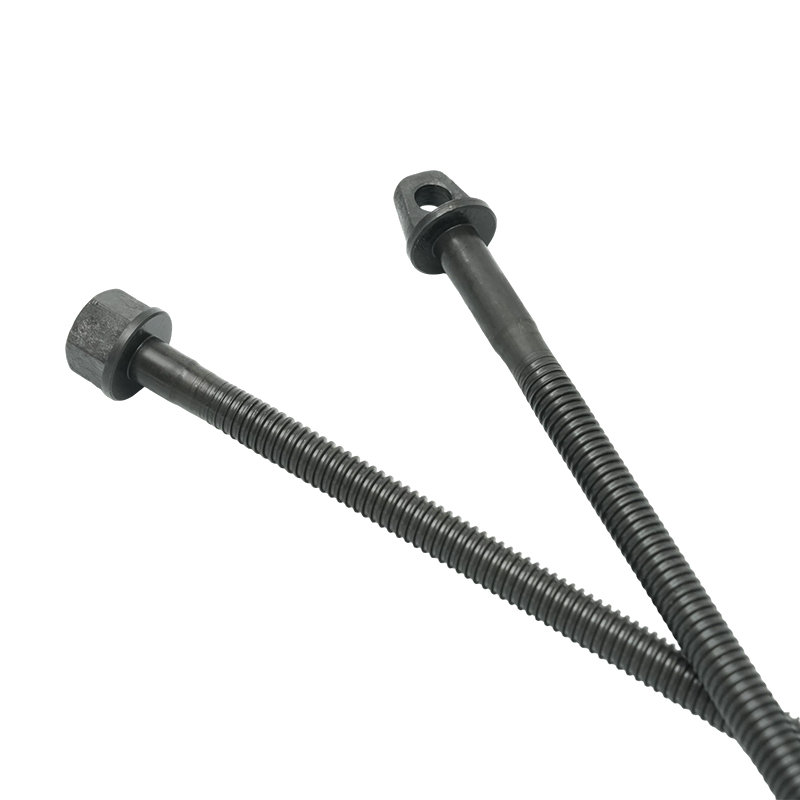
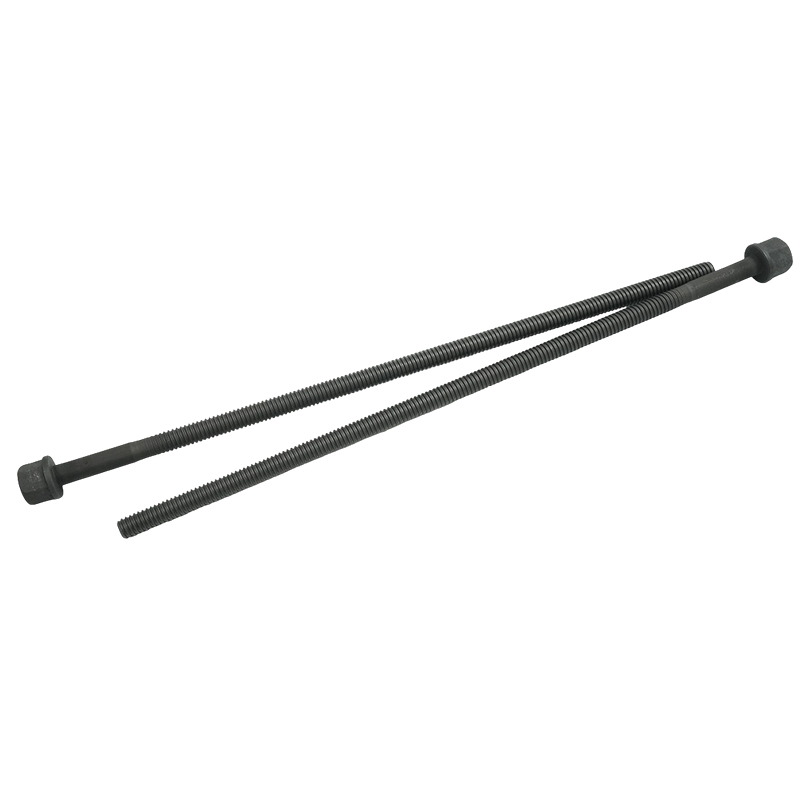
The trapezoidal thread profile used on scissor jack screw rods is not an arbitrary convention — it is the result of a specific set of mechanical trade-offs that V-profile metric threads cannot satisfy in power transmission applications. Understanding why the trapezoid profile dominates in Jack Screws helps engineers and procurement specialists identify counterfeit or misspecified components before they reach a vehicle's emergency toolkit.
The ISO 2904 trapezoidal thread standard defines a 30° included flank angle, compared to the 60° flank angle of standard metric fastener threads. This shallower angle produces three mechanical consequences that are critical for jack screw performance:
- Higher mechanical efficiency: The 30° flank reduces the radial force component during axial loading. A trapezoidal lead screw operating under load achieves 50–70% mechanical efficiency per revolution, compared to 20–40% for a V-thread of equivalent pitch. In a scissor jack, this means less operator torque is wasted overcoming thread friction and more is converted into lifting force against the vehicle load.
- Greater tooth root strength: The wider root width at the base of the trapezoidal thread cross-section provides a larger shear area per tooth. Under the bending moment generated when a loaded scissor jack reaches full extension, this root geometry resists tooth shear failure — a failure mode that would cause sudden, uncontrolled drop of the vehicle being supported.
- Predictable self-locking: The helix angle of a trapezoidal thread at typical jack screw pitches (typically 4–6 mm pitch on diameters of 16–22 mm) keeps the lead angle below the friction angle of the steel-on-steel interface. This ensures the jack remains positionally locked when the operator releases the crank handle — a safety-critical property for any load-bearing mechanism.
Shanghai Soverchannel Industrial Co., Ltd. manufactures trapezoidal jack screw rods with thread profile verified using optical comparator measurement and thread ring gauges calibrated to ISO 2904, ensuring the flank angle and pitch diameter tolerance meet the functional requirements of scissor jack assemblies across the 300–700 mm length range supplied to automotive OEM and aftermarket customers.
Rolled vs. Cut Trapezoidal Threads on Scissor Jack Screw Rods: Which Process Delivers Better Fatigue Life
Both thread rolling and thread cutting can produce dimensionally correct trapezoidal profiles on scissor jack screw rods, and both are specified in production. However, the subsurface metallurgical condition they leave behind differs fundamentally — and that difference determines how the screw rod behaves over thousands of load cycles in field use, particularly in the emergency roadside conditions where scissor jacks must perform reliably after months or years of storage.
Process Comparison: Thread Rolling vs. Thread Cutting for Jack Screws
| Property |
Thread Rolling |
Thread Cutting |
| Grain flow at thread root |
Continuous — fibers follow contour |
Interrupted — fibers cut through |
| Residual stress at root |
Compressive (fatigue-resistant) |
Tensile (fatigue-promoting) |
| Surface hardness at root |
+10–15 HRC vs. core (work hardened) |
Equal to or below core hardness |
| Fatigue life (relative) |
1.5–2× higher than cut threads |
Baseline |
| Surface finish (Ra) |
0.8–1.6 µm (smoother) |
1.6–3.2 µm |
| Material utilization |
No material removed — displaced |
Chips generated — material lost |
| Production rate |
Higher — suited to volume production |
Lower — suited to prototypes and specials |
The compressive residual stress introduced at the thread root by rolling is the key fatigue advantage. Fatigue cracks nucleate and propagate under tensile stress; compressive residual stress at the root effectively opposes this crack-opening force and extends the number of load cycles before initiation. For a scissor jack screw rod rated at 2000 kg, the alternating bending stress at full extension is not trivial — particularly for longer rods in the 600–700 mm range where column deflection under eccentric load adds bending to the primary axial tension. Thread-rolled rods at this length specification carry meaningfully lower fatigue risk, which is why volume automotive suppliers and OEM jack manufacturers consistently specify rolling over cutting for production quantities.
Material Selection for Scissor Jack Screw Rods: What 35K and 45K Steel Deliver Under Load
The selection of 35K and 45K carbon structural steel for scissor jack screw rods reflects a deliberate balance between strength, toughness, and machinability that alternative materials — including low-carbon steel or alloy grades — do not achieve as efficiently for this specific application. The "K" designation in Chinese GB/T standard carbon steels (equivalent to approximately AISI 1035 and AISI 1045 respectively) indicates a controlled sulfur and phosphorus content that improves machinability while maintaining the mechanical property response to quench-and-temper heat treatment that makes these grades suitable for dynamically loaded power transmission components.
Mechanical Properties After Quench-and-Temper Treatment
| Grade |
Tensile Strength (Rm) |
Yield Strength (Rp0.2) |
Elongation (A%) |
Hardness (HB) |
| 35K (Q&T) |
≥ 570 MPa |
≥ 320 MPa |
≥ 20% |
163–207 HB |
| 45K (Q&T) |
≥ 650 MPa |
≥ 380 MPa |
≥ 16% |
197–241 HB |
The higher carbon content of 45K delivers greater tensile and yield strength after heat treatment, making it the preferred choice for screw rods in longer length ranges (above 500 mm) and higher load categories approaching the 2000 kg rated capacity. The trade-off is slightly reduced elongation — 16% versus 20% for 35K — which reflects marginally lower ductility. For jack screw rods, this remains well within the safety margin for the application because the dominant failure mode under overload is thread deformation or column buckling rather than sudden brittle fracture, and both grades maintain impact toughness above the levels required for automotive roadside use conditions.
35K is more commonly specified for shorter rods in the 300–450 mm range where bending stress at full extension is lower, and where the higher elongation provides better energy absorption if the jack is accidentally overloaded — a scenario more likely in the hands of non-professional roadside users than in controlled workshop environments. Shanghai Soverchannel Industrial Co., Ltd. selects between these grades based on customer-provided length and load specifications, with heat treatment hardness verification included in the outgoing inspection report for each production batch.
Blackening vs. Galvanizing on Jack Screws: Corrosion Protection Matched to Storage Conditions
The rust prevention treatment applied to scissor jack screw rods is not purely a cosmetic decision. A scissor jack is one of the least-used components in a vehicle — typically stored untouched for months or years in a trunk spare wheel well, often in conditions of condensation, road salt contamination, and temperature cycling that promote surface oxidation. A screw rod that has corroded in storage may seize in the nut during emergency use, delivering zero lifting capability precisely when it is needed most.
Blackening (Black Oxide) Treatment
Blackening produces a Fe₃O₄ magnetite conversion coating approximately 1–2 µm thick through a controlled alkaline oxidation process at 135–145°C. The coating itself contributes virtually no dimensional change to the thread profile — critical for trapezoidal threads where even 5–10 µm added per side could tighten the thread fit and increase operating torque. Blackening provides mild corrosion resistance (typically 6–12 hours in neutral salt spray per ASTM B117) and must be sealed with oil or wax to perform at the upper end of this range. It is cost-effective for high-volume production and is the standard treatment for jack screw rods supplied as vehicle OEM equipment, where the sealed trunk environment and factory-applied oil coating extend practical storage life well beyond what the bare salt spray hours suggest.
Zinc Electroplating Treatment
Electro-zinc plating at 5–8 µm thickness provides significantly greater salt spray resistance — typically 72–120 hours before white rust appearance, and 200–300 hours before red rust on the base steel, when a chromate passivation layer is applied over the zinc. For jack screw rods specified for aftermarket sale or export markets where storage environments are less controlled than the OEM supply chain, the zinc-plus-chromate system offers meaningfully better long-term protection. The dimensional addition from electroplating (approximately 5–8 µm per surface) is small enough that standard 6e trapezoidal thread tolerances accommodate it without requiring oversize nuts, unlike hot-dip galvanizing which adds 45–85 µm and would require compensating nut thread adjustments.
The choice between blackening and galvanizing for a given jack screw rod production run depends on the customer's end-use channel, storage environment, and export requirements. Shanghai Soverchannel Industrial Co., Ltd. offers both surface treatments with documented salt spray test records from Nantong Jinzhai Hardware Co., Ltd., allowing customers to specify the appropriate protection level and receive objective corrosion performance evidence with each delivery batch rather than relying on visual inspection alone.
Column Buckling Risk in Long Jack Screws: How Rod Length and Load Interact
A scissor jack screw rod at full extension is structurally a slender column under compressive load — not a simple tension fastener. As rod length increases from 300 mm to 700 mm, the column slenderness ratio increases proportionally, and the critical load at which the rod will buckle laterally drops as the square of the length increase. This means a 700 mm rod, all else equal, has roughly one-quarter the buckling resistance of a 300 mm rod of identical cross-section — a relationship described by Euler's buckling formula that fundamentally governs why longer jack screw rods require larger diameters or higher material grades to maintain equivalent load ratings.
- Effective length factor: In a scissor jack, the screw rod is constrained at both ends by the pivot joints of the scissor arms — a pin-pin boundary condition with an effective length factor (K) of 1.0. This is less favorable than a fixed-end column (K = 0.5) but more favorable than a cantilever (K = 2.0). The effective length for buckling calculation equals the full rod length between engagement points, not the nominal rod length.
- Eccentric loading effect: In field use, the vehicle's jacking point is rarely centered perfectly on the jack saddle, introducing a bending moment that is superimposed on the axial compressive load. This eccentricity reduces the effective buckling load below the Euler critical value. For rods in the 600–700 mm range under near-rated load, even 5–10 mm of saddle offset from center can produce lateral deflection at the rod midpoint that exceeds material yield — which is why load ratings on longer jack screw specifications incorporate a more conservative safety factor than equivalent-diameter shorter rods.
- Diameter-to-length ratio guidance: Industry practice for scissor jack screw rods targets a minimum diameter-to-effective-length ratio that keeps the Euler critical load at least 3× the rated working load. For a 700 mm effective length rod rated at 2000 kg (approximately 20 kN), this typically requires a nominal thread diameter of at least 20–22 mm in 45K steel. Reducing to a 16 mm diameter at this length to save weight or cost brings the safety factor against buckling below 2.0 under eccentric load — an unacceptable margin for emergency support equipment.
Shanghai Soverchannel Industrial Co., Ltd. designs jack screw rod cross-sections against both thread stress area and column buckling criteria for each length-load combination in the 300–700 mm range, rather than applying a single diameter across all lengths. This approach — backed by the company's deep engineering experience in automotive transmission and fastening components — ensures that the rated 2000 kg load capacity is genuinely achievable at full extension, not only at partial stroke where buckling risk is lower.
Transmission Efficiency and Operating Torque Specification for Scissor Jack Screw Rods
The mechanical effort required to operate a scissor jack — the torque a vehicle occupant must apply to the crank handle to lift the vehicle — is directly determined by the screw rod's thread efficiency, lead, and friction condition. An inefficient or corroded jack screw rod can require torques that exceed what an average adult can sustain, turning an emergency roadside tool into an unusable piece of equipment. Understanding what drives operating torque allows buyers and engineers to specify jack screws that remain operable across their service life rather than only when new.
Factors That Determine Required Operating Torque
| Factor |
Effect on Torque |
Practical Range |
| Thread lead (pitch) |
Higher lead → lower torque per unit lift, higher linear advance |
4–6 mm pitch typical for Tr16–Tr22 jack rods |
| Thread coefficient of friction (µ) |
Higher µ → higher torque, lower efficiency |
0.10–0.15 (lubricated) to 0.18–0.25 (dry/corroded) |
| Thread flank angle |
30° trapezoidal lower than 60° metric for same load |
30° (ISO trapezoid) vs. 60° (metric V) |
| Axial load |
Torque increases linearly with load |
0–2000 kg rated range |
| Surface finish quality |
Smoother surface → lower friction → lower torque |
Ra 0.8–1.6 µm (rolled) vs. 1.6–3.2 µm (cut) |
A practical operating torque target for a vehicle scissor jack under 1000 kg load is typically 15–25 N·m at the crank socket — achievable with a standard 400 mm lug wrench by an average adult applying approximately 40–60 N of hand force. If the jack screw rod has surface corrosion that raises the thread friction coefficient from 0.12 (lightly oiled, new condition) to 0.22 (dry, lightly oxidized), operating torque at the same load increases by approximately 70–80%, potentially pushing the required effort beyond what a smaller-framed operator can sustain in a real emergency. This is the engineering argument for surface treatment quality on jack screws being a functional specification, not merely an aesthetic one.
Shanghai Soverchannel Industrial Co., Ltd. validates transmission smoothness on scissor jack screw rods through no-load rotation testing under assembly with matched nuts, confirming consistent torque without jamming across the full stroke length — a quality checkpoint that catches surface defects, thread form deviations, and pitch errors that dimensional inspection alone cannot detect.


 中文简体
中文简体 Português
 Español
 Deutsch
 русский
 عربى
عربى