
Content
A flange joint on a high-pressure oil pipeline does not fail with a warning. Pressure builds, temperature cycles, corrosive media contacts every surface — and when the fastener underperforms, the consequences are immediate and severe. That is why engineers and procurement teams in oil and gas, petrochemical, and power generation do not reach for standard carbon steel threaded rods when specifying critical bolted connections. They specify ASTM A193 Grade B7 threaded rods and stud bolts — and have done so for decades, because the material earns the specification every time.
This article explains what makes B7 the default choice for high-pressure fastening, where it is applied across the oil and gas value chain, how it compares to alternative grades, and what to verify before placing a bulk procurement order.
Most industrial threaded rods are made from low or medium carbon steel and perform reliably in dry, moderate-temperature environments — construction frames, machinery mounts, electrical cable tray supports. These are conditions where tensile strength is constant and corrosion is manageable with a zinc coating.
Oil and gas service is different in every dimension. Wellhead equipment, pipeline flanges, and pressure vessel bolting operate at temperatures that can exceed 400°C. Internal pressures in hydrogenation reactors reach hundreds of bar. The media — crude oil, refinery process gases, hydrogen sulfide, acidic condensates — attack surfaces continuously. And the consequence of joint failure is not a loose shelf bracket; it is a process leak, a safety incident, or a shutdown that costs hundreds of thousands of dollars per day.
Standard carbon steel loses tensile strength rapidly above 200°C, is not rated for pressure vessel service, and corrodes quickly without surface protection that degrades over time. These limitations are not acceptable in oil and gas bolting. thread rod and stud products engineered for demanding industrial applications are the only appropriate starting point for this class of service.
ASTM A193 is the governing specification for alloy-steel and stainless-steel bolting materials for high-temperature or high-pressure service. Grade B7 is the most widely used grade within that specification. It designates a chromium-molybdenum alloy steel — typically AISI 4140 or 4142 — that has been quenched and tempered to achieve a precise combination of strength, toughness, and heat resistance.
The quench-and-temper process is not optional finishing. It is the mechanism that delivers B7's performance. Heating the steel to austenizing temperature, rapidly quenching in oil or water, then tempering at a controlled lower temperature refines the microstructure and imparts the tensile strength, yield strength, and ductility that the ASTM standard requires. Without this treatment, the same alloy steel would not meet specification.
| Property | Requirement |
|---|---|
| Tensile strength (min) | 125 ksi / 862 MPa |
| Yield strength (min) | 105 ksi / 724 MPa |
| Elongation (min) | 16% |
| Reduction of area (min) | 50% |
| Hardness (max) | 35 HRC / 321 HBW |
| Max service temperature | ~450°C (840°F) |
The hardness maximum is as important as the minimums. Capping hardness at 35 HRC controls susceptibility to hydrogen embrittlement and stress corrosion cracking — failure modes that matter in environments containing hydrogen or wet hydrogen sulfide. For a full overview of the specification framework, technical guidance on ASTM A193 bolting material classifications provides useful context on grade coverage and historical background.
Our ASTM A193 B7 threaded rods certified to high-pressure service requirements are produced to full specification with material test reports available per production lot.
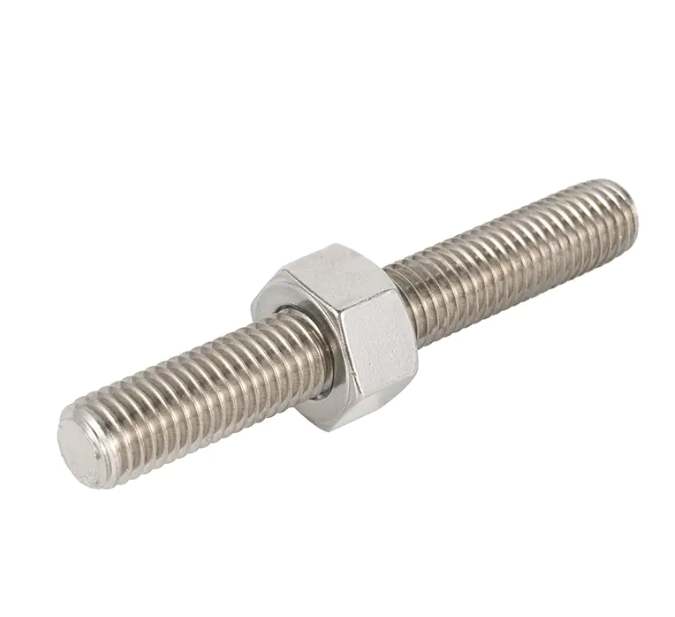
B7 threaded rods and stud bolts appear throughout the oil and gas value chain, from upstream drilling equipment to downstream refinery processing. The common thread is always the same: high pressure, elevated temperature, or aggressive chemical exposure — usually all three simultaneously.
Every flanged joint on a high-pressure oil or gas pipeline is a potential leak point. B7 stud bolts, paired with ASTM A194 Grade 2H heavy hex nuts, are the standard fastening system for ASME B16.5 flanges in Class 600, Class 900, and above. The combination delivers the bolt load required to seat the gasket uniformly and maintain a seal through pressure and temperature cycling across the operating life of the pipeline.
Refinery hydrogenation reactors operate at hydrogen partial pressures that can reach 200 bar or more, at temperatures above 300°C. The bolting that seals the reactor flanges must maintain clamping force at temperature without creep relaxation that would open the joint. B7's yield strength retention at elevated temperatures — significantly better than standard carbon steel — makes it the material specified in ASME Section VIII vessel codes for this service.
At the wellhead, Christmas tree assemblies and manifold connections are bolted joints that must hold against wellbore pressure throughout the producing life of the well. B7 stud bolts provide the tensile capacity for API 6A and ASME rated equipment while maintaining dimensional stability in the wide temperature swings between surface ambient and produced fluid temperatures.
LNG storage and transfer equipment presents the opposite challenge: extreme cold rather than heat. Standard B7 alloy steel loses impact toughness at sub-zero temperatures, which is why LNG applications require a different grade. For these services, our ASTM A320 L7 threaded rods certified for cryogenic and low-temperature service are the correct specification — engineered to the impact toughness requirements that B7 does not address.
B7 is the right choice for most high-pressure oil and gas bolting, but it is not the right choice for every application. Understanding when to specify a variant or an alternative prevents both under-specification and unnecessary cost.
A354 Grade BD has higher tensile strength than B7 — around 150 ksi minimum versus 125 ksi — and is the standard for automotive chassis and heavy structural applications at ambient temperatures. The key distinction is heat resistance. B7 retains meaningful strength up to approximately 450°C; Grade 8 alloy steel does not. For oil and gas flanged service at elevated temperatures, B7 is the correct specification regardless of tensile strength comparison. Grade 8 is suited to ambient-temperature structural bolting where maximum static strength is the design constraint.
B7M is a lower-hardness variant of the same alloy, produced to a maximum of 22 HRC rather than B7's 35 HRC. Lower hardness significantly reduces susceptibility to sulfide stress cracking (SSC) in environments containing wet hydrogen sulfide — the condition defined in NACE MR0175/ISO 15156 as "sour service." If the pipeline or vessel handles sour crude or gas containing H₂S in aqueous phase, B7M is the required specification, not standard B7. The trade-off is lower tensile and yield strength, which affects joint design. Standard B7 is not acceptable for sour service as-specified; the hardness ceiling is too high.
For applications above B7's temperature ceiling — certain reforming reactors, steam superheater flanges, and high-temperature power generation bolting — ASTM A193 B16 (a chromium-molybdenum-vanadium alloy) maintains strength at temperatures where B7 begins to relax. B16 carries a significant cost premium and is a specialist grade; confirm the actual service temperature against design code requirements before upgrading.
| Grade | Key characteristic | Typical application |
|---|---|---|
| ASTM A193 B7 | 125 ksi tensile, rated to ~450°C | Oil & gas flanges, pressure vessels, pipeline |
| ASTM A193 B7M | Lower hardness, SSC resistant | Sour service (H₂S environments) |
| ASTM A320 L7 | High impact toughness at sub-zero | LNG, cryogenic storage, cold service |
| A354 Grade BD (Grade 8) | 150 ksi tensile, ambient temperature only | Structural steel, automotive, heavy machinery |
| ASTM A193 B16 | Strength retention above 450°C | Steam superheaters, very high-temp reactors |
B7's alloy steel composition provides excellent mechanical performance but modest inherent corrosion resistance. In offshore platforms, coastal refineries, chemical processing environments, and any service with cyclic moisture exposure, surface treatment is a primary factor in the maintenance interval and total service life of the fastener assembly.
Dacromet is the specification treatment for B7 studs in demanding corrosion environments. The coating — a water-based zinc-aluminum flake system cured at approximately 300°C — provides 500–1,000 hours of neutral salt spray resistance in standardized testing, significantly outperforming electroplated zinc. Critically, Dacromet is applied without electrochemical processes, which means no hydrogen absorption and no hydrogen embrittlement risk. For high-strength B7 fasteners where embrittlement is a concern, this matters. Film thickness of 8–12 microns allows coated threads to remain within tolerance class without the oversize threading required by hot-dip galvanizing.
A PTFE layer applied over Dacromet addresses the thread friction issue that causes torque scatter during installation of large-diameter stud bolt assemblies. Uniform friction coefficient across all studs in a multi-bolt flange pattern is essential for achieving consistent gasket seating stress — the foundation of a leak-free joint. PTFE topcoat also reduces galling risk on large-diameter studs (M27 and above) where installation torques are high.
Electroplated zinc provides adequate protection for B7 rods in moderate indoor or sheltered outdoor environments. It is not specified for offshore service, coastal facilities, or environments with chemical splash. The main advantage is cost and availability; for general-purpose high-strength industrial applications where the installation environment is not aggressive, zinc-plated B7 is the economical choice.
B7 threaded rods for regulated pressure equipment service require documentation and verification that goes beyond dimensional check and visual inspection. The following checklist reflects the minimum quality requirements for procurement into oil and gas, petrochemical, and power generation applications.
Sourcing B7 threaded rods and stud bolts from a manufacturer with integrated production capability — cold heading, thread rolling, heat treatment, and surface treatment under one quality management system — provides the traceability and batch consistency that critical service applications demand. For specifications outside standard commercial ranges, custom manufacturing capability is the determining factor in whether a supplier can actually deliver what the engineering specification requires.
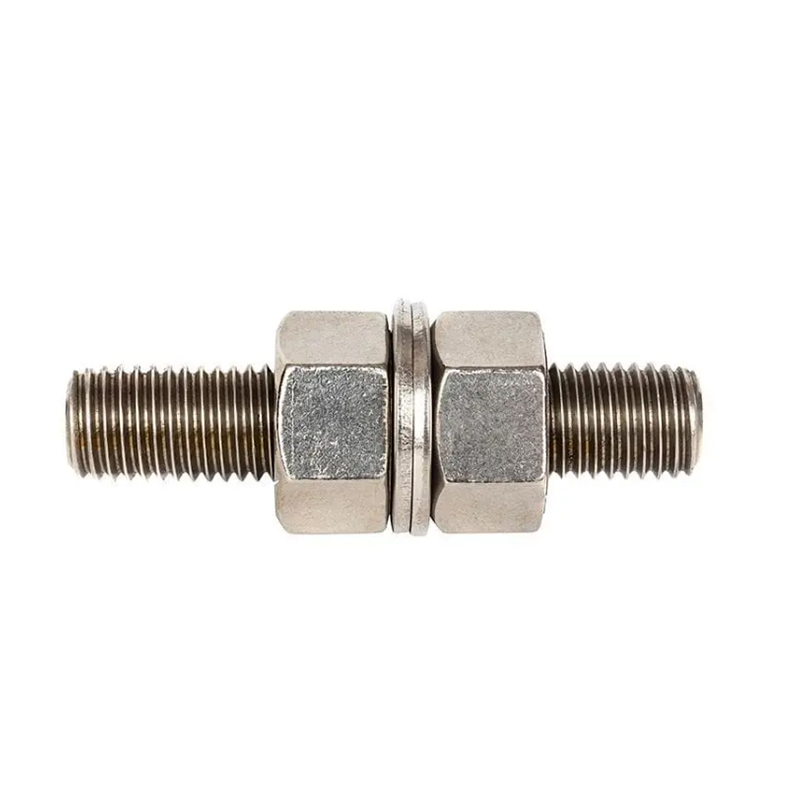 1-8 UNC *5" Alloy Steel ASTM A193 B7 Threaded Rods Grade L7 Threaded Studs
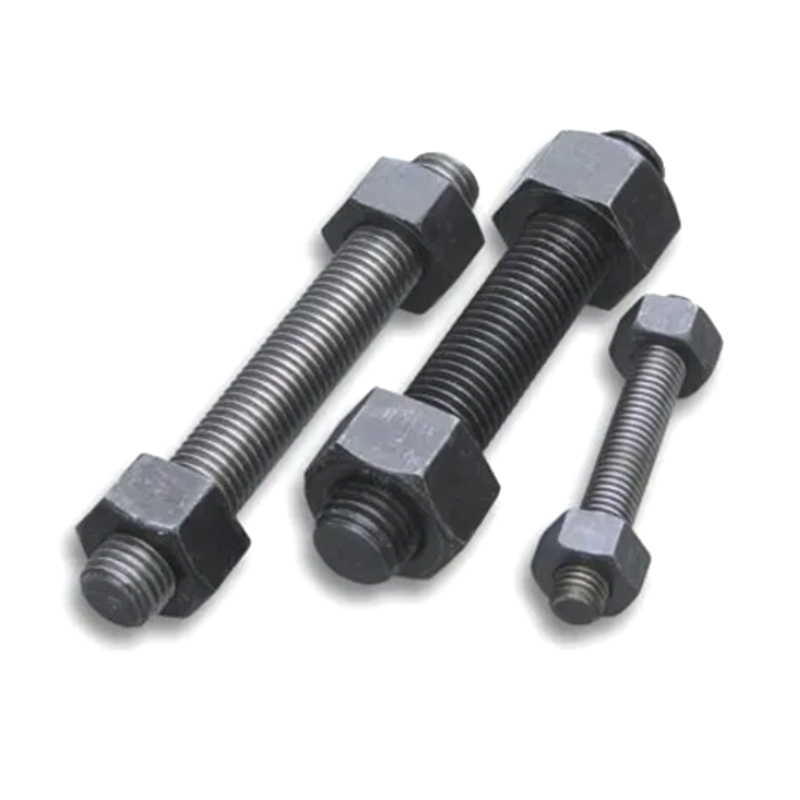 1-8 UNC *5" Alloy Steel ASTM A193 B7 Threaded Rods
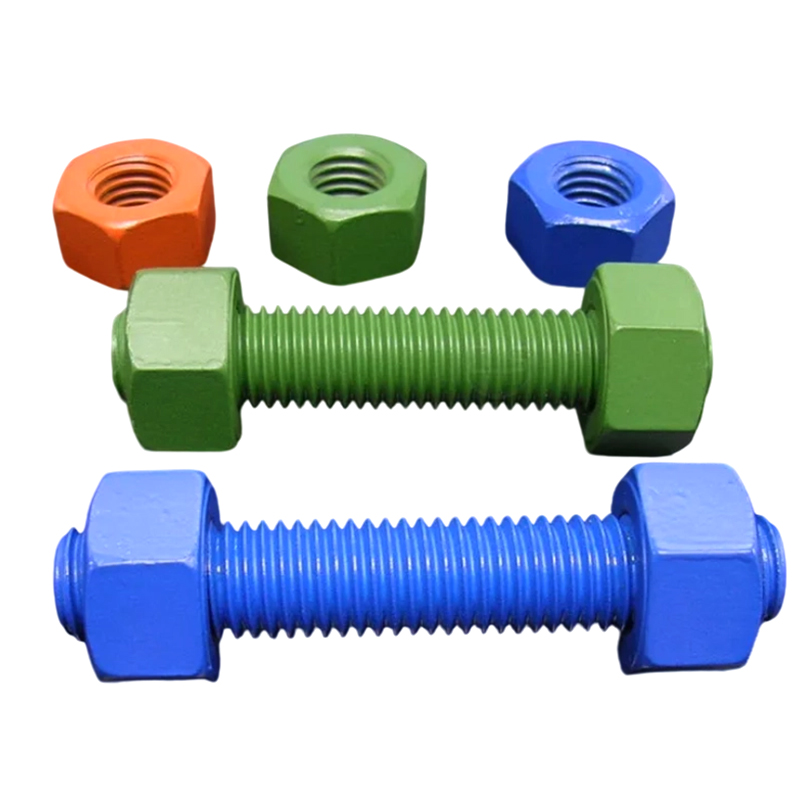 Alloy Steel M27*300 PTFE / Dacromet Coating B7 Threaded Rods Studs
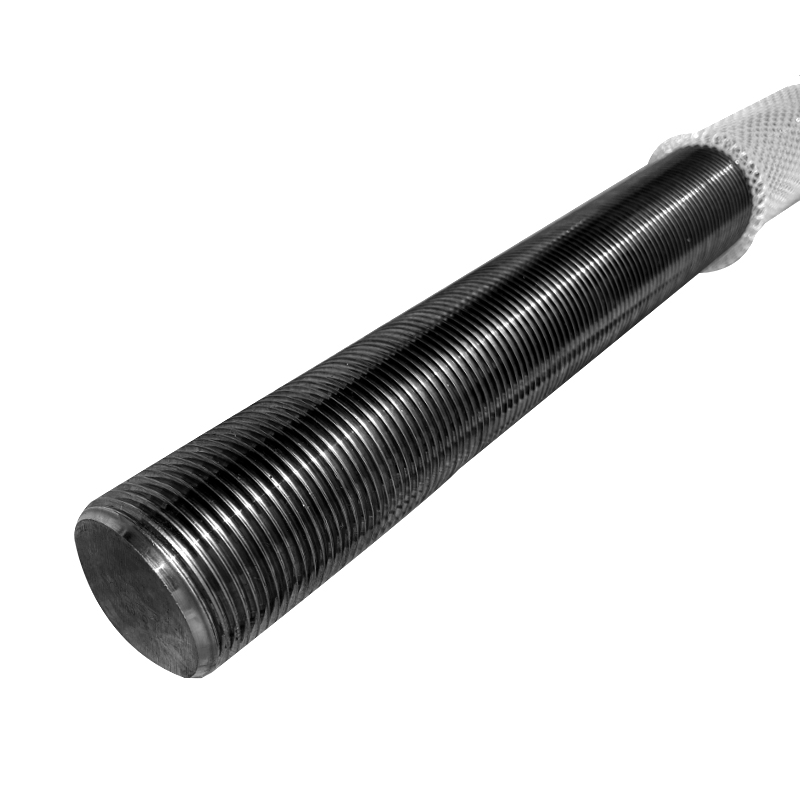 M27*300 PTFE Blue / Dacromet Coated ASTM A320 L7 Fully Threaded Rods
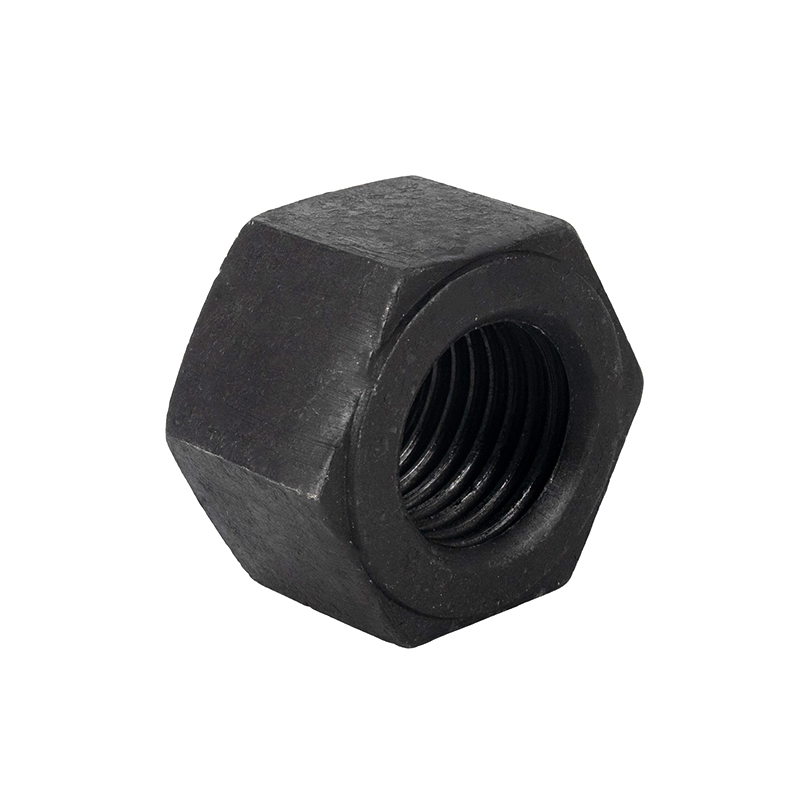 ASTM A194 B7 Black Heavy Hex Nuts
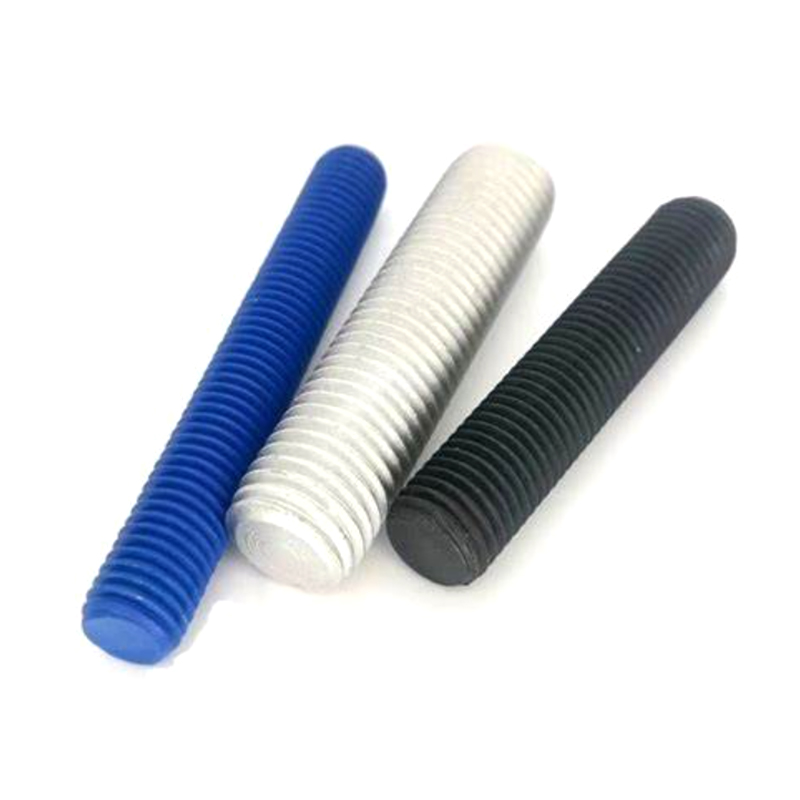 3/4*10" Zinc Plated / Black Oxide / Hot Dip Galvanized B7 Threaded Rods
 Contact Information
 Address



 中文简体
中文简体 Português
 Español
 Deutsch
 русский
 عربى
عربى