
Content
A bolt that loosens under vibration does not announce itself. It simply fails — gradually, then all at once. For engineers specifying fastener assemblies in motors, vehicle frames, fan housings, and industrial machinery, the combination of nuts and spring washers is one of the most cost-effective and widely proven methods of maintaining clamp force under dynamic load. This article covers how the combination works, which types suit which applications, how to match materials to the environment, and what surface treatments extend service life in the field.
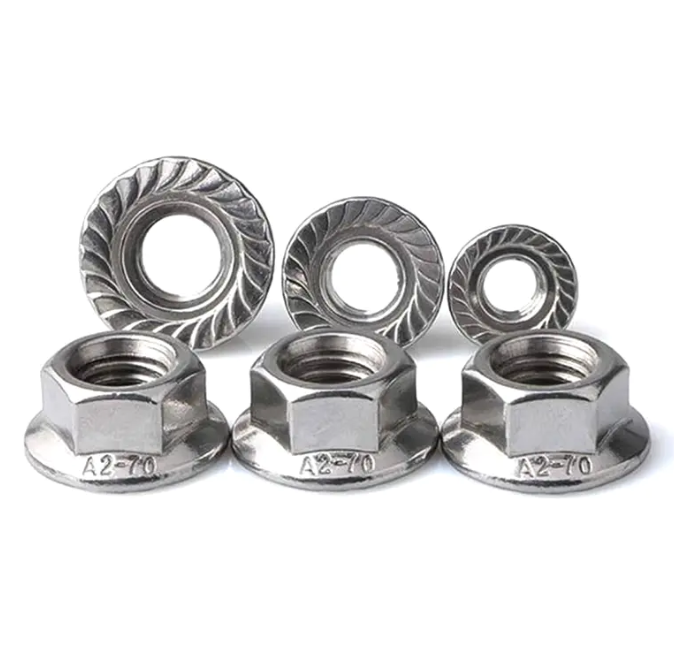
A nut alone, threaded onto a bolt and torqued to specification, creates a clamping force that holds the joint together. The problem is that vibration induces micro-movements between the mating threads. Over time, these small lateral movements reduce the preload, and the nut backs off — often without any visible sign until the joint fails.
A spring washer sits between the nut and the bearing surface. As the nut is tightened, it compresses the washer. When vibration attempts to loosen the nut, the washer's stored elastic energy resists the backward rotation by pushing back against the underside of the nut. The result is a maintained preload that a nut alone cannot sustain in dynamic conditions.
This is not a redundant pairing. The nut provides clamping strength and load transfer; the spring washer provides the preload retention mechanism. Together they address both requirements of a reliable mechanical connection: initial clamping force and sustained anti-loosening performance. For procurement teams sourcing complete fastener assemblies, selecting both components from a single supplier who understands this interaction — such as reviewing a full nuts and washers product range from a specialized fastener manufacturer — simplifies specification and ensures dimensional compatibility.
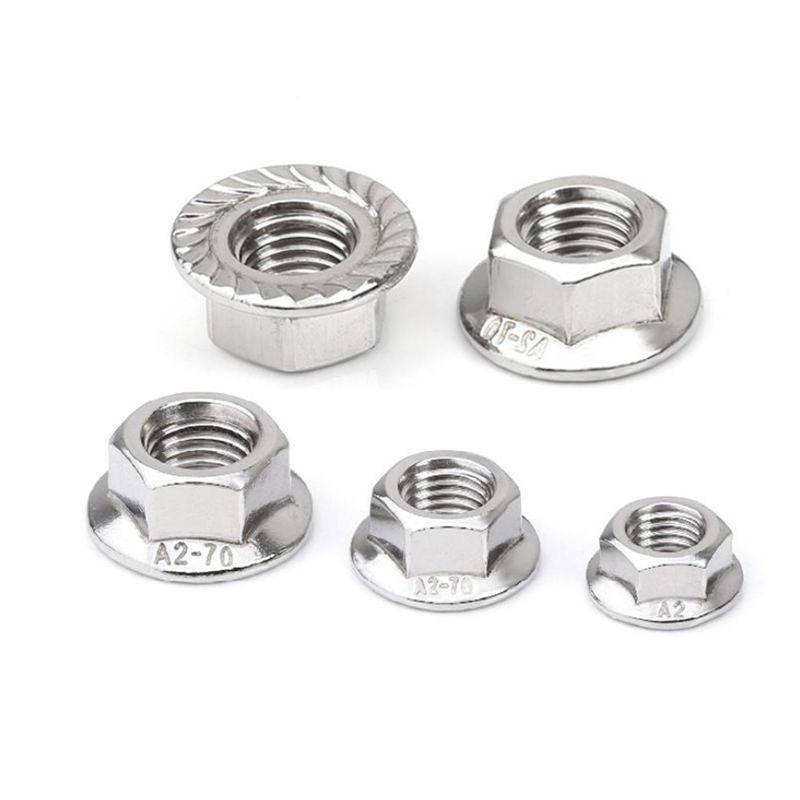
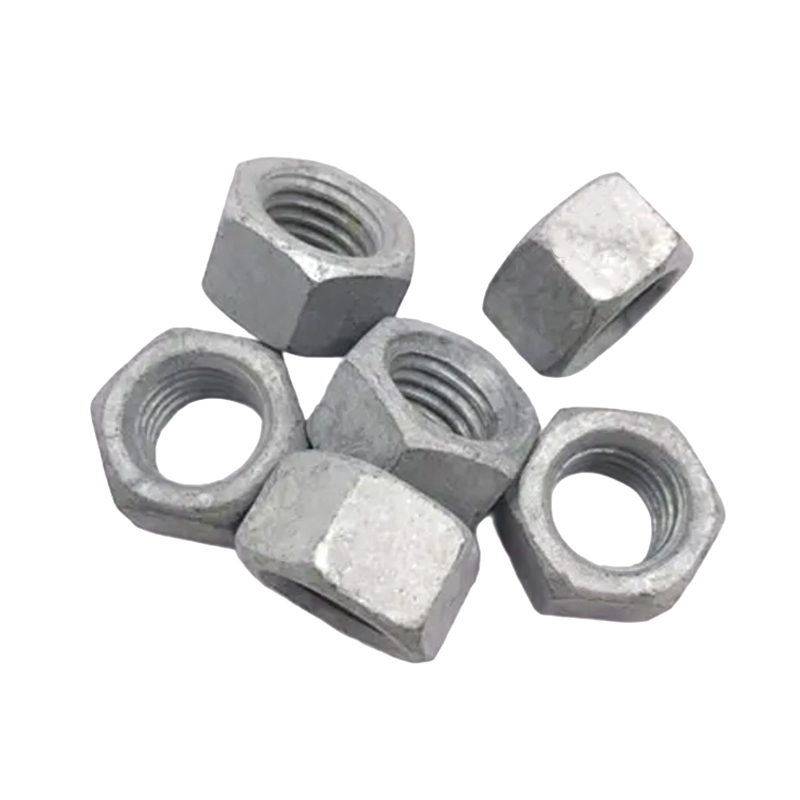
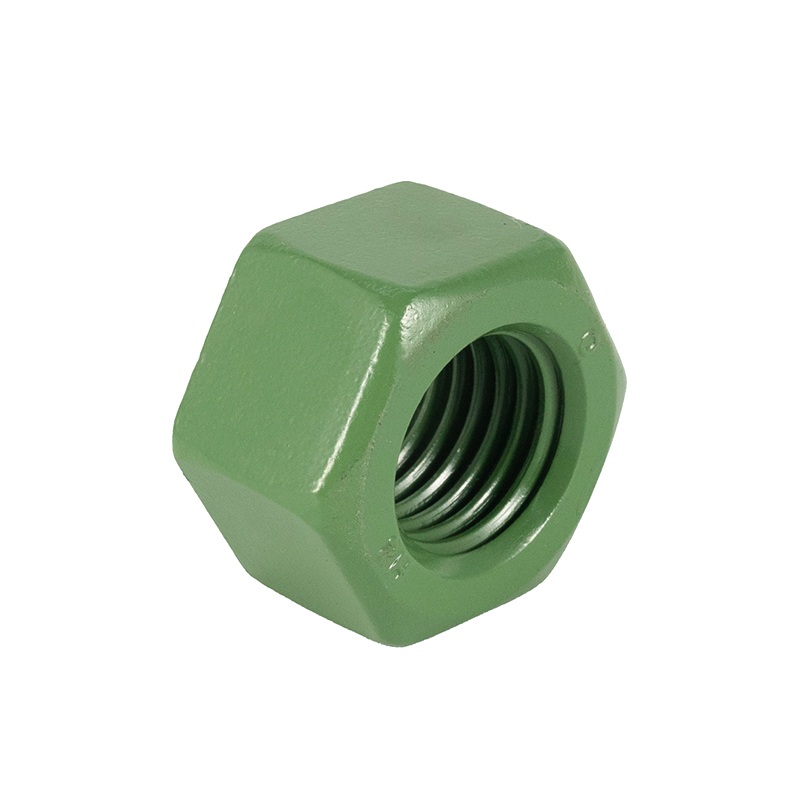
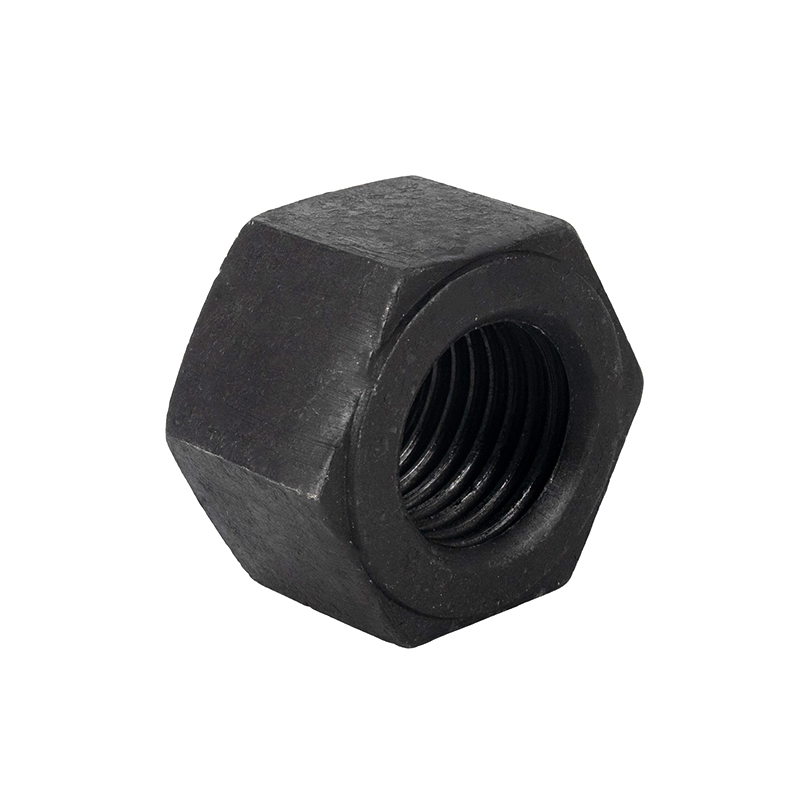
Not all nuts are equal in vibration resistance, and the right choice depends on load magnitude, assembly frequency, and the severity of the vibration environment.
For most vibration-critical applications — motors, pumps, vehicle subframes, HVAC equipment — the grade 8 or grade 10 hexagonal nut paired with a standard or heavy-duty spring washer remains the industry default. Grade 4 nuts are reserved for light-duty, low-vibration applications where cost is the primary driver.
Spring washers are not a single product. The three main types have distinct mechanical characteristics that make them suitable for different loading conditions.
Material selection for nuts and spring washers is driven by three factors: strength requirement, environmental exposure, and cost.
Carbon steel is the default for general industrial and construction applications. It offers high tensile strength at low cost and is available in the full range of grades (4, 8, 10). Its limitation is corrosion susceptibility — without a surface treatment, carbon steel fasteners will rust in humid or outdoor environments. For indoor machinery, enclosed enclosures, and dry environments, carbon steel with a galvanized or phosphated finish is the practical and economical choice.
Stainless steel 304 is the standard corrosion-resistant grade, suitable for food processing equipment, architectural applications, coastal structures, and general wet environments. It offers good corrosion resistance in most atmospheric conditions and is non-magnetic, which matters in certain electrical applications. The trade-off is lower hardness compared to heat-treated carbon steel — stainless steel spring washers are generally rated for lighter to medium loads.
Stainless steel 316 adds molybdenum to the alloy, significantly improving resistance to chloride-induced corrosion (salt water, chemical exposure). It is specified for marine hardware, offshore equipment, chemical processing plants, and coastal infrastructure where 304 would eventually pit and fail. The cost premium over 304 is roughly 20–30%, justified entirely by the environment.
A common mistake is specifying stainless steel nuts with carbon steel spring washers, or vice versa, without considering galvanic compatibility. In wet environments, dissimilar metals in contact will accelerate corrosion of the less noble material. Match materials across the complete fastener assembly.
For carbon steel fasteners, surface treatment is not optional — it determines service life. The three most common treatments each suit a different exposure level.
For outdoor applications and environments with high humidity, chemical exposure, or salt air, the selection hierarchy is clear: stainless steel as the first choice, Dacromet-coated carbon steel as the cost-effective alternative, and standard galvanizing only where exposure is genuinely light. Specifying the wrong treatment is one of the most common causes of premature fastener failure in field installations.
The nuts-and-spring-washer pairing covers a broad range of industries, but its value is most pronounced in three categories of application.
Motors and rotating machinery: Electric motors, pumps, and fans generate sustained vibration at consistent frequencies. Fasteners securing motor mounts, terminal boxes, and bearing housings are under constant cyclic load. Standard spring washers with grade 8 hexagonal nuts are the assembly specification in most motor manufacturer guidelines precisely because this combination has decades of field-proven performance in these conditions.
Vehicles and transport equipment: Chassis connections, suspension mounting points, exhaust brackets, and body panel fixings all operate in high-vibration environments with temperature cycling and road-induced shock. Automotive OEMs and tier-1 suppliers specify spring washers extensively in non-torque-to-yield bolted joints. For procurement managers sourcing fasteners for vehicle assembly or aftermarket applications, ensuring the spring washers are dimensionally matched to the nut grade and bolt size is as important as material selection.
Industrial construction and structural steel: Bolted steel connections in industrial buildings, platforms, and equipment supports benefit from heavy-duty spring washers when the structure is subject to operational vibration from adjacent machinery, wind load, or seismic activity. In these applications, high-strength structural bolts paired with correctly specified nuts and washers form the complete connection assembly that structural engineers design to.
Nuts and spring washers are catalog items, but catalog items vary considerably in actual quality. When specifying for production or maintenance procurement, verify the following before placing volume orders.
First, confirm the material certificate. Carbon steel grade 8 nuts and stainless steel 304 nuts look identical on a shelf; the certificate confirms the actual material composition and mechanical properties. Reputable manufacturers supply material test reports as standard. Second, check dimensional conformance to the relevant standard — DIN 934 for hexagonal nuts, DIN 127 for split spring washers, or the equivalent ISO/ANSI specification for your application. Third, for surface-treated parts, request salt spray test results. A Dacromet-coated fastener claiming 480+ hours of salt spray resistance should have the test data to prove it.
For OEM applications requiring custom dimensions, specific grade combinations, or proprietary surface treatments, working with a manufacturer who offers OEM and ODM fastener customization services ensures the assembly specification can be met without compromise. Standard catalog products cover the majority of applications; the edge cases are where custom capability becomes the deciding factor in supplier selection.
 Contact Information
 Address



 中文简体
中文简体 Português
 Español
 Deutsch
 русский
 عربى
عربى