
Content
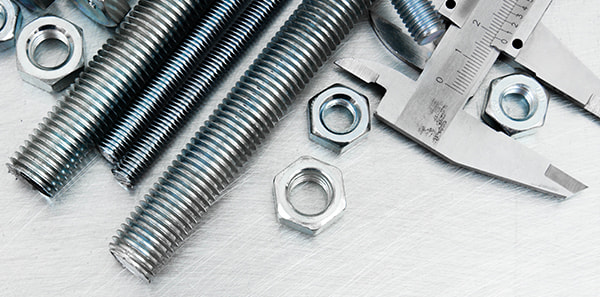
Walk through any large construction site, industrial plant, or electrical installation and you will find threaded rods running through it — holding ceiling grids in place, anchoring equipment bases, supporting cable trays, and tying structural steel together. Among the different types available, fully threaded rods stand out as the most versatile: threaded continuously from one end to the other, they can be cut to any required length on site, positioned at any point along their length, and adjusted after installation. For engineers and procurement teams sourcing fasteners across multiple applications, that flexibility is a significant operational advantage. This guide covers what fully threaded rods are, where they are used, how to select the right grade, and what to watch for during installation.
The defining characteristic of a fully threaded rod is continuous threading along its entire length — no smooth shank, no unthreaded mid-section. This single design feature creates capabilities that partially threaded fasteners cannot match.
Compare the main types side by side:
| Fastener Type | Thread Coverage | Primary Advantage | Typical Use |
|---|---|---|---|
| Fully threaded rod | 100% of length | Cut-to-length flexibility, adjustable positioning | Construction, HVAC, general anchoring |
| Partially threaded rod | Ends only, smooth shank | Higher shear strength at unthreaded section | Tension-critical load-bearing joints |
| Double-end stud bolt | Both ends, plain middle | Precise clamping at flanged connections | Pipeline flanges, pressure vessels |
| Tap-end stud | Short thread + long thread | Fits tapped holes without through-bolting | Engines, turbines, high-pressure fittings |
Because a fully threaded rod has no head and no fixed length dependency, it is uniquely suited to long-span applications — ceiling suspensions, overhead pipe supports, structural tie rods — where the connection point varies and on-site cutting is standard practice. A nut can be positioned anywhere along the rod, and two rods can be joined end-to-end using a coupling nut, extending reach without specialist fabrication.
Explore our fully threaded rod product range for standard and custom dimensions across carbon steel, alloy steel, and stainless steel grades.
Few fasteners appear in as many distinct industries as the fully threaded rod. Its combination of adjustability, tensile strength, and availability in corrosion-resistant materials makes it the default choice for long-reach fastening tasks across the following sectors.
Construction — Steel Structure, Ceiling Joists, and Pre-Embedded Fixing
In structural construction, fully threaded rods are used to tie steel frame components together, connect concrete-embedded anchor systems to above-grade structures, and suspend ceiling grid systems from overhead slabs. Their ability to be cut to precise lengths on site eliminates the need for custom-fabricated fasteners for each connection point. Pre-embedded rods cast into concrete during pouring create anchor points for subsequent structural connections — a technique widely used in column bases, equipment foundations, and curtain wall support systems. For structural steel connections, steel structure high-strength bolts complement threaded rods where higher clamping force in compact bolt patterns is required.
Machinery — Equipment Assembly and Frame Connections
In machinery manufacturing and industrial equipment assembly, fully threaded rods serve as frame tie bolts, jig positioning elements, and adjustable lead screws where a sliding nut must move along the rod's length. The continuous thread allows the position of connected components to be adjusted after assembly — a capability that fixed-length bolts cannot provide. This makes them standard components in machine frames, test fixtures, and modular assembly systems where dimensional fine-tuning is part of the installation process.
Power Industry — Cable Trays, Cable Supports, and Transformer Fastening
Electrical installations depend heavily on threaded rods for suspending cable trays from structural ceilings and walls, supporting conduit runs, and fastening transformer and switchgear equipment to mounting frames. The rods are typically paired with channel nuts and spring nuts for tool-free repositioning along strut channel systems — the standard suspension method in commercial and industrial electrical work. Installation speed and positional flexibility make fully threaded rods the preferred fastener for these systems.
Petrochemical and Pipeline Engineering — Long-Distance Connections and Corrosion-Resistant Fixing
In petrochemical plants and pipeline infrastructure, threaded rods are used to support pipelines over long horizontal runs, fix valves and instrumentation to pipe racks, and secure tanks and pressure vessels to structural supports. The demanding environments of refineries and chemical processing plants — high temperatures, chemical exposure, elevated humidity — require grade-specified materials rather than standard carbon steel. This is where alloy steel grades and stainless steel variants become essential, as covered in the materials section below.
Decoration Engineering — Indoor Hanging, Lighting, and Curtain Wall Adjustment
In architectural and interior fit-out work, fully threaded rods provide the adjustable hanging system for suspended lighting fixtures, decorative ceiling elements, and curtain wall bracket adjustment. The ability to position a nut anywhere along the rod's length and lock it in place allows contractors to fine-tune installation heights after the rod is fixed — a practical advantage when working with uneven structural ceilings or sloped surfaces.
Selecting the correct material grade is the most consequential specification decision for fully threaded rods. The three primary categories each address a distinct set of working conditions.
Standard Carbon Steel — General-Purpose Applications
Low and medium carbon steel threaded rods (commonly meeting ASTM A307 Grade A or equivalent DIN/ISO standards) are the default choice for indoor structural applications, dry environments, and non-critical assemblies. They offer the best value per unit of tensile strength and are straightforward to cut, thread, and galvanize for moderate corrosion protection. For standard construction, machinery framing, and interior electrical work in protected environments, carbon steel is typically the appropriate specification.
High-Strength Alloy Steel — Heavy-Load and High-Temperature Service
Where standard carbon steel is insufficient — high-pressure pipeline systems, power generation equipment, pressure vessel assemblies, and structural connections requiring elevated tensile strength — alloy steel grades are specified. The most widely used is ASTM A193 Grade B7, a chromium-molybdenum alloy steel that is quenched and tempered to achieve minimum yield strength of 105 ksi and tensile strength of 125 ksi. It is rated for service temperatures up to 427°C (800°F), making it the standard specification for oil and gas, power generation, and heavy industrial fastening. Our ASTM A193 B7 threaded rods for high-temperature service are produced to full specification with material test reports available per lot.
For low-temperature and cryogenic applications — common in LNG facilities and cold storage infrastructure — ASTM A320 Grade L7 provides the required impact toughness at sub-zero temperatures that standard B7 alloy steel cannot deliver. See our ASTM A320 L7 threaded rods for low-temperature service for specifications and available sizes.
Stainless Steel — Corrosion-Resistant and High-Cleanliness Environments
In environments where carbon steel corrodes unacceptably fast — coastal construction, chemical processing, food and pharmaceutical facilities, outdoor architectural work — stainless steel threaded rods are specified. Grade 304 covers most indoor and general outdoor applications. Grade 316, which contains molybdenum for enhanced resistance to chlorides and chemical exposure, is required in marine, petrochemical, and acid-wash environments. The trade-off is cost: stainless rods carry a significant price premium over carbon steel, which is why correct environment assessment before specification is important.
| Material Grade | Standard | Key Properties | Recommended For |
|---|---|---|---|
| Carbon Steel | ASTM A307 / DIN 975 | Cost-effective, high strength-to-cost ratio | Indoor construction, machinery, general assembly |
| Alloy Steel B7 | ASTM A193 B7 | 125 ksi tensile, rated to 427°C | High-pressure/temperature: oil & gas, power generation |
| Alloy Steel L7 | ASTM A320 L7 | High impact toughness at sub-zero temperatures | Cryogenic service, LNG, cold storage |
| Stainless 304 | ASTM F593 / ISO 3506 | General corrosion resistance | Outdoor, moderate humidity, architectural |
| Stainless 316 | ASTM F593 / ISO 3506 | Chloride and chemical resistance | Marine, petrochemical, food processing |
Four specification dimensions determine whether a fully threaded rod will perform correctly in a given application.
1. Diameter and Thread Pitch
Thread diameter and pitch must match the nuts and tapped holes in the assembly. Metric rods follow ISO standards (M6 through M64 being most common in industrial work); inch-series rods follow UNC or UNF per ASME B1.1. Mixing metric and inch hardware is a common installation error that causes thread stripping — confirm the thread standard of all mating components before ordering.
2. Length and On-Site Cutting
Fully threaded rods are typically supplied in standard lengths of 1 meter or 3 meters (or equivalent imperial lengths) and cut to size on site using a hacksaw, angle grinder, or rod cutter. After cutting, the cut end should be deburred and, where required, re-chased with a thread-restoring die to ensure clean nut engagement. Ordering rods close to the required length reduces both material waste and cutting time.
3. Surface Treatment
For carbon steel rods in outdoor or moderately corrosive environments, zinc plating (electrogalvanized) provides basic protection. Hot-dip galvanizing offers heavier coating and significantly longer outdoor service life. For severe corrosion environments, specifying stainless steel is more reliable than relying on surface coatings on carbon steel. Our heavy hex nuts for threaded rod assemblies are available in matching surface treatments to ensure galvanic compatibility across the fastener assembly.
4. Mating Hardware Compatibility
A fully threaded rod performs as part of a system. The nuts, washers, and couplings paired with it must match in thread standard, grade, and surface treatment. For high-strength alloy rod (B7), the standard pairing is ASTM A194 Grade 2H heavy hex nuts. For stainless rods, use stainless nuts of the same grade to avoid galvanic corrosion at the interface. Mismatching nut grade to rod grade — particularly using standard-strength nuts on high-strength rods — transfers stress to the weaker component and compromises the assembly's rated capacity.
Fully threaded rods are straightforward to install, but a handful of recurring errors account for most field failures.
Cutting without deburring. A cut end with a burr or compressed thread will not engage a nut cleanly. Always deburr cut ends with a file or grinder, and re-chase the thread with a die if the cut was made with a blade that distorted the thread profile. Forcing a nut onto a damaged thread causes galling and makes subsequent disassembly difficult or impossible.
Under-tightening in suspension applications. Threaded rods in overhead suspension duty — ceiling grids, cable trays, lighting — rely on correct nut torque to maintain clamping load against vibration. Under-tightened connections back off gradually, especially in environments with mechanical vibration from HVAC equipment or foot traffic on floors above. Use a torque wrench or calibrated impact driver, and apply thread-locking compound where vibration is expected.
Skipping anti-seize on stainless assemblies. Stainless steel threads are prone to galling — the oxide layer that gives stainless its corrosion resistance also increases friction between mating stainless threads under torque. Once galling starts, the nut seizes and the rod must be cut off. Apply molybdenum disulfide or PTFE-based anti-seize compound to stainless threads before assembly, and tighten slowly by hand before applying torque.
Using the wrong nut grade. In high-load structural and pressure applications, the nut must be rated to match the rod. A standard hex nut on an A193 B7 rod will strip before the rod yields — the failure mode is in the nut, not the rod, and the assembly gives no warning before it lets go. Specify heavy hex nuts to the appropriate ASTM A194 grade for all high-strength rod assemblies.
Ignoring thermal expansion in high-temperature service. In power generation and petrochemical applications where rods operate at elevated temperatures, the assembly must accommodate thermal expansion. Fixed-end connections with no allowance for expansion create bending stress in the rod as the system heats up. Consult the applicable engineering standard for expansion joint requirements when specifying fully threaded rods for high-temperature service.
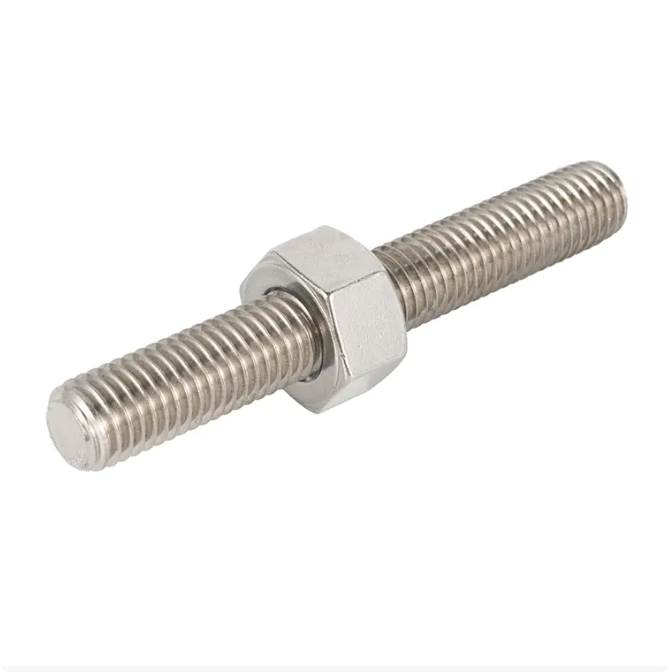
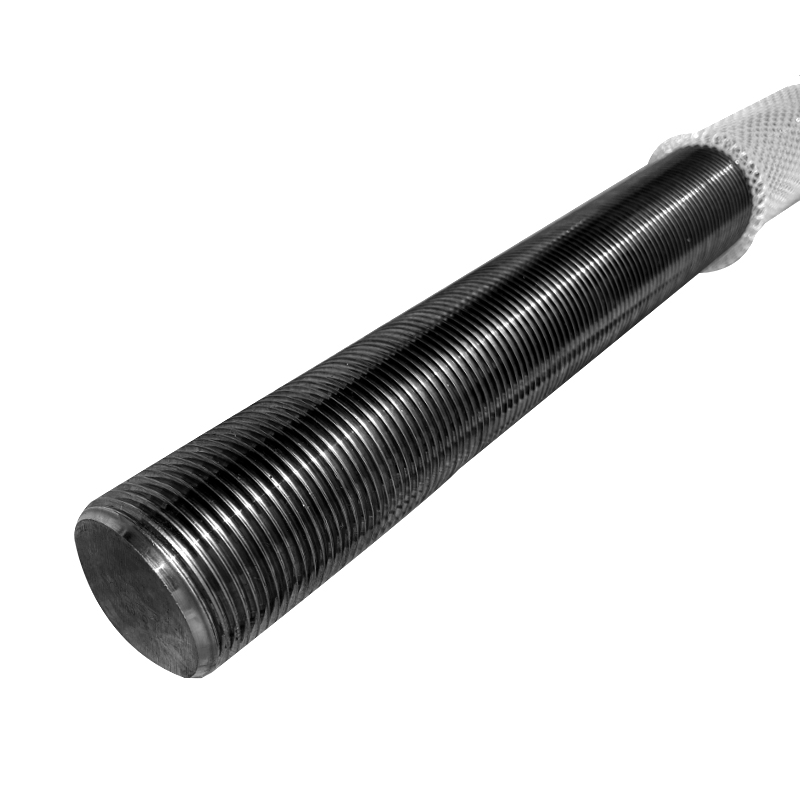 M27*300 PTFE Blue / Dacromet Coated ASTM A320 L7 Fully Threaded Rods
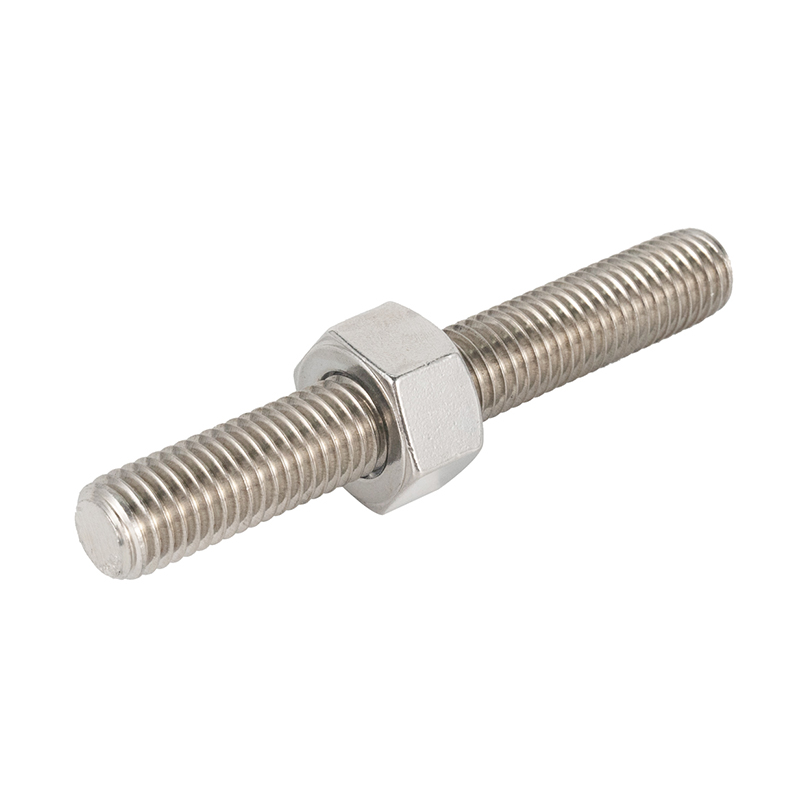 M10×300 Carbon Steel Grade 8.8 Galvanized Fully Threaded Rods
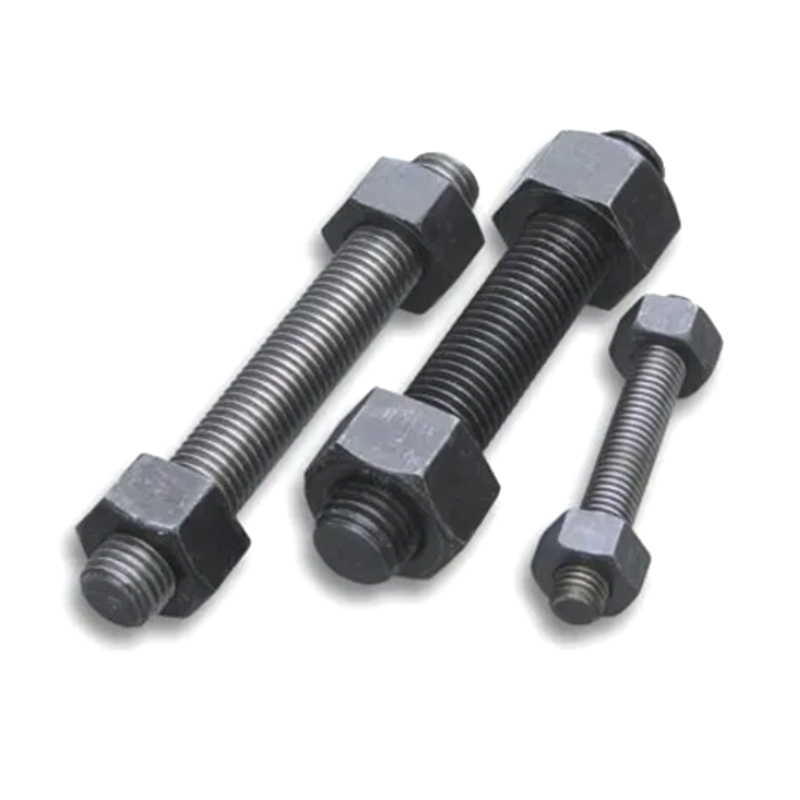 M16*300 Carbon Steel Grade 8.8 PTFE Blue Coated Fully Threaded Studs
1-8 UNC *5" Alloy Steel ASTM A193 B7 Threaded Rods
M16*300 Carbon Steel Grade 8.8 PTFE Blue Coated Fully Threaded Studs
1-8 UNC *5" Alloy Steel ASTM A193 B7 Threaded Rods
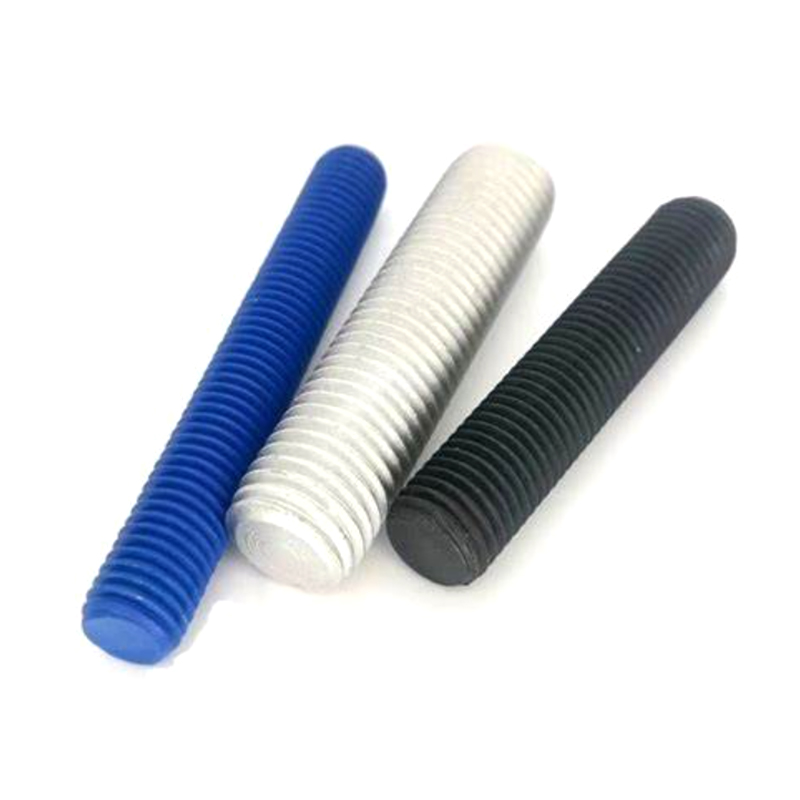 3/4*10" Zinc Plated / Black Oxide / Hot Dip Galvanized B7 Threaded Rods
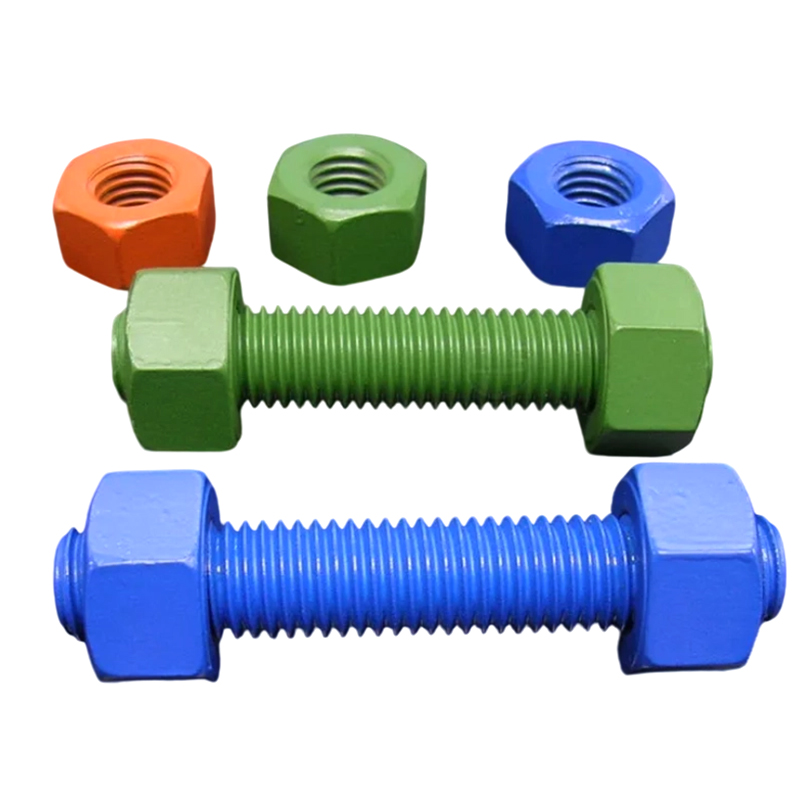 Alloy Steel M27*300 PTFE / Dacromet Coating B7 Threaded Rods Studs
 Contact Information
 Address



 中文简体
中文简体 Português
 Español
 Deutsch
 русский
 عربى
عربى