
Content
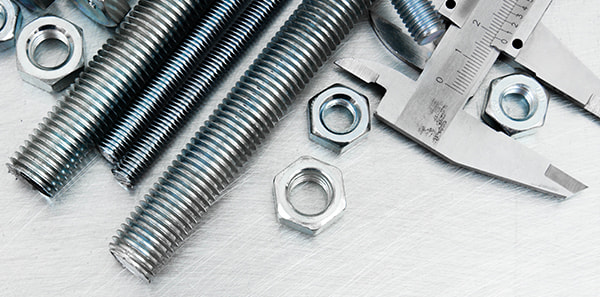
Pick up a hex head bolt and you are holding the single most deployed industrial fastener on earth. Steel frames, engine blocks, ship hulls, bridge decks — the same six-sided profile shows up everywhere, tightened with the same class of tool, trusted with loads that would destroy lesser connections. That ubiquity is not accidental. It is the result of a geometry that packs genuine mechanical advantage into a compact, standardized form. But ubiquity also breeds complacency: engineers and buyers who treat all hex head bolts as interchangeable routinely end up with wrong-grade fasteners in critical joints, corrosion failures in outdoor assemblies, and dimensional mismatches that slow installation. This guide works through the five dimensions that actually determine whether a hex head bolt will perform — standard system, material, grade, surface treatment, and application fit — so you can select with confidence rather than habit.
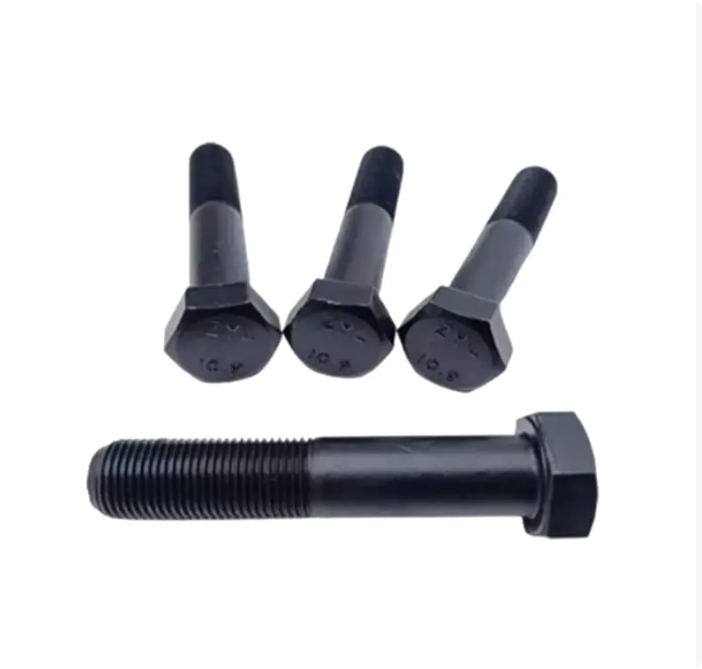
The hexagonal head provides six flat bearing surfaces for a wrench or socket. That geometry allows high torque application without the tool slipping off, and it does so using tools that every workshop, field crew, and assembly line already owns. An Allen key requires a recessed socket; a Torx bit requires a matching star profile. A hex head works with open-end wrenches, box wrenches, ratchet sockets, and impact drivers — the tool inventory is effectively universal.
There is a distinction worth preserving between a hex bolt and a hex cap screw. Both carry a six-sided head and an externally threaded shank, but hex cap screws are manufactured to tighter dimensional tolerances and include a washer face under the head. In practice, hex bolts are the dominant choice for structural and construction assemblies where a nut provides the mating thread; hex cap screws are preferred in precision machinery applications where the fastener threads directly into a tapped bore. When a specification sheet says "hex head bolt," it is almost always referring to the broader category — but confirming the tolerance class before ordering prevents downstream fit problems.
One further distinction: external hex bolts for industrial applications are driven from the outside of the head, unlike socket head cap screws where the drive is internal. This matters in any assembly where access space is limited but tool engagement from the side is feasible — steel structures and automotive subframes being the clearest examples.
Three standard families govern the vast majority of hex head bolts in global supply chains. Choosing between them is not an aesthetic decision — it affects wrench size, thread pitch, tolerance class, and cross-border interchangeability.
| Standard | Thread Coverage | Thread Type | Common Variants | Typical Market |
|---|---|---|---|---|
| DIN 931 / DIN 933 | M4 – M64 | Metric coarse | Part-thread (931), Full-thread (933) | Europe, Asia |
| ISO 4014 / ISO 4017 | M1.6 – M64 | Metric coarse / fine | Part-thread (4014), Full-thread (4017) | Global (preferred for cross-border specs) |
| ASME B18.2.1 | ¼″ – 4″ | UNC / UNF | Hex bolt, Heavy hex bolt | North America, oil & gas |
The DIN and ISO systems overlap significantly in geometry, but they are not identical. A practical example: an M10 bolt under DIN 933 is designed for a 17 mm wrench, while the same nominal size under ISO 4017 uses a 16 mm wrench. That one millimeter difference is irrelevant in a workshop with a full wrench set — but it can cause installation delays on a large job site where tool inventory is standardized. For international procurement, specifying to ISO is the safer default, as it signals interoperability expectations clearly to suppliers in any country.
The ASME system uses inch-based nominal diameters and either Unified National Coarse (UNC) or Fine (UNF) thread profiles. In North American construction and particularly in oil and gas flange bolting — where ASTM material grades intersect with ASME dimensional standards — this system remains the default. Buyers sourcing from China for North American projects should explicitly call out ASME B18.2.1 on purchase orders, since Chinese manufacturers default to metric DIN/ISO unless instructed otherwise.
Material and grade are separate decisions that compound each other. The material determines the base corrosion resistance and elemental composition; the grade (and its associated heat treatment) determines the mechanical performance ceiling. Selecting the wrong combination in either direction — overspecifying adds unnecessary cost, underspecifying creates failure risk — is one of the most common procurement errors in industrial fastening.
| Material | Metric Grade | Min. Tensile Strength | Typical Application |
|---|---|---|---|
| Medium carbon steel | 8.8 | 800 MPa | General machinery, steel structures |
| Alloy steel (quenched & tempered) | 10.9 | 1040 MPa | Automotive, heavy equipment |
| Alloy steel (quenched & tempered) | 12.9 | 1220 MPa | High-load critical joints |
| Stainless steel 304 | A2-70 | 700 MPa | Food processing, indoor corrosive |
| Stainless steel 316 | A4-80 | 800 MPa | Marine, offshore, chloride exposure |
Grade 8.8 carbon steel covers the majority of industrial use cases. It offers a tensile strength of 800 MPa with adequate ductility, is straightforward to source globally, and carries a predictable cost. Grade 10.9 enters the picture where higher preload is required in a compact joint — automotive suspension components and gearbox covers are typical examples. Grade 12.9 is reserved for genuinely critical, high-stress applications; its lower ductility relative to 8.8 means it is more sensitive to improper installation torque, so it demands stricter assembly controls.
Stainless grades trade tensile strength for corrosion resistance. A4-80 (316 stainless) caps at 800 MPa — equivalent to 8.8 carbon steel — but maintains that performance indefinitely in chloride-rich environments where a zinc-plated carbon steel bolt would corrode through its coating within months. In marine and coastal construction, the long-term cost calculation almost always favors stainless over repeated replacement of carbon steel fasteners.
Surface treatment is the environmental defense layer of a hex head bolt. Even the correct grade of steel will corrode prematurely if the surface protection is mismatched to the operating environment. The core trade-off is between coating thickness (which affects dimensional fit), corrosion performance, and cost.
For a more detailed breakdown of coating selection by environment and substrate, the bolt surface treatment types and selection guide covers each option against specific operating conditions. One pairing to avoid: hot-dip galvanizing on grade 12.9 bolts. The pickling process prior to galvanizing introduces hydrogen embrittlement risk in high-strength steels — a combination that has caused documented field failures in load-bearing connections.
Where maximum vibration resistance is needed alongside corrosion protection, hexagonal flange bolts for high-vibration environments integrate a load-distributing flange directly into the head geometry, reducing the reliance on surface-treated washers that can degrade over time.
The same basic fastener geometry serves radically different demands across industries. Understanding what each sector requires prevents specification errors when a procurement team is sourcing for multiple project types simultaneously.
Construction and civil infrastructure consume the largest volume of hex head bolts globally. Structural steel connections in buildings, bridges, and towers are governed by ASTM F3125 (which encompasses the former A325 and A490 grades) in North America, or EN 14399 in Europe. These are not generic hex bolts — they are manufactured and tested as structural fasteners with documented proof load and hardened washer requirements. The construction sector also uses large quantities of standard grade 8.8 hex bolts for secondary connections, formwork, and equipment mounting where structural bolt specifications are not required.
Automotive assembly specifies hex head bolts at the component level — engine mounts, suspension subframes, transmission housings, and brake caliper carriers all carry precise torque specifications that assume a known bolt grade and surface treatment. Grade 10.9 is the dominant choice for powertrain and chassis joints. Dacromet coating is widely preferred because it maintains dimensional precision, resists the thermal cycling of underhood environments, and avoids the hydrogen embrittlement risk associated with electroplating on high-strength steel.
Marine and offshore applications impose the most aggressive corrosion demands. Salt spray, constant humidity, and biological fouling attack carbon steel finishes rapidly. A4-80 stainless (316 grade) is the standard specification for exposed deck hardware, pipe flanges, and hull fittings. For subsea applications or those involving dissimilar metal contact, duplex stainless or exotic alloys may be required — but for the majority of above-waterline marine work, A4-80 hex head bolts with passivated finish deliver the necessary service life without excessive cost.
Industrial machinery spans the widest range of requirements. General fabrication and equipment frames use grade 8.8 with zinc plating. High-cycle or high-vibration assemblies — compressors, fans, pump housings — benefit from flanged variants or prevailing-torque nut pairings to resist self-loosening. Precision equipment may require grade 12.9 to achieve the clamping force needed in a joint with limited bolt engagement length.
A hex head bolt is only as reliable as the process that produced it. Price-driven sourcing that skips documentation creates traceability gaps — and in industries where fastener failures carry liability, gaps in the paper trail are as problematic as gaps in the metal itself.
Three documents should accompany any industrial fastener order: a material test report (MTR) confirming chemical composition and mechanical test results for the production lot; a dimensional inspection report verifying head geometry, thread form, and length tolerances; and a manufacturer's ISO 9001:2015 certificate confirming that the quality management system that produced the bolt is audited and current. Suppliers who cannot provide all three on request should not be in the supply chain for critical applications.
Head markings provide a fast visual check. On metric bolts, the grade (8.8, 10.9, 12.9) is stamped on the top of the head, along with a manufacturer identification mark. On imperial bolts, SAE grades are indicated by radial lines: Grade 5 shows three lines, Grade 8 shows six. Absence of marking on a bolt sold as Grade 8 or 10.9 is a disqualifying defect — it means either the bolt was not manufactured to grade, or the marking process failed quality control.
Specifying thread class on purchase orders is a detail that separates experienced buyers from novices. ISO metric threads default to 6g (external) and 6H (internal) tolerance classes for general-purpose use. Tighter classes (4g/4H or 5g/5H) are available for precision fits but add cost and extend lead time. Looser classes (8g) are sometimes used in hot-dip galvanized bolts to accommodate the coating thickness — but must be paired with the corresponding oversized nut to ensure proper engagement.
Finally, pairing decisions matter. The nuts and washers pairing guide covers the principle that washers, lock washers, and nuts should match the grade and finish of the bolt they accompany. Installing a Grade 8 bolt with a Grade 2 nut creates a weak point at the nut threads; mixing zinc-plated bolts with uncoated nuts accelerates galvanic corrosion at the joint interface. The fastener assembly performs as a system — every component in that system deserves the same specification discipline applied to the bolt itself.
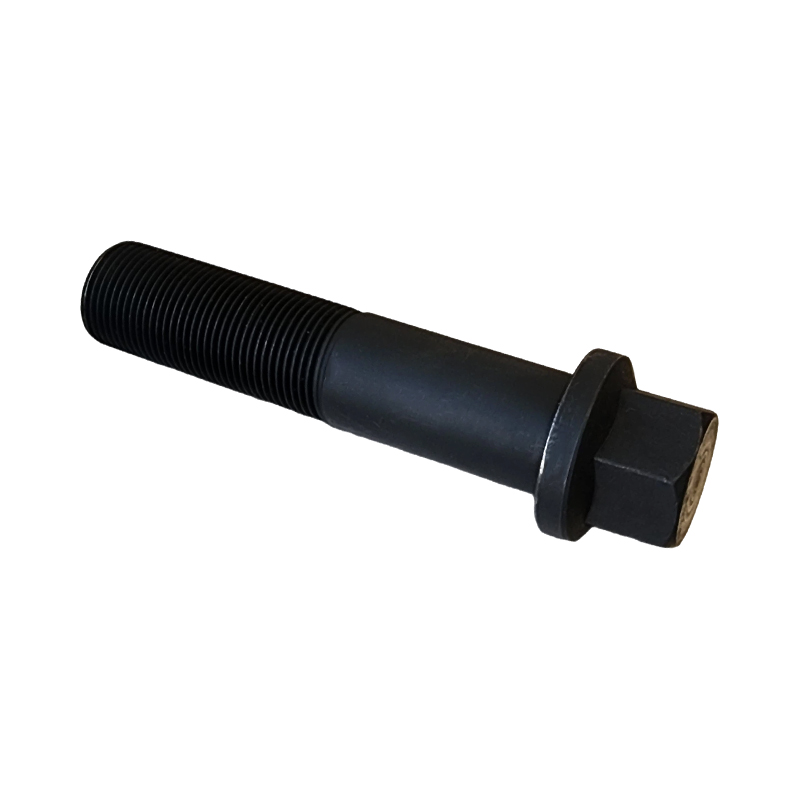
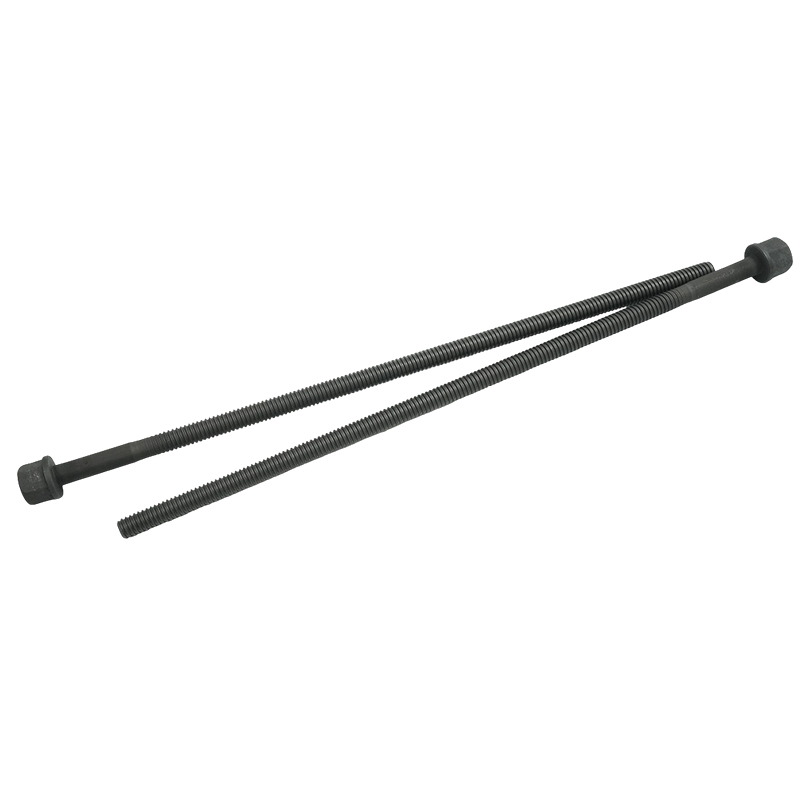 Hex Head Jack Screw Rods
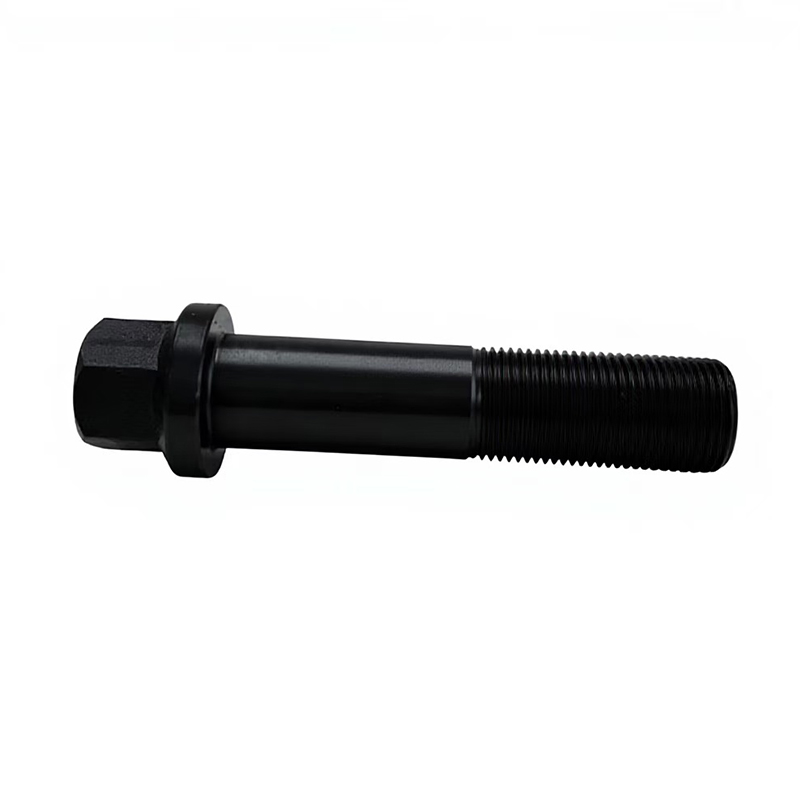 M8×60 Alloy Steel Grade 8.8 Zinc-Plated Hex Head Flange Bolt Cylinder Bolts
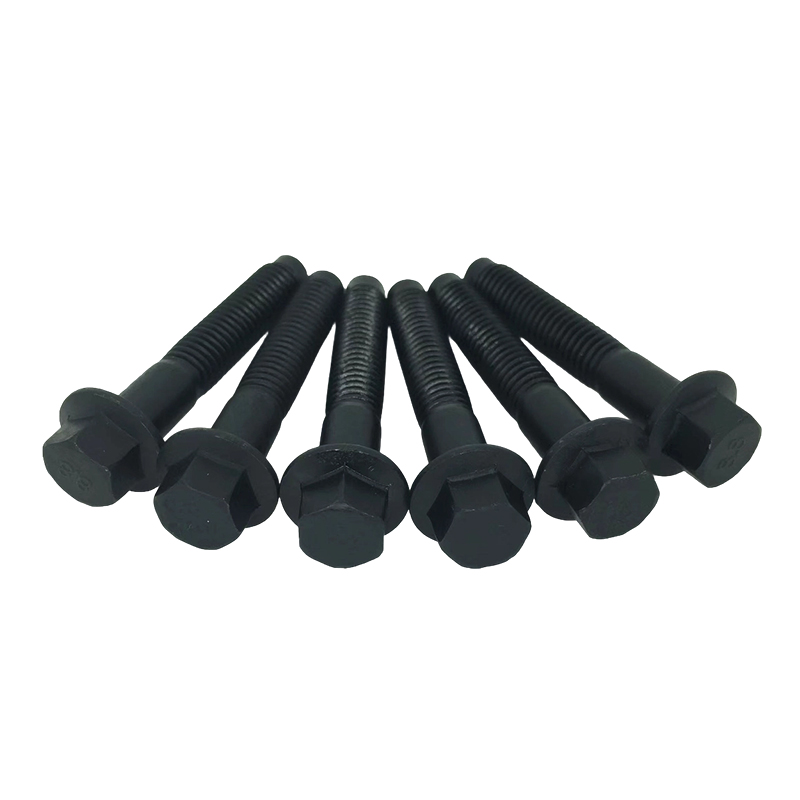
 M8×100 Alloy Steel Grade 8.8 Phosphate Coated Cylinder Hex Head Flange Bolts
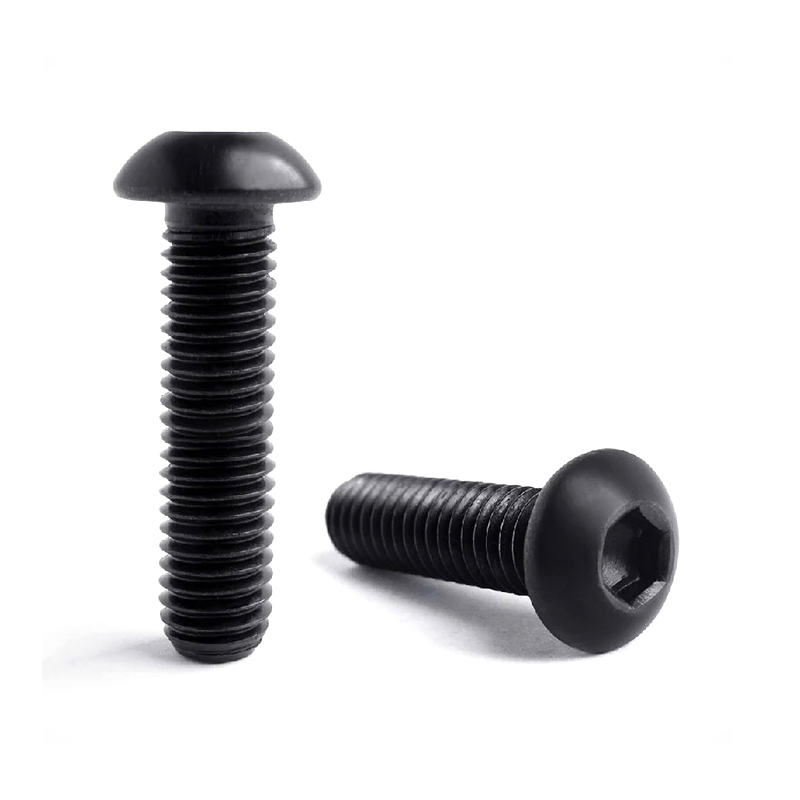
 M5*10 Grade 8.8 Carbon Steel Flanged Hex Head Bolts
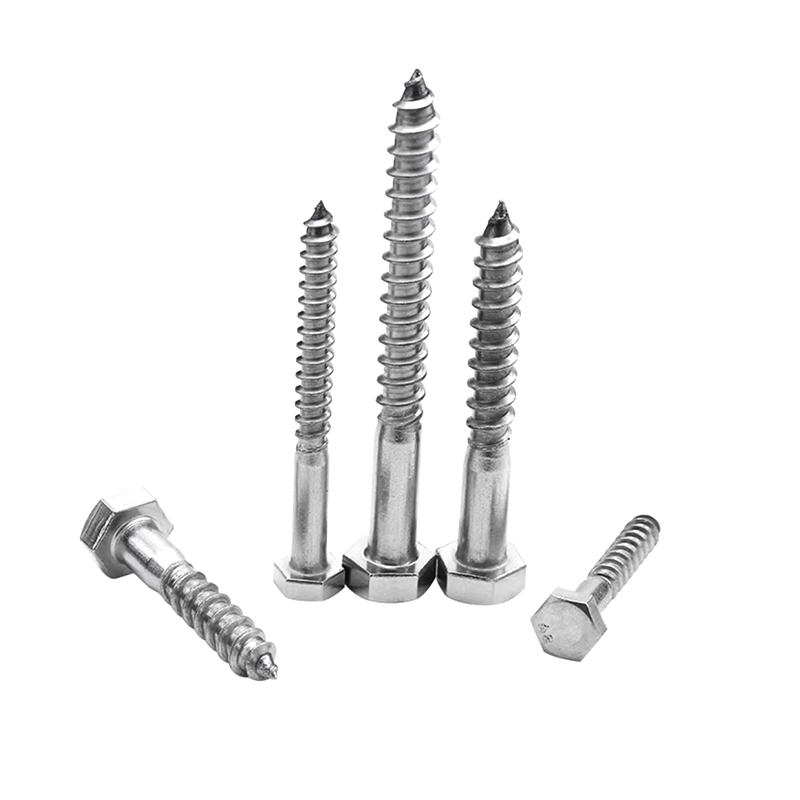
 Zinc Plated Carbon Steel Hexalobular Button Head Bolt
 ST5*25 SS316 Hex Head Wood Screws for Woodworking
 Contact Information
 Address



 中文简体
中文简体 Português
 Español
 Deutsch
 русский
 عربى
عربى