
Content
The head of a bolt does more than provide a surface for a wrench to grip. It determines how load is distributed into the joint, what tools are required for installation and removal, whether the fastener can be used in countersunk or flush applications, and how much bearing area is available against the clamped material. Selecting the correct head type for an application is as consequential as selecting the correct diameter and grade -- an incorrect head type can result in surface damage, loosening under vibration, inadequate clamping area, or a joint that cannot be assembled or serviced with the available tooling.
Hex head bolts, hex flange bolts, carriage bolts, and socket cap bolts are four of the most widely used fastener head types across industrial, structural, automotive, and commercial applications. Each serves a distinct purpose and each has specific conditions under which it outperforms the others. Understanding the engineering rationale behind each design is the foundation for consistent, reliable fastener specification.
The hex head bolt is the most widely produced and used fastener type in the world. Its six-sided head engages with an open-end wrench, box wrench, or socket on all six faces, providing positive torque transmission and broad tool compatibility. The geometry is defined in ASME B18.2.1 for unified inch fasteners and ISO 4014 and ISO 4017 for metric fasteners, standardizing head dimensions across manufacturers so that hex bolts from any compliant supplier are interchangeable in a given application.
A hex head bolt consists of a hexagonal head, a shank that may be partially or fully threaded, and the threaded portion at the end. The head bearing face -- the flat underside of the head that contacts the clamped material -- distributes the clamping load over a circular area determined by the head's across-flats dimension. This bearing area is one of the key functional parameters of the head: insufficient bearing area causes the head to embed into softer materials under load, reducing effective clamping force over time.
Two shank configurations are standard: partially threaded bolts (with a plain shank section between the head and the thread run-out) and fully threaded bolts. Partially threaded bolts are preferred in structural and shear applications because the unthreaded shank can be sized to fit snugly in the clearance hole, providing a positive location and keeping the threaded portion out of the shear plane. Fully threaded bolts offer greater grip length flexibility and are common in general-purpose assembly where shear loading is not a primary concern.
Hex head bolts are produced across a wide range of mechanical property grades. In the unified inch system, the most common structural grades are SAE Grade 5 (three radial marks on the head, 120,000 psi minimum tensile strength) and SAE Grade 8 (six radial marks, 150,000 psi minimum tensile strength). In the metric system, property classes 8.8, 10.9, and 12.9 correspond to progressively higher tensile and yield strength levels. The property class is marked directly on the head as a numerical designation.
Material options beyond carbon steel include stainless steel (most commonly A2-70 and A4-80 in metric, or 18-8 and 316 in inch designations), alloy steel, brass, and silicon bronze for specialist corrosion resistance requirements. The head marking system for stainless steel and non-ferrous fasteners differs from the carbon steel grade mark system and should be verified against the relevant standard when material traceability is required.
Hex head bolts are the default fastener for steel structural connections, machinery assembly, equipment base frames, flanged pipe joints, and any application where high clamping force is required and external wrench access is available. Their standardization across industries means that tooling, torque specifications, and replacement fasteners are universally available, which simplifies both initial assembly and field maintenance.
A hex flange bolt is a hex head bolt with an integrated circular flange at the base of the head. The flange extends radially beyond the hex head perimeter and presents a larger bearing surface to the clamped material than a standard hex head of the same nominal size. This integrated flange is the defining feature of the design and the primary reason for its selection over a standard hex head bolt in many applications.
The flange serves the same function as a separate flat washer placed under the head of a standard hex bolt, but integrates it permanently into the fastener itself. This eliminates washer loss during assembly and disassembly, reduces parts count, prevents washer rotation or misalignment during torquing, and ensures consistent bearing area in every installation. In high-volume assembly environments -- automotive manufacturing in particular -- the elimination of a separate washer component represents a meaningful reduction in assembly time and in the risk of washer omission.
The underside of the flange is often serrated in a pattern of radial teeth. These serrations bite into the clamped surface as the bolt is tightened, providing a mechanical resistance to rotational loosening that acts in addition to thread friction. Serrated flange bolts are a common solution in applications subject to vibration where a separate locking element such as a lock washer or thread-locking compound would otherwise be required. The serrations make serrated flange bolts unsuitable for use against finished or painted surfaces where surface marking is not acceptable -- in those applications, non-serrated (smooth flange) versions are used.
Hex flange bolts are standardized in metric in DIN 6921 and ISO 15071 (non-serrated) and ISO 15072 (serrated). The hex portion of a flange bolt head is typically smaller than the hex of a standard hex bolt of the same diameter, because the wrench load is shared between the hex faces and the flange bearing against the socket shoulder. This smaller hex means that a different wrench or socket size is required compared to a standard hex bolt of the same nominal diameter -- an important practical point for maintenance operations where the correct tooling must be on hand.
Hex flange bolts are extensively used in automotive and powertrain assembly, particularly for fastening components to thin-walled brackets, sheet metal, and plastic housings where the enlarged bearing surface prevents pull-through and the serrations provide vibration resistance. They are also common in agricultural equipment, commercial vehicles, and general machinery assembly where assembly speed and parts count reduction are priorities.
The carriage bolt has a distinctly different design philosophy from the hex head and flange bolt types. Its most visible feature is a domed, smooth head with no external wrench flats -- there is no provision for applying torque to the bolt head from above. Instead, a square or ribbed section immediately below the head is designed to embed into the material being fastened (wood, plastic, or soft metal) and prevent the bolt from rotating as the nut is tightened from the opposite side.
The square neck of a carriage bolt is slightly larger than the round shank and is sized to match the square hole punched or drilled in the mating material. When the bolt is drawn into the hole by tightening the nut, the corners of the square neck bite into the material and lock the bolt against rotation. This allows a single person to tighten the nut without holding the bolt head -- a significant practical advantage in construction applications where access to both sides of a joint simultaneously is difficult or impossible.
The anti-rotation feature is material-dependent. In wood and composite materials, the square neck embeds effectively across a range of torque values. In metal-to-metal joints, the square neck requires a matching square punched hole to function correctly; in a plain round drilled hole in metal, the carriage bolt will rotate during nut tightening and the clamping load cannot be developed without holding the bolt externally.
The smooth, domed head of a carriage bolt presents no purchase for a standard wrench or screwdriver from the exposed face. Once installed with the head flush against the surface, the bolt cannot be removed by someone with access only to the head side -- only the nut side can be used to disassemble the joint. This tamper-resistance property, while not the primary reason for the design, makes carriage bolts a preferred choice for outdoor furniture, playground equipment, fencing, and security fixtures where fastener access restriction is desired on the exposed face.
Carriage bolts are standardized in ASME B18.5 for unified inch fasteners. Common variants include the standard square-neck carriage bolt, the ribbed neck carriage bolt (where longitudinal ribs replace the square neck for use in round holes in thin materials), and the step bolt (a larger-headed variant used in heavy timber construction and utility pole attachment). Carriage bolts are most commonly produced in low-carbon steel with a zinc or hot-dip galvanized finish for outdoor and construction use, and in stainless steel for marine and corrosive environments.
Carriage bolts are a standard fastener in wood frame construction, timber joinery, deck building, wooden furniture assembly, playground and recreational equipment, metal-to-timber connections in agricultural buildings, and wherever a smooth, rounded head on the exposed face combined with single-sided tightening from the nut side is needed.
A socket cap bolt -- also called a socket head cap screw (SHCS) -- has a cylindrical head with a hexagonal recess (socket) machined into the top face. Torque is applied using an Allen key (hex key) or a socket drive tool inserted into the internal recess rather than applied to external flats. This internal drive design enables a fundamentally different set of installation characteristics compared to external hex fasteners.
The cylindrical head of a socket cap bolt has a significantly smaller overall diameter than a hex head of equivalent grip strength, allowing the fastener to be installed in locations with very limited radial clearance around the head. This compact head envelope is one of the primary reasons socket cap bolts are preferred in precision mechanical assemblies, machine tool components, and jig and fixture construction where multiple fasteners are closely spaced or adjacent to machined surfaces.
The internal hex drive transmits torque efficiently through a large contact area between the key and the socket walls, allowing very high installation torques relative to the fastener size. Socket cap bolts are routinely specified in high-strength alloy steel (property class 12.9 in metric, or equivalent to SAE Grade 8 and above in inch) and tightened to high preload levels that would strip the external flats of a standard hex bolt at the equivalent diameter.
The head can also be countersunk into a counterbored hole so that the top of the head is flush with or below the surrounding surface. This is a critical feature in assemblies where a projecting head would create an interference with moving parts, mating components, or guarding.
Socket head cap screws are standardized in ASME B18.3 for unified inch fasteners and ISO 4762 for metric. The head height and socket depth are proportioned to the nominal diameter, and standard counterbore dimensions for recessing the head flush are tabulated in the same standards. Because the counterbore diameter matches the head diameter precisely, using a socket cap bolt in a counterbored hole produces a clean, flush surface that is not achievable with an external hex fastener of the same diameter.
While the hex socket is by far the most common drive type in socket cap bolts, several variants are available for specific applications. Torx (six-point star) socket heads resist cam-out better than hex at very high torque and are used in production assembly applications where powered tooling is used. Spanner and pin-in-hex drives provide additional tamper resistance by requiring specialist tools not available in general hardware channels. These variants are used in security hardware, transit systems, and public infrastructure fastening where unauthorized disassembly must be deterred.
Socket cap bolts are the standard fastener for precision machinery, CNC machine tool construction, hydraulic manifold assembly, die and mold tooling, robotics, linear motion systems, and any application requiring high clamping force in a compact envelope. They are also widely used in bicycle components, medical equipment, electronic enclosures, and consumer products where flush-head installation and a clean visual appearance are specified alongside mechanical performance.
| Feature | Hex Head Bolt | Hex Flange Bolt | Carriage Bolt | Socket Cap Bolt |
|---|---|---|---|---|
| Drive type | External hex | External hex | None (nut side only) | Internal hex (Allen key) |
| Integrated washer | No | Yes (flange) | No | No |
| Anti-rotation feature | No | Serrations (optional) | Square neck embeds in material | No |
| Head envelope | Standard | Wider than hex head | Dome, no wrench flats | Compact cylinder |
| Flush installation possible | No | No | No (dome protrudes) | Yes (counterbored hole) |
| Single-sided installation | No | No | Yes (in wood and soft material) | No |
| Primary standard (metric) | ISO 4014 / ISO 4017 | ISO 15071 / ISO 15072 | DIN 603 | ISO 4762 |
| Typical grade range | 4.6 to 12.9 | 8.8 to 10.9 | Low carbon to medium carbon | 8.8 to 12.9 |
The right head type for a given application follows from answering a defined set of functional questions. Working through these systematically eliminates unsuitable options and identifies the head types that meet the engineering requirements.
If the bolt head will be in a confined space, recessed in a counterbore, or adjacent to a surface that prevents a wrench from swinging through the arc needed to tighten a hex bolt, the socket cap bolt's internal drive may be the only viable option. An Allen key needs only the vertical access above the bolt head to engage and apply torque -- it does not require radial clearance for a wrench swing arc.
If the fastener passes through wood or a similar material and nut access from the reverse side is available, the carriage bolt is the correct choice for single-handed installation. The square neck provides automatic anti-rotation without requiring anyone to hold the bolt head, and the smooth dome head presents a clean, snag-free surface on the exposed face.
If the assembly is subject to vibration and the use of lock washers, prevailing torque nuts, or thread-locking compound is undesirable (due to assembly speed requirements, the need for clean disassembly, or parts count targets), a serrated hex flange bolt provides a degree of vibration resistance through the serrations biting into the clamped surface, without any additional components.
When a standard hex head bolt would require a separate washer to prevent the head from pulling through or embedding excessively into a thin or soft clamped material, a hex flange bolt of equivalent diameter provides a larger bearing area in a single component. The integrated flange is more reliable than a separate washer that can be omitted, misaligned, or lost during servicing.
When the head must sit at or below the surrounding surface to avoid interference with adjacent components, guarding, or mating parts, only the socket cap bolt used with a counterbored hole achieves this reliably. The cylindrical head geometry allows the hole to be bored to a precise depth and diameter that seats the head exactly flush, producing a surface that can be sealed, painted over, or operated against without the bolt head creating a projecting obstruction.
For the highest preload requirements at a given bolt diameter, socket cap bolts in property class 12.9 or equivalent provide the highest tensile strength and can be tightened to the highest torque values of the four head types discussed here. Hex head bolts in Grade 8 or property class 10.9 are the standard choice for structural and high-load general assembly. Carriage bolts are typically the lowest-strength option in this group, as they are most commonly produced in lower carbon steel grades suited to wood construction rather than high-load structural applications.
All four bolt head types are available with a range of surface finishes that determine their corrosion resistance in service. The appropriate finish is determined by the environment the fastener will be exposed to and any galvanic compatibility constraints imposed by the materials in the joint.
Galvanic compatibility between the fastener finish and the materials being clamped should always be verified. Stainless steel fasteners in contact with untreated aluminum in a marine or wet environment can accelerate galvanic corrosion of the aluminum; hot-dip galvanized fasteners in contact with uncoated steel provide cathodic protection to the steel at the joint interface. These interactions are predictable and manageable with correct material selection, but they must be considered at the specification stage rather than discovered in service.
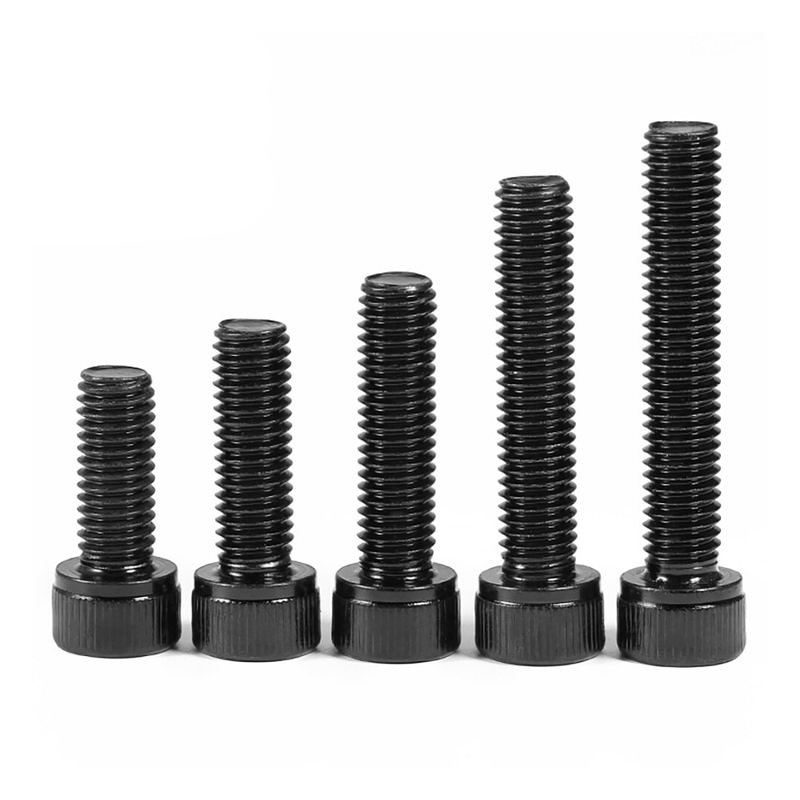 Grade 12.9 Alloy Steel Black Oxide Hex Socket Head Cap Screw M3-M24
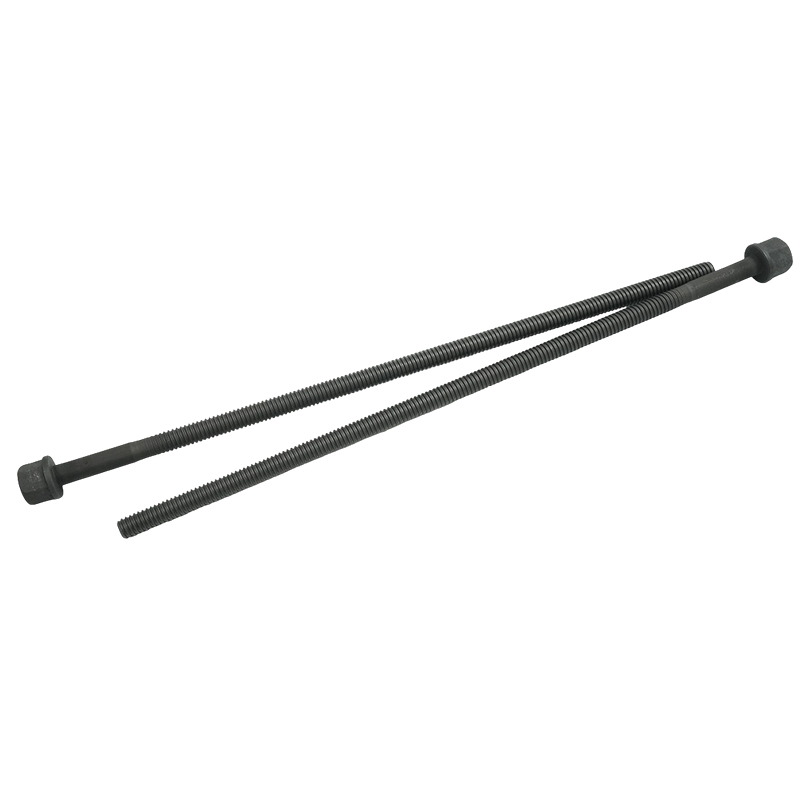 Hex Head Jack Screw Rods
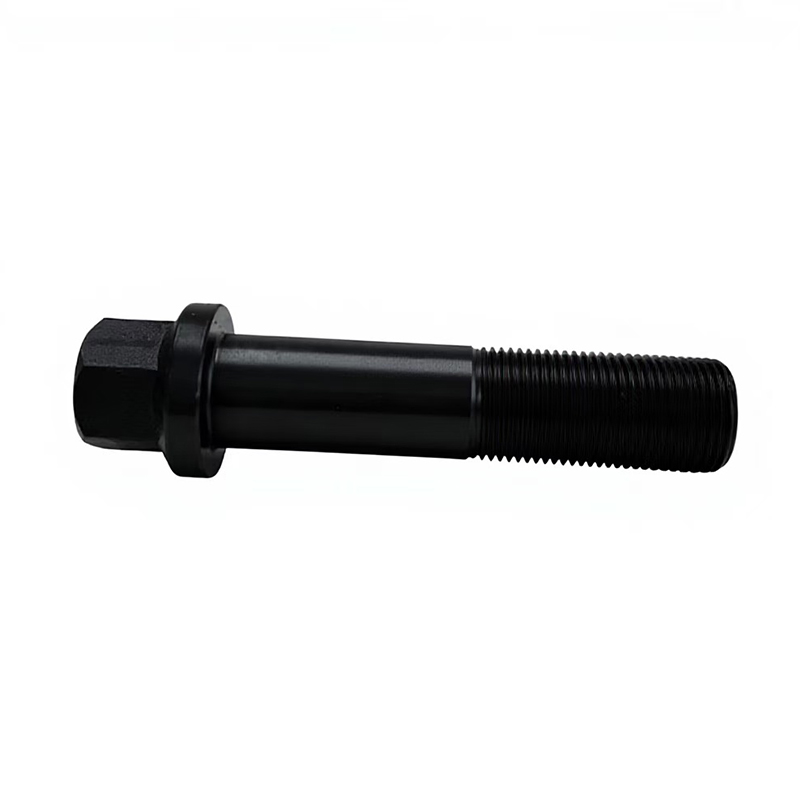 M8×60 Alloy Steel Grade 8.8 Zinc-Plated Hex Head Flange Bolt Cylinder Bolts
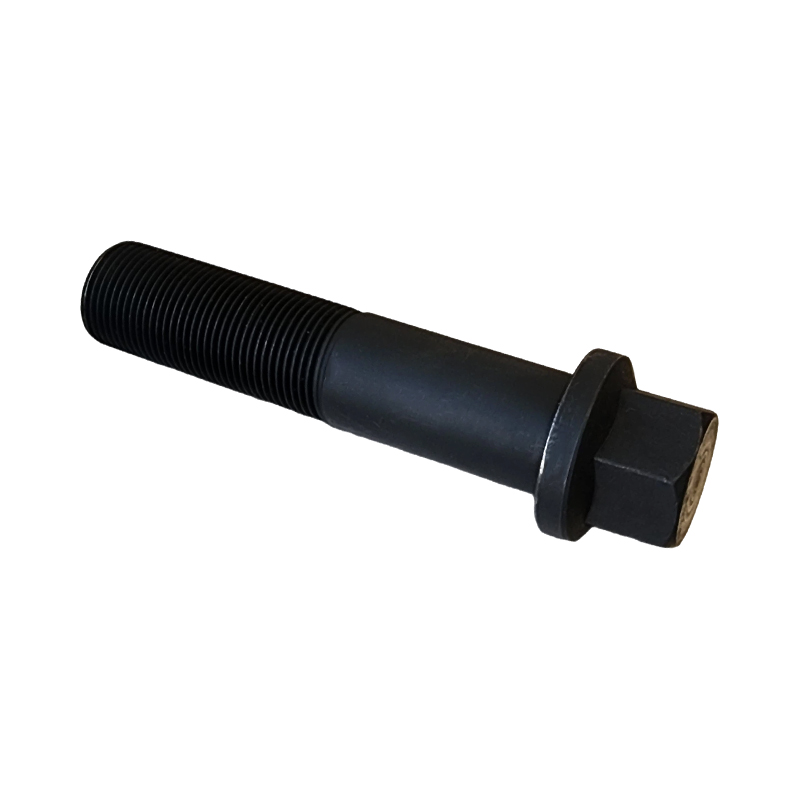 M8×100 Alloy Steel Grade 8.8 Phosphate Coated Cylinder Hex Head Flange Bolts
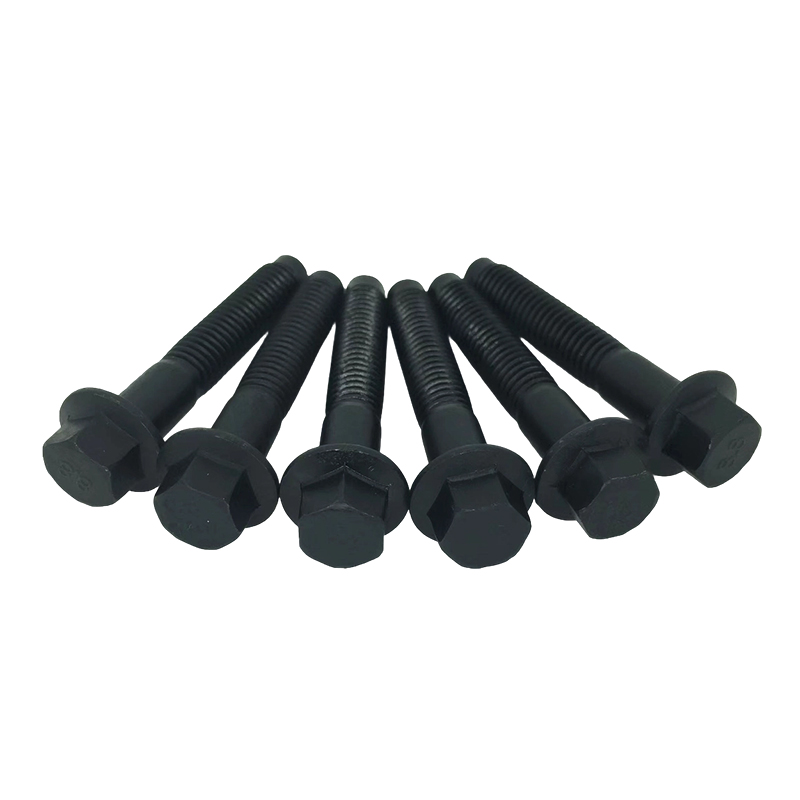 M5*10 Grade 8.8 Carbon Steel Flanged Hex Head Bolts
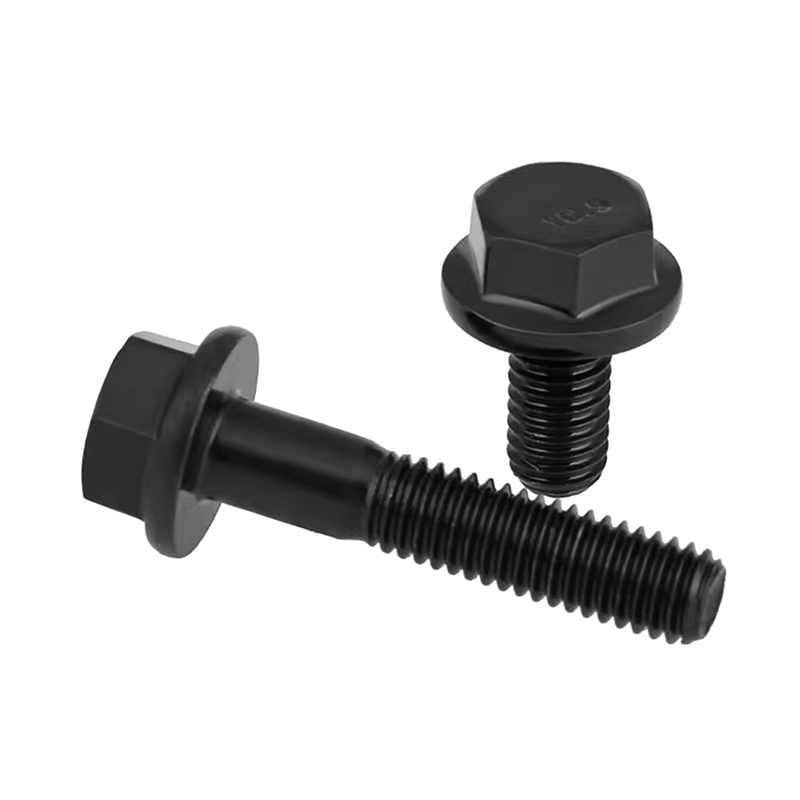 Alloy Steel M6*20 Galvanized Hexagonal Flange Bolts
 Contact Information
 Address



 中文简体
中文简体 Português
 Español
 Deutsch
 русский
 عربى
عربى