
Content
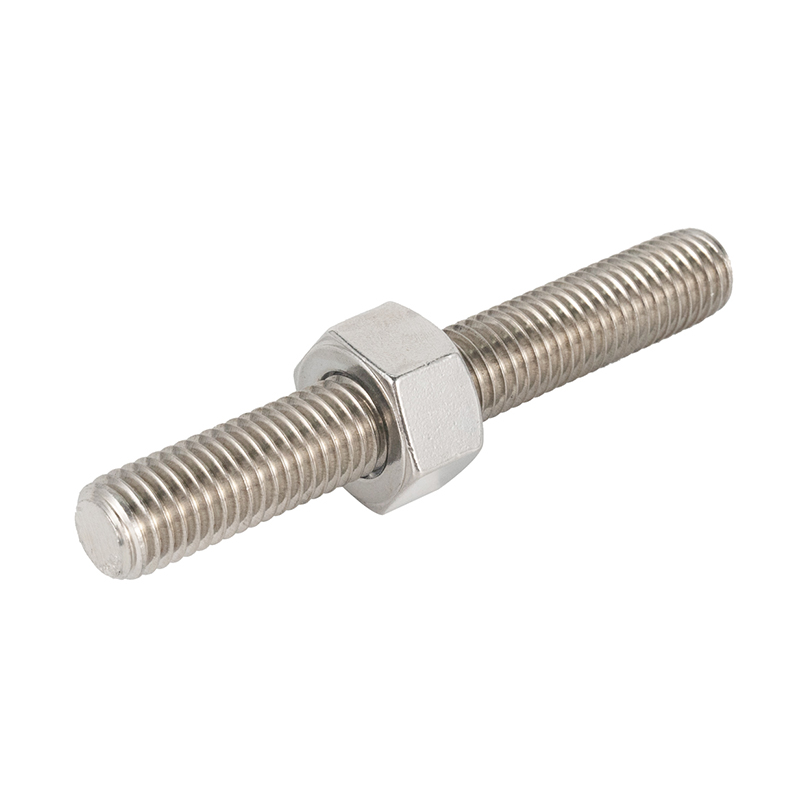
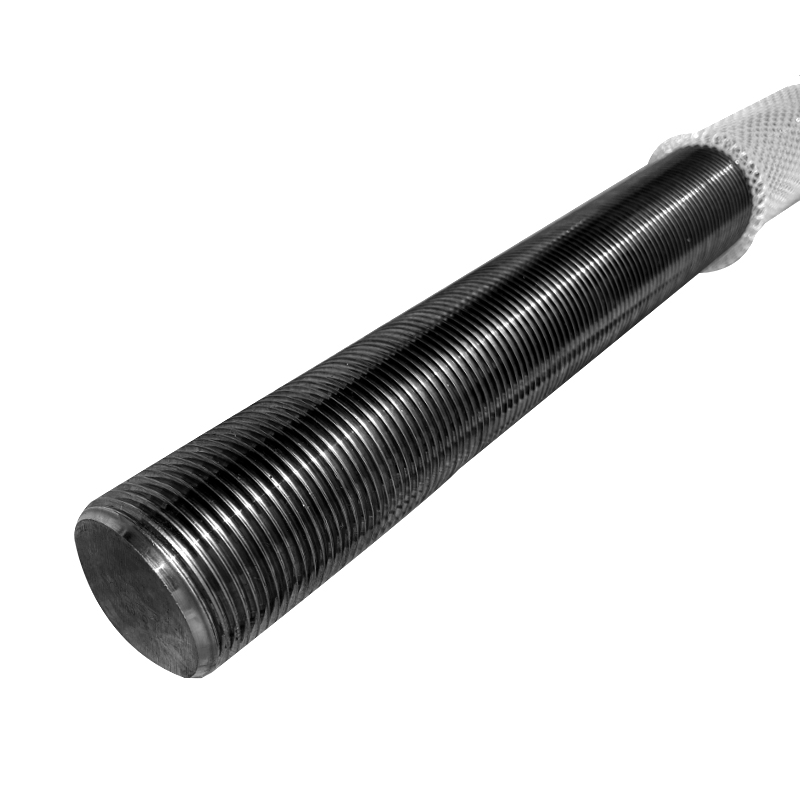
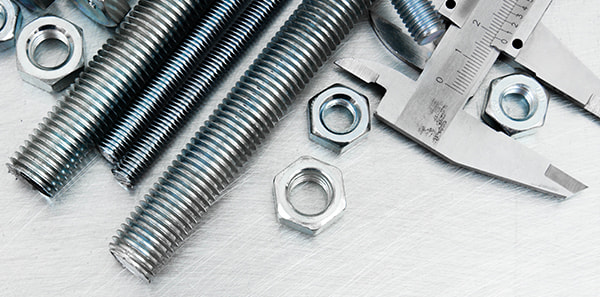
Threaded rod -- a fully threaded cylindrical bar with no head at either end -- is one of the most fundamental and versatile fastening components in industrial, construction, and mechanical engineering. Unlike a standard bolt or cap screw, which is a single-direction fastener designed to clamp from one end, a full threaded rod bar can be used bidirectionally: it accepts nuts, couplings, or other threaded components at both ends, along its length, or at any defined position. This flexibility makes it indispensable across a range of applications that a conventional headed fastener cannot serve.
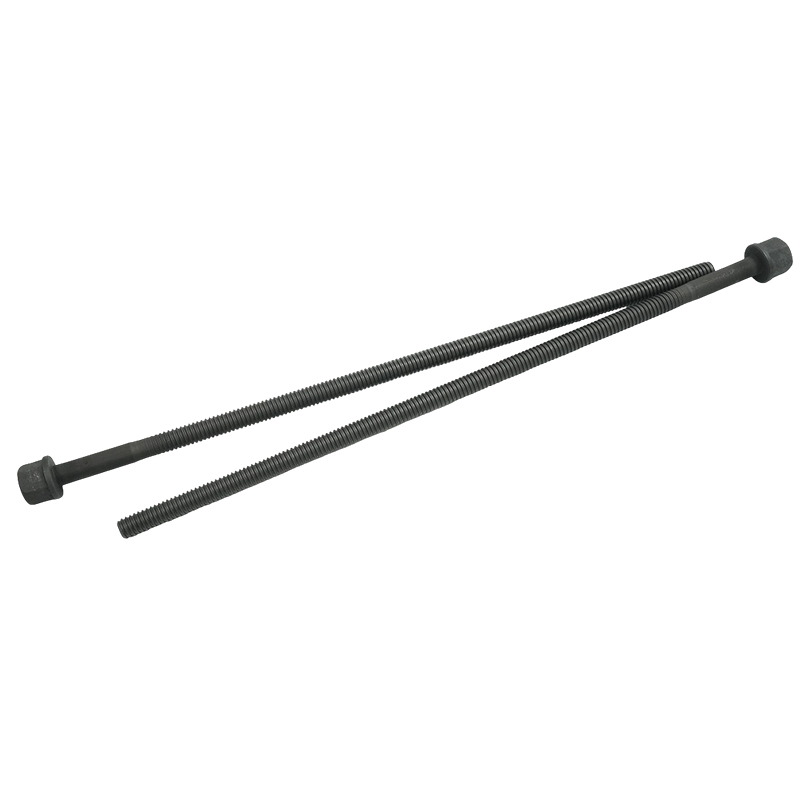
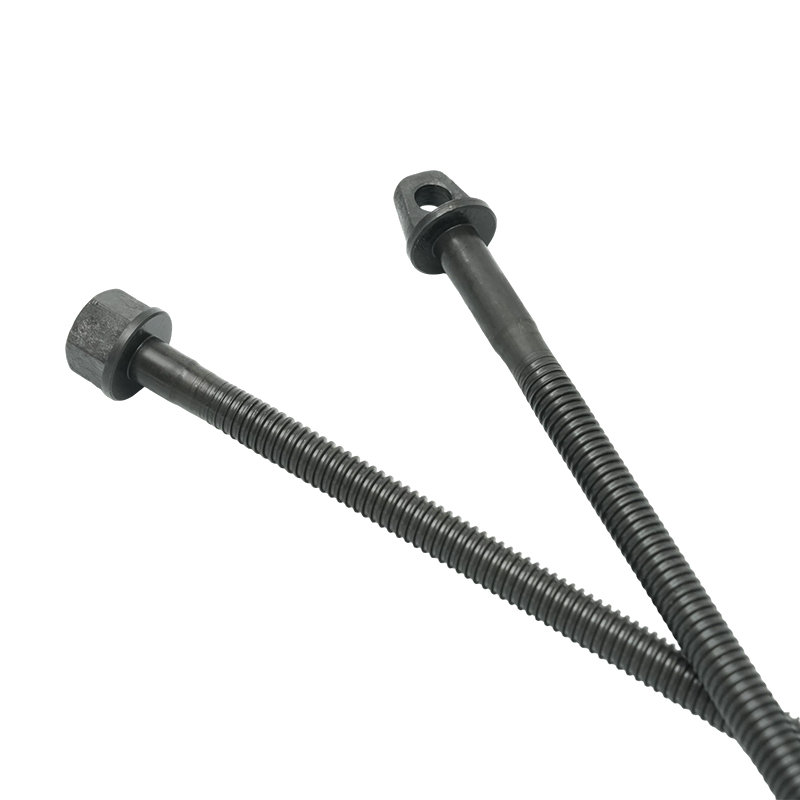
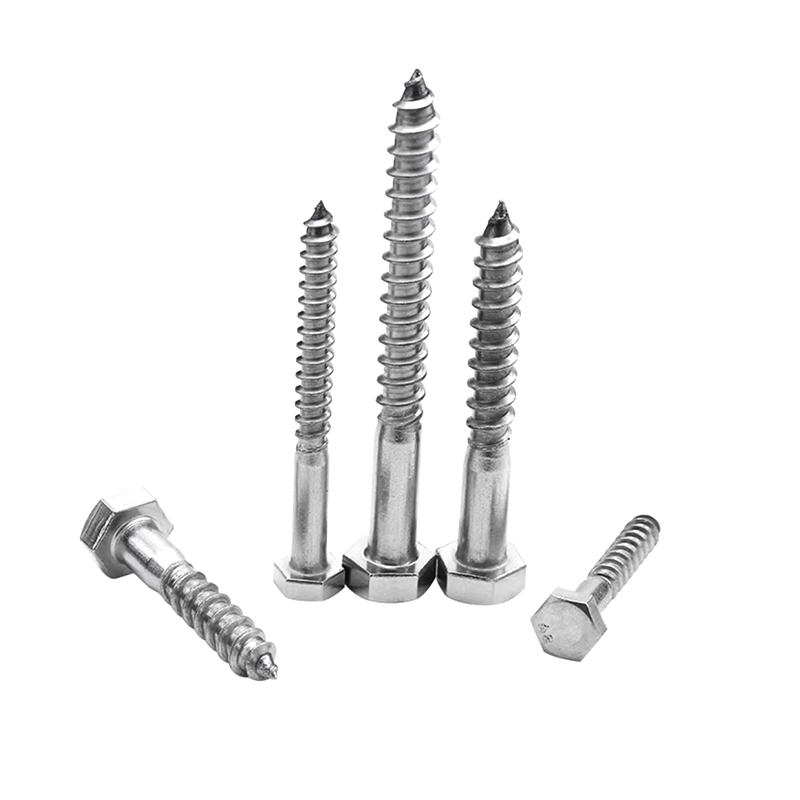
Within the broader threaded rod category, a specific variant -- the hex head screw rod -- adds a hexagonal head at one end of the threaded shank. This modification addresses a key limitation of the plain threaded rod: without a head, a standard threaded rod cannot be torqued from one end without an accessible nut or coupling. The hex head screw rod for jack applications and lead screw uses combines the full-length thread of a rod with the positive drive of a hex head, enabling torque application from one end while transmitting linear force through the thread along the shank.
Understanding the design differences, dimensional standards, material grades, and functional applications of these two product types is the starting point for accurate specification and procurement.
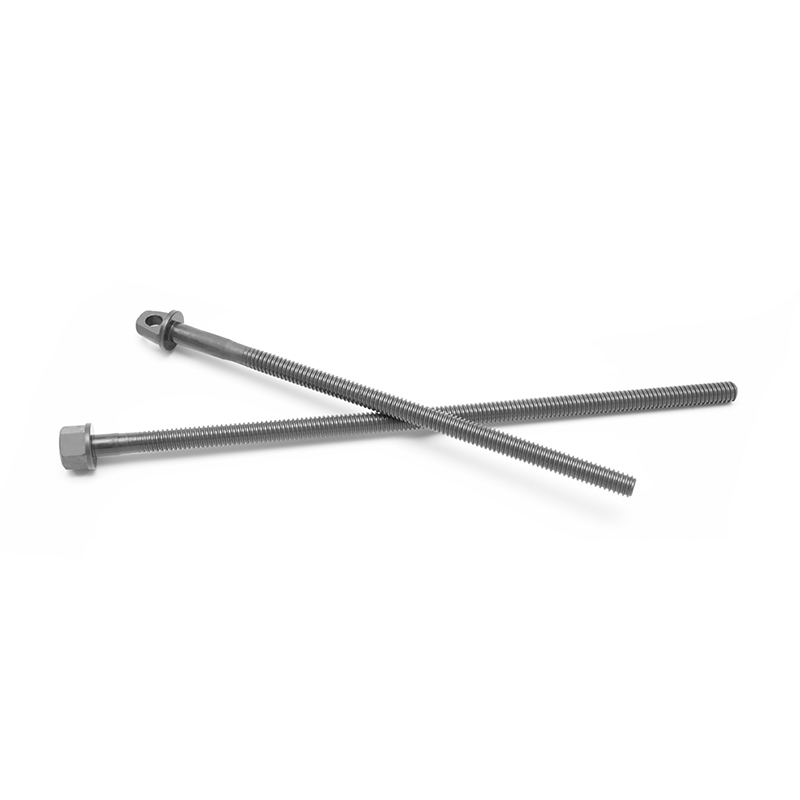
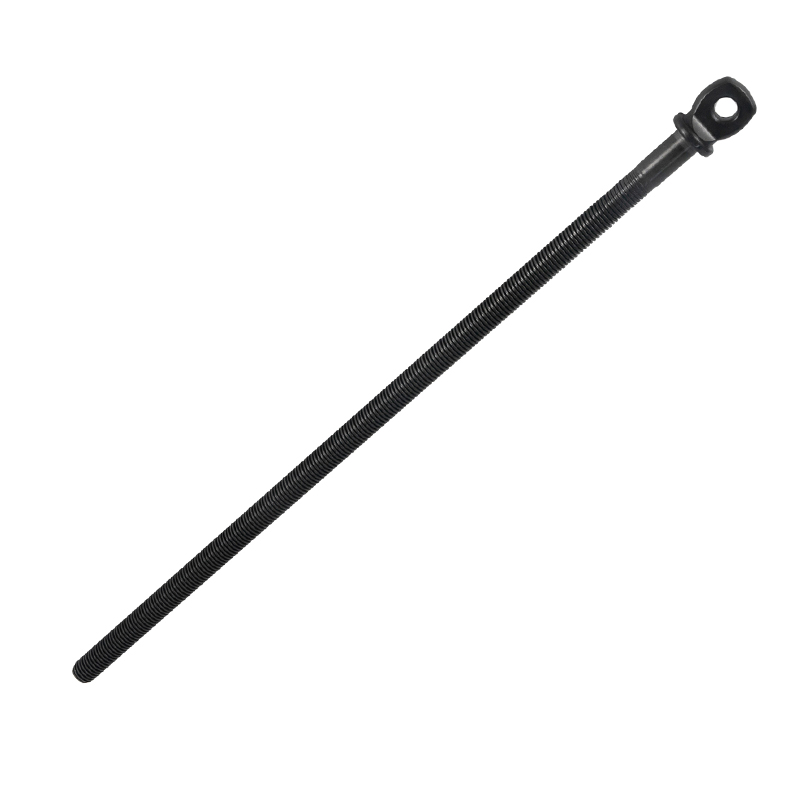
A full threaded rod bar -- also called all-thread rod, stud rod, or allthread -- is a length of bar stock threaded continuously from end to end with no unthreaded plain shank section. The threads extend the full usable length of the rod, allowing nuts, couplings, or clevis ends to be positioned anywhere along the rod and adjusted after installation.
Full threaded rods are produced by one of two methods, each of which affects the mechanical properties of the finished product:
The thread form on a full threaded rod bar determines its compatibility with mating nuts and couplings, its load-carrying capacity per unit of engaged length, and its suitability for specific mechanical functions:
Full threaded rod bar is produced in standard lengths of 1 meter, 2 meters, 3 meters, and 6 meters in metric markets, and in 3-foot, 6-foot, and 12-foot lengths in imperial markets. Custom lengths are cut to order for specific applications. Diameter ranges for commercially stocked threaded rod typically run from M6 to M52 in metric and from 1/4 inch to 2 inches in unified inch series, with larger diameters available to order from specialist producers.
The thread tolerance class of a full threaded rod determines how precisely the thread dimensions are controlled. For general construction use, 6g (metric) or 2A (unified inch) tolerance is standard. For precision lead screw and mechanical power transmission applications, finer tolerance classes (4g or 6H in metric, matched to precision nuts) are specified to minimize backlash and ensure smooth, predictable axial motion.
Full threaded rod is produced in a range of material grades with significantly different strength levels. The correct grade selection depends on the tensile, shear, and fatigue loads the rod will carry in service:
| Grade Designation | Material | Minimum Tensile Strength | Typical Applications |
|---|---|---|---|
| ASTM A307 Grade A | Low carbon steel | 414 MPa (60,000 psi) | General construction, hangers, light structural |
| ASTM A193 B7 | Alloy steel (Cr-Mo), quenched and tempered | 862 MPa (125,000 psi) | High-pressure flanges, pressure vessels, elevated temperature |
| ISO Property Class 4.8 (metric) | Low to medium carbon steel | 420 MPa | General-purpose metric construction rod |
| ISO Property Class 8.8 (metric) | Medium carbon steel, quenched and tempered | 800 MPa | Structural, machinery, high-load assemblies |
| A2-70 Stainless (metric) | Austenitic stainless 304 equivalent | 700 MPa | Food, pharmaceutical, outdoor, corrosive environments |
| A4-80 Stainless (metric) | Austenitic stainless 316 equivalent | 800 MPa | Marine, chloride, chemical exposure |
The versatility of full threaded rod bar derives from the fact that it is a structural element with no inherent orientation -- any point along its length can accept a nut, coupling, or clevis, and the usable grip length can be set at installation to match the actual joint thickness rather than being constrained by the fixed length of a headed fastener. This adjustability makes threaded rod the standard solution across a wide range of structural and mechanical applications.
Threaded rod is one of the primary fastening elements in suspended ceiling systems, mechanical and electrical (M and E) service hangers, and pipe support assemblies in commercial and industrial buildings. Cut lengths of threaded rod connect ceiling anchors to clevis hangers, trapeze assemblies, pipe clamps, and strut channel in configurations that can be assembled and adjusted on site to match actual ceiling heights and service routing. The ability to cut threaded rod to any required length and fit standard nuts and fittings without special machining makes it significantly more flexible than equivalent bolted connections using headed fasteners.
In reinforced concrete construction, threaded rod is cast into or epoxy-anchored into concrete to provide threaded connection points for structural steel attachments, base plates, machinery feet, and seismic bracing. ASTM F1554 specifies the requirements for anchor bolt rod used in these structural foundation applications, with Grades 36, 55, and 105 covering a range of yield and tensile strength requirements.
Turnbuckles -- adjustable tension links with right-hand threaded rod at one end and left-hand threaded rod at the other -- use full threaded rod bar as their core component. Rotating the turnbuckle body simultaneously advances both rod ends into the body (shortening the assembly and increasing tension) or withdraws them (lengthening the assembly and reducing tension). This in-line tensioning function is used in structural bracing, cable stays, theatrical rigging, marine standing rigging, and any application requiring adjustable tension in a tension member without disassembling the end connections.
Full threaded rod cut to specified lengths and fitted with heavy hex nuts at both ends is used as stud bolts in flanged pipe joints in process piping, pressure vessels, and heat exchangers. The ASME PCC-1 guidelines for pressure boundary bolted flange joint assembly specify the material, thread form, nut engagement, and tightening sequence for these joints. Stud bolts for high-temperature and high-pressure service are typically produced to ASTM A193 B7 (alloy steel) with A194 2H heavy hex nuts as the standard mating nut grade.
Coil threaded rod -- a specific variant with a coarser, rounded thread form designed for rapid engagement with wing nuts and coil thread ties -- is extensively used in concrete formwork and shuttering systems. The coil thread form allows one-handed nut engagement and disengagement, which is important in the fast-cycle assembly and stripping of formwork panels. Plain threaded rod with standard hex nuts is used in heavier-duty through-tie applications where higher lateral pressure from wet concrete requires the structural capacity of a standard thread engagement length.
The hex head screw rod is a threaded rod with a hexagonal head formed or forged at one end. The combination of a full-length threaded shank with a hex head creates a component that can transmit both rotational torque (through the hex head) and linear force (through the thread) in a single element. This is a different functional requirement from a standard fastener: the rod is not primarily a clamping device but a mechanical motion converter -- transforming the rotary input at the hex head into linear displacement of a nut or lead nut traveling along the thread.
A jack screw is a device that converts rotary motion to linear motion through a threaded interface. The hex head screw rod is the driven element in a jack screw assembly: the hex head is engaged by a wrench, ratchet, or powered drive, and the resulting rotation advances or retracts the threaded rod relative to a fixed nut or lead nut housing. The mechanical advantage of a jack screw is the ratio of the torque input at the hex head to the linear thrust output at the rod end, which is determined by the thread pitch and the radius at which the input force is applied.
A finer thread pitch produces higher mechanical advantage (more linear thrust per unit of input torque) but slower linear travel per revolution and higher susceptibility to binding if the thread is not well lubricated. A coarser pitch produces faster linear travel and lower mechanical advantage, and is more self-cleaning in dirty or contaminated environments. The thread form selection for jack screw applications is a balance between these factors, with the load magnitude, travel speed, and lubrication conditions all influencing the optimum choice.
Standard 60-degree V-thread forms (UNC, UNF, ISO metric) are used in many hex head screw rod jack applications, particularly at lower load levels where the thread contact stresses are within the capacity of the V-thread flank. However, the 60-degree flank angle of a V-thread creates a significant radial force component (the wedging effect of the thread flanks) that increases friction and reduces efficiency compared to a more axially oriented thread profile.
For higher-load power transmission and more demanding jack screw applications, trapezoidal and ACME thread forms are specified:
An important design consideration in jack screw hex head screw rod selection is whether the thread is self-locking or overhauling. A self-locking thread will hold its position under load without external braking when the drive input is removed -- the friction in the thread is sufficient to resist back-driving by the axial load. An overhauling thread will back-drive under load if the driving torque is removed, requiring an external brake or locking mechanism to hold position.
The self-locking condition is met when the thread lead angle is less than the friction angle of the thread interface. For most standard V-thread and ACME thread combinations with steel-on-steel contact and typical lubrication, the thread is self-locking -- which is why a nut on a bolt does not loosen simply from the applied load. For high-efficiency lead screws designed to minimize friction (such as those used in CNC machine tools with recirculating ball nut assemblies), the thread may be intentionally designed to overhaul, as this allows the driven element to be repositioned by a light external force without requiring back-driving torque.
Hex head screw rods are used across a range of jack, lifting, and linear positioning applications:
The material requirements for a hex head screw rod in a power transmission or jack application differ from those of a structural fastener. In addition to tensile strength, the thread contact stress (Hertzian contact pressure between mating thread flanks), wear resistance, fatigue life under cyclic loading, and in some applications corrosion resistance must all be evaluated.
Medium carbon steel (AISI 1045 or equivalent) and alloy steel (AISI 4140, 4340) are the most common materials for industrial hex head screw rods and jack screw assemblies. Medium carbon steel provides an adequate combination of strength, machinability, and thread rolling capability for the majority of jack and lifting applications. Alloy steel grades 4140 and 4340, heat treated to the required strength level, are specified for high-load and high-cycle applications where the higher core strength, improved fatigue resistance, and better surface hardness response to heat treatment justify the material cost premium.
Thread efficiency and wear life in jack screw applications are significantly affected by the surface treatment of the rod and the lubrication regime. Zinc phosphate coating (Parkerizing) applied before a grease or oil lubricant improves lubricant retention on the thread surface and reduces initial wear during bedding-in. Hard chrome plating on the thread flanks is used in high-cycle precision lead screw applications to improve wear resistance. For outdoor or corrosive environments, zinc plating, hot-dip galvanizing, or stainless steel rod are specified, with the selection balanced against the thread tolerance requirements of the application -- thicker coatings reduce the effective clearance between rod and nut threads.
In power transmission jack screw assemblies, the lead nut (the nut that travels along the screw rod or the nut relative to which the rod advances) is often made from a softer material than the rod -- typically bronze, brass, or acetal (Delrin) polymer. This material pairing deliberately makes the nut the sacrificial wear component. It is significantly cheaper and easier to replace a worn bronze nut than to replace the full screw rod, so the nut is designed to wear preferentially while the rod retains its dimensional accuracy over a much longer service life. Bronze nuts also provide inherently better lubrication retention and lower friction than steel-on-steel pairings, improving power transmission efficiency and reducing the drive torque required for a given thrust load.
For buyers, engineers, and procurement teams specifying full threaded rod bar or hex head screw rod for jack and power transmission applications, the following parameters represent the minimum required information for accurate product specification and supplier communication:
 Contact Information
 Address



 中文简体
中文简体 Português
 Español
 Deutsch
 русский
 عربى
عربى