
Content
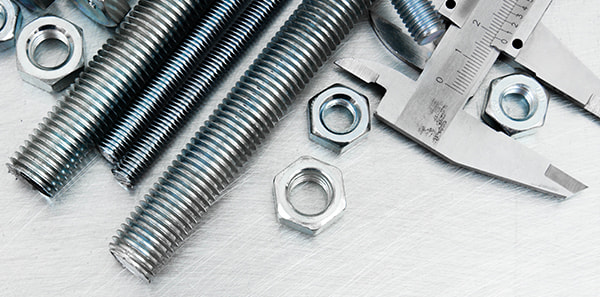
Threaded rods, also known as all thread rods or studs, are long cylindrical fasteners with continuous threading along their entire length. Unlike traditional bolts that feature a head and partial threading, threaded rods provide threading from end to end, allowing for adjustable positioning of nuts, couplings, and other components anywhere along the rod's length. This versatility makes threaded rods indispensable in construction, manufacturing, mechanical assemblies, and numerous other applications where adjustable fastening or structural support is required.
The fundamental purpose of threaded rods is to create tension connections between components or to provide adjustable hanging and suspension systems. By threading nuts onto both ends of the rod and tightening them against the materials being joined, you create a clamping force that holds the assembly together. The continuous threading allows you to precisely position components at any point along the rod's length, making threaded rods ideal for situations where exact spacing or future adjustments may be necessary.
In construction and structural applications, threaded rods serve as anchor bolts embedded in concrete foundations, tie rods that hold walls together, and suspension rods for drop ceilings, ductwork, and piping systems. The ability to cut threaded rods to custom lengths and adjust component positions makes them particularly valuable in retrofit situations where dimensions may vary from original plans. Contractors regularly use threaded rods to hang HVAC equipment, electrical conduit, and plumbing from structural members, with the threading allowing precise leveling adjustments.
Manufacturing and mechanical engineering applications utilize threaded rods in machine frames, assembly fixtures, adjustable supports, and lead screw mechanisms. Woodworkers employ threaded rods in jigs, clamps, and vises where adjustable pressure or positioning is beneficial. Automotive and equipment repair often requires threaded rods as replacement studs, exhaust hangers, or custom mounting solutions. The aerospace and marine industries rely on threaded rods made from specialized materials for applications requiring high strength-to-weight ratios or exceptional corrosion resistance.
Threaded rods offer several distinct advantages compared to conventional bolts and screws. Their continuous threading provides unlimited adjustment possibilities along the entire length, eliminating the need to stock multiple bolt lengths for different applications. You can cut threaded rods to precise custom lengths on-site using a hacksaw or cutoff wheel, providing flexibility that pre-manufactured bolts cannot match. This customizability reduces inventory requirements and allows for adaptation to unexpected field conditions.
The symmetrical design of threaded rods enables reversible installation and double-ended connections that distribute loads more evenly than single-headed fasteners. In tension applications, threaded rods can achieve higher load ratings than comparable bolts because the continuous threading distributes stress uniformly rather than concentrating it at the thread runout point. When combined with appropriate nuts, washers, and couplings, threaded rods create highly engineered connection systems capable of meeting demanding structural and mechanical requirements.
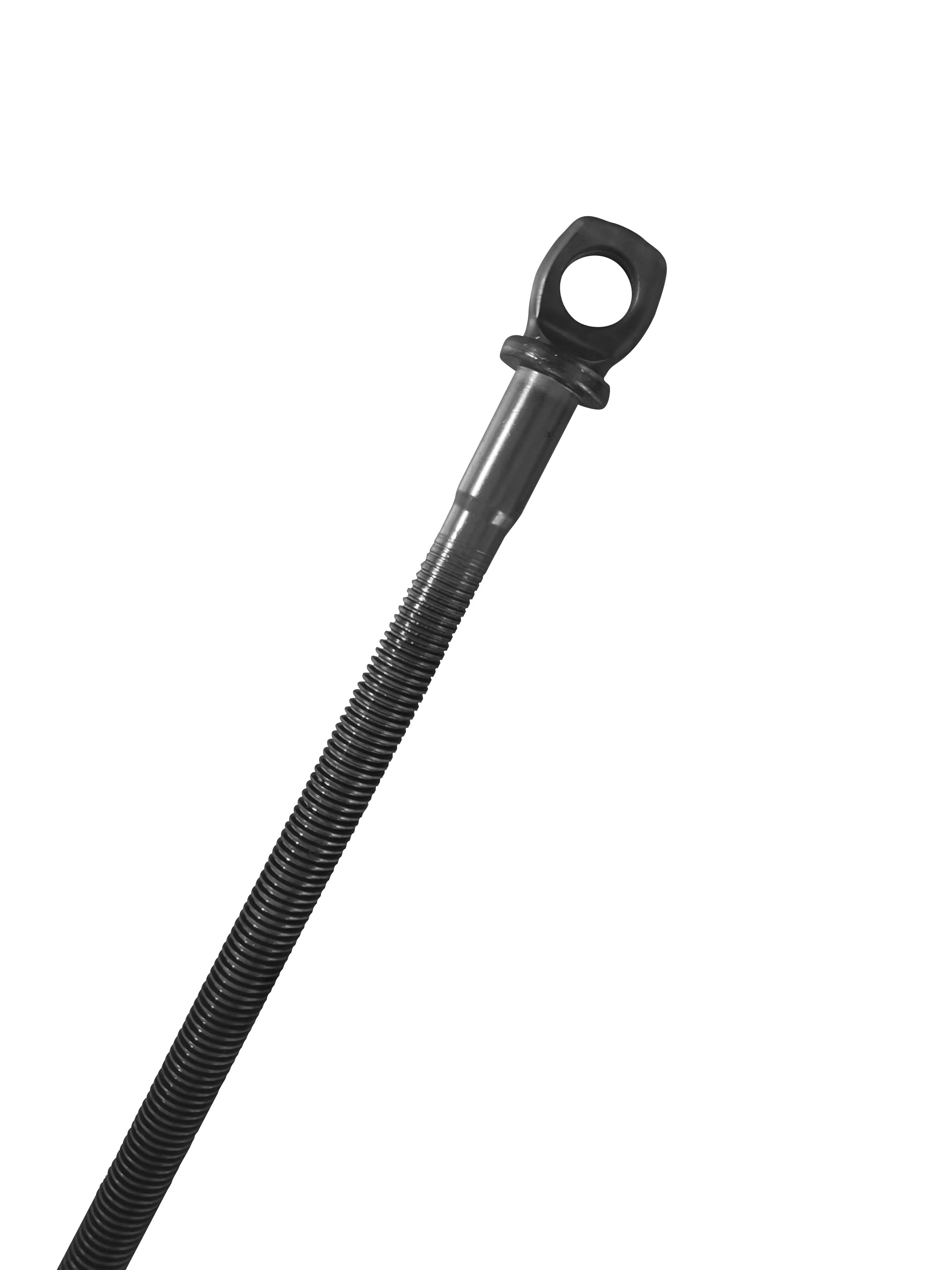
Threaded rods are manufactured in both imperial and metric sizing systems, with specifications that define diameter, thread pitch, length, and material properties. Understanding these specifications ensures you select the appropriate rod for your application's load requirements, dimensional constraints, and environmental conditions.
The imperial system designates threaded rod sizes by diameter in fractions of an inch, with common sizes ranging from 1/4 inch through 2 inches for general applications, though larger diameters are available for specialized structural use. Standard fractional sizes include 1/4", 5/16", 3/8", 7/16", 1/2", 5/8", 3/4", 7/8", 1", 1-1/8", 1-1/4", 1-1/2", and 1-3/4". Smaller diameter rods below 1/4 inch use numbered designations like #6, #8, #10, and #12, following the same convention as machine screws.
Thread pitch for imperial threaded rods follows either coarse thread (UNC) or fine thread (UNF) standards. Coarse threads are default for general applications, providing good strength and easier assembly, with designations like 1/4-20 indicating a quarter-inch diameter with twenty threads per inch. Fine threads offer superior resistance to vibration loosening and provide finer adjustment capability, designated as 1/4-28 for the same diameter but with twenty-eight threads per inch. Extra-fine threads are available for specialized applications but less commonly stocked.
Metric threaded rods use millimeter measurements with the designation "M" followed by the nominal diameter. Common metric sizes include M3, M4, M5, M6, M8, M10, M12, M14, M16, M20, M24, M30, M36, and larger for heavy structural applications. The diameter represents the major diameter of the thread measured at the thread peaks. Standard lengths typically range from 250mm to 3000mm, though custom lengths and continuous stock material can be cut to order.
Metric thread pitch is specified in millimeters between adjacent threads, with both coarse and fine pitch options available. For example, an M10 rod with coarse threads has a 1.5mm pitch (designated M10 x 1.5), while fine thread M10 uses 1.25mm pitch (M10 x 1.25). Coarse pitch is standard unless otherwise specified. The smaller pitch number indicates finer threads, which may seem counterintuitive compared to the imperial system where higher TPI numbers indicate finer threads.
Threaded rods are commonly sold in standard lengths of 12 inches, 36 inches (3 feet), 72 inches (6 feet), and 120 inches (10 feet) in the imperial system, or metric equivalents of 1 meter, 2 meters, and 3 meters. Many suppliers also stock 6-foot and 10-foot lengths as convenient sizes for construction applications. Industrial suppliers often carry 12-foot lengths or can order continuous lengths for large projects requiring minimal joints and couplings.
Purchasing longer standard lengths and cutting them to size typically proves more economical than buying multiple shorter pieces, provided you have appropriate cutting tools and storage space. However, transportation considerations and handling difficulties may make shorter lengths preferable for certain situations. Some suppliers offer custom cutting services, though field cutting remains common practice for contractors and fabricators working with threaded rod regularly.
Thread class specifications define the tolerance and fit between threaded rods and mating nuts. Class 2A is standard for most threaded rod applications, providing a balance between ease of assembly and secure fit with Class 2B nuts. This combination allows for reasonable manufacturing tolerances while ensuring threads engage properly even with minor dirt or coating buildup. Class 3A threads offer tighter tolerances for precision applications but require cleaner conditions and may be harder to assemble in field conditions.
| Imperial Size | Coarse Thread TPI | Fine Thread TPI | Metric Equivalent |
| 1/4" | 20 | 28 | M6 |
| 5/16" | 18 | 24 | M8 |
| 3/8" | 16 | 24 | M10 |
| 1/2" | 13 | 20 | M12 |
| 5/8" | 11 | 18 | M16 |
| 3/4" | 10 | 16 | M20 |
| 1" | 8 | 12 | M24 |
The material composition and heat treatment of threaded rods directly determine their strength, corrosion resistance, and suitability for specific applications. Selecting the appropriate grade ensures your assembly meets safety requirements and performs reliably throughout its intended service life.
Grade A36 threaded rod represents the baseline carbon steel material commonly used for general-purpose applications where high strength is not critical. This low-carbon steel offers good weldability and machinability at economical prices, making it suitable for light structural supports, furniture assembly, and non-critical mechanical applications. A36 provides a minimum tensile strength of 58,000 psi, adequate for many common uses but insufficient for high-load structural applications.
Grade B7 threaded rod is manufactured from medium-carbon alloy steel and heat-treated to achieve tensile strengths of 125,000 psi or higher. This grade serves as the standard for high-strength applications including structural connections, pressure vessel flanges, and heavy equipment assembly. B7 rods are identifiable by color coding or markings and must be paired with Grade 2H heavy hex nuts for proper performance. The combination of high strength and reasonable cost makes B7 the preferred choice for demanding structural and mechanical applications.
Grade B8 and B8M threaded rods are manufactured from austenitic stainless steel alloys, specifically 304 and 316 stainless respectively. While these grades offer lower tensile strength than B7 carbon steel (typically 75,000 to 100,000 psi depending on cold working), they provide excellent corrosion resistance for outdoor, marine, and chemical environments. B8M (316 stainless) contains molybdenum for enhanced resistance to chlorides and acidic conditions, making it the superior choice for coastal installations and industrial chemical processing applications.
Metric threaded rods use property class designations consisting of two numbers separated by a decimal point. The first number multiplied by 100 indicates the minimum tensile strength in megapascals, while the second number represents the ratio of yield strength to tensile strength multiplied by ten. Class 4.6 provides basic strength equivalent to mild steel, suitable for non-critical applications. Class 8.8 is the metric equivalent to Grade B7, offering high strength for structural and mechanical use with minimum tensile strength of 800 MPa (116,000 psi).
Class 10.9 and 12.9 metric threaded rods provide even higher strength ratings for the most demanding applications, though availability may be limited compared to class 8.8. Stainless steel metric rods typically carry designations like A2-70 or A4-80, where A2 corresponds to 304 stainless, A4 to 316 stainless, and the number indicates tensile strength in MPa divided by ten. The property class marking should appear on the rod itself or on attached identification tags for verification purposes.
Galvanized threaded rod features a zinc coating applied through hot-dip or electroplating processes, providing corrosion protection for outdoor structural applications while maintaining the strength properties of the base carbon steel. Hot-dip galvanizing produces a thicker, more durable coating ideal for long-term exterior exposure, though the coating thickness may affect thread fit and require oversized nuts. Zinc-plated rods offer thinner coatings suitable for indoor or limited outdoor use with less impact on thread dimensions.
Brass and bronze threaded rods provide excellent corrosion resistance with good electrical conductivity, making them valuable for marine hardware, electrical grounding systems, and decorative applications. Silicon bronze offers superior strength among copper alloys while maintaining corrosion resistance. Titanium threaded rods deliver exceptional strength-to-weight ratios and corrosion resistance for aerospace, medical, and high-performance applications, though costs are substantially higher than steel alternatives. Aluminum threaded rods serve applications where weight reduction is paramount and loads are moderate, though their lower strength requires larger diameters to achieve equivalent load ratings.
Threaded rods require compatible nuts, washers, couplings, and end fittings to create complete fastening systems. Understanding the proper selection and use of these components ensures reliable performance and simplifies installation.
Hex nuts are the most common choice for threaded rod assemblies, available in regular height, heavy hex, and jam nut configurations. Heavy hex nuts provide increased bearing surface and are required when using high-strength Grade B7 rods to develop full tensile capacity. Jam nuts are thinner than standard nuts and are typically used in pairs, with the jam nut tightened against a regular nut to create a locking effect that resists vibration loosening. This double-nut arrangement is common in adjustable applications like leveling feet and suspension systems.
Coupling nuts are elongated internally threaded cylinders that join two threaded rods end-to-end, essential when required lengths exceed available stock sizes or when creating adjustable-length assemblies. Standard coupling nuts measure approximately twice the length of regular hex nuts, providing adequate thread engagement on both rods. Turnbuckle couplings incorporate left-hand threads on one end and right-hand threads on the other, allowing length adjustment by rotating the coupling body to simultaneously advance or retract both rods.
Wing nuts allow tool-free tightening and removal, making them ideal for temporary assemblies, jigs, fixtures, and applications requiring frequent adjustment. Nylon insert lock nuts incorporate a polymer ring that creates friction against threads, preventing loosening from vibration while still allowing removal and reuse. Cap nuts feature a domed top that covers the threaded rod end, providing a finished appearance and protecting against thread damage and injury from sharp rod ends.
Flat washers distribute clamping force over a larger area than the nut bearing surface alone, preventing damage to soft materials and reducing stress concentrations in the substrate. Standard flat washers suit general applications, while fender washers provide significantly larger outer diameters for maximum load distribution on wood, plastic, or thin metal materials. The washer inner diameter should provide clearance for the threaded rod while the outer diameter should extend well beyond the nut's across-flats dimension.
Split lock washers create spring tension and bite into both the nut and substrate surface to resist loosening, though their effectiveness has been questioned in modern engineering analysis. Belleville washers are conical spring washers that maintain tension in joints subject to thermal expansion, settling, or relaxation. Structural washers, also called bearing plates, are thick hardened steel washers required in structural steel connections to prevent yielding of the base material under high clamping forces.
Rod ends and clevises provide articulating connections that accommodate angular misalignment in linkages and suspension systems. These fittings thread onto rod ends and incorporate spherical bearings or pin joints for rotational freedom. Eye nuts thread onto threaded rods to create attachment points for cables, chains, or hooks, commonly used in lifting and rigging applications. Anchor plates and embedment assemblies cast into concrete create secure attachment points for threaded rods in foundation and structural applications.
Adjustable hangers and clevises designed specifically for threaded rod suspension systems provide built-in length adjustment without requiring cutting or threading operations. These assemblies typically include swivel features that accommodate angular displacement and simplify installation on non-parallel surfaces. Vibration isolation mounts thread onto rods to support equipment while dampening transmitted vibrations, essential for HVAC equipment, generators, and precision machinery installations.
Proper installation of threaded rod assemblies requires attention to preparation, alignment, tightening procedures, and safety considerations. Following established best practices ensures structural integrity and long-term reliability.
When cutting threaded rod, thread a nut onto the rod beyond the cutting point before making the cut. After cutting with a hacksaw, cutoff wheel, or reciprocating saw, back the nut off past the cut end—this action re-forms any damaged threads and ensures smooth thread engagement. Use a fine-tooth blade or abrasive cutoff wheel appropriate for the rod material to minimize thread damage. File or grind the cut end to remove burrs and create a slight chamfer that aids thread starting during assembly.
For cleaner cuts with minimal thread damage, consider using a rod cutter or threading die specifically designed for threaded rod. These tools cut perpendicular to the rod axis and clean threads in a single operation. When multiple cuts are required, measure carefully and mark cutting locations clearly before beginning to avoid waste. Remember to account for thread engagement depth, nut thickness, and washer thickness when calculating required lengths—a common error is cutting rods too short and discovering insufficient thread engagement during assembly.
Clean threads before assembly to remove dirt, metal shavings, or protective oils that could prevent proper engagement or introduce grit into the thread interface. Wire brushes work well for removing loose contamination, while solvent cleaning may be necessary for heavy oil or grease deposits. Inspect threads for damage, cross-threading, or deformation—attempting to force damaged threads will only worsen the problem and potentially ruin mating nuts.
Apply appropriate thread lubricant or anti-seize compound to facilitate assembly and prevent galling, particularly important with stainless steel rods which are prone to thread seizure. Light oil or graphite-based lubricants suit most applications, while specialty anti-seize compounds containing copper, nickel, or molybdenum serve high-temperature or chemically aggressive environments. Be aware that lubrication significantly affects the relationship between applied torque and resulting clamping force—if following torque specifications, verify whether they assume dry or lubricated conditions.
Begin assembly by threading nuts onto the rod by hand for several turns to verify proper thread engagement and detect any cross-threading before applying tools. Cross-threading occurs when threads are not properly aligned during initial engagement, causing damage that prevents full tightening and reduces strength. If resistance is encountered during hand threading, back the nut off and restart rather than forcing it with tools.
For through-rod assemblies passing completely through the materials being joined, install washers on both sides to distribute loads and protect material surfaces. Thread nuts onto both ends loosely, then tighten in stages while monitoring alignment. In multi-rod assemblies, bring all connections to approximately thirty percent of final tightness before progressively advancing to sixty percent and finally to full tightness. This staged approach allows the assembly to equalize and prevents binding or misalignment caused by tightening one location before others.
Structural and critical mechanical applications require specific torque values to develop proper clamping force without exceeding the rod's elastic limit. Consult engineering specifications or torque charts that correspond to the rod grade, diameter, and thread pitch. Use calibrated torque wrenches for precision applications, particularly in structural steel connections, pressure vessels, and equipment assemblies where failure could have serious consequences.
In the absence of specific torque requirements, general guidelines suggest tightening until the connection is snug, then advancing the nut an additional quarter to half turn for small diameter rods (under 1/2 inch) or half to three-quarters turn for larger rods. The nut should be tight enough that the assembly cannot shift under expected loads but not so tight that threads are damaged or the rod permanently deforms. Watch for signs of over-tightening including nut deformation, rod elongation, or material crushing under washers.
Understanding the load capacity of threaded rod assemblies is essential for safe and reliable installations. Proper engineering analysis accounts for material strength, rod diameter, loading conditions, and safety factors appropriate to the application.
The tensile strength of a threaded rod represents the maximum load it can theoretically support before failure, calculated by multiplying the minimum tensile stress rating by the rod's tensile stress area. The tensile stress area is less than the nominal cross-sectional area because thread valleys reduce the effective load-bearing material. For example, a 1/2-13 Grade B7 rod has a tensile stress area of approximately 0.142 square inches and tensile strength of 125,000 psi, yielding a theoretical maximum load of 17,750 pounds.
Working loads must incorporate appropriate safety factors to account for uncertainties in loading, material properties, installation quality, and consequences of failure. Typical safety factors range from 3:1 for static loads in non-critical applications to 10:1 or higher for dynamic loads, shock loading, or life-safety applications. Applying a 5:1 safety factor to our example rod reduces the working load to approximately 3,550 pounds. Local building codes and engineering standards specify minimum safety factors for structural applications—always consult applicable regulations and qualified engineers for critical installations.
Threaded rods subjected to lateral loads or bending moments in addition to axial tension experience combined stresses that reduce effective capacity. Long unsupported spans are p
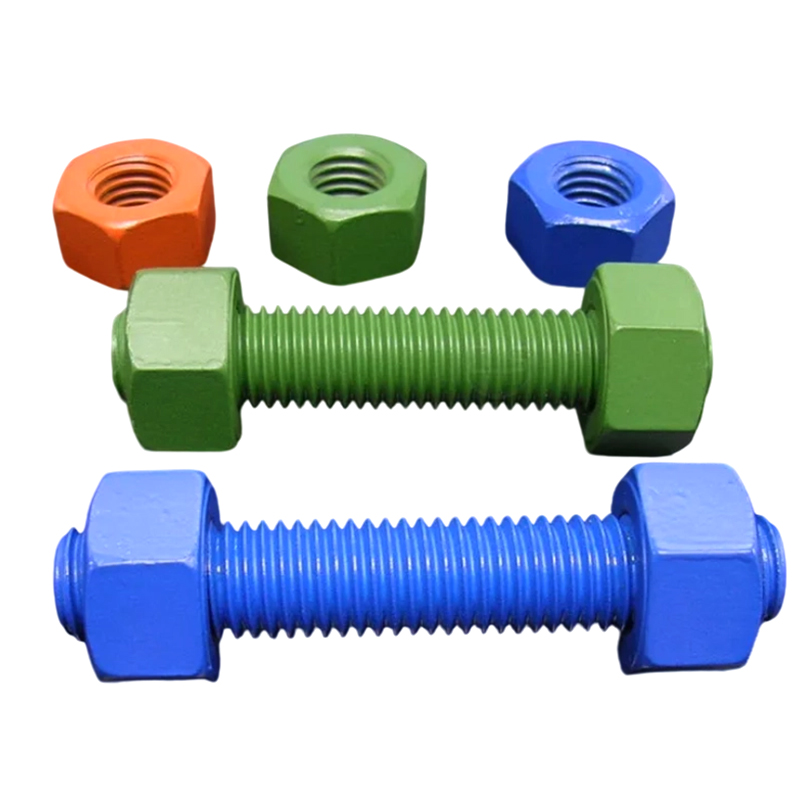 Alloy Steel M27*300 PTFE / Dacromet Coating B7 Threaded Rods Studs
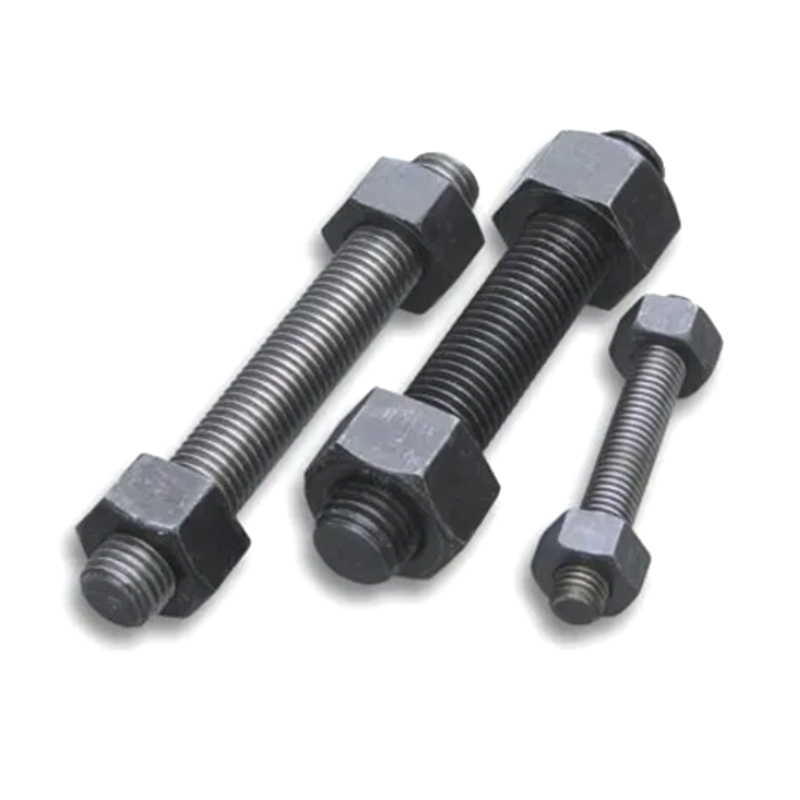 1-8 UNC *5" Alloy Steel ASTM A193 B7 Threaded Rods
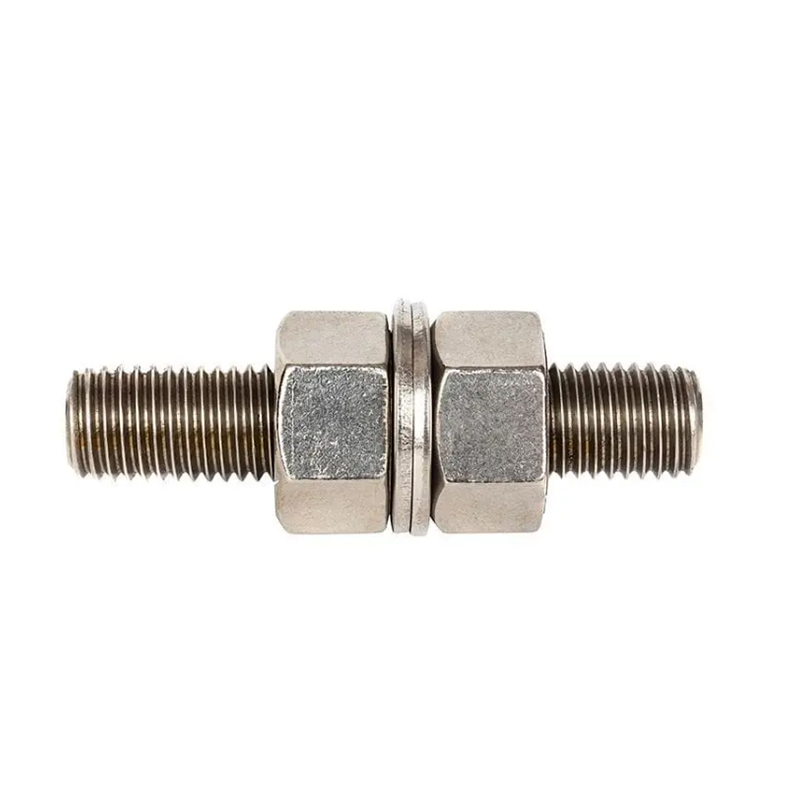 1-8 UNC *5" Alloy Steel ASTM A193 B7 Threaded Rods Grade L7 Threaded Studs
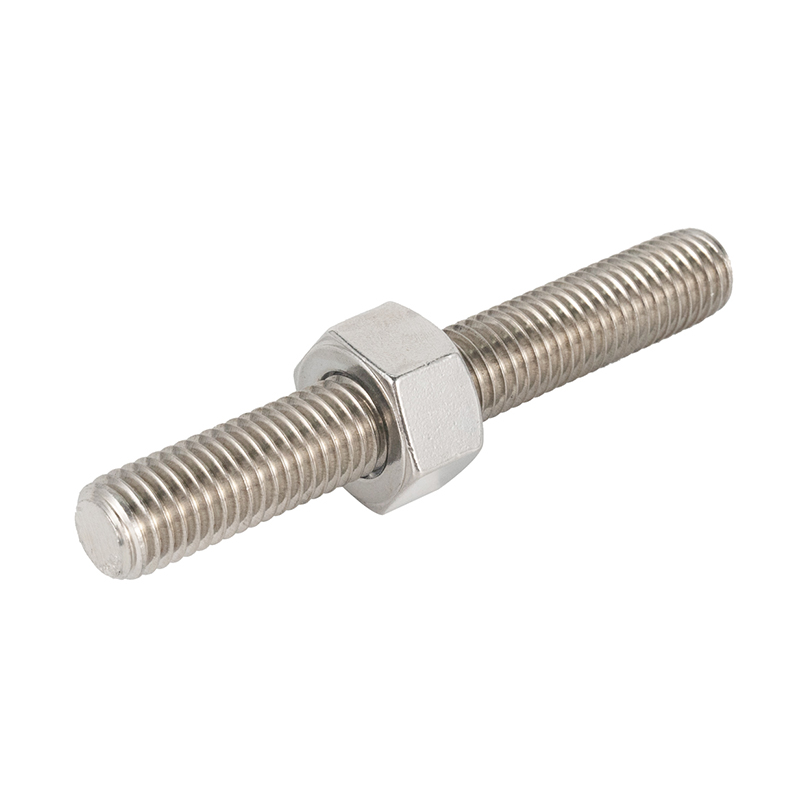 M10×300 Carbon Steel Grade 8.8 Galvanized Fully Threaded Rods
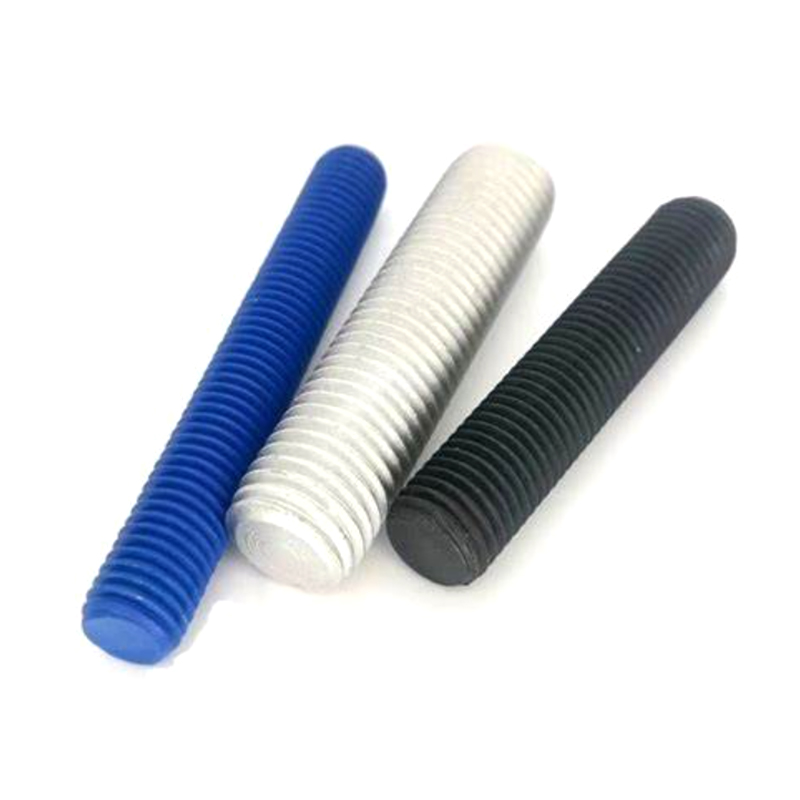 3/4*10" Zinc Plated / Black Oxide / Hot Dip Galvanized B7 Threaded Rods
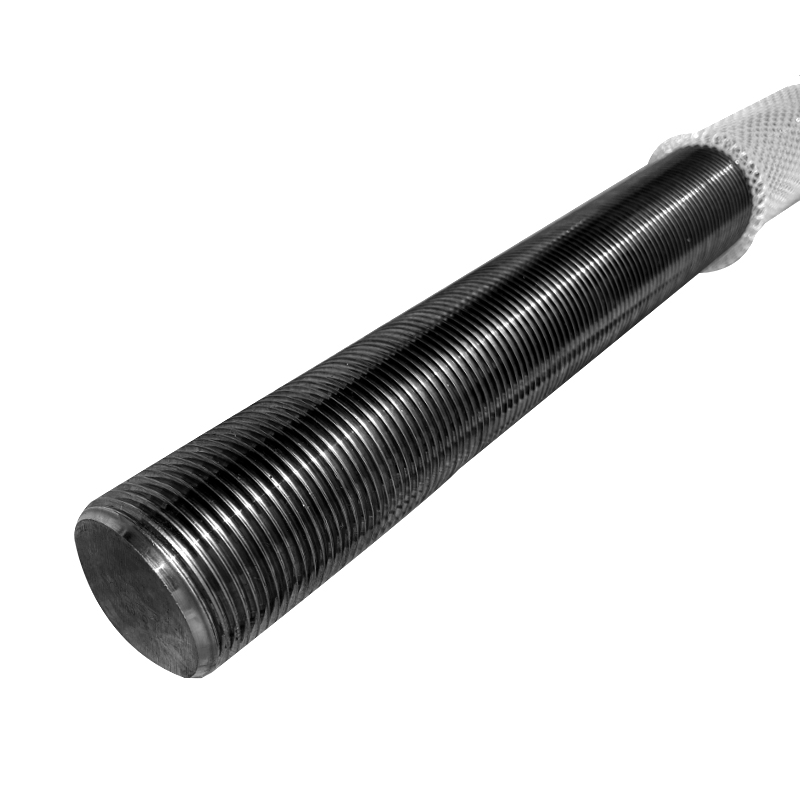 M27*300 PTFE Blue / Dacromet Coated ASTM A320 L7 Fully Threaded Rods
 Contact Information
 Address



 中文简体
中文简体 Português
 Español
 Deutsch
 русский
 عربى
عربى