Shanghai Soverchannel Industrial Co., Ltd. is a professional manufacturer specializing in non-standard and standard bolts. We operate advanced production lines with an annual output of 10,000 tons, equipped with comprehensive inspection instruments. Mastering unique long bolt cold-heading technology, we can achieve one-step cold extrusion forming for non-standard special-shaped parts.
Struggling to find the right standard part? Let us engineer it. From automotive bolts to unique shaped components, we specialize in custom runs based on your samples or drawings.
The design of the nut in a trapezoidal lead screw system plays a critical role in determining the performance, wear characteristics, and efficiency of the entire assembly. Several factors related to the nut design can have a direct impact:
1. Load Distribution and Performance
Material and Hardness...
When it comes to securing components in high-stress, heavy-duty applications, carbon steel hexagon screws stand out as a highly reliable choice. Known for their strength, durability, and cost-effectiveness, these screws are used across various industries, from automotive manufacturing to constructio...
Metallurgical Foundations of Stainless Steel Fasteners
1. Alloy Classifications and Key Grades
Stainless steel fasteners are categorized by their crystalline structures and alloy compositions:
Austenitic (300 Series):
AISI 304 (1.4301): 18% Cr, 8% Ni; general-purpose use with moderate chloride r...
In high-vibration environments, carbon steel screws, stainless steel screws, and alloy steel screws each have distinct advantages and limitations based on their material properties, strength, and resistance to fatigue and corrosion.
1. Strength & Hardness
Carbon Steel Screws: Medium- to high-c...
A jack screw operates on the principle of the screw thread, converting rotational motion into linear force. The core components include a threaded screw shaft and a nut, which work in tandem to generate vertical movement. When the screw is rotated (manually or via a motor), the nut travels along the...
Stainless steel screws are indispensable in applications ranging from aerospace and medical devices to marine infrastructure and consumer electronics, valued for their corrosion resistance, mechanical strength, and aesthetic appeal. However, the design and production of these fasteners involve intri...
Lifting screws, often referred to as lead screws or ball screws in some contexts, are integral to industrial lifting systems, providing a reliable and precise method of lifting, positioning, and moving heavy loads. These components are critical in sectors like construction, manufacturing, and wareho...
I. Common Thread Symbols①NPT (National Pipe Thread): A standard American tapered pipe thread with a 60° thread angle, commonly used for general-purpose applications.②PT (British Standard Tapered Pipe Thread): A 55° thread angle taper thread widely used for sealing. British pipe threads are fine thre...
Lifting screws are a type of mechanical fastener used to safely lift and move heavy loads in various industrial sectors, including construction, manufacturing, and logistics. These components are critical for ensuring that loads are handled efficiently, securely, and safely. However, what are the ke...
The performance of a trapezoidal lead screw under dynamic loads versus static loads is influenced by several factors, including the material properties, thread geometry, lubrication, and the design of the system. Understanding how these screws behave under different loading conditions is critical fo...
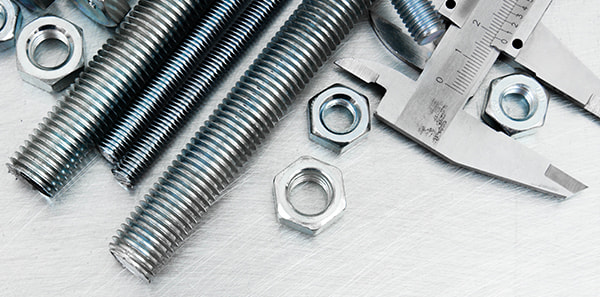
At Soverchannel Industrial CO.,Ltd. , precision is at the heart of everything we do. Today, we’re proud to showcase our Screw Rods —a perfect blend of advanced engineering, superior materials, and meticulous craftsmanship.
Unmatched Quality, Every Step of the WayFrom the initial raw material to t...
Minimizing backlash in trapezoidal lead screw systems is critical for achieving precise and repeatable motion, especially in applications requiring high accuracy. However, reducing backlash while avoiding excessive friction or wear requires careful design considerations and the use of specialized te...



 Contact Information
 Address



 中文简体
中文简体 Português
 Español
 Deutsch
 русский
 عربى
عربى