
Content
A fabricator calls on a Friday: a 12-metre steel column lands on a base plate that is already drilled for 3/4-10 holes, the foundation has been poured and cured for three weeks, and the anchor schedule on the drawing still reads "cast-in-place". Nothing about the bolt changes. Everything about the anchor family has to.
That is the normal shape of the problem. Most anchoring failures are specification failures rather than load failures. A 3/4-inch wedge anchor set into a hole drilled one millimetre oversize gives up a measurable share of its tension capacity before the torque wrench is picked up, and a concrete screw driven with a worn SDS bit cuts a thread that never fully engages the substrate. Choosing among the types of concrete anchor bolts is really choosing the tolerances your crew has to hold, the inspection regime you will be measured against, and the cost per installed anchor rather than the cost per piece.
The short answer: cast-in-place anchor bolts — L-bolts, J-bolts and headed rods to ASTM F1554 — stay the cheapest and strongest option while the concrete is still open. Once the pour has cured, four post-installed families do almost all the work: torque-controlled wedge anchors, sleeve anchors, concrete screws and adhesive anchors. Only torque-controlled expansion anchors and adhesive anchors are generally qualified for cracked concrete and seismic categories, so on a project governed by ACI 318 Chapter 17 everything else is a non-starter, whatever the packaging claims.
The families differ in one fundamental question: how does the anchor move load into the concrete — by bearing, by friction, by a mechanical key, or by chemical bond? Every other property, from hole tolerance to whether the anchor can be removed and reused, follows from that answer.
Set before or during the pour, so the concrete itself becomes the load path. L-bends, J-bends and headed rods in F1554 Grade 36, 55 or 105 cover most column bases; hot-dip galvanizing handles outdoor exposure. Nothing post-installed matches the capacity per dollar, but there is zero tolerance for a layout error once the concrete sets.
A clip expands against the drill hole wall as the nut is torqued. Two-part design, through-hole installation, the widest approval base of any mechanical anchor. It also demands the tightest hole tolerance in the family — roughly half a millimetre on the nominal drill diameter — plus generous edge distance to develop full capacity.
A slotted sleeve expands as the bolt is tightened, so the load spreads over a longer length of hole. More forgiving of an oversize hole than a wedge, and the bolt can be removed and reinstalled. Capacity falls away quickly at shallow embedment, which keeps it a light-to-medium duty choice for racks, handrails and MEP supports.
Internally threaded, set flush with a setting tool and then loaded with a bolt or threaded rod. Fast, cheap, and the most sensitive of all types to hole cleaning. Displacement anchors are not qualified for cracked concrete, so they belong on static, low-consequence fixings: conduit hangers, signage, cable tray.
The anchor cuts its own thread in the concrete. Installation takes seconds, there is no expansion force pushing against a nearby edge, and it can be backed out with a socket. It needs a hole within about half a millimetre of nominal and a full-depth, clean bore; dust left in the hole can cost more than half the tested capacity.
Bond carries the load into the substrate, and the "anchor" is often just a piece of continuously threaded rod or a rebar dowel in an injected hole. Highest capacity per millimetre of embedment, lowest stress on nearby edges, and the family that handles close-to-edge and cracked conditions most reliably. The trade-offs are cure time, substrate temperature limits and strict hole cleaning.
Cast-in-place work usually comes down to a bent rod rather than a catalogue fastener: 3/4-10 or M20, hot-dip galvanized, ordered to ASTM F1554 Grade 36 for general column bases and Grade 55 where the design demands more. The bend geometry matters as much as the grade, because the hook has to develop the rod without crushing the concrete immediately around it.
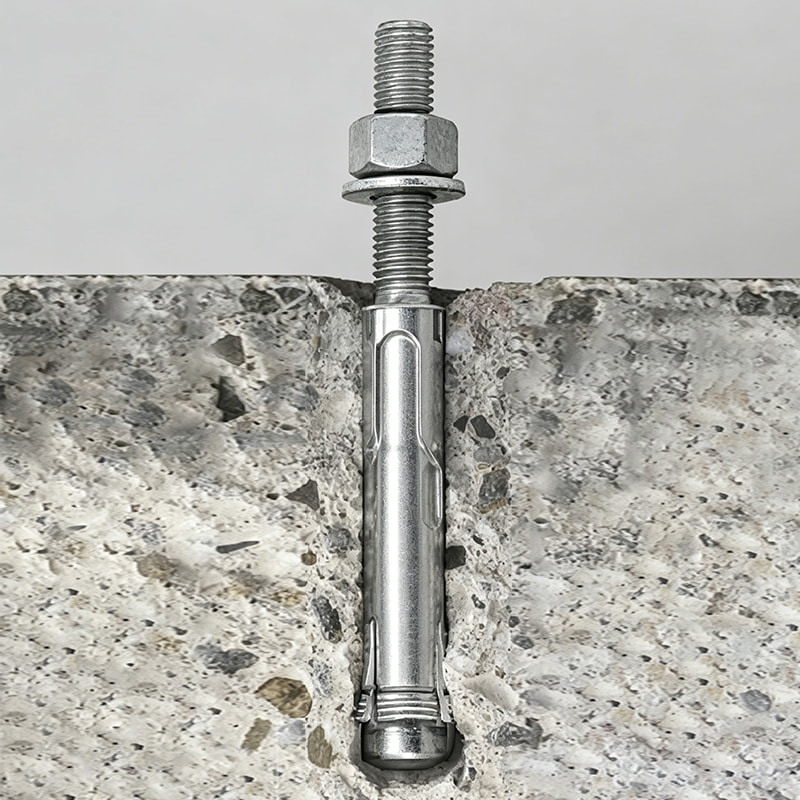 ASTM F1554 Hot-Dip Galvanized Carbon Steel Anchor BoltCast-in-place foundation fastener with exposed threaded end, suited for structural anchoring and construction fastening where bent-rod anchorage and galvanized corrosion protection matter.View Product →
The comparison below lines up the six families on the variables that actually decide a site decision: what the drill hole has to hold, how much tension the anchor develops, whether it can come out again, whether it is legal in cracked concrete, and what it costs installed.
Two columns deserve attention. Hole tolerance drives rework: a wedge anchor in an oversize hole cannot be rescued with extra torque, and the practical fix on site is to step up a diameter or switch to a chemical anchor. Cracked-concrete qualification is a binary gate rather than a preference — if the engineer has flagged the base material as cracked, only approved expansion and adhesive anchors may be used at all.
Embedment depth is the most powerful lever in anchor selection and the one most often value-engineered away. The chart below shows an indicative capacity index for a 12 mm torque-controlled wedge anchor in 30 MPa uncracked concrete as effective embedment increases.
The relationship is not linear, and that is the point. Moving from 60 mm to 100 mm of effective embedment adds roughly 60 percent more capacity for a drill time that grows by a few seconds. Trimming embedment from 100 mm back to 60 mm to save a longer drill bit shifts the failure mode from a ductile steel break to a sudden concrete cone pull-out, which is the difference between an inspection note and an incident report.
The genuinely hidden numbers are edge distance and spacing. An anchor placed 100 mm from a free edge may deliver only half of the catalogue capacity, and two anchors closer together than three times the embedment depth interact with each other and can lose 30 to 50 percent each. Those two figures rarely appear on an anchor schedule, and they explain why a proof-load test occasionally fails on an anchor that was installed exactly to the datasheet.
Consumption of concrete anchors is not evenly spread. The split below reflects where volume sits and, more usefully, which sectors tolerate which installation methods.
Retrofit and racking work is where the post-installed families earn their share, because the concrete already exists and nobody is going to break it out to embed a rod. Infrastructure keeps cast-in-place at the top because a 2 mm placement error in a bridge bearing is not something an adhesive cartridge can correct.
Sequence matters more than brand. The same anchor installed with the wrong bit, or into a hole that was never cleaned, behaves like a different and weaker product. The order of operations below is what an inspector will reconstruct if something fails.
Steps three and four account for most site failures. A hole drilled with a worn bit is conical, so the expansion clip contacts only the top of the bore; a hole blown out with a dirty compressor pushes oil mist into the same bore that the adhesive is supposed to bond to. Both mistakes are invisible after installation and both show up in a proof-load test.
One detail that gets overlooked on cast-in-place work is that the rod is only half of an assembly. Heavy hex nuts matched to the rod grade are what actually develop the preload, and a nut with the wrong proof load turns a correctly specified F1554 rod into an unrated joint.
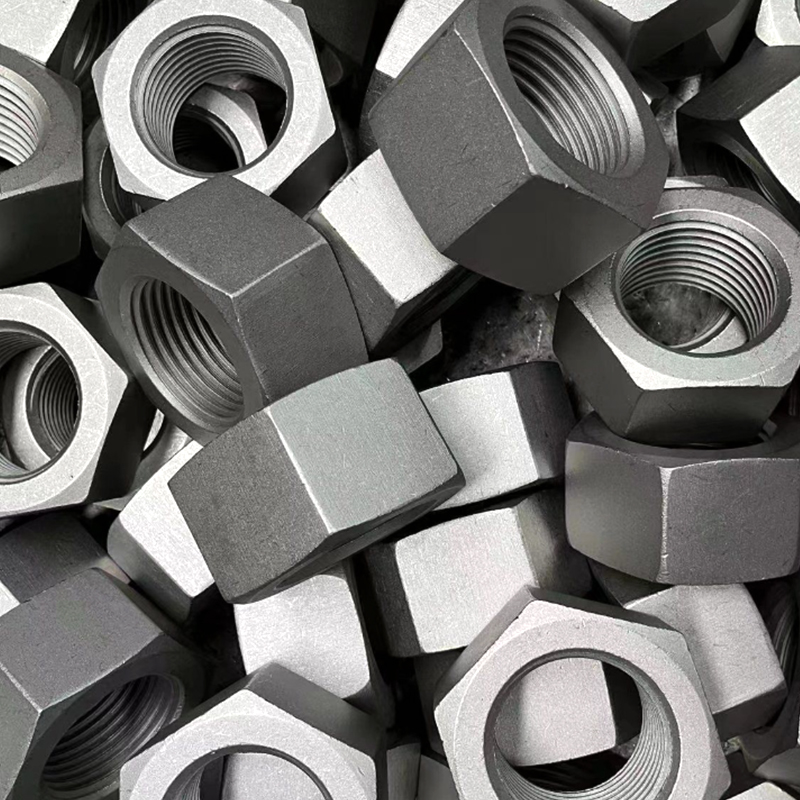 ASTM A194 B7 Black Heavy Hex NutsHigh-strength heavy hex nuts matched to A193 B7 bolts for high-temperature flanged joints, helping maintain preload in pressure piping and petrochemical service.View Product →
Unit price and installed cost are different numbers, and only one of them belongs in a budget. Labour, drilling time, inspection and the probability of rework all move the ranking.
A bent F1554 rod wins outright on material cost, but only if the schedule allows it to be placed before the pour. Ordered late, it becomes the most expensive option on the list.
Concrete screws for light duty, wedge anchors where an approval is mandatory. Both install in under a minute, which is where the real saving sits.
Adhesive anchors, despite the highest unit price, reach the highest capacity per millimetre of embedment and the tightest edge distances.
The gap between families is mostly labour and risk. A rejected anchor costs many times its unit price to rectify, because the fix usually means drilling a larger hole, cutting and re-welding a base plate, or relocating a bracket. On high-vibration equipment, the cheaper expansion anchor that needs a torque re-check every six months rarely stays cheaper for long.
Retrofit work also pulls in non-standard parts — longer rods, special head geometry, one-off coatings — which is normally handled through an OEM/ODM programme rather than a catalogue order, and that conversation is worth starting before the first anchor is drilled, not after.
Where the design uses continuously threaded rod as the adhesive anchor rod, common for retrofit dowels and machinery anchoring, the rod is usually ordered to ASTM A193 B7 or A320 L7 rather than as a plain commercial bolt, so that the steel grade matches the rest of the assembly.
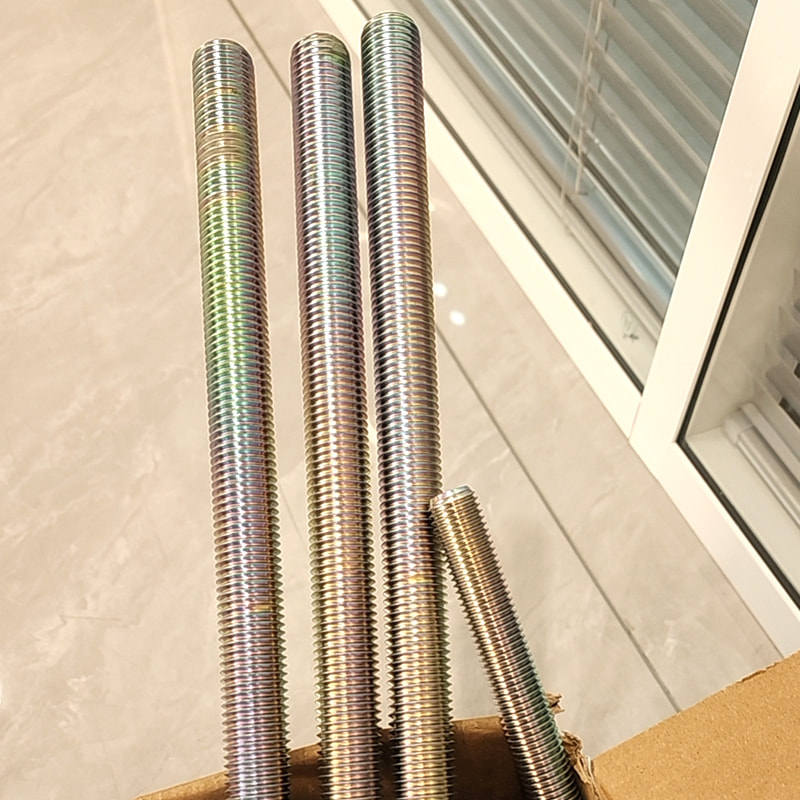 3/4 x 10 Inch ASTM A193 B7 Threaded RodHigh-strength alloy threaded rod for flanges, structural steel anchoring, and heavy machinery; offered in zinc, black oxide, or hot-dip galvanized finishes.View Product →
In North America, post-installed anchors in concrete fall under ACI 318 Chapter 17. The chapter does not care what the packaging says; it points at the approval documents.
Outdoor and wash-down environments decide the finish long before they decide the anchor type. Hot-dip galvanizing and zinc flake coatings behave very differently over a twenty-year design life, and pairing stainless steel nuts with galvanized rods in a wet environment invites galvanic attack at exactly the point where the load transfers. A practical overview of coating behaviour is gathered in this guide to bolt surface treatment selection.
Pick the family before the part number. If the concrete is still open, a bent F1554 rod is the least expensive capacity you can buy, and the only discipline required is layout accuracy. If the pour has cured, decide between expansion, screw and adhesive anchors on cracked-concrete status, hole tolerance your crew can genuinely hold, and the cost of getting one anchor wrong — then buy the rod and the matching nut as one assembly, not as two separate line items.
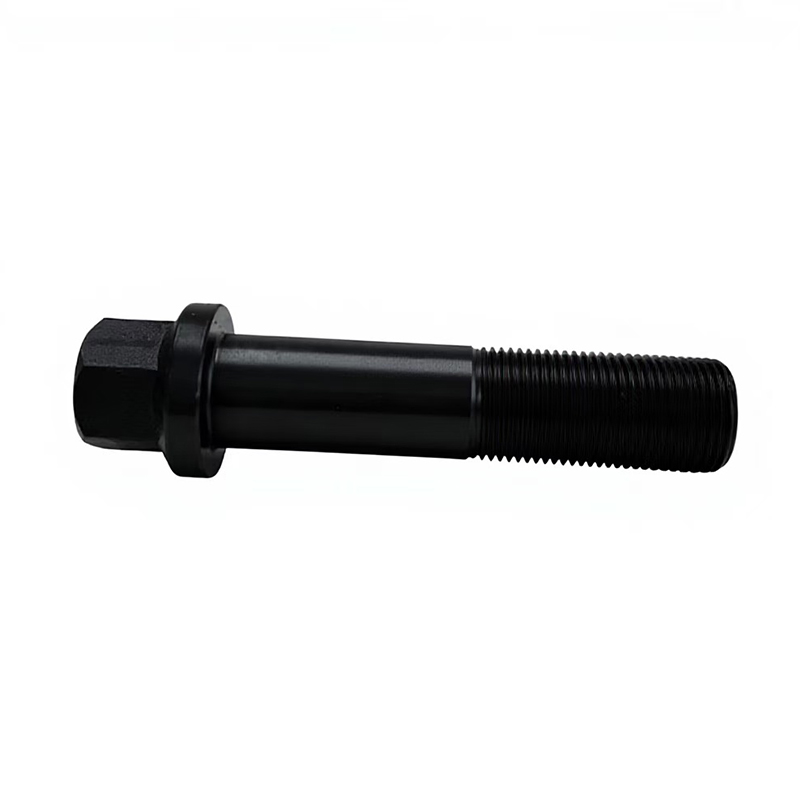 M8×60 Alloy Steel Grade 8.8 Zinc-Plated Hex Head Flange Bolt Cylinder Bolts
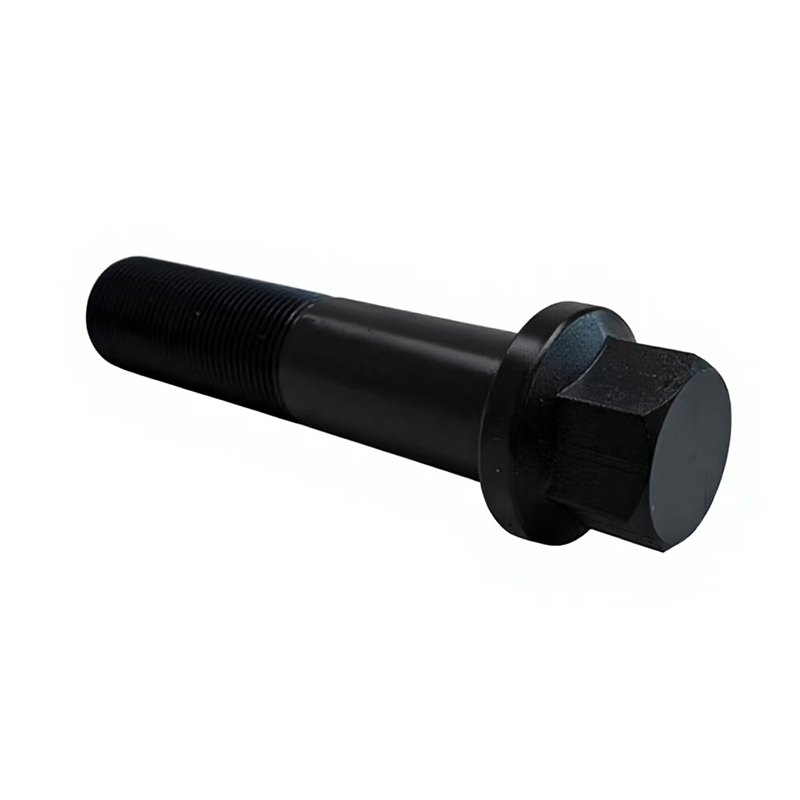 M8×40 Carbon Steel Grade 8.8 Black Cylinder Head Flange Bolts
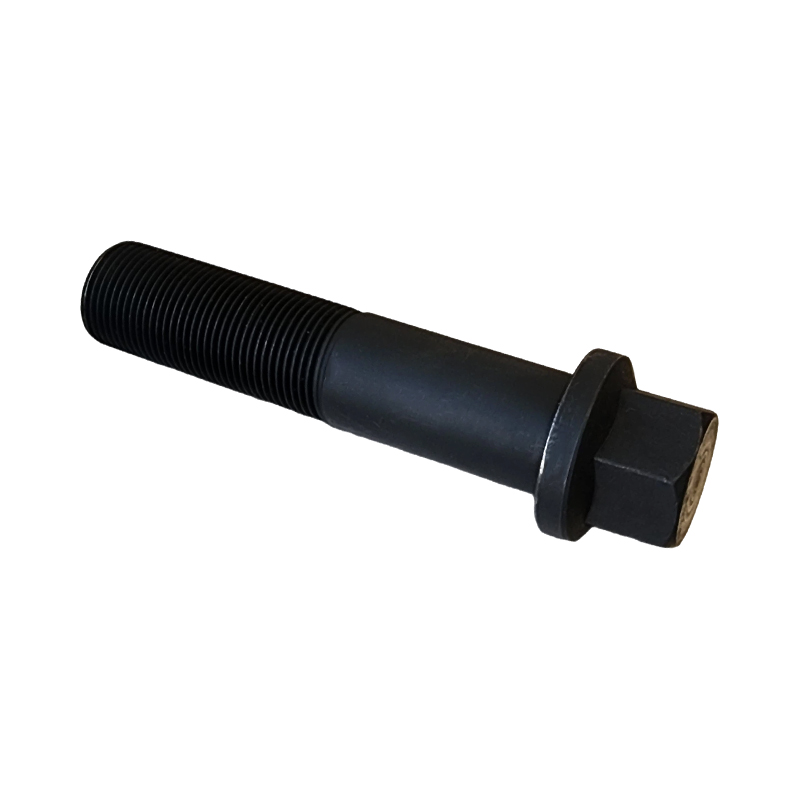 M8×100 Alloy Steel Grade 8.8 Phosphate Coated Cylinder Hex Head Flange Bolts
 Universal Zinc Plated Straight Handle Wheel Wrench
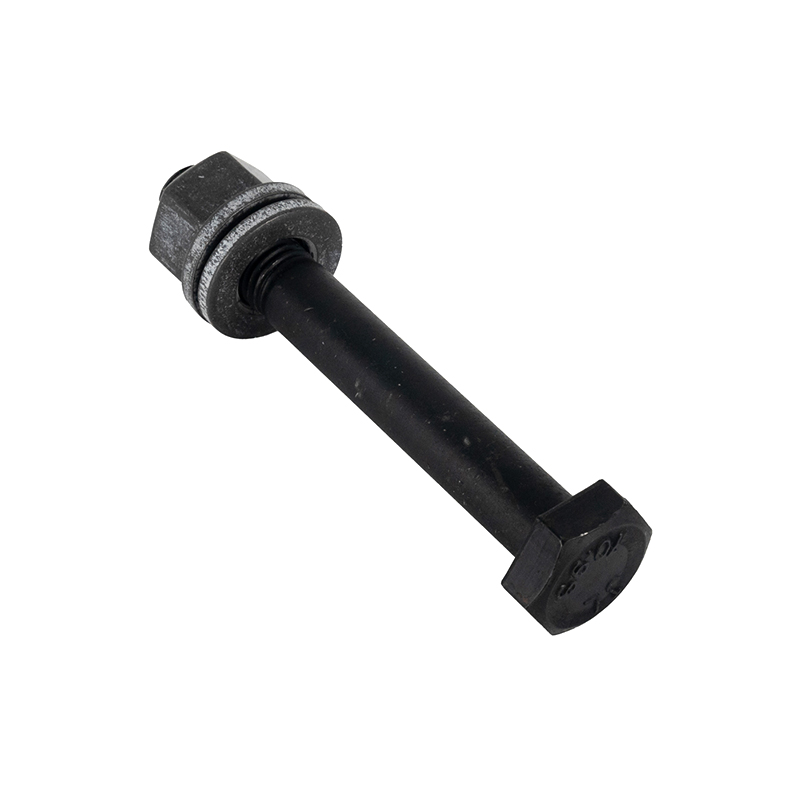 Steel Structure M20*120 Zinc Plated High-Strength Bolts
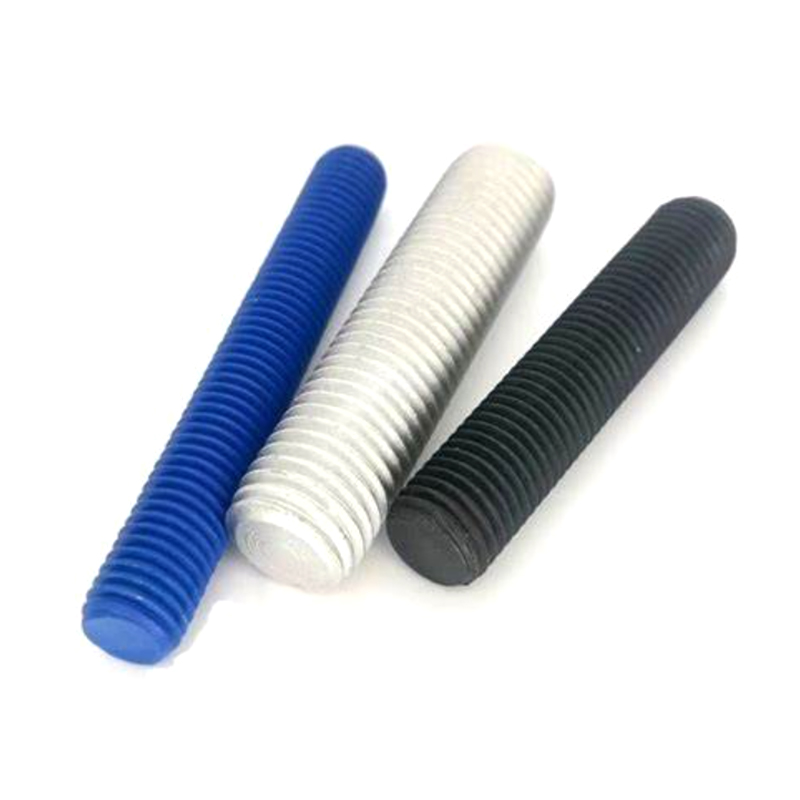 3/4*10" Zinc Plated / Black Oxide / Hot Dip Galvanized B7 Threaded Rods
 Contact Information
 Address



 中文简体
中文简体 Português
 Español
 Deutsch
 русский
 عربى
عربى