
Content
A vibrating-screen bracket comes back into the workshop with a loose nut for the second time in three months. It had been torqued to the drawing value, the thread was clean, and the part number matched the original. What changed was the batch: the replacement nylon-insert nut carried a thicker zinc layer, the thread bottomed out on the bolt before the joint reached full preload, and the locking collar never actually did its job.
Locking nuts are not interchangeable parts that you pick by thread size. The real decision comes down to three questions: how the nut creates resistance, what temperature and chemistry it will live in, and whether anybody will ever take it apart again. Answer those and the type usually selects itself.
Short answer: below roughly 120 °C, with a joint that may lose preload and will be serviced more than once, a nylon-insert lock nut (DIN 985 / ISO 7040) is still the cheapest reliable choice. Above that temperature, or in aggressive chemistry, all-metal distorted-thread nuts take over. Serrated flange and Keps nuts handle low-amplitude vibration in one-shot assemblies. Castle nuts and slotted nuts remain the honest answer wherever a mechanical lock has to be visually inspected.
Almost every locking nut on the market falls into one of two families, and confusing the two is where most field failures start.
Prevailing torque nuts resist from the very first turn of the wrench. The interference is engineered into the nut: a nylon collar, a distorted top thread, or an elliptically displaced thread section. Because the friction exists before the joint is tightened, the nut keeps resisting rotation even when clamp load drops to zero. This is the family that survives a joint that has gone soft.
Preload-dependent and mechanical locks spin on freely and only hold once seated. A castle nut with a cotter pin, a Keps nut with its captive tooth washer, a serrated flange nut, or a jam nut pair all depend either on the joint staying tight or on a physical device that must be assembled correctly. If the bolt stretches and preload walks away, a serrated flange nut has nothing left to offer.
One practical consequence buyers rarely account for: with a prevailing-torque nut, part of the wrench reading is spent overcoming the insert, so the clamp load delivered at a given torque is lower than with a free-running nut. If a drawing specifies 45 N·m for both types, the joint does not get the same preload.
The nylon-insert nut still earns its place because the collar rebounds after removal and keeps pulling its weight for three or four assemblies. Its limits are real, though: above about 120 °C the nylon creeps and the preload quietly disappears, and some solvents and hydraulic fluids swell the insert until the nut seizes on the thread.
 DIN 985 Zinc-Plated Nylon Insert Lock NutA prevailing-torque nylon insert lock nut for vibration-prone machinery; its carbon steel, zinc-plated build suits repeated assembly where insert limits are understood.View Product →
The first-cycle torque printed on a data sheet is the least useful number in the catalogue, because nobody services a joint on the first cycle. ISO 2320 exists precisely because prevailing torque has to be measured again after repeated tightening, and that second reading is where the families separate.
Read the bars as a ranking rather than a specification: they show the share of first-cycle prevailing torque still present at the fifth assembly, a pattern that repeats across bench tests of prevailing-torque nuts. All-metal distorted-thread nuts lose the least because the interference is cold-formed into steel. Nylon inserts drop faster once the collar has been compressed a few times. Serrated flange nuts are not in the same competition at all, since the bite on the mating surface is a one-time event.
The commercial implication is straightforward: if a maintenance schedule allows five teardowns, quoting a nylon-insert nut without telling the buyer to replace it at the third is setting up a warranty claim. If the joint is assembled once in a factory, the cheaper one-shot lock is the correct spend.
This split reflects the mix of locking-nut orders passing through our own shop floor, not a market study, but it tracks the enquiries we receive. Automotive work is dominated by nylon-insert nuts and flange nuts in zinc or zinc-nickel, because the joints are serviced and the temperatures stay modest. Steel structure rarely uses a locking nut at all; those connections are tension-controlled with heavy hex nuts and hardened washers, and the "lock" is inspection of the turn. High-temperature service in energy and pipeline work is where ASTM A194 grade 2H or 7 nuts appear alongside A193 B7 studs, and where a nylon insert would be a specification error rather than a cost saving.
Steps one to three decide the external shape. Steps four and five decide whether the parts you receive will assemble without a fight on the line. For low-amplitude vibration on light-gauge brackets, where the nut goes on once and the flange has to spread load into thin sheet, a serrated flange nut is often the whole answer.
 A 304 stainless serrated flange nut that spreads clamp load on light-gauge brackets and resists low-amplitude vibration without a separate lock washer.View Product →
Most locking-nut complaints that reach a purchasing desk are not about the locking feature. They are about the coating and the thread fit.
High-temperature service adds one more layer. Flanged and pipeline joints working above the range of polymer inserts normally pair an ASTM A193 B7 stud with an ASTM A194 heavy hex nut in grade 2H or 7, where the nut carries the same elevated-temperature rating as the stud and the thicker pattern survives the washer face load.
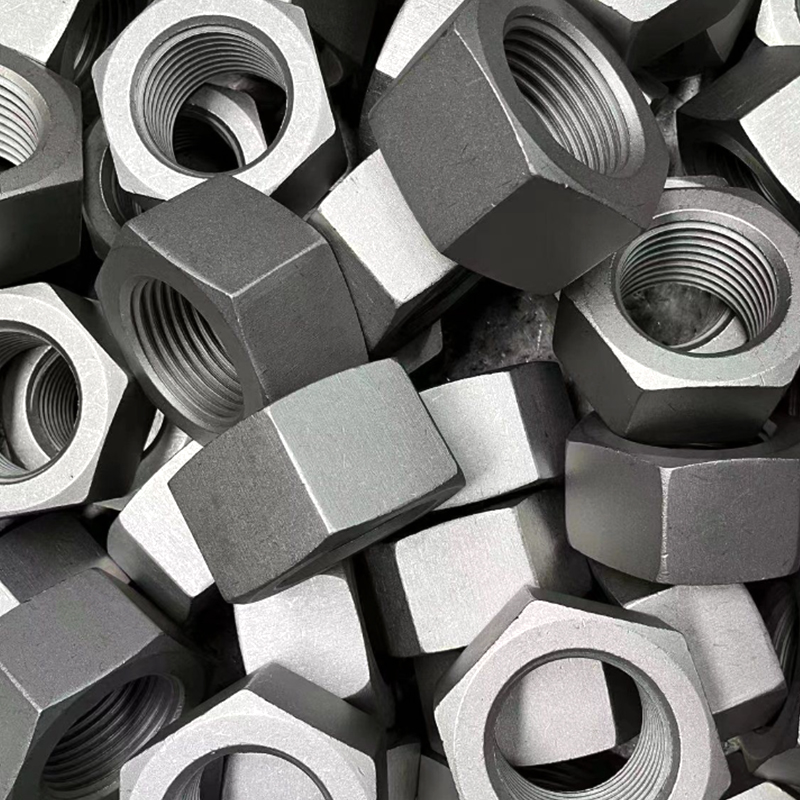 ASTM A194 2H/7 Black Heavy Hex NutsHigh-strength heavy hex nuts matched to A193 B7 studs for high-temperature process piping and flange joints, sized to carry design preload.View Product →
A locking nut buys time, not immunity. Three habits keep the benefit: re-torque bolted flanges after the first thermal cycle, mark nut and stud with a witness line so rotation is visible during rounds, and retire prevailing-torque nuts once the resistance feels light by hand. Nylon inserts should be stored sealed, because the collar absorbs moisture and swells in humid warehouses.
On the paperwork side, buyers increasingly expect EN 10204 3.1 mill certificates, salt-spray hours for the chosen coating, and RoHS or REACH statements for zinc-nickel and PTFE finishes. Automotive programmes add ELV declarations. None of that is difficult to supply when it is specified at the quotation stage and almost impossible to reconstruct afterwards, which is why the specification belongs in the purchase order rather than in an email. A wider review of common anti-loosening methods for nuts is a useful checklist when a joint keeps coming back.
Where a standard part cannot solve the problem — a left-hand thread, a thin pattern for a confined cavity, a non-standard flange diameter, or a specific insert material for a chemical environment — a custom locking nut programme built from drawings or samples is usually cheaper than redesigning the joint around a catalogue item.
The nut that failed on the vibrating screen was not a bad nut. It was a nylon-insert nut asked to do a job the batch could not deliver, because nobody checked the coating thickness against the thread tolerance. Pick the family by mechanism and temperature, check the class against the bolt, confirm the coating against the gauge, and the type almost never surprises you in service.
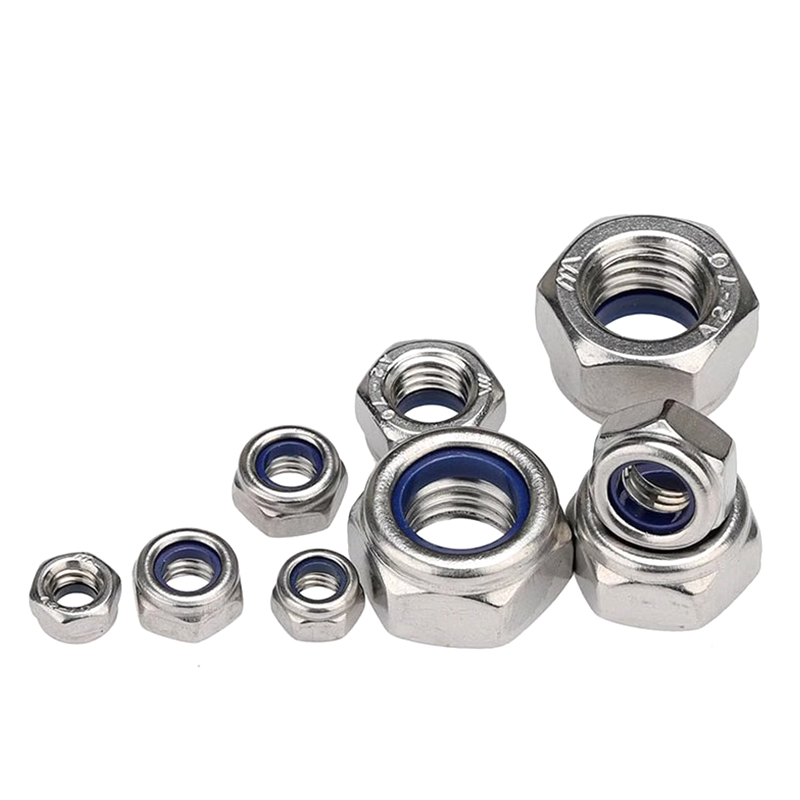 DIN 985 Carbon Steel Zinc Plated Nylon Insert Lock Nut
 DIN 985 Carbon Steel Zinc Plated Nylon Insert Lock Nut
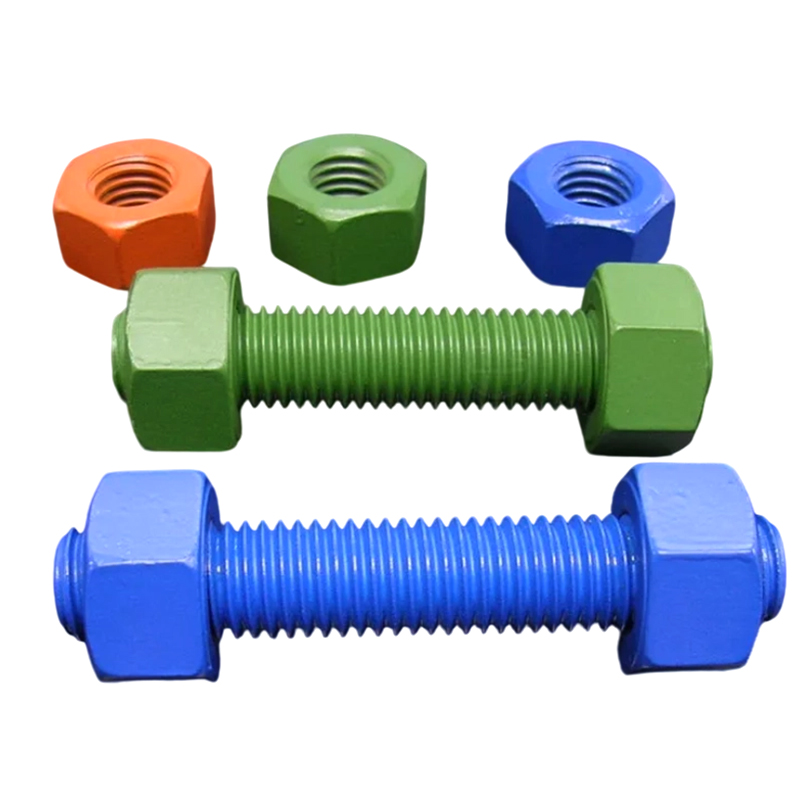 Alloy Steel M27*300 PTFE / Dacromet Coating B7 Threaded Rods Studs
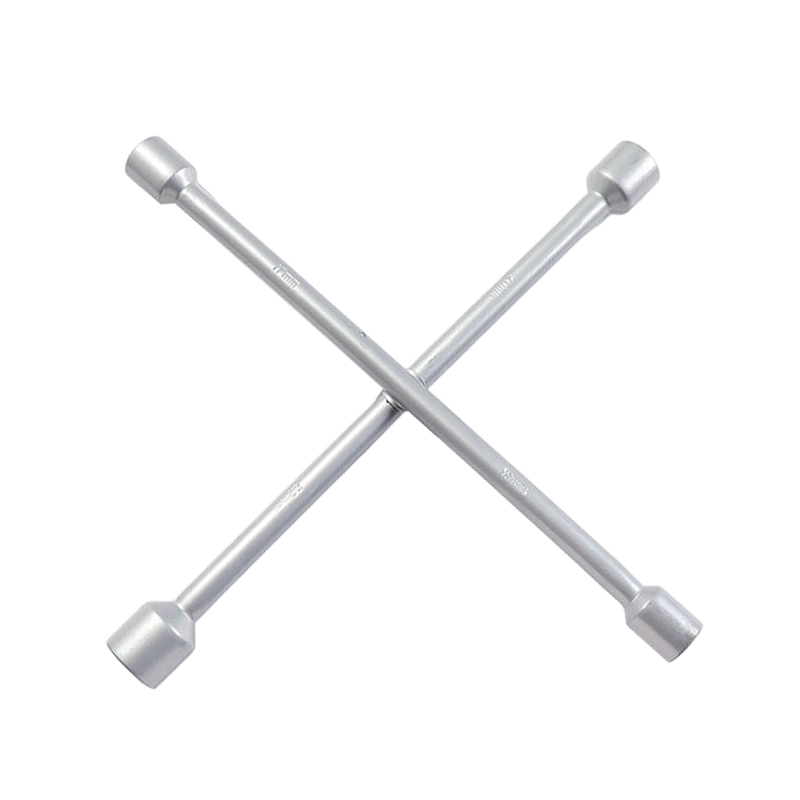 Alloy Steel Zinc Plated Cross Lug Wrench
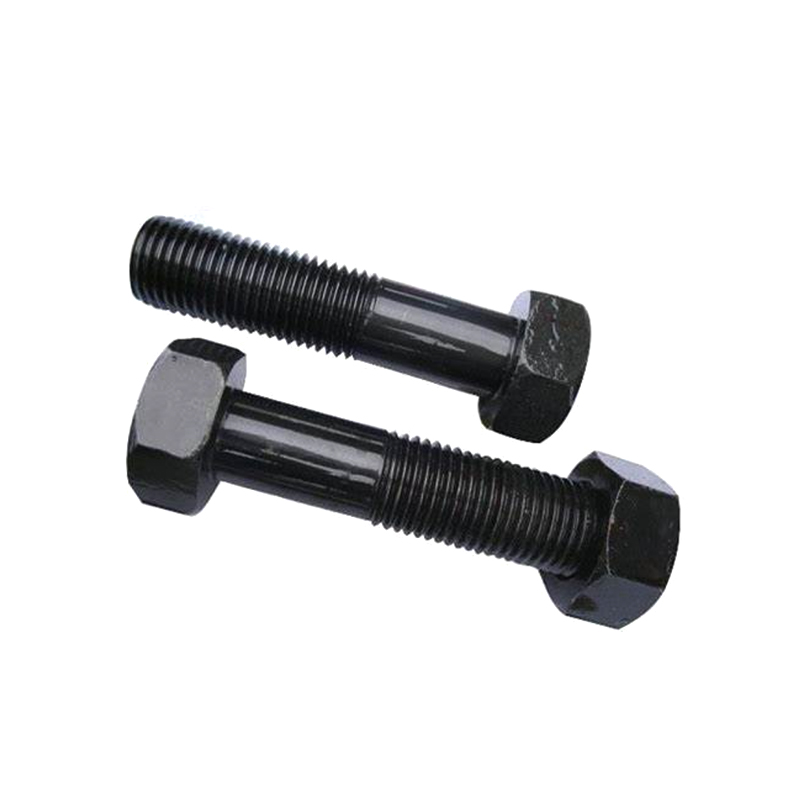 Alloy Steel M10*100 External Hex head Screw Black Oxide Bolts
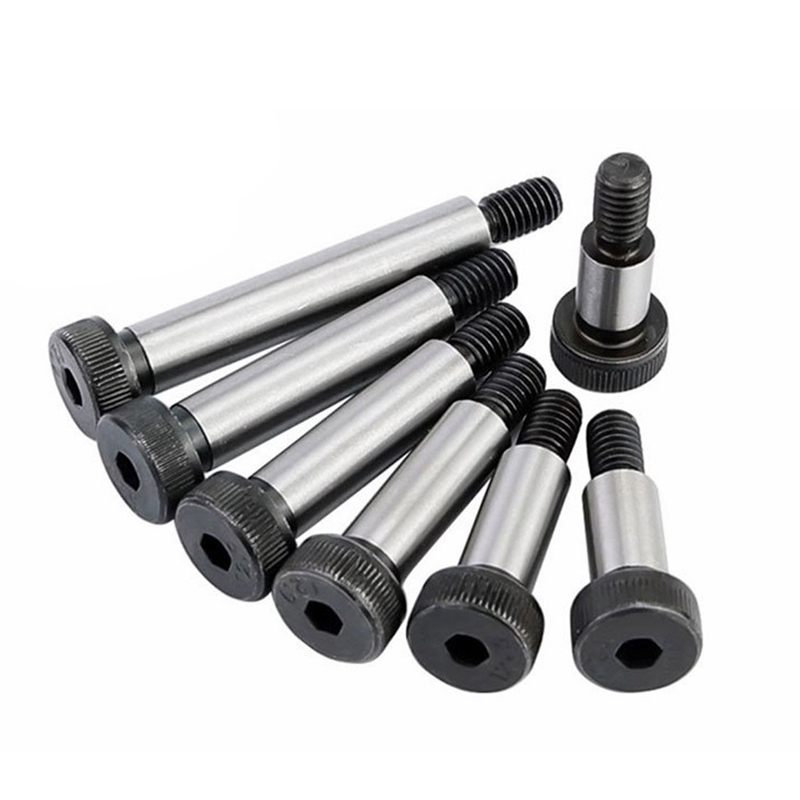 Alloy Steel Black Oxide Extended Shoulder Screw ISO 7379
 Contact Information
 Address


 中文简体
 Português
 Español
 Deutsch
 русский
 عربى