
Content
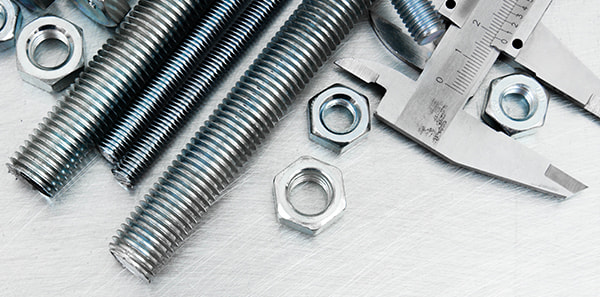
A black full threaded bar is a continuous length of steel rod with threads running from one end to the other, distinguished by its dark, non-reflective surface finish. The "black" designation is critically important because it describes the protective coating—typically black oxide, black phosphate, or a plain hot-rolled mill scale—that determines the bar's corrosion resistance, lubricity, and suitable applications. The most common grades for black threaded bar are carbon steel grades 4.6, 4.8, 8.8, and 10.9 under the ISO metric grading system, with B7 alloy steel being the standard for high-temperature bolting in accordance with ASTM A193. The selection of the correct grade and finish is primarily driven by the tensile load requirements, the environmental exposure, and whether the bar will be used in a dry indoor setting, a humid environment, or a high-temperature pressure-bound application.
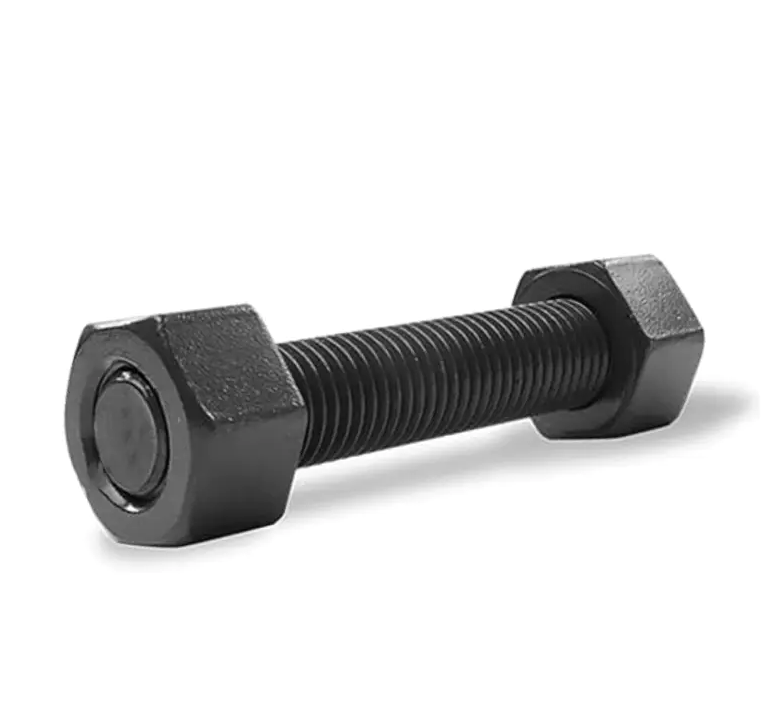
The term "black" in the context of a threaded bar does not refer to a single, standardized finish. It encompasses several distinct surface treatments, each with its own corrosion protection level, coefficient of friction, and appearance. Confusing one black finish for another can lead to premature rust, thread galling, or incorrect torque-tension relationships in critical bolted connections.
| Finish Type | Appearance | Corrosion Resistance | Typical Use Case |
|---|---|---|---|
| Hot-Rolled Mill Scale (Self-Colour) | Dark grey/black, slightly rough | Minimal, will rust quickly outdoors | Concrete formwork, temporary structures, indoor fabrication |
| Black Oxide (Chemical Conversion) | Deep black, smooth, semi-gloss | Moderate with oil film, poor without | Machinery assembly, indoor mechanical, aesthetic applications |
| Black Phosphate (Manganese Phosphate) | Matte dark grey/black, crystalline texture | Good with oil/wax sealant | Automotive fasteners, oil-impregnated bushings, anti-galling threads |
| Black Zinc (Electroplated + Black Passivate) | Uniform black, slight metallic sheen | Best among black finishes, salt spray 48-96+ hours | Architectural exposed fixings, outdoor non-structural |
The plain hot-rolled finish, often called "self-colour" or "black bar" in the trade, is the most economical and the most common on general-purpose threaded rod sold in hardware outlets. The black oxide and phosphate finishes are conversion coatings that alter the surface chemistry of the steel without adding measurable thickness, which means they do not affect thread fit or the pitch diameter. Black zinc, by contrast, is an electroplated coating that does add thickness—typically 5 to 12 microns—and this must be accounted for in the thread tolerance. A zinc-plated threaded bar requires nuts manufactured with an overtap allowance to ensure free assembly.
The mechanical performance of a black full threaded bar is determined by its steel grade, which specifies the minimum tensile strength, yield strength, and elongation. The ISO metric grading system, defined in ISO 898-1 for carbon steel fasteners, uses a two-digit code where the first digit multiplied by 100 gives the approximate minimum tensile strength in MPa, and the product of the two digits multiplied by 10 gives the approximate yield-to-tensile ratio. Selecting the wrong grade for the application load results in either plastic deformation from yielding or brittle fracture from overload.
| Grade | Min. Tensile Strength (MPa) | Min. Yield Strength (MPa) | Elongation After Fracture | Common Diameter Range | Typical Application |
|---|---|---|---|---|---|
| 4.6 | 400 MPa | 240 MPa | 22% | M5 - M36 | Low-stress fastening, hanging, general fabrication |
| 8.8 | 800 MPa | 640 MPa | 12% | M8 - M48 | Structural connections, machinery, pipe supports |
| 10.9 | 1000 MPa | 900 MPa | 9% | M12 - M36 | High-load structural, lifting equipment, pressure vessels |
| B7 (ASTM A193) | 860 MPa (min) | 720 MPa (min) | 16% | M16 - M100+ | High-temperature flanges, refinery bolting, steam service |
The grade marking on a black threaded bar is typically stamped on one or both ends of the bar or on the face of a nut that accompanies it. A grade 8.8 bar may also feature a quenched and tempered microstructure, identifiable in a laboratory by its tempered martensite grain structure. In the field, the absence of grade markings is a warning sign. A black bar with no visible stamp should be assumed to be grade 4.6 or lower and must not be used in any load-bearing application where failure could cause injury or property damage.
The threads on a full threaded bar are not a generic commodity feature; they are manufactured to a specific tolerance class that determines how the bar mates with nuts and tapped holes. The standard thread for metric black threaded bar is the ISO metric coarse thread profile (M-profile) per ISO 68-1, with a 60-degree flank angle. The tolerance class is typically 6g for the external thread on the bar, which provides a medium fit that balances ease of assembly with resistance to loosening under vibration.
For bars that will be used with nuts, a 6g bar thread combined with a 6H nut thread creates the standard ISO clearance fit. When the bar is intended to be threaded into a tapped hole rather than used with a nut, the fit class becomes more critical. A 6g bar thread in a 6H tapped hole provides adequate clearance for most applications, but for precision machinery or where the bar must be frequently removed and reinstalled, a tighter 5g/6g thread fit on the bar may be specified. The thread class is rarely marked on the bar itself; it is a manufacturing specification that must be confirmed from the supplier's documentation.
The method used to form the threads on a black full threaded bar significantly affects the bar's fatigue resistance, surface finish, and dimensional consistency. Thread rolling, where the thread profile is cold-formed by pressing hardened steel dies against the rotating bar, produces a thread with superior mechanical properties. The cold-working process compresses and work-hardens the thread surface, creating a compressive residual stress layer that delays fatigue crack initiation. Rolled threads also have a smoother surface finish because the material is displaced rather than cut, resulting in fewer stress-raising surface imperfections.
Cut threads, produced by removing material with a die or a single-point cutting tool, have the inherent disadvantage of cutting through the grain flow lines of the steel. This creates exposed grain ends at the thread root that are more susceptible to corrosion and fatigue crack initiation. For a grade 8.8 or 10.9 threaded bar subjected to cyclic loading, a rolled thread can provide a fatigue life that is 50% to 100% longer than an equivalent cut thread. The price premium for rolled-thread bar is modest and is justified in any application involving vibration, pressure cycling, or dynamic loading.
No black finish provides the same level of corrosion protection as hot-dip galvanizing or stainless steel. A black full threaded bar is fundamentally a carbon steel product with a cosmetic or mildly protective surface layer, and it will rust if exposed to moisture, condensation, or outdoor weather without additional protection. The plain hot-rolled mill scale offers almost no barrier protection; it delays the onset of red rust by only a matter of days in humid conditions. Black oxide, while attractive, is a magnetite (Fe₃O₄) layer that is inherently porous and relies on a post-treatment oil or wax film to seal the surface. Without this sealant, black oxide offers negligible corrosion resistance.
For applications where the bar will be visible and subject to occasional moisture—such as architectural fittings, furniture assembly, or indoor railing supports—black phosphate with a supplementary oil coating or black zinc plating provides the most durable solution short of upgrading to stainless steel. Black zinc plating with a trivalent chromium passivate layer can achieve 96 hours of neutral salt spray resistance before red rust per ISO 9227, which is sufficient for covered outdoor applications. However, for permanent outdoor exposure, buried service, or marine environments, the black finish is insufficient. In these conditions, the material must be upgraded to hot-dip galvanized steel, 304 stainless steel threaded bar, or 316 stainless for coastal exposure.
When a black full threaded bar is used in a tensioned bolted connection—common in structural steel, machinery mounting, and flanged pipe joints—achieving the design preload requires understanding the torque-tension relationship. This relationship is dominated by the friction coefficients at the thread interface and the nut bearing face. The black finish directly affects these friction coefficients. A plain mill-scale bar has a high and inconsistent coefficient of friction, typically in the range of 0.20 to 0.35 depending on surface condition. A black oxide finish with oil has a much lower and more predictable coefficient of roughly 0.12 to 0.18. A phosphated and oiled finish falls between 0.15 and 0.22.
The practical implication is that the same torque applied to bars with different black finishes produces significantly different preloads. Over-torquing a lubricated black oxide bar to the value specified for a dry mill-scale bar can yield the threads or even fracture the bar. The installation procedure must account for the specific finish condition, and the use of a calibrated torque wrench with a known K-factor (nut factor) for the specific bar and nut combination is essential for critical connections. If the K-factor is unknown, the preload can be verified by measuring the bolt elongation with a micrometer or an ultrasonic bolt gauge, which eliminates the uncertainty of the torque-tension relationship.
A full threaded bar is frequently cut to length on site. The cutting method matters because it affects both the integrity of the remaining threads and the ability to start a nut on the cut end. An abrasive cut-off saw is the fastest method but leaves a burr and heat-affected zone at the cut. The burr must be filed to a 45-degree chamfer around the entire circumference of the bar end, and the first two threads behind the cut should be chased with a thread file or a split die nut to remove any distortion. A bandsaw produces a cleaner cut with less heat input and is preferred for higher-grade bars where the heat of abrasive cutting could locally temper the steel and reduce its strength at the cut end.
After cutting, the exposed raw steel at the cut face has no black finish protection. This face will rust quickly. On a black oxide bar, the cut end should be treated with a cold blackening solution or coated with a zinc-rich paint to restore corrosion protection. On a critical structural connection, the cut end should not be placed in a location where water can pool or where the exposed steel is in contact with a dissimilar metal that would cause galvanic corrosion. A simple dab of anti-seize compound or heavy grease on the cut face is often sufficient for indoor applications, but it is not a substitute for proper coating restoration in outdoor service.
Black full threaded bar is manufactured in standard metric diameters from M6 up to M100 or larger in specialty mills, with M8, M10, M12, M16, M20, and M24 being the most commonly stocked sizes. Standard lengths are typically 1 meter, 2 meters, and 3 meters, though shorter stud lengths are available pre-cut for specific applications. The weight per meter increases with the square of the diameter; an M24 bar weighs approximately 3.55 kg per meter, while an M12 bar weighs about 0.89 kg per meter. For large-diameter bars, the weight becomes a handling consideration that may require mechanical lifting during installation.
When procuring black threaded bar, the specification should clearly state the diameter, pitch (coarse unless fine is specified), grade, finish, thread standard, and length. A complete call-out reads, for example: "M20 x 2.5, Grade 8.8, Black Oxide, ISO 68-1 thread, 6g tolerance, 2-meter length." Ambiguous specifications invite substitution of a lower-grade or different-finish product. Reputable suppliers provide material test certificates (MTCs) that trace the heat number of the steel, its chemical composition, and its mechanical test results. For structural applications governed by a building code, these certificates must be retained with the project documentation to demonstrate compliance.
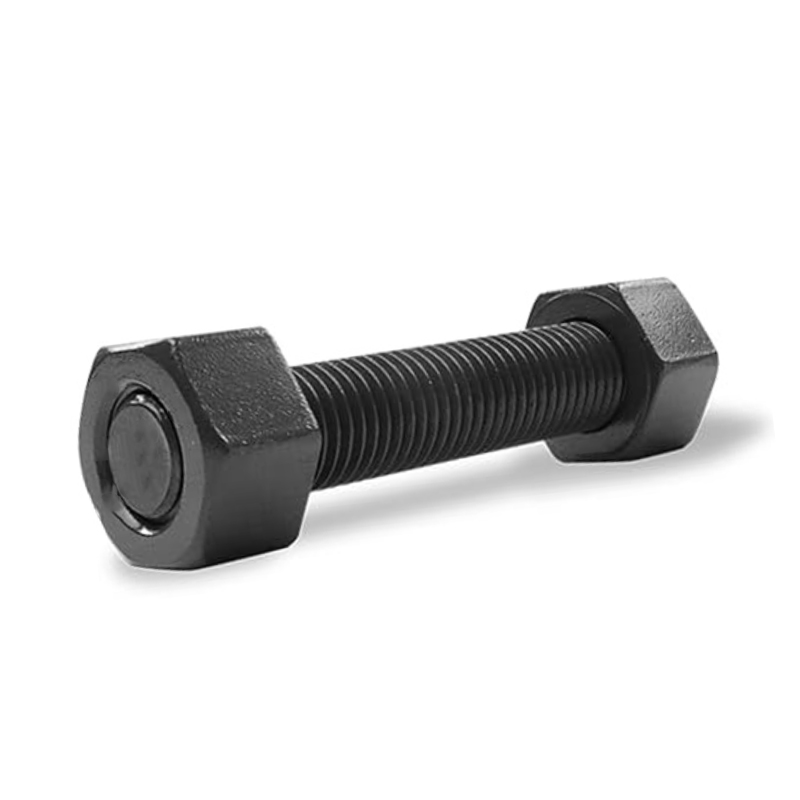 Carbon Steel M16×300 Grade 8.8 Galvanized / Black Full Threaded Bar
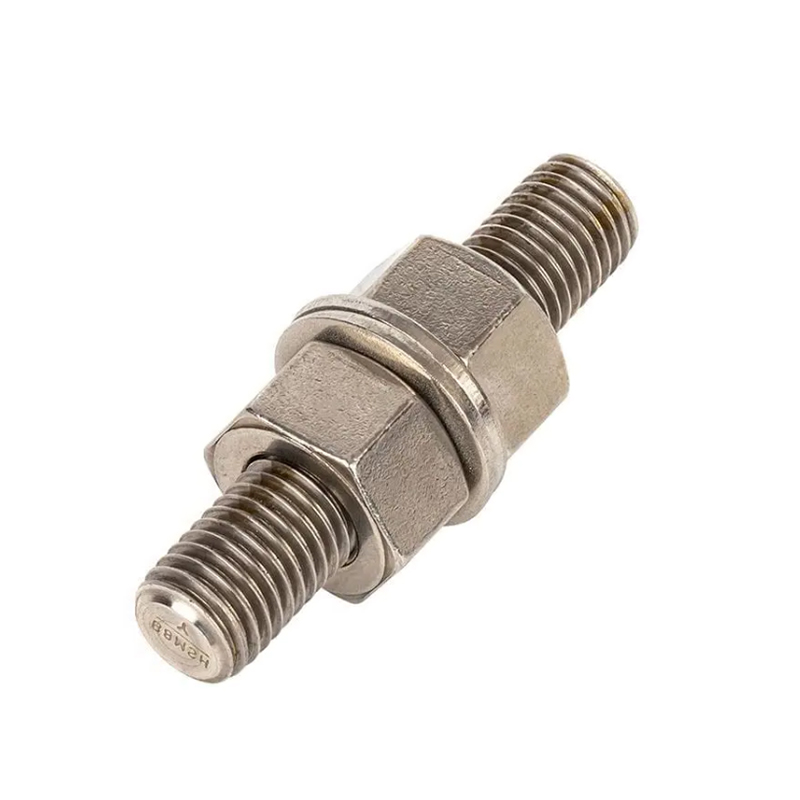 L7 Galvanized / Black / HDG Surface 3/4*10" Full Threaded Bar
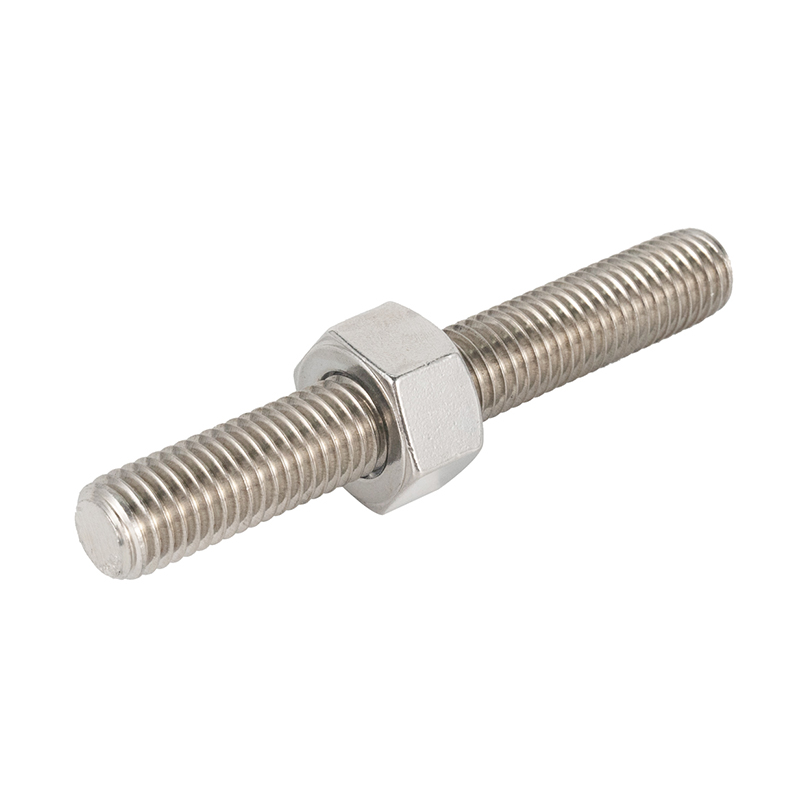 M10×300 Carbon Steel Grade 8.8 Galvanized Fully Threaded Rods
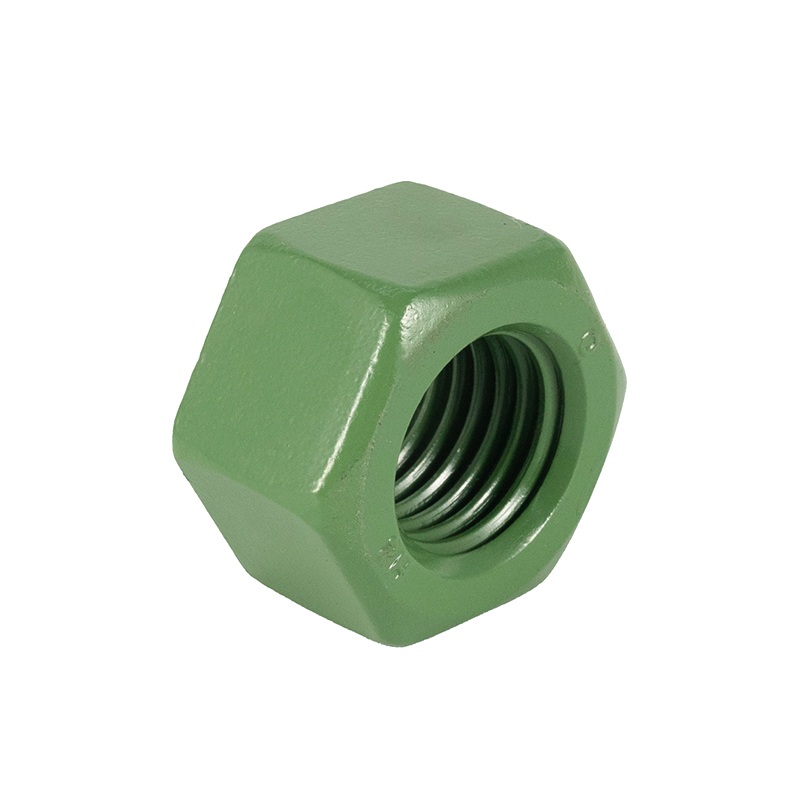 Black Hot Dip Galvanized Heavy Hex Nuts
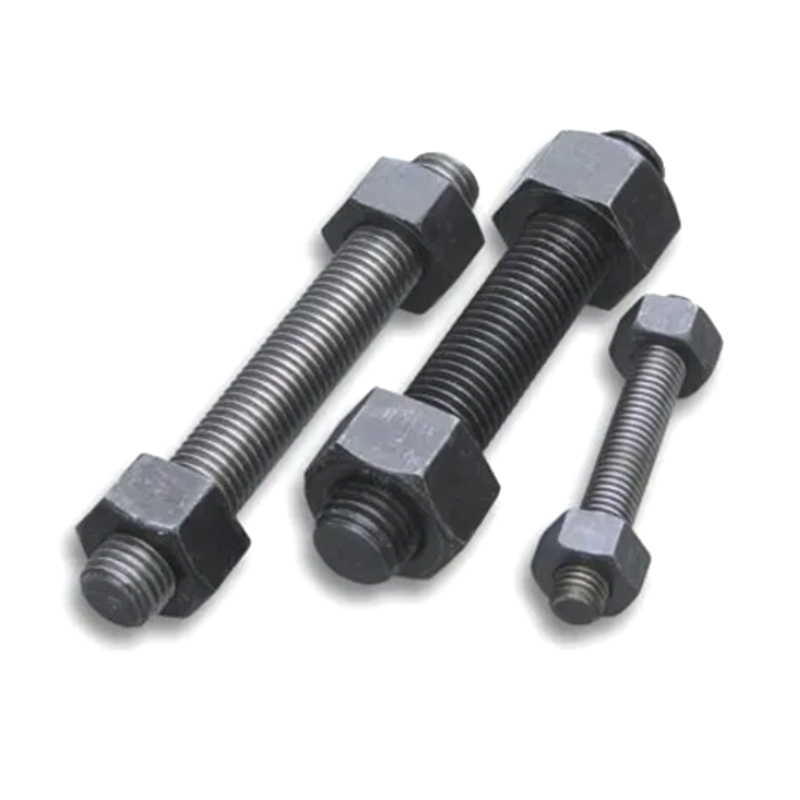 M16*300 Carbon Steel Grade 8.8 PTFE Blue Coated Fully Threaded Studs
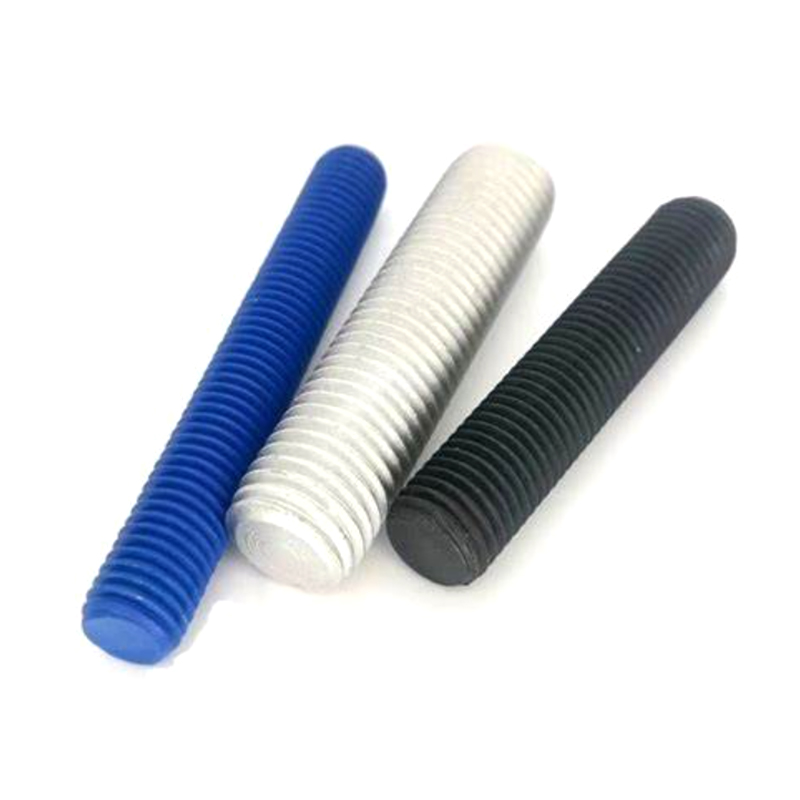 3/4*10" Zinc Plated / Black Oxide / Hot Dip Galvanized B7 Threaded Rods
 Contact Information
 Address



 中文简体
中文简体 Português
 Español
 Deutsch
 русский
 عربى
عربى